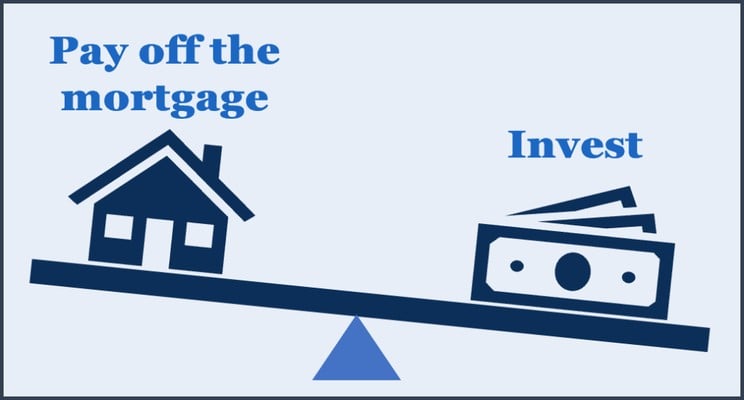
Should You Pay Off Your Mortgage Early or Invest the Difference? A Clear Financial Comparison
Homeownership comes with big decisions beyond choosing the right property. One of the most common questions homeowners face is: “Should I pay off my mortgage early or invest the money I’d use for extra payments?” Both strategies can build wealth, but the best choice depends on your financial goals, risk tolerance, and mortgage terms.
This guide breaks down the pros, cons, and long-term implications to help you make an informed choice.
Option 1: Paying Off Your Mortgage Early
Paying off your mortgage early means making extra principal payments or paying a lump sum to reduce your loan balance. Here’s what to consider:
✔ Pros of Paying Off Your Mortgage Early
-
Guaranteed Return
Paying off your mortgage is equivalent to earning a risk-free return equal to your interest rate. For example, a 4% mortgage is like a 4% return on your money without risk. -
Lower Financial Stress
Owning your home outright can provide peace of mind and reduce monthly expenses. -
Interest Savings
Extra payments reduce the total interest paid over the life of the loan—sometimes tens of thousands of dollars. -
Simplified Finances
With no mortgage payment, your monthly budget becomes simpler and more predictable.
✘ Cons of Paying Off Your Mortgage Early
-
Opportunity Cost
Money used to pay off your mortgage could be invested elsewhere for potentially higher returns. -
Liquidity Risk
Extra payments tie up cash in your home. Once the money is in your home equity, it’s not easily accessible without a home equity loan or line of credit. -
Loss of Tax Deduction
Mortgage interest may be deductible if you itemize taxes, though this is less impactful after the 2017 tax law changes.
Option 2: Investing the Difference
Instead of making extra mortgage payments, you could invest that money in the stock market, retirement accounts, or other investment vehicles.
✔ Pros of Investing
-
Potentially Higher Returns
Historically, the stock market averages 7–10% annual returns—higher than most mortgage interest rates. -
Liquidity and Flexibility
Investments can be accessed or reallocated more easily than home equity. -
Tax Advantages
Contributions to retirement accounts like a 401(k) or IRA may provide tax benefits. -
Diversification
Investing spreads risk across different asset classes, unlike putting all extra cash into one asset (your home).
✘ Cons of Investing
-
Market Risk
Investments can lose value, especially in the short term, making returns uncertain. -
No Guaranteed Savings
Unlike mortgage payoffs, which guarantee interest savings, investments are not guaranteed. -
Discipline Required
Success depends on consistent investing and avoiding impulsive decisions during market swings.
Key Factors to Consider
When deciding between paying off your mortgage early or investing, consider:
1. Mortgage Interest Rate
-
Low rates (3–5%) may make investing more appealing.
-
High rates (6%+) may make early payoff more financially advantageous.
2. Risk Tolerance
-
Conservative investors may prefer the guaranteed return of mortgage payoff.
-
Comfortable risk-takers may prefer investing for potentially higher growth.
3. Financial Goals
-
Do you want financial freedom and a mortgage-free home?
-
Or are you focused on wealth accumulation and long-term investing?
4. Time Horizon
-
Short-term goals may favor mortgage payoff.
-
Long-term goals (20–30 years) may favor investing, leveraging compound growth.
5. Other Debts
-
High-interest debts (credit cards, personal loans) should usually be paid off first.
A Balanced Approach
Some homeowners choose a hybrid strategy:
-
Make extra mortgage payments while also contributing to retirement or brokerage accounts.
-
Allocate extra cash based on your risk tolerance, interest rates, and financial goals.
-
This provides a mix of guaranteed returns and growth potential.
Example Comparison
Imagine a $300,000 mortgage at 4% interest over 30 years:
-
Extra mortgage payments: Could save ~$70,000 in interest over the life of the loan.
- Investing the same money: With a 7% average return, the same amount could grow to over $150,000 in 30 years.
This illustrates the potential long-term advantage of investing, but with more risk and no guaranteed return.
Final Thoughts
There’s no one-size-fits-all answer. Paying off your mortgage early provides guaranteed savings, peace of mind, and financial security. Investing the difference can generate higher long-term wealth but comes with market risk and discipline requirements.
The best choice depends on your financial goals, mortgage rate, risk tolerance, and personal priorities. Often, a balanced approach—combining extra mortgage payments with consistent investing—offers both security and growth potential.
--
Tina Jingru Sui 隋静儒
Associate Broker | Team Leader of TJS Team, Keller Williams
 Serving Metro Atlanta — Johns Creek, Alpharetta, Duluth, Suwanee, Buford, and beyond
 404-375-2120


 WeChat: tinasuirealty
 Follow me on Instagram / 小红书 / WeChat / Facebook