What Buyers Should Know About Fixed-Rate vs. Adjustable-Rate Mortgages
Choosing the right mortgage is one of the most important financial decisions a homebuyer will make. Two of the most common loan types are fixed-rate mortgages and adjustable-rate mortgages (ARMs). Each has its advantages and risks, and the best choice depends on your financial situation, long-term plans, and comfort with risk.
Here’s what buyers should know about fixed-rate vs. adjustable-rate mortgages.
What Is a Fixed-Rate Mortgage?
A fixed-rate mortgage has an interest rate that stays the same for the entire life of the loan.
This means:
- Your monthly principal and interest payments remain stable
- Your rate is not affected by market changes
- Budgeting becomes more predictable
Fixed-rate loans are commonly available in terms such as 15, 20, or 30 years.
Advantages of a Fixed-Rate Mortgage
Fixed-rate mortgages are popular for their stability.
Key benefits include:
- Predictable monthly payments
- Protection from rising interest rates
- Easier long-term financial planning
- Lower stress for first-time buyers
This makes them especially appealing for long-term homeowners.
Disadvantages of a Fixed-Rate Mortgage
While stable, fixed-rate loans may have some drawbacks:
- Higher initial interest rates compared to ARMs
- Less flexibility if rates drop significantly
- May cost more over time in certain market conditions
Buyers may pay a premium for stability.
What Is an Adjustable-Rate Mortgage (ARM)?
An adjustable-rate mortgage has an interest rate that can change over time based on market conditions.
Typically, it includes:
- A fixed rate for an initial period (e.g., 5, 7, or 10 years)
- Periodic adjustments after that based on a financial index
This means monthly payments can increase or decrease over time.
Advantages of an Adjustable-Rate Mortgage
ARMs can be attractive in certain situations.
Benefits include:
- Lower initial interest rates
- Lower monthly payments at the start
- Potential savings if rates stay low
- Good option for short-term homeowners
They can help buyers save money early in the loan term.
Disadvantages of an Adjustable-Rate Mortgage
ARMs carry more uncertainty.
Potential risks include:
- Payments may increase significantly over time
- Budgeting becomes less predictable
- Risk of higher long-term costs if rates rise
- Complexity in understanding terms and adjustments
Buyers must be comfortable with financial fluctuation.
Key Differences Between Fixed and Adjustable Rates
Here’s a simple comparison:
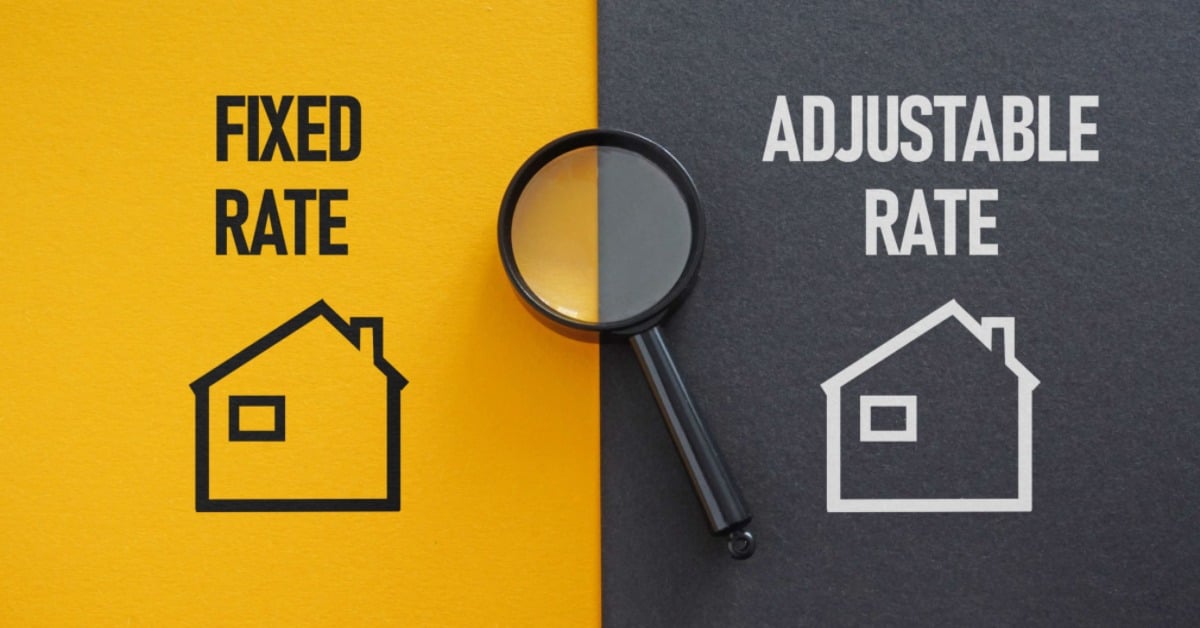
- Fixed-rate: Stable payments, long-term predictability
- Adjustable-rate: Lower starting cost, future uncertainty
The right choice depends on your goals and risk tolerance.
When a Fixed-Rate Mortgage Is a Better Choice
A fixed-rate loan may be ideal if you:
- Plan to stay in your home long-term
- Prefer stable monthly payments
- Have a fixed budget
- Want protection from interest rate increases
It is often the safer and more traditional option.
When an Adjustable-Rate Mortgage May Make Sense
An ARM may be suitable if you:
- Plan to sell or refinance within a few years
- Expect your income to increase
- Want lower initial payments
- Are comfortable with financial risk
It can be useful for short-term financial strategies.
Interest Rate Environment Matters
The overall economy can influence which loan type is more attractive.
For example:
- When rates are high → ARMs may offer initial savings
- When rates are low → fixed-rate loans provide long-term protection
Understanding market conditions can help guide your decision.
Consider Your Long-Term Plans
Your timeline in the home is one of the most important factors.
Ask yourself:
- How long do I plan to stay in this home?
- Will I refinance later?
- Could I move within 5–7 years?
Your answers help determine the best mortgage structure.
Understand Rate Adjustments in ARMs
If choosing an ARM, it’s important to understand:
- Adjustment frequency (yearly, etc.)
- Rate caps (limits on how much rates can increase)
- Index and margin used to calculate changes
These details determine your future payment risk.
Work With a Mortgage Professional
A lender or mortgage advisor can help you:
- Compare loan scenarios
- Understand total long-term costs
- Evaluate risk vs. stability
- Choose the right structure for your goals
Professional guidance is especially important for first-time buyers.
Final Thoughts
Both fixed-rate and adjustable-rate mortgages have advantages, and neither is universally better. The right choice depends on your financial goals, how long you plan to stay in the home, and your comfort with risk.
A fixed-rate mortgage offers stability and peace of mind, while an adjustable-rate mortgage offers lower initial payments with more flexibility—but also more uncertainty. Understanding both options helps you make a confident and informed homebuying decision.
--
Tina Jingru Sui 隋静儒
Associate Broker | Team Leader of TJS Team, Keller Williams
Serving Metro Atlanta — Johns Creek, Alpharetta, Duluth, Suwanee, Buford, and beyond
404-375-2120
www.tinasui.com
WeChat: tinasuirealty
Follow me on Instagram / 小红书 / WeChat / Facebook