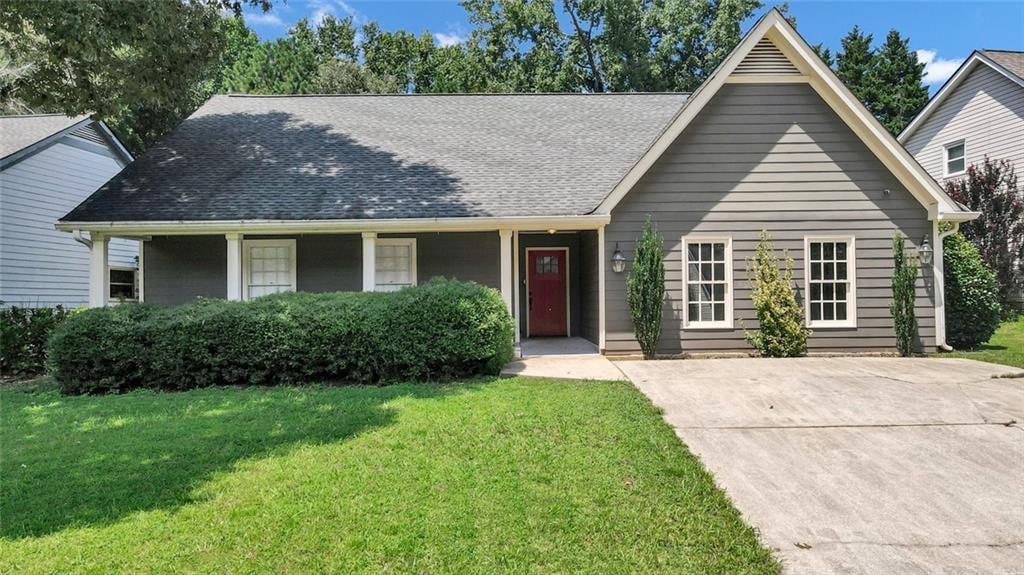
One of the easiest mistakes in homebuying is evaluating the house more carefully than the environment around it. Buyers may spend 45 minutes discussing countertops, flooring, bedrooms, and paint colors—then spend almost no time studying the road behind the property, neighboring lots, commute pattern, property taxes, HOA obligations, nearby land use, future construction, or the places they will drive to every week. Many interior problems can be changed. Many location problems cannot.
What Buyers Should Look for Beyond the House Itself
Before you fall in love with the house, understand everything you are buying outside its walls.
The House Is Only One Layer of the Purchase
Imagine two homes.
Both are:
- Approximately the same price.
- Similar in size.
- Recently renovated.
- In the same general part of Metro Atlanta.
Home A has:
- A usable lot.
- A straightforward commute.
- Reasonable access to recurring destinations.
- No major visible external objection.
Home B has:
- A busy road directly behind the backyard.
- An undeveloped parcel next door.
- A difficult driveway.
- A substantially longer rush-hour route.
Inside the front door, Home B may be prettier.
But after closing, the Buyer can change the cabinets.
The Buyer cannot move the road.
You Can Renovate
the Kitchen.
You Cannot Renovate
the Road Behind You, the Adjacent Parcel, the Tax Jurisdiction, or Your Daily Commute.
Use the Three-Ring Ownership Radius Audit
Ownership Ring | What to Evaluate |
|---|---|
Ring 1: Property Edge | Lot position, neighboring properties, road exposure, drainage, parking, adjacent land, utility infrastructure, privacy |
Ring 2: Daily-Life Radius | Commute, groceries, healthcare, recreation, recurring errands, transit, school logistics where relevant, daily driving pattern |
Ring 3: Future External Environment | Development, road projects, zoning / land use, new construction, surrounding supply, taxes, HOA obligations, long-term flexibility |
The Question to Ask Before Making an Offer:
“What Am I Accepting With This Property That I Cannot Remodel After Closing?”
Start With the Control Map
Before worrying about whether something is “good” or “bad,” ask how much control you will have over it after closing.
Control Level | Examples |
|---|---|
Mostly Within Your Control | Paint, flooring, fixtures, many appliances, landscaping, some interior layout changes |
Shared / Partially Controlled | HOA decisions, shared roads, condominium systems, common areas, easements |
Largely Outside Your Control | Adjacent ownership, public roads, traffic patterns, nearby development, tax jurisdiction, external land use, commute geography |
The less control you have over a characteristic, the more carefully you should evaluate whether you can live with it before closing.
Ring 1: Look Beyond the Property Line
1. Walk the Entire Exterior—Then Look Outward
Most Buyers walk around the house looking for:
roof issues,
siding,
foundation concerns,
landscaping,
and drainage.
Do that.
Then turn around.
Look outward from the property.
What can you see?
What can you hear?
What sits behind the fence?
What is uphill from the property?
What is downhill?
What surrounds the backyard?
Do Not Inspect
Only
the House.
Inspect
What the House Is Attached To.
2. Study the Exact Road Position
Two homes in the same subdivision may have very different road exposure.
One may sit:
- Deep inside the subdivision.
- Near the entrance.
- On a cul-de-sac.
- At an intersection.
- Along a through street.
- Backing to a larger road.
Drive the road at more than one time if it matters to you.
Listen from the backyard.
Stand inside the primary bedroom.
Traffic volume and noise can feel very different at 11:00 a.m. and 5:30 p.m.
A road you barely notice during a Saturday showing may become part of your everyday ownership experience.
3. Look at Adjacent Parcels—not Just Neighboring Houses
Ask what is beside and behind the property.
Is it:
- Another residential lot?
- Undeveloped land?
- A retention area?
- Common HOA property?
- Commercial land?
- Utility infrastructure?
- A road right-of-way?
- Public property?
If the answer materially affects your decision, investigate the parcel and current land-use information through appropriate public sources.
Do not assume:
“It is empty now, so it will always stay empty.”
Vacant Today
Does Not Mean
Vacant Forever.
4. Evaluate Drainage Beyond the Yard
Water does not care where the property line is.
Look at:
- Neighboring elevation.
- Retaining walls.
- Drainage paths.
- Creeks or drainage easements.
- Low areas.
- Sloped lots.
- Where runoff appears likely to travel.
If drainage appears questionable, qualified inspection or engineering review may be appropriate.
5. Look at Parking as a Real-Life Function
A driveway may technically fit two cars.
But can two cars leave independently?
What happens when guests visit?
Is street parking restricted?
Is there an HOA rule?
Does a steep driveway become inconvenient?
Can delivery vehicles turn around?
Parking is easy to ignore during a showing because:
you arrived with one car.
Ownership may be different.
6. Observe Surrounding Property Conditions Objectively
Look at physical conditions that could affect the ownership experience:
- Visible deferred exterior maintenance.
- Vacant structures.
- Construction activity.
- Heavy street parking.
- Commercial uses.
- Drainage conditions.
- Shared fences or retaining walls.
- Visible property-use conflicts.
Focus on objective property and land-use conditions—not assumptions about the people who live nearby.
Ring 2: Audit the Life You Will Live Around the House
7. Drive the Commute at the Time You Actually Travel
A listing can say:
“20 miles from work.”
But mileage does not tell you how the route behaves.
Test:
- Morning commute.
- Evening commute.
- School / activity traffic where relevant.
- Major intersections.
- Highway access.
- Alternative routes.
Then ask:
“Am I willing to repeat this route hundreds of times a year?”
The Commute
Is Not Something
You Experience
Once.
It Is a Cost
You May Experience
Every Week.
8. Identify Your Five Most Frequent Destinations
Instead of asking:
“Is this close to shopping?”
write down five places you actually expect to visit frequently.
For example:
- Work.
- Your preferred grocery store.
- Healthcare.
- A recurring activity.
- A relative or another regular destination.
Then compare actual routes.
“Close to everything” is marketing language. “Twelve minutes from four of the five places I use every week” is decision information.
9. Calculate the Transportation Trade-Off
Suppose one home costs $25,000 less.
But it adds:
35 minutes of driving per weekday.
That does not automatically make the cheaper home a bad choice.
It means the Buyer should understand what the lower price is purchasing:
more house, more lot, lower payment—or simply more driving?
Transportation cost can include:
- Fuel.
- Tolls.
- Vehicle mileage.
- Parking.
- And time.
10. Verify School Assignment by Exact Address if It Matters to You
If school assignment is part of your purchase criteria, verify the current assignment through the applicable school district for the specific property.
Do not assume:
- The listing is always current.
- Every home with the same mailing city has the same district.
- A nearby school is necessarily the assigned school.
- Boundaries will never change.
Then evaluate whichever objective education information matters to you personally.
School assignment is an address-specific fact to verify—not a reason to label an entire neighborhood as universally better for a particular type of household.
11. Test Walkability for the Places You Would Actually Walk To
A home can be described as:
“walkable.”
But walkable to what?
Ask:
- Is there a continuous sidewalk?
- Are major crossings required?
- What is the route like after dark?
- Is the destination something I will actually use?
- Is the walk realistic in my normal routine?
12. Identify the Costs Attached to the Location
Two similarly priced homes can produce different monthly ownership costs because of:
- Property taxes.
- Insurance.
- HOA or condominium fees.
- Utilities.
- Maintenance requirements.
- Transportation expenses.
Before deciding one area is “more affordable,” compare:
Purchase Price
+
Recurring Ownership Cost
+
Location-Related Cost
=
Practical Cost of the Home
Ring 3: Understand What Could Change Around You
13. Research Nearby Development
A wooded parcel can become something else.
A quiet road can be widened.
New housing can add competition or services.
A commercial development can change traffic patterns.
A future project may improve convenience for one Buyer and reduce enjoyment for another.
If nearby land is important to your purchase decision, investigate:
- Current zoning or land-use designation.
- Public planning information.
- Known development proposals.
- Road or infrastructure projects.
- Current ownership where relevant.
Future conditions cannot always be known.
But Buyers should distinguish:
“I don't know what will happen”
from:
“I never checked.”
You are not only buying today's surroundings. You are accepting some uncertainty about how those surroundings can evolve.
14. Don't Assume New Development Automatically Raises Value
New development can bring:
- Restaurants.
- Retail.
- Employment.
- Road improvements.
- Recreation.
- Additional housing.
But it can also bring:
- Traffic.
- Construction.
- Views changing.
- Additional housing competition.
- Different land-use intensity.
Development is not automatically positive or negative.
Evaluate the specific effect on the property.
15. Understand the HOA's Role in Your Future Environment
If the property belongs to an HOA or condominium association, the ownership environment includes more than the house.
Review current information regarding:
- Dues.
- Rules.
- Owner responsibilities.
- Association responsibilities.
- Architectural restrictions.
- Rental restrictions where applicable.
- Special assessments.
- Financial condition and reserves where information is available.
You are buying into:
a shared governance and cost structure.
16. Ask Whether the Location Can Survive a Change in Your Life
Suppose the home works perfectly because:
your office is 10 minutes away.
What happens if your employer changes?
Suppose the home works because:
you do not currently need access to a major medical center.
What happens if your priorities change?
Suppose the home works because:
you rarely travel to another part of Metro Atlanta.
What if that changes?
No property needs to solve every future scenario.
But it is useful to ask:
“Is this location flexible—or does it work only because my current routine is unusually specific?”
A House Can Be Flexible
While
the Location Is Not.
17. Think About the Future Buyer Without Trying to Predict Appreciation
You do not need to buy a home based on what a hypothetical future Buyer might want.
But if resale flexibility matters to you, identify the property's permanent characteristics.
For example:
- Road exposure.
- Driveway usability.
- Lot functionality.
- Parking.
- Proximity to recurring destinations.
- Property type.
- HOA structure.
- External land-use characteristics.
Some future Buyers may not care about a particular objection.
Others will.
The goal is not to predict resale price.
The goal is to recognize whether you are buying a property with:
permanent limitations that could narrow future buyer appeal.
Future resale is not about guessing appreciation. It is about understanding which characteristics you will still be selling when the countertops have changed.
18. Visit the Property More Than Once When the Location Matters
A property can feel different:
- On a weekday morning.
- At afternoon traffic time.
- In the evening.
- After heavy rain.
- During neighborhood activity.
You may notice:
traffic,
lighting,
road noise,
parking,
water flow,
or other environmental conditions that were not obvious during the first tour.
Do Not Spend
40 Minutes Inspecting
the Kitchen
and Only
40 Seconds Inspecting the Location.
19. Create Your “Cannot Fix” List Before You Fall in Love
Before touring seriously, write down the permanent characteristics you are unwilling to accept.
For one Buyer, that might include:
- A steep driveway.
- A busy road directly behind the home.
- A commute above a personal maximum.
- Limited parking.
- A very small usable backyard.
For another Buyer, none of those may matter.
That is exactly the point.
Your list should be:
personal and property-specific.
Know your permanent deal-breakers before a beautiful interior gives you reasons to explain them away.
The Ownership Radius Matrix
What to Check | Can You Change It? | Best Buyer Question |
|---|---|---|
Interior Finishes | Often yes | What would it realistically cost to change? |
Lot / Driveway | Usually limited | Can I comfortably live with this permanently? |
Road Exposure | Generally no | Does the price and overall fit compensate for it? |
Adjacent Land | No | What exists today, and what could reasonably change? |
Commute | Only by changing job / routine | Am I willing to repeat this route? |
Tax Jurisdiction | Generally no | What does this property actually cost to own? |
HOA Structure | Shared governance | Am I comfortable with the rules, costs and responsibilities? |
Future Development | Usually outside Buyer control | Would I still buy if the surroundings changed within legally permitted possibilities? |
The 80-Point Ownership Radius Scorecard
Category | Score | Buyer Question |
|---|---|---|
Property Edge | ___ / 10 | Do the immediate surroundings work for me? |
Micro-Location | ___ / 10 | Road, lot, parking and adjacent land—how many permanent compromises exist? |
Commute Fit | ___ / 10 | Does the real weekday route work? |
Daily-Life Access | ___ / 10 | How efficiently can I reach recurring destinations? |
Total Location Cost | ___ / 10 | Have I included taxes, HOA, transportation and recurring ownership expenses? |
External Change Risk | ___ / 10 | Do I understand what could change around the property? |
Future Flexibility | ___ / 10 | Could the location still work if my routine changes? |
Resale Flexibility | ___ / 10 | How many permanent objections might I need to sell again later? |
Total | ___ / 80 | This measures personal ownership fit—not neighborhood quality or guaranteed resale. |
30 Questions to Ask Beyond the House Itself
☐ 1. What is directly behind the property?
☐ 2. What sits beside each property line?
☐ 3. Is there undeveloped land nearby?
☐ 4. What is the current land use of adjacent parcels?
☐ 5. How noticeable is road noise at different times?
☐ 6. Is the driveway practical for normal daily use?
☐ 7. Is guest parking realistic?
☐ 8. How does water appear to move across surrounding lots?
☐ 9. Are there retaining walls, easements or shared structures to understand?
☐ 10. What objective physical conditions do I notice on nearby properties?
☐ 11. What is my real weekday commute?
☐ 12. What alternative routes exist?
☐ 13. Which five destinations do I use most frequently?
☐ 14. How long does it take to reach each one?
☐ 15. Does the location add meaningful transportation cost?
☐ 16. What nearby amenities would I actually use?
☐ 17. If I care about walkability, where can I realistically walk?
☐ 18. Have I verified school assignment by exact address if relevant?
☐ 19. What are the actual property taxes for this jurisdiction?
☐ 20. What HOA or condominium obligations apply?
☐ 21. Are any major developments proposed nearby?
☐ 22. Are road or infrastructure projects planned?
☐ 23. Could new construction change traffic or housing competition?
☐ 24. Am I buying a view or privacy feature I do not control?
☐ 25. Which external characteristics are permanent?
☐ 26. Which ones are uncertain?
☐ 27. Would the location still work if my employment or routine changed?
☐ 28. Which permanent characteristic could narrow future buyer appeal?
☐ 29. Have I visited at more than one time or under more than one condition?
☐ 30. What am I accepting with this property that I cannot remodel after closing?
The Question I Would Ask Before Making the Offer:
“What Am I Accepting With This Property That I Cannot Remodel After Closing?”
Frequently Asked Questions
What should I look at besides the house when buying a home?
Evaluate the immediate property surroundings, road and lot position, neighboring land use, parking, commute, recurring destinations, taxes, HOA obligations, school assignment if relevant, nearby development and any external characteristic that may be difficult or impossible to change after closing.
Should I drive through the neighborhood at different times?
That can be useful when traffic, road noise, parking or commute patterns matter to you. Conditions during a weekend showing may differ from weekday mornings, evenings or other periods.
Should I worry about vacant land next to a home?
Vacant land is not automatically a problem, but Buyers should avoid assuming that it will remain unchanged forever. If the parcel materially affects your decision, investigate current zoning, land-use information and known development activity through appropriate public sources.
Does a busy road automatically make a home a bad purchase?
No. Buyer preferences vary, and many homes with road exposure sell successfully. The question is whether you personally accept the noise, traffic and privacy trade-off and whether the property's overall price and features make sense relative to alternatives.
How should I evaluate commute when buying?
Test the route during the times you expect to travel and consider mileage, traffic reliability, alternative routes, tolls and the amount of recurring time the commute may consume.
How do I verify schools for a property?
If school assignment matters to your purchase, verify the current assignment for the exact address through the applicable school district. Do not rely solely on a listing portal, mailing address or nearby school.
Can future development affect my home?
Yes, although the impact can be positive, negative or mixed depending on the project and property. Development may change traffic, amenities, surrounding views, infrastructure or housing supply. Future appreciation or depreciation should not be assumed.
Should I think about resale even if I plan to stay for years?
It can be useful to understand permanent property characteristics that may also matter to future Buyers, especially if there is any possibility you may sell earlier than expected. This is different from trying to predict future appreciation.
What location problems are hardest to fix?
Examples can include road exposure, lot configuration, driveway slope, adjacent land use, external noise, distance from recurring destinations and jurisdiction. How much each issue matters depends on the individual Buyer.
What is the most important question to ask beyond the house itself?
Ask: “What am I accepting with this property that I cannot remodel after closing?”
Don't Buy
Only
the House.
Understand
the Ownership Radius Around It.
Final Thoughts: The Most Expensive Problems May Be the Ones Outside the Walls
You can repaint.
You can replace flooring.
You can renovate a bathroom.
You can replace an appliance.
You may even be able to change part of the floor plan.
But before buying, pay particular attention to:
Road position.
Lot usability.
Adjacent parcels.
Drainage environment.
Parking.
Commute.
Recurring destinations.
Taxes.
HOA obligations.
School assignment if relevant.
Nearby development.
And the external characteristics you do not control.
The prettiest house is not automatically the strongest purchase.
A home has to function:
inside the walls and outside them.
The strongest Buyer does not ask only, “What do I love about this house?”
They also ask: “What comes with this house that I will still be living with long after the excitement of move-in is gone?”
Considering a Home in Metro Atlanta?
When we evaluate a property, we can look beyond bedrooms, bathrooms and interior finishes. That may include relevant comparable sales, exact lot and road position, surrounding properties, commute patterns, recurring destinations, property taxes, HOA structure, school-assignment verification when relevant, current competition, future development considerations and permanent location trade-offs. The goal is to understand not only whether you love the house—but whether the ownership environment around it makes sense for your life.
Tina Jingru Sui | TJS Team
Call or Text: (404) 375-2120
Email: [email protected]
Visit TinaSui.com
About Tina Jingru Sui
Tina Jingru Sui is the founder and leader of the TJS Team, serving home buyers, sellers, investors, new-construction buyers and relocation clients throughout Metro Atlanta.
Tina and her team serve Atlanta, Johns Creek, Alpharetta, Suwanee, Duluth, Buford, Dacula, Sandy Springs, Roswell, Marietta, Smyrna, Peachtree Corners and surrounding Metro Atlanta communities.
Keller Williams Realty Atlanta Partners · (404) 375-2120
This article is provided for general real estate education and information only and does not constitute legal, financial, tax, appraisal, lending, engineering, inspection, zoning, land-use, planning, insurance, environmental, school-placement, HOA, title, investment or other professional advice. The Ownership Radius Audit, Control Map, 80-point scorecard, examples, checklists and related concepts are educational decision-making tools only and do not establish whether a particular property is suitable for a Buyer, predict appreciation, guarantee resale, determine market value or rank neighborhoods. Buyer preferences regarding traffic, road exposure, parking, lot characteristics, commute, walkability, surrounding land use, property condition and other location factors vary substantially. A road, commercial use, vacant parcel, nearby development, utility feature, retention area, slope, HOA, older home, school assignment or other characteristic is not automatically positive or negative. Buyers should independently determine how much each characteristic matters to them. Current zoning, land use and development information can change and does not guarantee future use of a property or parcel. Proposed projects may be modified, delayed or abandoned. Vacant land should not be assumed to remain vacant. References to surrounding property conditions are intended to address objective physical and land-use characteristics only and should not be used to make assumptions based on the race, color, religion, sex, familial status, national origin, disability or other protected characteristics of residents or occupants. School assignments are property-specific, can change and should be verified through the applicable school district if relevant to the Buyer's independent criteria. Real estate professionals should provide objective information consistently and should not engage in discriminatory steering. Commute and travel times vary by route, traffic, weather, day and time and should be independently tested. Historical utility expenses reflect prior usage and do not guarantee future costs. Property taxes, HOA dues, insurance costs and other ownership expenses can change after closing. HOA and condominium rules, financial information, assessments, insurance structures and owner obligations should be reviewed through current governing documents and appropriate sources. Drainage, structural, environmental, grading, retaining-wall and similar concerns should be evaluated by appropriately qualified professionals when material. A Comparative Market Analysis is not an appraisal. Permanent location characteristics may influence future Buyer preferences differently and do not carry universal fixed value adjustments. Real estate professionals can assist Buyers with property search, market analysis, comparable sales, neighborhood logistics, public-information research, offer strategy and transaction coordination but do not replace attorneys, surveyors, engineers, inspectors, appraisers, lenders, insurance professionals, school districts, planning departments, zoning authorities, HOAs, environmental specialists or other qualified professionals. Equal Housing Opportunity. Tina Jingru Sui, GA License #392936, REALTOR®, affiliated with Keller Williams Realty Atlanta Partners.