What Makes a Real Estate Location Truly Resilient?
The structural factors that protect property value through every market cycle
In every housing cycle, some neighborhoods decline sharply.
Others barely move.
Some recover quickly.
Others take years.
So what separates fragile locations from truly resilient ones?
It’s not hype.
It’s not short-term appreciation.
It’s not even the broader market trend.
It’s structure.
Let’s break down what makes a real estate location genuinely resilient.
1️⃣ Diversified Economic Foundation
Resilient locations are anchored by strong and diverse employment.
Look for areas near:
-
Multiple industry sectors (healthcare, tech, logistics, finance, education)
-
Major transportation corridors
-
Established corporate hubs
-
Universities or medical centers
For example, metro areas like Atlanta benefit from diversified industries and regional infrastructure, which helps sustain housing demand even during economic slowdowns.
If one industry weakens, others help stabilize the local economy.
Economic diversity = demand stability.
2️⃣ Supply Constraints
Scarcity protects value.
Neighborhoods with:
-
Limited vacant land
-
Strict zoning regulations
-
Established development patterns
-
Few large-scale new construction projects
… tend to experience smaller price swings.
When supply cannot quickly expand, prices are naturally supported.
In contrast, rapidly expanding fringe areas often see sharper corrections because inventory rises quickly when demand slows.
3️⃣ Strong School Districts
School reputation creates built-in demand.
Even buyers without children understand the resale advantage of desirable school zoning.
Homes in strong districts typically:
-
Sell faster
-
Experience fewer price reductions
-
Recover more quickly after downturns
Schools widen the buyer pool — and broader demand increases resilience.
4️⃣ Lifestyle Infrastructure
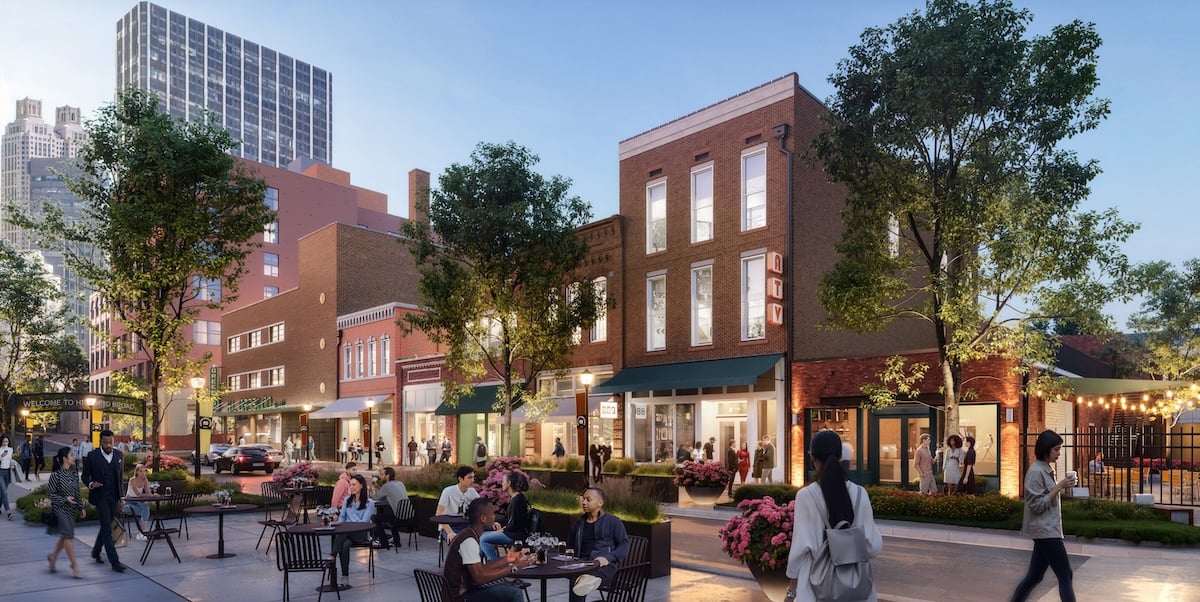
Resilient locations offer more than housing — they offer convenience and lifestyle.
Key indicators include:
-
Walkability
-
Parks and green space
-
Retail and dining options
-
Healthcare access
-
Community gathering spaces
Neighborhoods near lifestyle anchors such as Piedmont Park often maintain demand because quality of life remains attractive regardless of market conditions.
Lifestyle value is long-term value.
5️⃣ High Owner-Occupancy Rates
Communities with strong owner presence tend to be more stable.
Homeowners are less likely to:
-
Panic sell during temporary downturns
-
Aggressively discount
-
Exit based on short-term rate changes
Investor-heavy areas may rise quickly during hot markets — but can also decline faster when conditions tighten.
Owner stability reduces volatility.
6️⃣ Broad Buyer Appeal
Resilient locations attract multiple buyer types:
-
Young professionals
-
Growing families
-
Downsizers
-
Relocating executives
If demand relies on a narrow luxury niche or speculative investor activity, volatility increases.
The deeper and broader the buyer pool, the stronger the resilience.
7️⃣ Historical Performance Patterns
Past behavior often reveals structural strength.
Research:
-
How did the area perform during previous downturns?
-
Did prices decline sharply or moderately?
-
How quickly did sales activity recover?
Communities that consistently show smaller declines and faster recoveries are usually built on solid fundamentals.
Resilience leaves a pattern.
8️⃣ Market Perception & Reputation
Confidence matters.
When buyers believe:
-
“This neighborhood holds value.”
-
“Homes here always sell.”
-
“This is a safe long-term bet.”
… recovery accelerates.
Reputation compounds over time — reinforcing stability.
The Core Principle
Resilient real estate locations are defined by:
-
Structural demand
-
Supply limitations
-
Economic diversity
-
School quality
-
Lifestyle appeal
-
Stable ownership
-
Broad buyer pools
These are foundational characteristics — not temporary advantages.
When markets shift, trends fade.
Structure remains.
Final Thought
You can improve a property.
You can renovate a kitchen.
You can update finishes.
But you cannot change the structural foundation of a location.
When evaluating real estate, don’t just ask:
“Is the market strong?”
Ask:
“Is this location built to endure when the market weakens?”
Because true resilience isn’t about riding the cycle.
It’s about surviving it — and recovering first.
--
Tina Jingru Sui 隋静儒
Associate Broker | Team Leader of TJS Team, Keller Williams
 Serving Metro Atlanta — Johns Creek, Alpharetta, Duluth, Suwanee, Buford, and beyond
 404-375-2120


 WeChat: tinasuirealty
 Follow me on Instagram / 小红书 / WeChat / Facebook