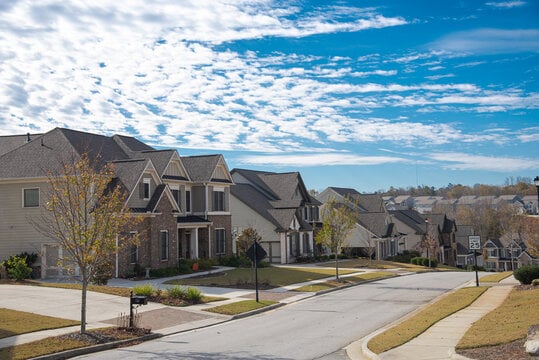
What Makes Atlanta Homes So Different Neighborhood to Neighborhood
At first glance, Atlanta’s housing market can look confusing. Two homes with similar prices, square footage, and finishes can feel completely different once you step inside—or once you live there. That’s because in Atlanta, neighborhood matters as much as the house itself, sometimes even more.
Understanding these differences is one of the biggest advantages of working with a truly local team.
Atlanta Isn’t One Market—It’s Many
Atlanta isn’t a single, uniform city. It’s a collection of distinct neighborhoods, suburbs, and communities, each shaped by different histories, development patterns, and lifestyles.
A home in Midtown, Alpharetta, Duluth, East Cobb, or Grant Park may share similar specs, but daily life in each area can feel worlds apart. Commute patterns, school zoning, walkability, and even weekend routines change dramatically from one neighborhood to another.
Layouts Reflect How Areas Developed
Many Atlanta neighborhoods grew at different times—and it shows in the homes.
-
Older intown areas often feature charming layouts, mature trees, and walkable streets, but may come with smaller rooms or older infrastructure.
-
Suburban communities built later tend to offer open layouts, larger lots, and newer systems, but may require longer drives for daily errands.
-
Some neighborhoods prioritize privacy and space, while others are designed around community interaction and convenience.
These differences affect not just aesthetics, but how easily a home supports everyday life.
Schools, Zoning, and Micro-Markets
In Atlanta, school districts can change from one street to the next—and those boundaries strongly influence demand, pricing, and resale value. Two nearly identical homes may sit minutes apart yet belong to completely different school clusters, creating very different buyer pools.
Beyond schools, zoning rules, HOA structures, and future development plans vary widely. A neighborhood poised for growth feels different from one that’s already fully built out—and that impacts both lifestyle and long-term value.
Commute and Traffic Patterns Shape Daily Life
Atlanta traffic is not evenly distributed. A home that looks convenient on a map may feel exhausting in practice, depending on commute direction and time of day.
Some neighborhoods offer easy access to major job centers, while others add hidden stress through bottlenecks, limited routes, or long peak-hour delays. These factors rarely show up in listings—but they dramatically affect how a home feels over time.
Community Vibe Can’t Be Measured on Paper
Beyond layout and logistics, each Atlanta neighborhood carries its own rhythm.
Some areas are lively and social, with parks, restaurants, and events nearby. Others are quiet, private, and residential. Neither is better—what matters is alignment with your lifestyle.
Buyers who choose based only on price or appearance often realize later that the neighborhood’s pace doesn’t match how they actually live.
Why Local Insight Matters
Online listings can tell you what a home has—but not how it feels to live there. They don’t explain school nuances, traffic realities, noise patterns, or how neighborhoods evolve over time.
This is where local experience makes the difference. Knowing Atlanta means understanding not just homes, but how people live inside them.
Final Thoughts
Atlanta homes differ so much neighborhood to neighborhood because Atlanta itself is layered, diverse, and constantly evolving. Two similar houses can offer completely different lives depending on where they’re located.
The smartest buyers don’t just ask, “Is this a good house?”
They ask, “Is this the right neighborhood for how I live?”
That’s where real value—and real satisfaction—comes from.
--
Tina Jingru Sui 隋静儒
Associate Broker | Team Leader of TJS Team, Keller Williams
 Serving Metro Atlanta — Johns Creek, Alpharetta, Duluth, Suwanee, Buford, and beyond
 404-375-2120


 WeChat: tinasuirealty
 Follow me on Instagram / 小红书 / WeChat / Facebook