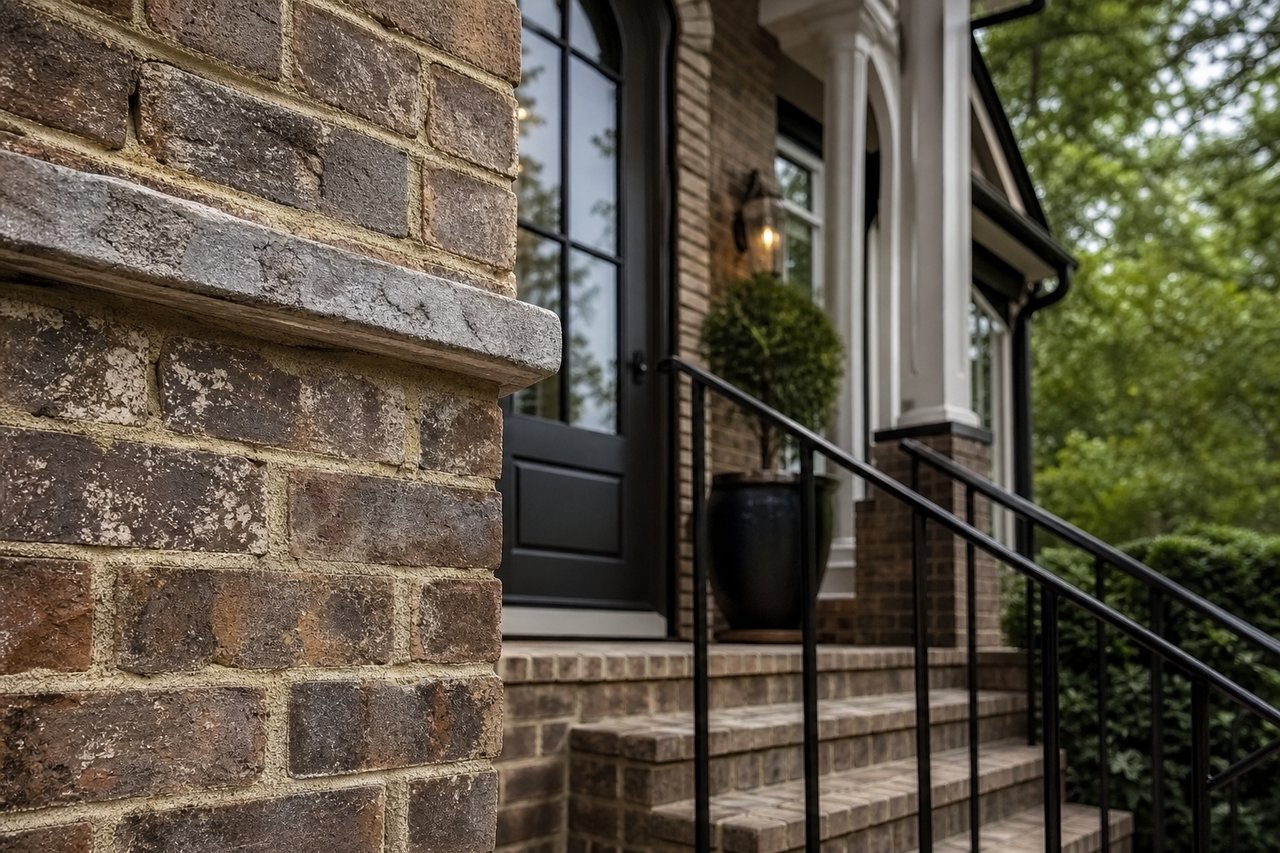
A major renovation can absolutely make a home more attractive—but Sellers should be careful about assuming that every renovation dollar comes back through the sale price. A Buyer does not know what the renovation cost you. The Buyer is asking a different question: “How much more is this home worth to me compared with the alternatives I can buy today?”
What Should Sellers Know About Pricing a Home After a Major Renovation?
The renovation budget explains what you invested. The market determines how much of that investment translates into value.
Watch: Pricing a Home After a Major Renovation
If the video does not display in your browser, watch it on YouTube here.
Renovation Cost
Is an
Input.
Market Value
Is an
Outcome.
Use the Renovation Value Translation Test
Supported Renovated Value
=
Baseline Market Value
+
Buyer-Visible Functional Improvement
+
Condition Confidence
+
Competitive Advantage
−
Over-Improvement
−
Buyer Preference Mismatch
−
Remaining Deferred Capital Items
The Most Important Question:
“How Much of What I Spent Actually Changed What a Buyer Is Willing to Pay?”
1. Start With the Home's Value Before the Renovation
Before asking:
“How much did the renovation add?”
first estimate:
“What would this property reasonably have been worth without the renovation?”
That gives you a baseline.
For example:
Assume an unrenovated version of the home might reasonably have competed around:
$650,000.
Seller then spends:
$100,000.
That does not automatically create:
$750,000 of market value.
The market still has to decide how much premium the finished property deserves.
You cannot measure renovation value until you first understand the property's unrenovated market position.
2. Compare With Renovated Comps—not Just Any Nearby Sale
A renovated home should not automatically be compared only with the closest sales.
You need to understand:
- Which comps have similar condition.
- Which have comparable renovation quality.
- Which have similar layout and usable space.
- Which have similar lot characteristics.
- Which have similar location and road position.
- Which compete for the same Buyer.
If a nearby home sold for $700,000 but had:
an original kitchen,
older bathrooms,
and outdated flooring,
your renovation may justify a premium.
But the next question is:
How much premium does the market actually support?
3. Renovation Cost and Buyer Value Are Two Different Numbers
Seller may spend:
$60,000
on a kitchen renovation.
But Buyer may only perceive:
$30,000–$40,000
of additional value compared with the alternatives.
Or Buyer may perceive more.
It depends on:
- The original condition.
- The quality of the renovation.
- How much comparable inventory is available.
- Whether Buyers value that particular improvement.
- Whether the renovation solved a functional problem.
Seller Measures
Cost.
Buyer Measures
Utility + Comparison + Emotion.
4. Functional Improvements Usually Translate Better Than Purely Personal Upgrades
Consider two renovations.
Renovation A:
- Improves the kitchen layout.
- Adds storage.
- Improves lighting.
- Creates better connection to living space.
Renovation B:
- Uses extremely expensive custom finishes.
- Reflects a highly personal design style.
- Does not materially improve functionality.
Both may have cost the same amount.
But Buyers may respond very differently.
The market usually rewards improvements that Buyers can immediately understand and use more consistently than improvements whose value depends heavily on personal taste.
5. Quality of Work Matters
“Renovated” is not a quality standard.
Buyers may notice:
- Uneven flooring.
- Poor cabinet installation.
- Sloppy paint work.
- Cheap fixtures in an otherwise high-end renovation.
- Unusual material choices.
- Visible shortcuts.
A renovation can look impressive in photography but lose credibility during the showing.
High-quality work can increase Buyer confidence.
Poorly executed work can create:
an uncertainty discount.
A Renovation Should
Reduce Buyer Questions—
Not Create
New Ones.
6. Keep Records, Receipts, Permits, and Warranties When Available
Documentation can help Buyers understand what was actually done.
Useful records may include:
- Contractor invoices.
- Receipts.
- Permits where required and applicable.
- Product warranties.
- Appliance information.
- Roof or HVAC documentation.
- Before-and-after information.
Documentation does not automatically increase value.
But it can reduce uncertainty.
That can matter when Buyers are comparing:
a documented renovation versus one they cannot easily understand or verify.
7. A New Kitchen Does Not Cancel an Old Roof
This is one of the biggest pricing mistakes after renovation.
Seller spends heavily on:
- Kitchen.
- Bathrooms.
- Flooring.
- Lighting.
But the property still has:
- An aging roof.
- Older HVAC systems.
- An old water heater.
- Deferred exterior maintenance.
Buyers evaluate:
the entire ownership package.
They may love the kitchen and still reserve money for the systems they expect to address later.
Renovation premium can be reduced when Buyers still see significant future capital obligations elsewhere in the property.
8. Ask Whether You Have Over-Improved for the Competitive Set
Suppose most competing homes in a neighborhood sell between:
$550,000 and $650,000.
Seller installs:
- Ultra-premium cabinetry.
- Designer imported tile.
- Commercial-grade appliances.
- Luxury finishes more typical of a much higher price point.
Those finishes may be beautiful.
But Buyers shopping that neighborhood may not fully compensate Seller for the additional cost.
This is the:
Over-Improvement Gap.
Luxury Cost
Does Not Automatically Create
Luxury Market Value.
9. The Renovation Should Be Compared With Today's Competition
Suppose Seller renovated two years ago.
At that time, the home may have looked dramatically better than the available competition.
But today:
- Several newly renovated homes may be listed.
- New construction may compete nearby.
- Buyer preferences may have shifted.
- Inventory may be higher.
Pricing happens:
today.
Not when the renovation was completed.
Your renovation should be measured against the homes Buyers can choose from now—not against the house you owned before the project started.
10. Think in Terms of “Renovation Premium,” Not “Renovation Reimbursement”
A useful mindset shift is:
Seller is not asking the next Buyer to reimburse the renovation.
Seller is asking the market to pay:
a premium for owning the improved version of the property.
Those are different concepts.
If Seller spent:
$120,000,
but Buyers consistently see only:
$70,000 of additional relative value,
Seller cannot force the market to reimburse the remaining $50,000 simply because the money was spent.
Don't Ask:
“How Do I Get My Renovation Money Back?”
Ask:
“What Premium Does the Market Support for the Finished Property?”
11. Distinguish Cosmetic Renovation From Functional Transformation
Renovation Type | Buyer Question | Pricing Relevance |
|---|---|---|
Cosmetic Refresh | Does the home feel newer and easier to move into? | Can improve presentation and perceived condition |
Functional Renovation | Did the renovation improve how the home actually works? | Potentially meaningful when Buyers recognize the improvement |
Major-System Replacement | Did this reduce near-term ownership risk? | Can reduce Buyer capital-reserve concerns |
Luxury Personalization | Does the Buyer value this finish enough to pay for it? | May have weaker cost-to-value translation |
Layout Transformation | Did this solve a meaningful functional limitation? | Can materially affect Buyer perception when well executed |
12. Renovation Premium Should Be Supported by Buyer Comparison
Suppose:
Comp A sold at:
$690,000
and is substantially less updated.
Comp B sold at:
$730,000
and is renovated similarly.
Your property may reasonably compete closer to B.
But if your home also has:
- A busier road.
- Smaller lot.
- Older roof.
- Less usable basement.
you cannot isolate the renovation and ignore everything else.
Pricing must still answer:
“Compared with the whole property, how much premium remains?”
13. Beware of Cost Anchoring
Seller says:
“We paid $80,000 for the renovation, so we need at least $80,000 more.”
That is understandable emotionally.
But it can create:
Cost Anchoring.
Seller begins pricing from:
what was spent,
instead of:
what the competitive market supports today.
The market does not see your invoices first. It sees the finished home beside every competing property.
14. Use the “Before / After / Competition” Test
Question | What You Are Measuring |
|---|---|
Before | What would the property likely compete for without the renovation? |
After | What materially improved in function, condition, presentation, or ownership risk? |
Competition | What can today's Buyer purchase instead at the proposed list price? |
Before
+
After
+
Competition
=
A Much Better Renovation Pricing Conversation.
15. Price the Whole House—not the Renovation
The renovated kitchen may be the most visually impressive part of the home.
But Buyers still evaluate:
- Location.
- Lot.
- Road position.
- Floor plan.
- Square footage.
- Roof.
- HVAC.
- Windows.
- Exterior condition.
- Basement.
- HOA.
- Taxes.
- Current competition.
The renovation is:
one component of the value story.
It is not the entire value story.
The Renovation Value Translation Matrix
Factor | What Seller Should Evaluate | Pricing Question |
|---|---|---|
Baseline Value | Unrenovated market position | What would this home likely compete for without the improvement? |
Functional Improvement | Layout, usability, storage, flow | Did the renovation make the property materially better to live in? |
Quality | Workmanship and consistency | Does the finish quality support the target price? |
Documentation | Permits, invoices, warranties where applicable | Can Buyer understand what was actually completed? |
Remaining Systems | Roof, HVAC, water heater, exterior | What future ownership costs still remain? |
Market Fit | Buyer preferences and competition | Will today's Buyer pay for these specific improvements? |
Over-Improvement Risk | Cost beyond competitive set | Did Seller spend beyond what this market normally rewards? |
80-Point Renovation Value Scorecard
Category | Score | Seller Question |
|---|---|---|
Comparable-Sale Support | ___ / 15 | Do renovated comps support a premium? |
Functional Improvement | ___ / 15 | Did the renovation materially improve the home? |
Quality / Workmanship | ___ / 10 | Will Buyers see quality or shortcuts? |
Buyer Appeal | ___ / 10 | Are these improvements broadly understandable to likely Buyers? |
Condition Confidence | ___ / 10 | Does the renovation reduce Buyer concern about immediate work? |
Remaining Capital Burden | ___ / 10 | What major systems still create future Buyer reserve needs? |
Competitive Position | ___ / 10 | How does the renovated home compare with today's alternatives? |
Total | ___ / 80 | This helps evaluate pricing support; it does not determine appraised or market value. |
25 Questions Before Pricing a Renovated Home
☐ 1. What would this home likely have been worth without the renovation?
☐ 2. Which recent sales are renovated to a similar level?
☐ 3. Which comps are truly competing for the same Buyer?
☐ 4. Did the renovation improve function or mainly appearance?
☐ 5. Did the floor plan improve?
☐ 6. Did storage or usable space improve?
☐ 7. How strong is the workmanship?
☐ 8. Are the materials consistent with the target price point?
☐ 9. Are there highly personal design choices?
☐ 10. Do we have receipts and invoices?
☐ 11. Were permits required and, if so, are appropriate records available?
☐ 12. Are warranties available?
☐ 13. What is the roof age and condition?
☐ 14. What is the HVAC age and condition?
☐ 15. Are there other major systems Buyers may still budget for?
☐ 16. Did Seller over-improve relative to the competitive set?
☐ 17. What renovated homes are currently active?
☐ 18. What new-construction alternatives compete at the same price?
☐ 19. Does the property's location support the target premium?
☐ 20. Does the lot support the target premium?
☐ 21. Are there permanent location objections the renovation cannot fix?
☐ 22. How much premium do Buyers appear to pay for similar renovated homes?
☐ 23. Are we pricing from market evidence or from renovation cost?
☐ 24. What would make a Buyer choose this home over another renovated property?
☐ 25. How much of what I spent actually changed what a Buyer is willing to pay?
Frequently Asked Questions
Does a $100,000 renovation add $100,000 to home value?
Not automatically. Renovation cost and market value are different concepts. The added value depends on the property's original condition, renovation quality, functionality, comparable sales, current competition, location, and Buyer demand.
Should I price my home based on renovation receipts?
No. Receipts can document what was spent and what work was completed, but pricing should be based primarily on current market evidence and how the finished property compares with relevant alternatives.
Do renovated homes always sell for more?
Not necessarily. Renovation can improve Buyer appeal and may support a premium, but the amount depends on the whole property and the competitive market.
Does a new kitchen increase value more than a new roof?
They affect Buyer perception differently. A kitchen may improve visual and functional appeal, while a newer roof may reduce near-term ownership risk. The market does not assign one universal dollar-for-dollar adjustment to either improvement.
Can a home be over-renovated?
Yes. A Seller can spend more on finishes and improvements than Buyers in that competitive market are willing to compensate for. This is especially important when the renovation level is far above surrounding alternatives.
Do permits matter when selling a renovated home?
They may. Requirements depend on the type of work and applicable local rules. Sellers should retain available permits, approvals, invoices, warranties, and contractor information and consult the appropriate local authority or professional when questions arise.
Should I renovate more before listing?
Not automatically. Additional spending should be evaluated based on what problem it solves for the Buyer, how it improves the home's competitive position, and whether the expected benefit justifies the cost and time.
What if the renovation is very high-end?
High-end finishes can support a premium when the location, property type, quality, and Buyer pool support that level of investment. Expensive materials alone do not guarantee an equivalent increase in market value.
What matters most when pricing after renovation?
Start with relevant comparable sales and current competition, then evaluate the renovation's functional improvement, workmanship, Buyer appeal, documentation, remaining major systems, and whether the renovation created a genuine competitive advantage.
Don't Price
the Renovation.
Price
the Finished Property in Today's Market.
Final Thoughts: The Market Pays for the Result—not the Receipt
A major renovation can absolutely make a home:
more attractive,
more functional,
more competitive,
and easier for Buyers to understand.
But Seller should not begin with:
“I spent $100,000, so the house is worth $100,000 more.”
Instead ask:
What was the baseline value?
What did the renovation materially improve?
What do renovated comps show?
What does current competition look like?
What major systems still remain?
Did we over-improve?
And what premium will Buyers actually recognize?
That produces a much stronger pricing strategy.
The Seller paid for the renovation.
But the Buyer decides how much additional value the finished result creates in the current market.
Renovated Your Metro Atlanta Home and Thinking About Selling?
Before setting the listing price, we can compare relevant renovated and unrenovated sales, current competition, renovation quality, major-system condition, property-specific advantages, lot and location differences, Buyer objections, and the premium today's market appears willing to pay. The goal is not to discount the renovation—but to translate the renovation into a price the market can support.
Tina Jingru Sui | TJS Team
Call or Text: (404) 375-2120
Email: [email protected]
Visit TinaSui.com
About Tina Jingru Sui
Tina Jingru Sui is the founder and leader of the TJS Team, serving home sellers, buyers, investors, new-construction buyers, and relocation clients throughout Metro Atlanta.
Tina and her team serve Atlanta, Johns Creek, Alpharetta, Suwanee, Duluth, Buford, Dacula, Sandy Springs, Roswell, Marietta, Smyrna, Peachtree Corners, and surrounding Metro Atlanta communities.
Keller Williams Realty Atlanta Partners · (404) 375-2120
This article is provided for general real estate education and information only and does not constitute legal, financial, tax, appraisal, construction, engineering, permitting, inspection, investment, accounting, brokerage-contract interpretation, or other professional advice. The Renovation Value Translation Test, scorecard, formulas, examples, matrices, and related frameworks are educational tools only and do not determine market value, appraisal value, sale price, renovation return, days on market, Buyer demand, or Seller net proceeds. Renovation cost does not equal market value, and no renovation is guaranteed to produce a dollar-for-dollar increase in sale price. Comparable Market Analysis is not an appraisal. Relevant comparable sales should be evaluated based on location, property type, size, condition, renovation quality, lot, layout, market timing, and other property-specific characteristics. System age does not by itself establish a defect, immediate replacement need, or remaining useful life. Permitting requirements vary by jurisdiction and type of work; Sellers should consult appropriate local authorities or qualified professionals when permit, code, or approval questions arise. Receipts, permits, warranties, and contractor records can provide useful information but do not guarantee workmanship or market value. Buyer preferences differ, and expensive or highly personalized improvements may not produce equal value for every Buyer. Current market competition, inventory, Buyer demand, interest rates, new construction, and other conditions can change. Real estate professionals can assist with comparable sales, pricing strategy, property positioning, market analysis, listing preparation, and transaction strategy but do not replace appraisers, inspectors, engineers, contractors, attorneys, CPAs, permitting authorities, or other qualified specialists. Equal Housing Opportunity. Tina Jingru Sui, GA License #392936, REALTOR®, affiliated with Keller Williams Realty Atlanta Partners.