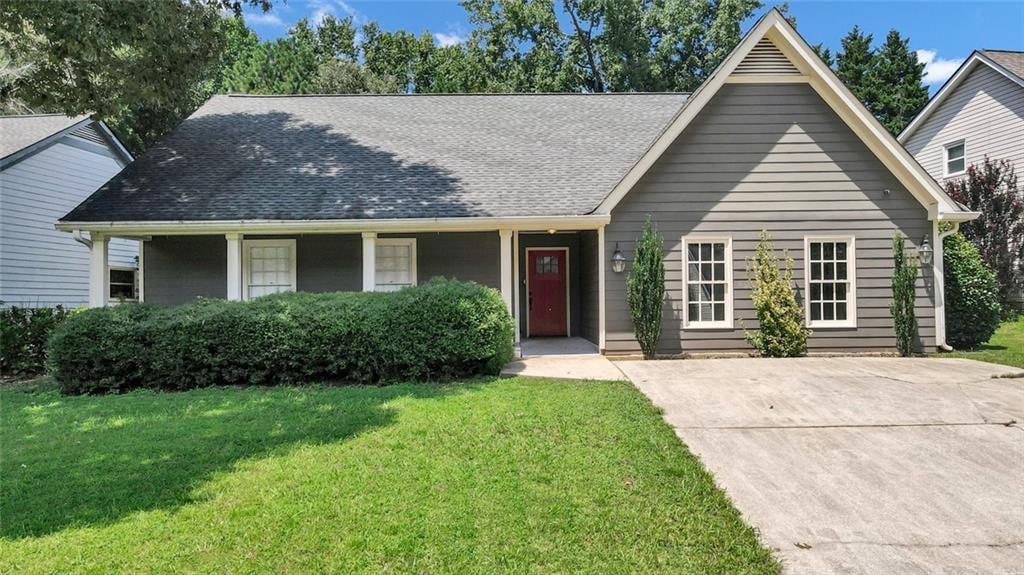
Johns Creek can be a strong place to own real estate without automatically being a strong place to buy every investment property. In 2026, buyers are entering a premium-priced submarket with more inventory, slower price momentum, and more negotiating room than the frenzy years—but they are also paying substantially more for entry than in many surrounding Metro Atlanta suburbs. That makes Johns Creek less of a “buy anything and wait” market and more of an underwriting market: your purchase price, hold period, rent, renovation burden, and exit strategy need to make sense before appreciation enters the conversation.
What the 2026 Johns Creek Market Means for Investment Property Buyers
The question is not whether Johns Creek is a “good market.” The question is whether its return profile matches the way you expect this investment to make money.
The Johns Creek Investment Snapshot Going Into Fall 2026
Current public market data paints a much more nuanced picture than simply calling Johns Creek “hot” or “slow.”
Metric | 2026 Snapshot | Investor Meaning |
|---|---|---|
Zillow Typical Home Value | Approximately $704,500 | High capital requirement relative to many surrounding suburbs |
Zillow 1-Year Value Change | Approximately +0.5% | Do not rely on rapid near-term appreciation to rescue weak cash flow |
Zillow Median Sale Price | Approximately $732,667 for June 2026 | Premium acquisition basis remains a major underwriting issue |
Sales Below List | Approximately 54.7% | Investors should negotiate instead of automatically paying asking price |
Zillow Days to Pending | Approximately 29 days | More decision time than the frenzy market, but attractive inventory can still move |
Realtor.com Median Listing Price | Approximately $730,000 in August 2026, down about 7% YoY | Seller expectations have softened from prior-year levels |
Realtor.com Active Listings | Approximately 361, up about 35% YoY | More buyer choice creates greater selectivity |
Zillow Average Rent | Approximately $2,618/month | Rent needs to be compared carefully against a $700K+ acquisition environment |
Market sources use different reporting periods and methodologies. Zillow and Realtor.com figures should not be treated as interchangeable measurements of the same exact transaction set. Data above reflects information available as of September 9, 2026.
Don't Search for
One Perfect
“Johns Creek Price.”
Use the Data to Understand
Price Level + Direction + Negotiating Environment.
1. Different Market Sources Can Show Different Prices Without Either One Being “Wrong”
This is important for investors.
Zillow's June 2026 Johns Creek data reports a median sale price above $730,000.
Realtor.com's August 2026 market data reports a lower median sold figure.
Resideline's six-month sample of 417 closings also places its median around $732,000.
Those numbers should not simply be averaged together.
They cover:
- Different time periods.
- Different datasets.
- Different methodologies.
An investor should use them for direction and context—and then underwrite the specific property using the most relevant nearby sales and rental evidence.
A market median tells you where the market is. It does not tell you what your specific investment property is worth.
Use the Johns Creek Investment Fit Test
Before deciding whether Johns Creek belongs in your portfolio, identify which return engine you are actually buying.
Investment Strategy | Johns Creek Fit | Primary Underwriting Question |
|---|---|---|
Long-Term Appreciation Hold | Potentially Strong Fit | Can I comfortably carry this asset long enough for the thesis to work? |
Cash-Flow-First Rental | More Challenging | Does realistic rent support this acquisition basis after all expenses? |
Value-Add Rental | Property-Specific | Can I buy below stabilized value and make improvements the rental / resale market actually rewards? |
Short-Term Flip | Highly Basis-Sensitive | Is the discount large enough to absorb rehab, financing, carrying cost and resale uncertainty? |
Capital-Preservation / Quality Hold | Potentially Attractive | Am I willing to accept lower initial yield for a premium ownership profile? |
Don't Ask Only:
“Is Johns Creek a Good Investment Market?”
Ask:
“What Type of Return Is Johns Creek Most Likely to Reward at My Entry Price?”
2. Johns Creek Makes More Sense When Appreciation Is Part of the Thesis—but Not the Rescue Plan
The long-run Fulton County housing record is meaningful.
The FHFA All-Transactions House Price Index for Fulton County reached approximately:
264.33 in 2025, using 2000 = 100.
That demonstrates substantial county-level appreciation over the long run.
But there are two very important caveats.
First:
Fulton County is not Johns Creek.
A county-wide index should not be presented as though it measures the performance of one city, neighborhood, or investment property.
Second:
historical appreciation does not guarantee future appreciation.
That matters even more in 2026 because Zillow's Johns Creek typical home value is up only around 0.5% over the prior year.
Appreciation can strengthen a good investment. It should not be used to justify a bad operating investment.
The Hold-Period Test
Before buying, ask:
“If this property's value barely changes for the next three years, am I still comfortable owning it?”
If the answer is no, your underwriting may be depending too heavily on appreciation.
3. Cash-Flow Investors Need to Be Especially Disciplined
Johns Creek's challenge for cash-flow investors is straightforward:
the homes are expensive relative to the amount of rent many properties can produce.
Zillow's late-July 2026 data puts:
typical home value around:
$704,500
and average rent around:
$2,618/month.
Those citywide numbers do not underwrite a specific rental.
But they illustrate the basic challenge:
at a premium acquisition basis, the deal has less room for:
- Mortgage cost.
- Property taxes.
- Insurance.
- HOA.
- Vacancy.
- Management.
- Repairs.
- Capital expenditures.
High Rent
Does Not Automatically Mean
High Yield.
Yield Depends on
Rent Relative to the Total Cost of Owning the Asset.
Underwrite the Property—not the Johns Creek Name
For a long-term rental, I would want to see:
☐ Actual achievable market rent
☐ Property taxes
☐ Insurance
☐ HOA dues
☐ HOA rental restrictions
☐ Vacancy assumption
☐ Property-management expense
☐ Routine maintenance
☐ Capital-expenditure reserve
☐ Financing cost
☐ Immediate renovation requirement
☐ Realistic exit costs
4. The Best 2026 Opportunity May Be the Entry Basis—not a Market Boom
This is where the current market becomes more interesting.
Zillow reports that approximately:
54.7% of Johns Creek sales were below list price
in its June 2026 data.
Realtor.com's August market data also shows significantly more active inventory than a year earlier and a median listing price approximately 7% below the prior year.
That does not mean every Seller is desperate.
It does mean investors should stop approaching Johns Creek as though every property requires:
“full price or lose it.”
In a Slower Market,
Your Return Can Be Created
Before Closing
Through
Entry-Price Discipline.
Investor negotiating opportunities can go beyond Purchase Price.
Depending on the property and transaction, that may include:
- Seller closing-cost credits.
- Repair credits.
- Price reductions.
- Closing-date flexibility.
- Other negotiated economic terms.
The goal is not to negotiate for the sake of winning.
The goal is:
to create enough margin at acquisition for the investment thesis to survive imperfect future conditions.
5. I Would Not Simply Call Johns Creek a “Buyer's Market”
Market labels can hide important detail.
As of August 2026, Realtor.com characterizes Johns Creek citywide as a:
balanced market.
At the same time:
- Active inventory is materially higher year over year.
- Median listing price is lower year over year.
- A majority of Zillow-recorded June sales closed below list price.
For investors, that is more useful than the label.
You don't need the entire market to be a buyer's market. You need the specific Seller and property to create enough negotiating room for your numbers to work.
6. Older Housing Stock Can Create Opportunity—but Also Capital Risk
A meaningful portion of Johns Creek housing was built decades ago.
That can create value-add opportunities.
But investors should distinguish:
cosmetic datedness
from:
capital-system aging.
A property may need:
- Paint.
- Flooring.
- Lighting.
- Kitchen or bathroom updates.
Those are one type of project.
A different property may also have:
- Older HVAC systems.
- Older roof.
- Aging water heater.
- Plumbing concerns.
- Drainage or moisture issues.
- Deferred exterior maintenance.
“Dated”
Can Create
Value-Add Opportunity.
Deferred Capital Items
Can Create
a Capital Call.
Before buying the renovation story, ask:
“Am I buying a house that needs updating—or a house that needs updating plus $40,000 of systems over the next few years?”
7. Renovation Should Improve Rentability or Exit Value—not Just Make the House Prettier
An investor renovation needs a different standard from an owner-occupant renovation.
Ask:
- Will this increase achievable rent?
- Will it reduce vacancy?
- Will it broaden the future buyer pool?
- Will it reduce maintenance?
- Will the market actually recognize the improvement at resale?
A $60,000 renovation does not automatically create:
$60,000 of value.
Investor renovation should solve an income, maintenance, marketability, or exit problem—not simply satisfy your personal design preference.
8. Never Underwrite Rent From a Citywide Average Alone
Zillow's citywide rental figure is useful for market context.
But an investor needs property-level rent evidence.
Two Johns Creek homes can have dramatically different rental performance because of:
- Square footage.
- Bedroom count.
- Condition.
- Garage.
- Lot.
- Neighborhood.
- HOA restrictions.
- Age and finish level.
- Tenant-paid vs. owner-paid expenses.
Don't Underwrite
the
City.
Underwrite
the
Specific House.
9. HOA Rental Restrictions Can Change an Investment Before the Tenant Ever Moves In
Johns Creek contains many established HOA communities.
For an investor, HOA due diligence should not stop at:
“How much are the dues?”
Review the current association documents for:
- Rental caps.
- Lease minimums.
- Waiting periods.
- Tenant registration requirements.
- Use restrictions.
- Approval requirements.
- Assessment or capital obligations.
A house can have excellent rental comps and still be a poor rental investment if the association does not allow you to execute the strategy.
10. New Supply Matters—but Use the Correct Geography
FRED's building-permit series reports:
9,660 new private housing units authorized in Fulton County in 2025.
That is a Fulton County figure—not an Atlanta-metro total.
For an investor, broader new supply matters because newer housing can compete for:
- Tenants.
- Future buyers.
- Convenience-oriented consumers who prefer lower-maintenance homes.
But again, a county permit number does not tell you the competitive supply within one Johns Creek neighborhood.
The practical question is:
“What new or renovated property will my future tenant or buyer compare against this house?”
Future Competition
Is Not Just
the House Next Door.
It Can Be
the Newer Alternative Nearby.
11. I Would Be More Selective With Short-Term Flips Than Long-Term Holds
A flip depends heavily on:
Entry Price + Rehab Accuracy + Carrying Time + Resale Price.
Johns Creek's high acquisition cost means small underwriting mistakes become expensive.
If the project requires:
- A high purchase price.
- Significant renovation.
- Expensive financing.
- Several months of carrying cost.
- An aggressive resale price.
then the deal may contain too many assumptions stacked on top of each other.
A flip should make money because you bought and executed well—not because you assume the market will be higher six months from now.
12. “Below List” Is Not the Same Thing as “Below Value”
A Seller originally lists at:
$800,000.
After reductions, an investor buys for:
$720,000.
It is tempting to say:
“I bought it $80,000 below asking.”
But if the relevant market supports:
$710,000–$725,000,
you did not necessarily buy an $80,000 discount.
Discount From
Old Asking Price
≠
Discount From Market Value.
13. Underwrite the Exit Before You Buy
Before closing, ask:
“Who is likely to buy this property from me later?”
Potential exit buyers may include:
- Another investor.
- An owner-occupant.
- A buyer prioritizing an established community.
- A buyer comparing older homes with newer nearby inventory.
The strongest investment usually preserves more than one reasonable exit.
Investor flexibility improves when the house can appeal to both the future tenant and the future owner-occupant.
14. Use the Five-Year Stress Test
Before purchasing, run the investment through a less exciting future.
Assume:
☐ Appreciation is slower than hoped.
☐ Rent growth is modest.
☐ One HVAC system needs replacement.
☐ Property taxes increase.
☐ Insurance gets more expensive.
☐ You experience vacancy.
☐ The home needs another round of cosmetic updating before resale.
☐ Selling costs are higher than expected.
Then ask:
“Do I Still Want to Own This Property if the Next Five Years Are Good—but Not Amazing?”
The 100-Point Johns Creek Investment Fit Scorecard
Category | Score | Investor Question |
|---|---|---|
Entry Basis | ___ / 20 | Am I buying at a price supported by property-specific market evidence? |
Rental Economics | ___ / 20 | Does realistic rent support realistic ownership expenses? |
Capital Expenditure Risk | ___ / 15 | What major systems may require money during my hold? |
Value-Add Opportunity | ___ / 10 | Will my improvements actually improve income, maintenance or exit value? |
Hold-Period Fit | ___ / 10 | Can I hold this long enough without being forced to sell? |
HOA / Rental Flexibility | ___ / 10 | Does the association allow my intended strategy? |
Exit Flexibility | ___ / 10 | Will this property appeal to more than one future buyer type? |
Dependence on Appreciation | ___ / 5 | Would the investment still make sense with weak near-term appreciation? |
Total | ___ / 100 | This measures investment fit—not guaranteed return. |
30 Questions Before Buying a Johns Creek Investment Property
☐ 1. What is my primary return goal: cash flow, appreciation, value-add, or capital preservation?
☐ 2. What do the most relevant recent sold comps support?
☐ 3. Am I receiving a real discount—or only a discount from an unrealistic asking price?
☐ 4. What is realistic current market rent for this exact property?
☐ 5. What active rentals compete with it?
☐ 6. How long are comparable rentals taking to lease?
☐ 7. What tenant-paid and owner-paid expenses apply?
☐ 8. What are the annual property taxes?
☐ 9. What will insurance realistically cost?
☐ 10. What are the HOA dues?
☐ 11. Does the HOA restrict rentals?
☐ 12. Is there a rental cap or waiting list?
☐ 13. How old is the roof?
☐ 14. How old are the HVAC systems?
☐ 15. How old is the water heater?
☐ 16. Are there plumbing, drainage, structural, or moisture concerns?
☐ 17. What immediate renovation is required before leasing?
☐ 18. Which renovations actually increase rent or future marketability?
☐ 19. What vacancy assumption am I using?
☐ 20. What maintenance reserve am I using?
☐ 21. What capital-expenditure reserve am I using?
☐ 22. What management cost am I using?
☐ 23. What financing cost am I using?
☐ 24. Does the investment still work if rent growth is slow?
☐ 25. Does it still work if appreciation is minimal for several years?
☐ 26. What new or renovated properties will compete with mine?
☐ 27. Who is my likely future buyer?
☐ 28. Can I comfortably hold the property through a slower market?
☐ 29. Am I depending on appreciation to compensate for weak operating numbers?
☐ 30. If the next five years are good—but not amazing—do I still want to own this property?
The Question I Would Ask Before Buying in Johns Creek:
“If Appreciation Barely Helps Me for the Next Three to Five Years, Does This Deal Still Make Sense?”
Frequently Asked Questions
Is Johns Creek a buyer's market in fall 2026?
I would describe the environment more carefully. Realtor.com's August 2026 citywide data characterizes Johns Creek as balanced, but inventory is materially higher than a year earlier, listing prices are lower year over year, and Zillow reports that more than half of June sales closed below list. For investors, that suggests stronger negotiating conditions without assuming every Seller will be highly motivated.
Are Johns Creek prices falling?
The picture is mixed rather than a simple decline. Zillow's typical home value was still approximately 0.5% higher year over year through July 2026, while Realtor.com's August median listing price was about 7% lower year over year. Asking-price movement and home-value indexes measure different things, so investors should not treat them as contradictory or assume either one predicts the next year.
Is Johns Creek good for cash-flow rental properties?
It can work at the right acquisition basis, but the city's high home values create a more difficult starting point for cash-flow-first investors. Property-specific rent, taxes, insurance, HOA, financing, vacancy, management, maintenance and capital expenditures need to be modeled before purchase.
Is Johns Creek better for appreciation than cash flow?
For many properties, that may be the more natural investment thesis because acquisition prices are high relative to rents. However, future appreciation cannot be guaranteed, and the investment should ideally remain financially manageable even when appreciation is modest.
Should investors buy older homes in Johns Creek?
Older homes can create value-add opportunities, but investors should distinguish cosmetic improvements from major capital items. A property that needs flooring and paint is a different investment from one that also needs roof, HVAC, plumbing, drainage, or structural work.
Does the HOA matter if I plan to rent the house?
Absolutely. Current HOA documents should be reviewed for rental restrictions, caps, lease requirements, waiting periods, fees, assessments and other rules. Strong rent comps do not help if the association prevents the intended rental strategy.
Is buying below list price automatically a good deal?
No. The relevant question is whether you are buying below supportable market value—not how far the Seller has moved from an earlier asking price.
Does Fulton County's long-term appreciation guarantee Johns Creek will keep appreciating?
No. The Fulton County FHFA index provides useful historical context, but it is county-level data and does not guarantee future performance in Johns Creek or any specific property.
Is Johns Creek a good flip market in 2026?
Potentially for a sufficiently discounted and well-underwritten property, but high acquisition costs make short-term projects sensitive to rehab overruns, financing cost, carrying time and resale assumptions. I would require more margin than a strategy built primarily around continued market appreciation.
What is the most important question for a Johns Creek investor?
Ask: “If appreciation is slower than I hope, does the property's entry basis, operating performance, capital burden and exit flexibility still justify owning it?”
Johns Creek
Can Be
a Strong Place to Own.
That Does Not Mean
Every Johns Creek Property
Is
a Strong Investment to Buy.
Final Thoughts: In 2026, Johns Creek Rewards Selectivity More Than Speculation
The current Johns Creek market gives investors something they had much less of during the frenzy years:
choice.
More inventory.
More sales below asking price.
Slower price momentum.
More opportunity to inspect carefully and negotiate intelligently.
But Johns Creek still carries a premium acquisition basis.
That means the investment needs to earn its way into the portfolio.
I would evaluate:
Entry price.
Realistic rent.
HOA restrictions.
Taxes and insurance.
Capital-system age.
Renovation needs.
Financing cost.
Hold period.
Future competition.
And exit flexibility.
Then—and only then—would I add long-term appreciation potential to the thesis.
The best Johns Creek investment in 2026 is not necessarily the property with the biggest future appreciation story.
It is the property you can buy at the right basis, operate without relying on unrealistic assumptions, hold through an imperfect market, and eventually exit to more than one reasonable buyer.
Considering an Investment Property in Johns Creek?
Before making an offer, we can analyze the specific property rather than relying on a citywide headline. That includes relevant sold comps, realistic rental comps, current competition, HOA rental restrictions, property condition, likely capital expenditures, renovation strategy, estimated operating expenses, negotiating position, and potential resale buyer pool. The goal is to understand exactly how the property is expected to make money—and what would happen if the market performs more slowly than expected.
Tina Jingru Sui | TJS Team
Call or Text: (404) 375-2120
Email: [email protected]
Visit TinaSui.com
About Tina Jingru Sui
Tina Jingru Sui is the founder and leader of the TJS Team, serving buyers, sellers, investors, new-construction buyers, and relocation clients throughout Metro Atlanta.
Tina and her team work with investment and residential clients throughout Johns Creek, Alpharetta, Suwanee, Duluth, Buford, Atlanta, and surrounding communities across Fulton, Forsyth, Gwinnett, Cobb, and the broader Metro Atlanta area.
Keller Williams Realty Atlanta Partners · (404) 375-2120
Market Data Sources: Zillow Home Value Index and Johns Creek market data; Realtor.com Economic Research; Federal Reserve Bank of St. Louis / FHFA Fulton County House Price Index; Federal Reserve Bank of St. Louis / U.S. Census Bureau Fulton County building permits; Resideline Johns Creek closed-sale analysis. Data reflects different reporting periods and methodologies and should not be treated as one uniform dataset.
This article is provided for general real estate education and market information only and does not constitute investment, financial, tax, legal, lending, appraisal, accounting, property-management, insurance, construction, HOA, or other professional advice. The Johns Creek Investment Fit Test, 100-point scorecard, Five-Year Stress Test, investment-strategy classifications, examples, and related frameworks are educational tools only and do not predict investment returns, appreciation, rental income, occupancy, resale price, tax treatment, financing results, or future market performance. Market statistics cited in this article come from different sources, time periods, methodologies, and geographic levels and should not be treated as directly interchangeable. Zillow's Home Value Index is not the same metric as median sale price, listing price, appraisal value, or property-specific market value. Realtor.com listing and sold-price statistics may reflect different data periods and methodologies from Zillow and other sources. Resideline's Johns Creek sale analysis represents its reported dataset and should not replace property-specific MLS analysis. Fulton County FHFA House Price Index data is county-level historical information and does not represent or guarantee appreciation in Johns Creek, a particular neighborhood, or a specific property. Fulton County building-permit figures are county-level figures and should not be interpreted as Johns Creek or Atlanta-metro permit totals. Historical appreciation does not guarantee future appreciation. Citywide rental averages do not establish achievable rent for a specific property. Rental estimates should be supported by relevant current rental comparables and adjusted for property condition, size, location, features, restrictions, lease structure, and market conditions. Gross rent does not equal Net Operating Income or cash flow. Investment analysis should incorporate taxes, insurance, HOA, vacancy, maintenance, property management, utilities where owner-paid, financing, capital expenditures, renovation costs, leasing costs, closing costs, reserves, and other property-specific expenses. HOA rules and rental restrictions can change and should be verified from current governing documents and appropriate association sources. Property-system age alone does not establish that a system is defective or requires replacement, and all material property concerns should be evaluated by appropriate qualified professionals. Renovation spending does not guarantee an equal increase in rent or resale value. Buying below list price does not establish that a property was purchased below market value. A Comparative Market Analysis is not an appraisal. Investor returns depend materially on purchase price, financing, operating results, holding period, transaction costs, tax circumstances, future market conditions, and execution. Real estate professionals can assist with market analysis, comparable sales, rental analysis, transaction structure, property search, negotiations, due diligence coordination, and investment-property evaluation, but do not guarantee investment results and do not replace attorneys, CPAs, financial advisers, lenders, appraisers, inspectors, engineers, contractors, insurance professionals, property managers, or HOA counsel. Equal Housing Opportunity. Tina Jingru Sui, GA License #392936, REALTOR®, affiliated with Keller Williams Realty Atlanta Partners.