Why Not All Appreciation Is Created Equal in Real Estate
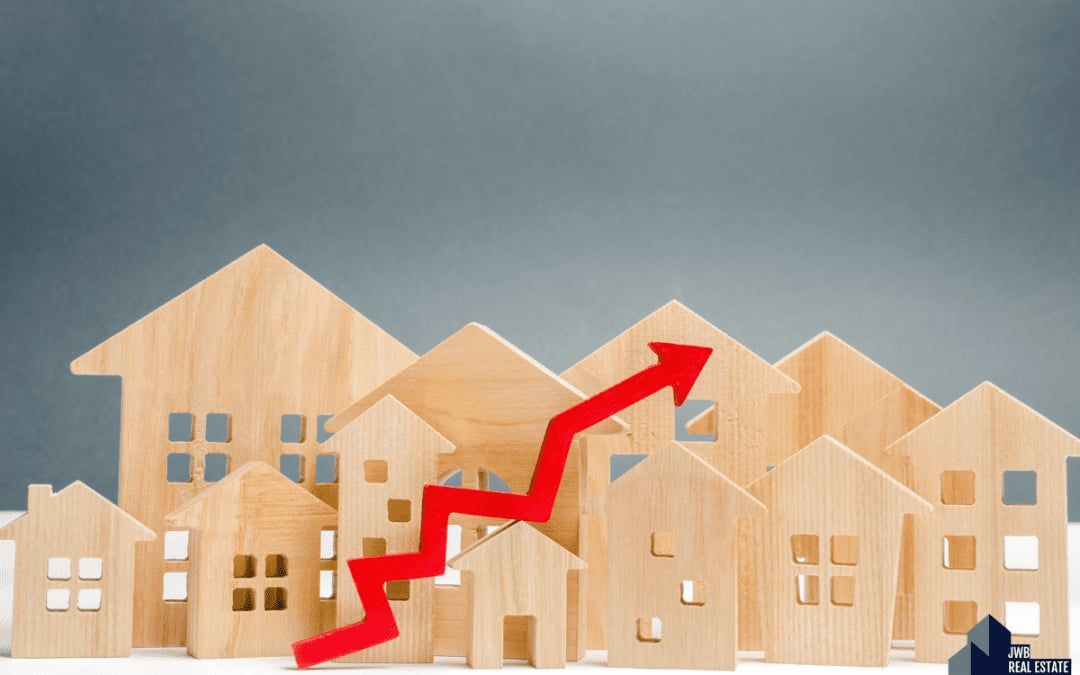
In real estate, appreciation is often seen as the ultimate measure of success. Homeowners and investors alike celebrate when property values rise, believing that any increase in price represents a strong investment. However, not all appreciation is created equal. Some types of value growth are sustainable and supported by strong fundamentals, while others are temporary and driven by short-term market forces.
Understanding the difference between these types of appreciation is critical for buyers who want to protect their investment and make smarter long-term decisions.
Market-Driven Appreciation vs. Fundamental Appreciation
One of the most important distinctions in real estate is the difference between market-driven appreciation and fundamental appreciation.
Market-driven appreciation occurs when property values rise due to broad economic or market conditions. Low interest rates, high buyer demand, or limited inventory can push prices upward across an entire region. During these periods, many homes increase in value regardless of their individual quality or location.
While this type of appreciation can be beneficial in the short term, it may not always be stable. When market conditions change, properties that gained value primarily due to momentum may experience slower growth—or even price corrections.
Fundamental appreciation, on the other hand, is rooted in the long-term qualities of a property. Homes with strong locations, practical layouts, and desirable neighborhoods tend to appreciate consistently over time because they remain attractive to buyers even when the market shifts.
The Role of Location Stability
Location has always been one of the most reliable drivers of sustainable appreciation. Properties located near strong schools, job centers, transportation access, and essential amenities tend to maintain demand over time.
These neighborhoods often experience steady growth because they meet the daily needs of residents. Even when the broader market slows, homes in stable locations typically retain value better than those in less desirable areas.
This is why experienced buyers often prioritize location stability over short-term price trends.
Livability and Buyer Demand
Another key factor that influences long-term appreciation is livability. Homes that are comfortable and practical to live in naturally attract more buyers.
Features that support strong buyer demand include:
-
Functional and flexible floor plans
-
Good natural light and ventilation
-
Adequate storage space
-
Efficient use of square footage
-
Convenient access to schools, shops, and transportation
A property that meets everyday lifestyle needs will always appeal to a wider range of buyers. That consistent demand helps support long-term appreciation.
Renovation vs. Structural Value
Some homes increase in value because of cosmetic upgrades, such as new paint, modern fixtures, or updated flooring. While renovations can improve a property's appeal, they do not always guarantee lasting appreciation.
If the underlying structure, layout, or location is weak, cosmetic improvements may only provide temporary value increases.
In contrast, homes with strong fundamentals—good layouts, durable construction, and desirable locations—often appreciate steadily even without constant upgrades.
The Importance of Liquidity
Another overlooked aspect of appreciation is liquidity, or how easily a property can be sold. A home may technically increase in value, but if it appeals to only a small group of buyers, selling it later may be difficult.
Properties with broad buyer appeal—such as homes in convenient neighborhoods with practical layouts—typically maintain stronger liquidity. This means they are easier to sell when market conditions change.
Liquidity plays a major role in protecting property value over time.
Short-Term Gains vs. Long-Term Growth
During strong market cycles, many buyers assume that any property will appreciate quickly. While this can happen during booming markets, long-term growth often tells a different story.
Homes that depend solely on market momentum may experience rapid appreciation followed by stagnation. In contrast, homes supported by strong fundamentals tend to grow steadily and maintain value through multiple market cycles.
For buyers who plan to hold property for many years, consistent growth is often more valuable than rapid but temporary gains.
Final Thoughts
Real estate appreciation is not just about rising prices—it is about the quality and sustainability of that growth. Properties supported by strong fundamentals, stable locations, and livable design tend to appreciate more reliably over time.
While market momentum can create short-term opportunities, the most successful real estate investments are usually those built on lasting value.
In the end, smart buyers do not simply ask whether a property will appreciate.
They ask a more important question:
What kind of appreciation is this property likely to deliver over time?
--
Tina Jingru Sui 隋静儒
Associate Broker | Team Leader of TJS Team, Keller Williams
 Serving Metro Atlanta — Johns Creek, Alpharetta, Duluth, Suwanee, Buford, and beyond
 404-375-2120


 WeChat: tinasuirealty
 Follow me on Instagram / 小红书 / WeChat / Facebook