Why Some Homes Feel Spacious—Even When They’re Not
Have you ever walked into a home that wasn’t particularly large — yet it felt open, breathable, and comfortable?
And then toured another home with more square footage that somehow felt tight or crowded?
Square footage alone does not determine how spacious a home feels.
In fact, perceived space is often more important than total size when it comes to comfort, livability, and resale appeal.
Let’s explore why some homes feel spacious — even when the numbers say otherwise.
1. Layout Flow Matters More Than Size
A well-designed floor plan minimizes unnecessary barriers.
Homes feel more spacious when:
-
Rooms connect naturally
-
Traffic flow is intuitive
-
There are fewer wasted hallways
-
Furniture placement feels obvious
Poor layout creates invisible congestion.
Even large rooms can feel restrictive if circulation paths are awkward or blocked.
Spaciousness is about movement — not measurement.
2. Ceiling Height Changes Everything
Vertical space dramatically affects perception.
Higher ceilings:
-
Create openness
-
Allow more natural light diffusion
-
Make rooms feel airy
Even a few additional inches can shift how a space feels.
Conversely, low ceilings combined with heavy design elements can make large rooms feel compressed.
3. Natural Light Expands Perception
Homes feel larger when they are bright.
Factors that enhance spaciousness include:
-
Well-positioned windows
-
Consistent light throughout the day
-
Open sight lines to outdoor views
-
Light-reflective surfaces
Natural light reduces visual boundaries and creates depth.
Dark spaces feel smaller — regardless of actual size.
4. Visual Continuity Reduces Fragmentation
When flooring, colors, and design elements are consistent across rooms, space feels unified.
Fragmented design — such as:
-
Frequent flooring changes
-
Sharp color contrasts
-
Numerous visual interruptions
— can make a home feel compartmentalized.
Consistency allows the eye to travel farther, making the home feel larger.
5. Proper Room Proportion Is More Important Than Room Count
Some homes maximize bedroom count at the expense of balance.
Common layout mistakes include:
-
Oversized living areas with undersized bedrooms
-
Narrow rooms that limit furniture flexibility
-
Irregular shapes that reduce usable space
Well-proportioned rooms create flexibility.
Flexibility creates comfort.
Comfort creates spaciousness.
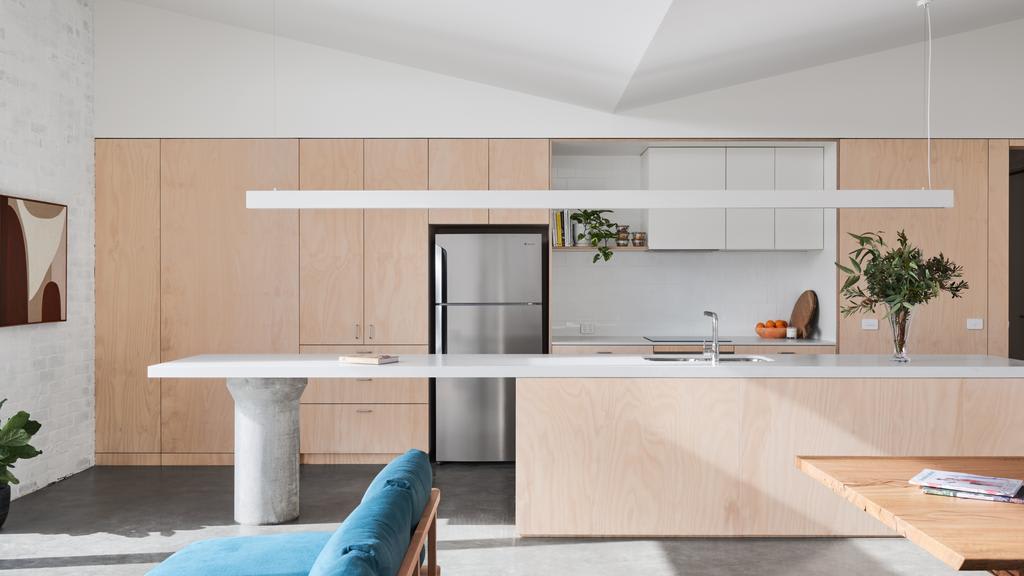
6. Smart Storage Reduces Visual Clutter
Clutter shrinks perception.
Homes feel spacious when:
-
Storage is integrated and accessible
-
Entry areas are organized
-
Kitchens have adequate cabinetry
-
Closets are properly sized
When everyday items have a place, visual noise decreases.
Spaciousness isn’t just about open floor area — it’s about calm visual fields.
7. Sight Lines Influence Psychological Space
From the entry point, what can you see?
Homes feel larger when:
-
You can see through to windows
-
There are long, uninterrupted sight lines
-
Spaces flow toward natural light
Blocked sight lines shorten perceived depth.
Clear sight lines create psychological extension.
8. Furniture Scale Matters
Even in smaller homes, properly scaled furniture makes a difference.
Oversized furniture in a moderate-sized room can:
-
Compress circulation
-
Overwhelm the space
-
Reduce functional area
Meanwhile, balanced proportions allow rooms to breathe.
Spaciousness is often about restraint.
9. Open vs. Defined Space Balance
Completely open floor plans can feel expansive at first.
But homes that feel spacious long-term often balance openness with subtle definition:
-
Partial walls
-
Architectural transitions
-
Intentional separation of active and quiet zones
Too much segmentation feels cramped.
Too much openness can feel chaotic.
The best layouts create harmony.
Why This Matters for Buyers
Buyers often assume they need more square footage to feel comfortable.
But sometimes what they truly need is:
-
Better layout efficiency
-
Improved natural light
-
Cleaner sight lines
-
Thoughtful storage
Choosing a home based solely on size can lead to overpaying for unused or inefficient space.
Choosing based on livability creates long-term satisfaction.
Why This Matters for Resale Value
Homes that feel spacious:
-
Photograph better
-
Attract broader buyer pools
-
Create stronger first impressions
-
Inspire more confident offers
Perceived space drives emotional appeal.
Emotional appeal drives demand.
Final Thought
Spaciousness is not a number on a listing sheet.
It is the result of:
-
Intelligent layout
-
Natural light
-
Visual flow
-
Proportion
-
Storage design
A smaller home that lives well often feels more expansive than a larger one that doesn’t.
The smartest buyers understand this:
It’s not about how big a home is.
It’s about how well it works.
--
Tina Jingru Sui 隋静儒
Associate Broker | Team Leader of TJS Team, Keller Williams
 Serving Metro Atlanta — Johns Creek, Alpharetta, Duluth, Suwanee, Buford, and beyond
 404-375-2120


 WeChat: tinasuirealty
 Follow me on Instagram / 小红书 / WeChat / Facebook