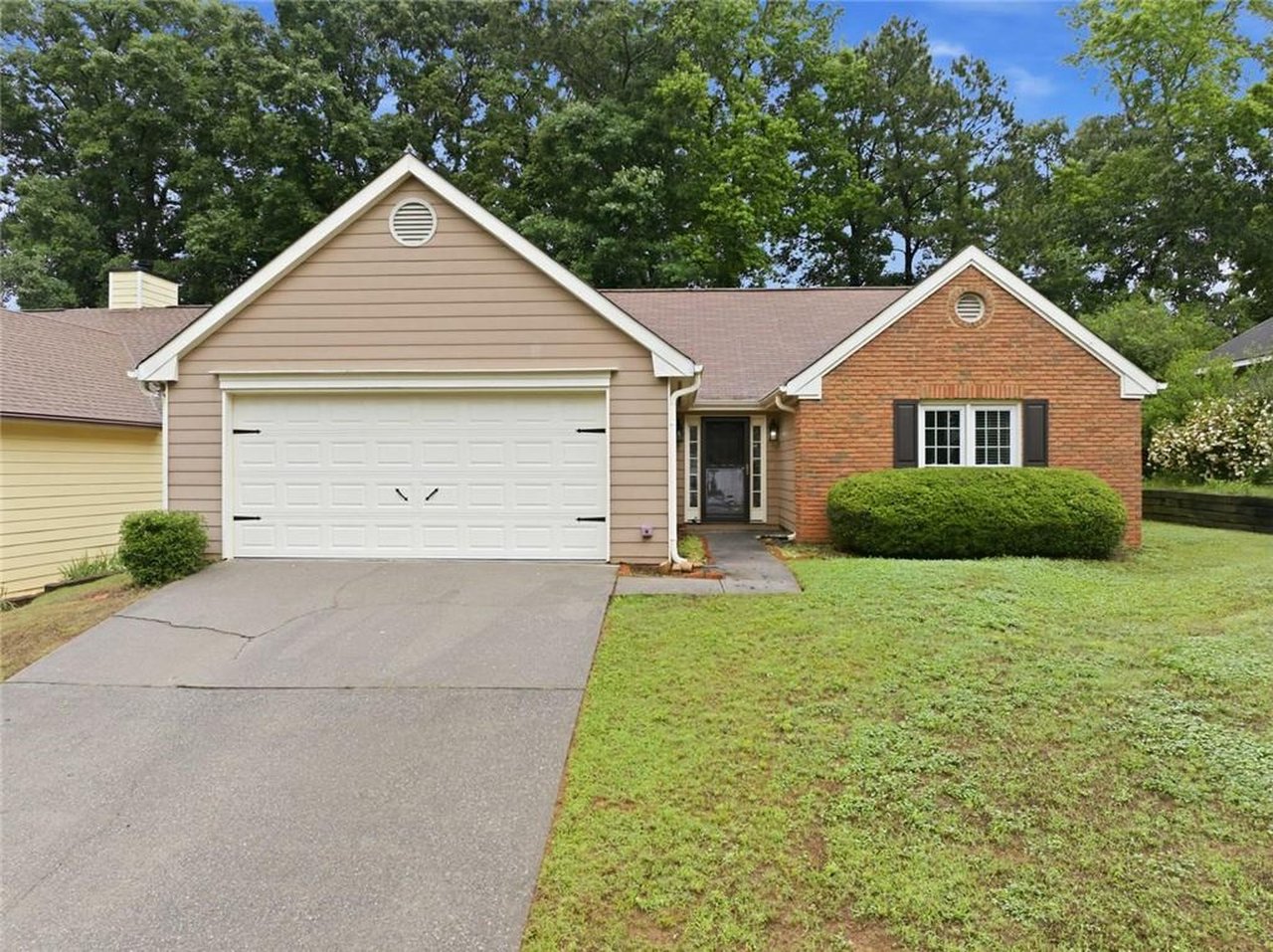
Is Alpharetta a good place to invest in real estate in 2026? Alpharetta remains one of the more fundamentally strong real estate markets in Northern Metro Atlanta, supported by a major corporate employment base, higher-income households, desirable amenities, and consistent housing demand. At the same time, the market has become more balanced, giving disciplined investors more room to negotiate than during the peak years.
Is Alpharetta a Good Place to Invest in Real Estate in 2026?
Alpharetta is one of the most fundamentally sound real estate markets in Northern Metro Atlanta.
Over the six months ending July 2026, the median sold price was approximately $779,000 across 1,055 closed sales, according to the market data referenced below. The city also benefits from a strong corporate employment base, desirable lifestyle amenities, convenient GA-400 access, and continued demand from relocating professionals.
But that doesn't mean every Alpharetta property is automatically a good investment.
The market has cooled from its most aggressive pricing periods, which can actually create better conditions for investors who understand how to evaluate purchase basis, rental income, property type, location, financing, and long-term appreciation potential.
If you're evaluating Alpharetta as an investment market, these are the five things I tell investors before we start pulling comps.
What the Numbers Say About Alpharetta Right Now
Let's start with the data, because Alpharetta's fundamentals tell a more nuanced story than simply saying, "It's a hot market, so buy anything."
According to a July 2026 Alpharetta market review from Resideline , the median sold price over the prior six months was approximately $779,000, with the middle half of sales ranging from approximately $550,000 to $1.1 million.
Zillow's Alpharetta market dashboard , reflecting data through June 30, 2026, showed a typical home value of approximately $722,997, down about 0.4% from the prior year, with homes moving to pending in approximately 32 days.
Zillow also reported a median sale-to-list ratio of approximately 99.0%, with 22.2% of transactions selling above list price and 59.6% selling below list.
Meanwhile, Redfin's Alpharetta market data showed a median sale price of approximately $792,000 over its referenced mid-summer 2026 period, down about 4.3% year over year.
Metric | Value | Source / Period |
|---|---|---|
Median Sold Price | $779,000 | Resideline, July 2026 |
Typical Home Value | $722,997 | Zillow, through June 30, 2026 |
Median Sale Price | $792,000 | Redfin, mid-summer 2026 |
Median Days to Pending | ~32 Days | Zillow, through June 30, 2026 |
Median Sale-to-List Ratio | 99.0% | Zillow, through June 30, 2026 |
Median Monthly Rent | $2,145 | Realtor.com, late 2025 report |
1. The Market Has Cooled—and That Can Be Good for Investors
The slight price softening shown in the data above is not automatically a red flag.
Alpharetta experienced significant appreciation through the earlier part of the decade. What we're seeing in 2026 is a more balanced environment in which buyers may have greater negotiating power, more time to evaluate properties, and more opportunity to conduct full due diligence.
An August 2026 North Atlanta market update described Alpharetta and nearby suburbs as somewhat less aggressive than the prior year, with modest price softening rather than a dramatic correction.
A balanced market can actually be more useful for disciplined investors.
You have more room to inspect, analyze rent, negotiate price, evaluate repairs, and walk away from a deal that doesn't make sense.
2. Corporate Employment Supports Long-Term Housing Demand
Alpharetta's investment case is not based purely on speculation.
The city has developed into an important technology, financial-services, and corporate-employment corridor along GA-400. That employment concentration creates continued demand from professionals relocating to Northern Atlanta and from households that want proximity to employment without living in Atlanta's urban core.
Alpharetta's pricing reflects that demand.
A July 2026 local market commentary noted that Alpharetta's median sale price was more than double the cited Georgia statewide median of approximately $376,000.
For an investor, employment strength matters because it supports both the ownership market and the rental market over time.
Higher-income professional tenants may also be more likely to seek longer-term housing, especially when relocating for work or evaluating whether to purchase after moving into the area.
3. Rental Returns Are Real—but They Are Not Automatic
Here's where investors need to be realistic:
Alpharetta is generally not a pure cash-flow market for highly leveraged single-family purchases at the upper end of the price range.
The most recent broad rental snapshot referenced here comes from Realtor.com's Alpharetta market report , which reported a median monthly rent of approximately $2,145 in its late-2025 data.
When you compare that with purchase prices in the $700,000-plus range, it becomes clear that investors using substantial leverage need to underwrite carefully.
Alpharetta's investment thesis is usually not:
"Buy any house and collect huge monthly cash flow."
It is more often a combination of rental stability + quality tenant demand + long-term appreciation + strategic acquisition price.
Property Types That May Be Worth Evaluating
- Townhomes and attached properties at more accessible purchase prices.
- Smaller single-family homes with strong rental demand but a lower acquisition basis.
- Properties with longer days on market where the seller may be more willing to negotiate.
- Homes with cosmetic rather than major structural issues where improvements may create additional value.
- Properties where appreciation and tenant stability are important components of the investment thesis.
The correct numbers will depend on your purchase price, financing structure, down payment, HOA dues, property taxes, insurance, repairs, vacancy assumptions, property management expenses, and expected rent.
That's why I prefer to run the actual investment numbers before an investor falls in love with a property.
4. Location Within Alpharetta Changes the Investment Profile
Alpharetta is not one uniform investment market.
Properties near Avalon, Downtown Alpharetta, and the GA-400 corridor may command a premium because of their proximity to employment, dining, retail, entertainment, and walkable amenities.
Other subdivisions and townhome communities may provide a lower entry point while still benefiting from Alpharetta's broader demand profile.
Even within the same city, investors should evaluate:
- School cluster.
- Distance to GA-400.
- Walkability.
- HOA costs and rental restrictions.
- Age of the property.
- New-construction competition.
- Property taxes.
- Expected tenant profile.
Local investors often distinguish between different Alpharetta submarkets because school zones, construction age, commute patterns, amenities, and price points can differ significantly.
The Houzeo July 2026 Alpharetta snapshot described the overall market as relatively balanced, with homes selling near the asking price on average.
But city-wide averages only tell part of the story. Some highly desirable homes can still move quickly, while others remain available long enough to create negotiating opportunities.
Related Reading:
Financing can completely change an investment property's return. Read the biggest financing questions Atlanta buyers are asking in 2026 →
5. Use Conservative Appreciation Assumptions
One of the biggest mistakes investors can make in premium suburban markets is projecting the appreciation rates of 2021 through 2023 indefinitely into the future.
Those extraordinary growth rates should not be the baseline assumption for a 2026 purchase.
Zillow's referenced data showed Alpharetta's typical home value down approximately 0.4% year over year, while Redfin's referenced mid-summer data showed a roughly 4.3% year-over-year decline in its three-month median sale-price comparison.
Neither number necessarily signals long-term weakness. They do show why investors should not rely on immediate appreciation to rescue a poorly underwritten purchase.
Buy on fundamentals—not hope.
Location quality, tenant demand, purchase basis, condition, realistic rent, manageable expenses, and a sufficiently long holding period should support the investment before appreciation is included.
Alpharetta's corporate employment, infrastructure, amenities, and premium positioning give it a compelling long-term demand story.
But the strongest investors still underwrite conservatively.
What This Means If You're Considering Alpharetta
Alpharetta is a fundamentally strong investment market with some very real trade-offs.
The entry price is high. Immediate rental yields may be tighter than investors can find farther outside the urban core. And near-term appreciation should not be assumed.
But the city also offers:
- A major corporate employment base.
- Higher-income housing demand.
- GA-400 access.
- Strong lifestyle amenities.
- Established neighborhoods.
- Relocation demand.
- Premium positioning within Georgia.
For many investors, that combination can make Alpharetta more compelling as a long-term wealth-building market than a short-term yield-maximization market.
The investors I see perform best here usually come in with a clear objective. They know whether they are prioritizing cash flow, appreciation, tenant quality, asset quality, or some combination of those factors.
Comparing Northern Atlanta investment markets?
The TJS Team works throughout Fulton, Forsyth, Gwinnett, Cobb, and surrounding areas. You can also read more about our Metro Atlanta market approach →
Don't Just Take My Word for It
See what buyers, sellers, and investors say about working with the TJS Team.
Frequently Asked Questions: Investing in Alpharetta Real Estate
Is Alpharetta a buyer's market or seller's market in 2026?
As of mid-2026, Alpharetta appears considerably more balanced than it was during the most competitive years of the market.
Zillow data through June 30, 2026 showed homes going to pending in approximately 32 days, with a median sale-to-list ratio of approximately 99.0% and a majority of referenced sales closing below list price.
However, market conditions vary significantly by property type, price point, location, condition, and neighborhood. Well-priced homes in highly desirable segments can still move much more quickly than the city-wide average.
What is the current median home price in Alpharetta?
The referenced six-month data from Resideline showed a median sold price of approximately $779,000 as of July 2026.
Redfin's referenced mid-summer data showed a median sale price of approximately $792,000, while Zillow's typical home value was approximately $722,997 as of June 30, 2026.
These measures are calculated differently, which is why they should be used as indicators rather than treated as interchangeable statistics.
How long do homes in Alpharetta stay on the market?
Zillow's referenced data showed a median of approximately 32 days to pending.
Individual properties can move substantially faster or slower depending on price, condition, location, inventory, property type, and seller strategy. Investors may find better negotiating opportunities among homes that have remained on the market longer.
What are typical rent levels in Alpharetta, and do they support investment cash flow?
The referenced Realtor.com data showed a median monthly rent of approximately $2,145 in its late-2025 snapshot.
When that rental level is compared with purchase prices approaching or exceeding $700,000, investors using significant leverage should expect relatively tight cash-flow calculations on many single-family homes.
Townhomes, smaller homes, below-market acquisitions, or properties purchased with more equity may produce very different results. Every property should be individually underwritten.
What makes Alpharetta a strong long-term investment market?
Alpharetta's long-term investment case is supported by its corporate employment base, GA-400 access, relocation demand, premium housing market, amenities, and proximity to major Northern Atlanta employment corridors.
The trade-off is the higher acquisition price, which makes disciplined property selection and realistic cash-flow assumptions especially important.
Ready to Invest in Alpharetta?
Alpharetta rewards investors who do their homework.
The fundamentals remain strong, the market is more negotiable than it was during the peak frenzy, and the right property at the right acquisition basis can potentially become a strong long-term asset.
But a premium market also leaves less room for sloppy underwriting.
The wrong property at the wrong price can underperform even in a fundamentally strong city.
That's why I prefer to look at the full investment picture before we write an offer: purchase price, realistic rent, HOA restrictions, taxes, insurance, expected repairs, financing, vacancy, maintenance, management, exit strategy, and the property's specific micro-market.
Let's Run the Numbers Before You Buy
I work with investors throughout Alpharetta, Johns Creek, Suwanee, Duluth, Buford, Forsyth County, Cobb County, and the broader Northern Atlanta market. If you're considering an investment property, we can compare opportunities side by side and determine which ones actually fit your investment goals.
Tina Jingru Sui | TJS Team
About Tina Jingru Sui
Tina Jingru Sui is the founder and leader of the TJS Team, a top-performing real estate team serving Northern Metro Atlanta. Tina and her team specialize in helping buyers, sellers, relocation clients, and real estate investors make informed decisions throughout Fulton, Forsyth, Gwinnett, Cobb, and surrounding counties.
The TJS Team serves communities including Alpharetta, Johns Creek, Milton, Roswell, Suwanee, Duluth, Buford, Marietta, and beyond.
Keller Williams Atlanta Partners · (404) 375-2120
This article is provided for general informational purposes only and does not constitute legal, tax, investment, mortgage, or financial advice. Real estate prices, rents, inventory, market times, financing costs, property expenses, and investment returns vary by property and can change over time. Past appreciation is not a guarantee of future performance. Investors should independently verify current market and rental data and consult appropriate legal, tax, lending, insurance, property-management, and financial professionals regarding their individual circumstances. Equal Housing Opportunity. Tina Jingru Sui, GA License #392936, REALTOR®, affiliated with Keller Williams Atlanta Partners and regulated by the Georgia Real Estate Commission.