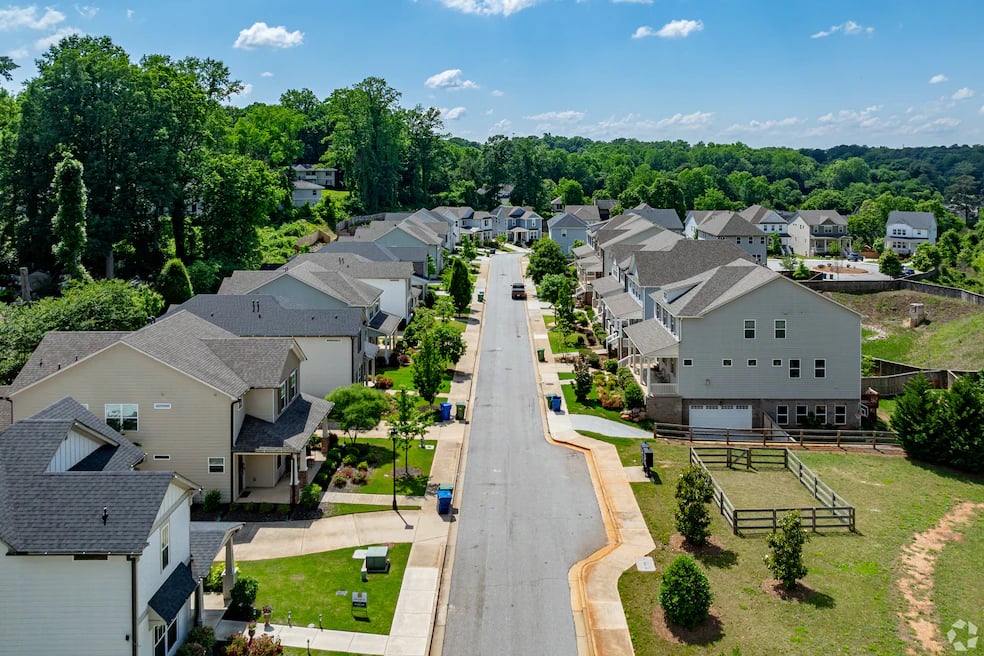
New construction gives Atlanta buyers more choices—but “new” should not automatically mean “better.” When comparing a newly built home with an older property, look at the complete trade-off: location, lot, floor plan, builder incentives, property taxes, HOA, construction quality, warranties, maintenance exposure, purchase price, and future resale competition.
Atlanta's New Construction Boom: What Buyers of Older Homes Should Know
Why Atlanta buyers should compare more than age when choosing between a brand-new home and an established property.
You tour a brand-new community.
The kitchen is modern.
The flooring is new.
The roof, HVAC, water heater, appliances, and windows are new.
The builder may even be advertising a mortgage-rate incentive or closing-cost contribution.
Then you tour an older home nearby.
It may not have the same finishes.
But perhaps it offers a larger lot, mature trees, a shorter commute, an established location, more storage, or a price that gives you room to renovate gradually.
Which one is the better buy?
Don't compare:
New House vs. Old House
Compare:
What each property gives you in exchange for the money you are spending.
Atlanta Continues to Add New Housing—but Not Every Area Is Building at the Same Pace
New construction remains an important part of the Metro Atlanta housing market.
U.S. Census Bureau permit data for the Atlanta-Sandy Springs-Alpharetta metropolitan area continued to show substantial residential permitting activity in 2026.
At the same time, construction activity can increase or decrease from year to year and differs significantly by county, city, community, product type, and price range.
The important question for a buyer is not:
“Is Atlanta building a lot?”
It is:
“What new construction competes with the specific older home I am considering?”
1. Understand What You Are Paying For With New Construction
New homes may offer features such as:
- New roofing and mechanical systems.
- Current kitchen and bathroom finishes.
- New appliances.
- Modern electrical and technology features.
- Contemporary floor plans.
- New windows and insulation systems.
- Builder warranty coverage, depending on the builder and agreement.
For buyers who do not want to take on immediate projects, that convenience can have real value.
But the value should be compared with the entire property—not simply the age.
2. Builder Incentives Can Change the Financial Comparison
One reason new construction may look financially attractive is that builders sometimes offer incentives.
Depending on the community, builder, inventory, lender, and timing, incentives may include:
- Mortgage-rate buydowns.
- Closing-cost assistance.
- Design-center credits.
- Upgrade packages.
- Other property- or lender-specific incentives.
These incentives can materially affect the buyer's initial cash requirement or monthly payment.
But compare the complete financing terms.
A $20,000 incentive is not automatically the same thing as a $20,000 lower purchase price.
Ask how the incentive is structured, whether a preferred lender or closing provider is required, and what the complete loan terms look like compared with alternatives.
Also Understand the Difference Between Base Price and Final Price
A builder may advertise a starting price.
Your final price may change depending on:
- Lot premium.
- Elevation or exterior package.
- Structural options.
- Kitchen selections.
- Flooring.
- Lighting.
- Finished basement or additional rooms.
Compare the actual completed price of the home you would buy—not only the community's advertised “starting from” number.
3. Older Homes May Have a Location Advantage
New construction requires land.
In some parts of Metro Atlanta, large new subdivisions may be built farther from established employment centers or commercial areas because that is where sufficient land is available.
An older property may offer easier access to:
- Existing shopping and restaurants.
- Major roads.
- Employment centers.
- Parks and established amenities.
- The places you already visit regularly.
That does not mean older automatically means better location.
It means location should be evaluated independently from the age of the house.
You can renovate an older kitchen.
You usually cannot renovate your commute.
4. Compare the Lot—not Just the House
Lot characteristics can create one of the biggest differences between established and newer communities.
Depending on the area, an older home may offer:
- A larger lot.
- Mature trees.
- More established landscaping.
- Greater distance between homes.
- Different driveway or parking configurations.
A new community may instead offer:
- Lower immediate landscaping maintenance.
- New community amenities.
- More standardized lot and exterior maintenance structures.
Neither is inherently better.
Ask how much you value land, privacy, yard maintenance, and community amenities.
5. Newer Floor Plans May Feel More Modern—but Function Still Matters
Many new homes emphasize features such as:
- Open kitchen and living spaces.
- Larger kitchen islands.
- Walk-in pantries.
- Home-office or flex spaces.
- Larger closets.
Older homes may offer different advantages:
- More separated rooms.
- Different architectural details.
- Finished basements.
- Established additions or storage.
Newer floor plan does not automatically mean better floor plan.
Judge the layout based on how you actually use rooms, furniture, storage, work space, stairs, and daily traffic flow.
6. With an Older Home, Understand Major-System Exposure
One clear advantage of buying new construction is that many major components begin their service life at roughly the same time as your ownership.
With an established home, review the age and condition of:
- Roof.
- HVAC systems.
- Water heater.
- Plumbing.
- Electrical system.
- Windows.
- Exterior components.
- Drainage and moisture conditions.
Older does not automatically mean defective.
Evaluate: Age + Actual Condition + Maintenance History + Inspection Findings + Expected Repair Exposure.
7. Don't Assume a Brand-New Home Does Not Need an Inspection
New construction has not had decades of wear.
That does not mean construction is automatically flawless.
Buyers may choose to obtain independent inspections of new construction, subject to their contract and the stage of construction.
Depending on timing and circumstances, buyers may discuss inspections involving:
- Pre-drywall construction.
- Final completion.
- Major systems and visible components.
- Items to address before or after closing under applicable procedures.
The available inspection rights and timing depend on the purchase agreement and builder process.
New does not mean uninspectable.
8. Understand What the Builder Warranty Actually Covers
Many newly constructed homes come with some form of builder warranty.
But warranty coverage is not unlimited.
Review:
- Which components are covered.
- How long each type of coverage lasts.
- What is excluded.
- How claims must be submitted.
- Who performs repairs.
- Any mediation or arbitration requirements.
Builder warranty and a separate home-warranty service contract are not necessarily the same thing.
Get important warranty promises in writing and retain the warranty documents after closing.
9. New Communities Often Come With HOA Rules You Should Understand
Many new developments operate under homeowners associations.
Review the applicable governing documents and understand matters such as:
- Annual or monthly dues.
- Amenities.
- Exterior modification rules.
- Parking restrictions.
- Rental restrictions.
- Maintenance responsibilities.
An older community may also have an HOA—or none at all.
Do not assume newer or older tells you which association structure will fit your plans.
10. Be Especially Careful With Property-Tax Estimates on New Construction
If the home or lot was only recently completed, historical tax records may not necessarily reflect the fully completed property in the same way a future assessment will.
Georgia property values are assessed based on the county's valuation process, with annual assessment notices reflecting property value as of January 1.
Buyers should not simply assume that an old tax amount attached to a vacant lot, incomplete home, or different ownership situation will equal the tax liability after purchasing a completed residence.
For both new and older homes, ask for a buyer-specific tax estimate rather than relying only on the seller's historical tax bill.
11. Compare Total Ownership Cost—not Just Purchase Price
Suppose:
Older Home: $525,000
and:
New Home: $565,000
It may be tempting to assume the older home is automatically cheaper.
But the complete comparison may include:
Factor | Older Home | New Construction |
|---|---|---|
Purchase Price | May be lower | May be higher |
Builder Incentive | Not applicable | May be available |
Immediate Renovation | Property-specific | Often limited initially |
Near-Term Major Systems | Depends on age and condition | Generally newer, but still inspect and review warranty |
HOA | Varies | Varies |
Lot / Landscaping | May be larger or more established | Community-specific |
Location / Commute | Must evaluate | Must evaluate |
Total Cost / Fit | Calculate | Calculate |
12. Don't Automatically Assume the Utility Difference
Newer homes may incorporate newer building materials, insulation, windows, appliances, and mechanical systems.
But actual utility usage depends on more than the home's age.
It can also depend on:
- Square footage.
- Thermostat settings.
- Occupancy.
- System efficiency.
- Insulation and windows.
- Utility rates.
A 4,000-square-foot new home may still cost more to operate than a much smaller older home.
Ask for actual available information rather than relying on the word “energy-efficient.”
13. Buying Early in a New Community Can Mean Living Around Construction
If you purchase before the community is complete, your surroundings may continue changing after you move in.
Consider:
- Construction traffic.
- Noise and dust.
- Incomplete landscaping.
- Future phases.
- Amenities that are not yet complete.
- Potential changes to plans or timelines.
Ask which portions are:
Completed · Under Construction · Approved · Planned
Do not treat every planned feature as guaranteed until you understand the governing documents and contractual commitments.
14. If You Buy an Older Home, Think About Future New-Construction Competition
This is one of the most overlooked questions.
You may love the older home today.
But if substantial new housing is being built nearby, future buyers could eventually compare your resale with newer inventory.
That does not automatically hurt the older home's value.
The older property may have advantages that are difficult for a builder to reproduce:
- Better-established location.
- Larger lot.
- Mature trees.
- Finished basement.
- No HOA or different restrictions.
- Lower price point.
- Architectural characteristics not common in newer construction.
The question is not whether new construction exists nearby.
Ask: “What does this older home offer that future new construction may not?”
Builder Incentives Can Matter to Future Resale Competition Too
Imagine several years from now you want to sell your home while a nearby builder is still selling new inventory.
A prospective buyer might compare your resale home with:
- Brand-new finishes.
- Builder warranty.
- Potential financing incentives.
- Closing-cost incentives.
Your home may still compete extremely well based on price, upgrades, lot, finished spaces, location, or immediate availability.
But buyers considering an older property near substantial future development should understand the possible competitive set.
15. A Builder Contract May Be Very Different From a Typical Resale Contract
Buyers should not assume the contract terms for new construction will mirror the forms or negotiation structure used in a typical resale transaction.
Builder agreements may address matters such as:
- Construction timelines.
- Deposit requirements.
- Selections and upgrades.
- Change orders.
- Inspection access.
- Completion standards.
- Warranty provisions.
- Closing obligations.
- Dispute-resolution provisions.
Read the actual contract carefully and obtain appropriate legal advice if you have questions about your rights or obligations.
Remember:
The builder's sales representative represents the builder's interests.
Buyers should understand who represents them and what representation agreement applies before relying on advice in the transaction.
New Construction vs. Older Home: A Better Comparison
Factor | New Construction | Older / Established Home |
|---|---|---|
Major Systems | Generally new | Evaluate age and condition |
Finishes | Current / selectable in some cases | May be updated or original |
Builder Incentives | May be available | Seller concessions may be negotiable |
Location | Project-specific | May be more established |
Lot | Community-specific | May offer mature landscaping or larger lot |
Warranty | Builder warranty may apply | Depends on property/components and any service contract |
Construction Environment | Future phases may still be active | Existing surroundings easier to observe |
Future Competition | Other builder inventory may compete | May compete with future new construction |
15 Questions to Ask Before Choosing New vs. Older
☐ Which location gives me the better daily routine?
☐ What is the actual completed purchase price—not just the builder base price?
☐ What builder incentives are currently available and what conditions apply?
☐ How does the lot compare?
☐ Which floor plan functions better for my real life?
☐ What are the HOA dues and restrictions?
☐ What are my realistic property-tax and insurance estimates?
☐ What major systems in the older home may require future attention?
☐ What does the builder warranty actually cover?
☐ What inspection rights do I have under the contract?
☐ What portions of the new community are still planned or under construction?
☐ How much future builder inventory may still be sold nearby?
☐ What does the older home offer that new construction cannot easily reproduce?
☐ What is my realistic total monthly ownership cost for each option?
☐ If I sell in five years, what might buyers compare my home against?
Don't Choose Based Only on
New vs. Old.
Compare:
Location + Price + Lot + Condition + Incentives + Ownership Cost + Future Competition
Frequently Asked Questions
Is new construction always better than an older Atlanta home?
No. New construction may offer newer systems, current finishes, warranties, and possible builder incentives. An older home may offer a different location, lot, price, floor plan, mature landscaping, or established surroundings. Compare the complete property rather than age alone.
Do I need an inspection on a brand-new home?
Buyers may choose to obtain an independent inspection even on new construction. New does not mean every item is necessarily free from defects. Inspection rights and timing depend on the purchase agreement and stage of construction, so review the contract and applicable builder procedures.
Are builder incentives free money?
They can provide meaningful financial value, but review the conditions. Some incentives may be linked to a preferred lender, closing provider, specific inventory, closing date, or other requirements. Compare the entire financing and transaction terms rather than the incentive amount alone.
Does new construction automatically have lower utility bills?
Not automatically. Newer construction may contain newer efficiency features, but actual energy use also depends on home size, systems, occupancy, thermostat settings, insulation, utility rates, and other factors.
Are older homes always more expensive to maintain?
No. An older home that has been well maintained and has updated major systems may have limited immediate repair needs. Evaluate actual condition and maintenance history rather than assuming age alone predicts cost.
Can nearby new construction hurt the resale value of an older home?
Not automatically. New construction can change the competitive set and buyer expectations, but older properties may compete through location, lot, price, mature landscaping, finished spaces, condition, or other characteristics. Future value and resale speed cannot be guaranteed.
Is the builder's advertised base price what I will actually pay?
Not necessarily. Depending on the community and home, lot premiums, structural options, upgrades, finishes, and other selections can change the final contract price. Ask for the complete price of the specific home and options you are considering.
Should I use the builder's preferred lender?
A preferred lender may offer builder-related incentives, but buyers should compare the complete loan terms, interest rate, APR where applicable, points, lender fees, mortgage insurance, credits, and other costs with available alternatives. The largest incentive does not automatically produce the lowest overall borrowing cost.
Final Thoughts: “New” Is a Feature—not a Complete Buying Strategy
New construction can be a great choice.
So can an older home.
The mistake is assuming one category automatically wins.
A new home may give you newer systems, a modern layout, builder incentives, and fewer immediate projects.
An established home may give you a stronger location for your routine, a larger lot, mature surroundings, or a lower price that gives you room to customize later.
Before choosing, compare:
Where it is.
What you are actually paying.
What condition it is in.
What the contract provides.
What ownership will cost.
What future buyers may compare it against.
The best home is not necessarily the newest home.
It is the property where the location, price, layout, condition, ownership cost, and long-term flexibility make the most sense for you.
Comparing New Construction With an Older Atlanta Home?
We can compare both options side by side—including recent comparable sales, builder incentives, total purchase price, property taxes, HOA, major-system condition, lot, location, current and planned competition, and estimated ownership costs. The goal is not to push you toward “new” or “old,” but to understand what you are receiving for your money.
Tina Jingru Sui | TJS Team
Search Metro Atlanta Homes at TinaSui.com →
About Tina Jingru Sui
Tina Jingru Sui is the founder and leader of the TJS Team, serving buyers, sellers, investors, and relocation clients throughout Metro Atlanta.
Tina and her team serve communities including Johns Creek, Alpharetta, Suwanee, Duluth, Buford, Dacula, Marietta, Roswell, Sandy Springs, Smyrna, Lawrenceville, and surrounding Metro Atlanta areas.
Keller Williams Atlanta Partners · (404) 375-2120
2026 construction note: U.S. Census Bureau building-permit data continued to show substantial residential permitting activity in the Atlanta-Sandy Springs-Alpharetta metropolitan area in 2026, although construction activity varies by period and geography and should not be interpreted as a uniform “boom” in every city, county, property type, or price range. Builder incentives, prices, inventory, completion dates, lending offers, HOA provisions, warranties, and future construction plans are property- and builder-specific and can change.
This article is provided for general informational and educational purposes only and does not constitute legal, tax, financial, lending, appraisal, inspection, engineering, construction, warranty, insurance, investment, or other professional advice. New construction is not guaranteed to be free from defects, and an older home is not automatically in inferior condition. The age of a roof, HVAC system, plumbing, electrical system, windows, water heater, or other component does not by itself establish that repair or replacement is required. Home inspections have limitations and do not guarantee discovery of every current or future condition. Builder incentives are subject to availability and conditions and may involve preferred lenders, closing providers, specific inventory, deadlines, financing terms, or other requirements. Builder warranties vary in scope, duration, exclusions, claims procedures, and dispute provisions. Future phases, amenities, road projects, developments, and community plans may change, be delayed, or not be completed as initially anticipated. Property taxes for newly completed homes may differ from historical records associated with land or earlier assessments. Appreciation, resale demand, utility savings, days on market, investment performance, and future property value are not guaranteed. Buyers should independently review contracts, HOA documents, tax information, warranty materials, builder disclosures, inspection findings, financing terms, and relevant public records and consult qualified attorneys, inspectors, engineers, contractors, lenders, tax professionals, insurance professionals, or other specialists as appropriate. Equal Housing Opportunity. Tina Jingru Sui, GA License #392936, REALTOR®, affiliated with Keller Williams Atlanta Partners and regulated by the Georgia Real Estate Commission.