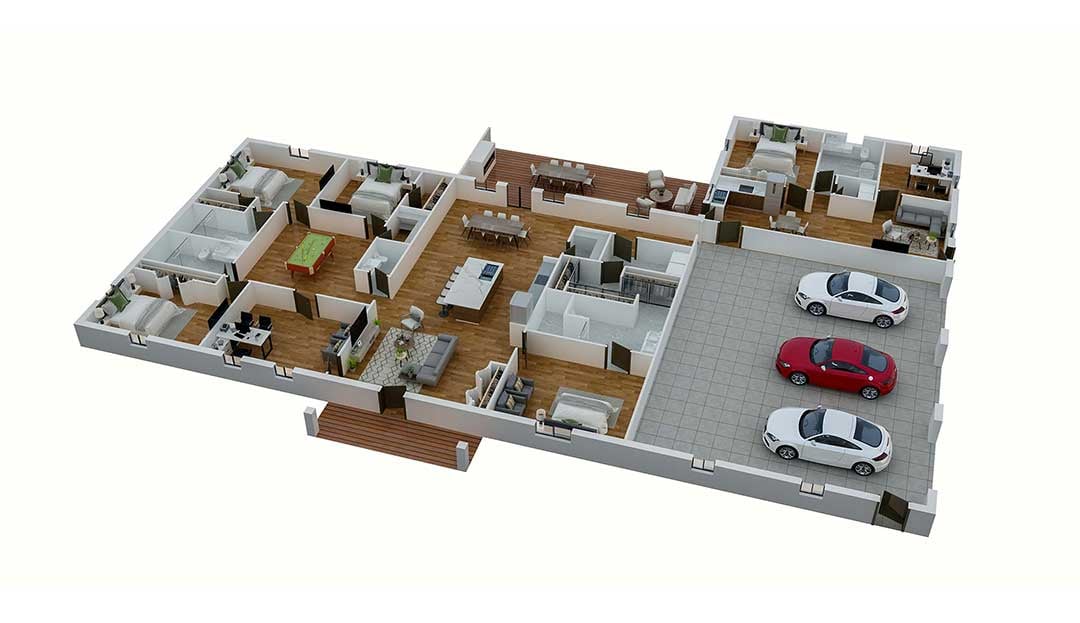
A three-bedroom home built in 2024, in the Sweetwater Green community of Lawrenceville, Gwinnett County, closed this week. I represented the seller, and the seller was not signing in person — they were signing through a power of attorney.
At 11:18 on the morning of closing, the closing attorney’s office wrote the file thread with one sentence: the seller’s power of attorney had not yet arrived. The file was marked closed and complete at 12:53 that afternoon.
Between those two timestamps is the part worth writing down, because almost every seller who has ever asked me “can my brother just sign for me?” has assumed the answer is a yes with no logistics attached.
What a power of attorney actually does in a Georgia closing
A power of attorney lets someone — the attorney-in-fact — sign on another person’s behalf. Sellers reach for one for ordinary reasons: they have moved out of state, they are travelling on the closing date, the property is held by more than one person and only one of them can be at the table.
Here is the part that surprises people. In a Georgia closing the power of attorney is not a convenience sitting off to the side of the transaction. It becomes one of the closing documents. The deed is signed by the attorney-in-fact under that authority, and the authority itself has to be good enough, specific enough, and physically present enough to satisfy the closing attorney, the title underwriter and — where there is a loan on the other side — the lender.
So a power of attorney carries all the failure modes of any other closing document. It can be drafted too narrowly to cover a conveyance of real estate, signed without the witnessing the county will want when it is recorded, or approved by everyone and still be in the wrong city on the morning of closing because somebody sent a scan when an original was needed.
What that morning did not have to spend time on
When a question like that one lands ninety minutes before a closing, what decides the outcome is not how fast you can improvise. It is how much of the file was already finished and in writing before the question arrived.
On this one, the sequence looked like this.
Two days before closing, the closing attorney’s office confirmed in writing that it had everything it needed from the seller’s side, and the lender’s clear-to-close was in hand. There was no document chase running underneath the POA question.
The afternoon before closing, my transaction coordinator wrote the attorney’s office to ask one narrow thing: of the two addresses we had on file, which mailbox is actually being monitored for this closing, and who is the closer on the file? The answer came back in ten minutes, naming both. That sounds like housekeeping. It is the reason the 11:18 message on closing morning landed in a thread where the right people were already copied and someone on our side was reading, instead of in an inbox nobody was watching.
Also the afternoon before closing — not the morning of — the buyer’s final walk-through was done, at five o’clock, confirmed through the showing system and recorded at the keybox. A walk-through booked for the morning of closing is a second thing that can go wrong on a day that only has room for one.
And at 10:11 that morning, before anyone had raised the power of attorney, a member of my team was already at the house.
The file was complete and funded by 12:53. It closed on the day it was scheduled to close.
Six questions to ask before anyone signs through a power of attorney
If you are selling or buying in Georgia and someone in your transaction will sign through an attorney-in-fact, this is the list I would want you to work through, and the time to work through it is the week you go under contract — not the week of closing.
- Tell the closing attorney at the very beginning. The moment you know a power of attorney will be used, say so in writing. Everything below is easy with three weeks and difficult with three hours.
- Ask whether they will accept the document you already have. A general power of attorney drafted years ago for something else may not carry the language needed to convey a specific piece of real estate. Send a copy for review early and ask directly: is this one sufficient, or do you want one drafted for this closing?
- Ask whether they need the original, and how it should get there. This is the question that bit this file. A scan and a wet-signed original are not interchangeable, and a document that has to travel needs to be mailed on a day that is not the day before closing. Ask how they want it delivered and get a confirmation that it arrived.
- Ask whether it will be recorded, and what that requires. If the power of attorney is going to be recorded alongside the deed, the way it was signed and witnessed matters. Find that out before it is signed, not after.
- If there is a loan, get the lender’s approval separately. The closing attorney accepting a power of attorney and the lender accepting it are two different approvals. Both have to happen, and the lender’s underwriting often takes longer.
- Confirm the person signing is available on the day. An attorney-in-fact has a job, a calendar and a car that can break down. Agree a closing time with them, in writing, the same way you would with the seller themselves.
Looking back
On every file where anyone is signing through a power of attorney, I now treat that document the way I treat the survey or the payoff statement: as a closing document with its own deadline, due in the closing attorney’s hands the week before closing, with a written confirmation that it was received in the form they need.
The second standard I apply is smaller and it earns its keep constantly. Before closing week, we confirm in writing which mailbox at the closing attorney’s office is being monitored for this file and who the closer is. A closing can survive a hard question on the morning of the closing. What it cannot survive is a hard question sent to an address nobody is reading.
And the third one is the walk-through. Where the schedule allows it, I would rather have the buyer in the house the evening before than the morning of. It costs nothing and it clears the closing day of one entire category of surprise.
I am Tina Jingru Sui, a listing agent and buyer’s agent with Keller Williams Atlanta Partners, working across Gwinnett County, Forsyth County, North Fulton, Cobb County and DeKalb County in English and Mandarin, at about 100 closings a year. If you are selling a home in Lawrenceville, Suwanee, Buford or Johns Creek and something about your situation is not the standard shape — an out-of-state seller, a power of attorney, an estate, a trust or a company on the deed — that is a conversation worth having before the listing goes live rather than during closing week.