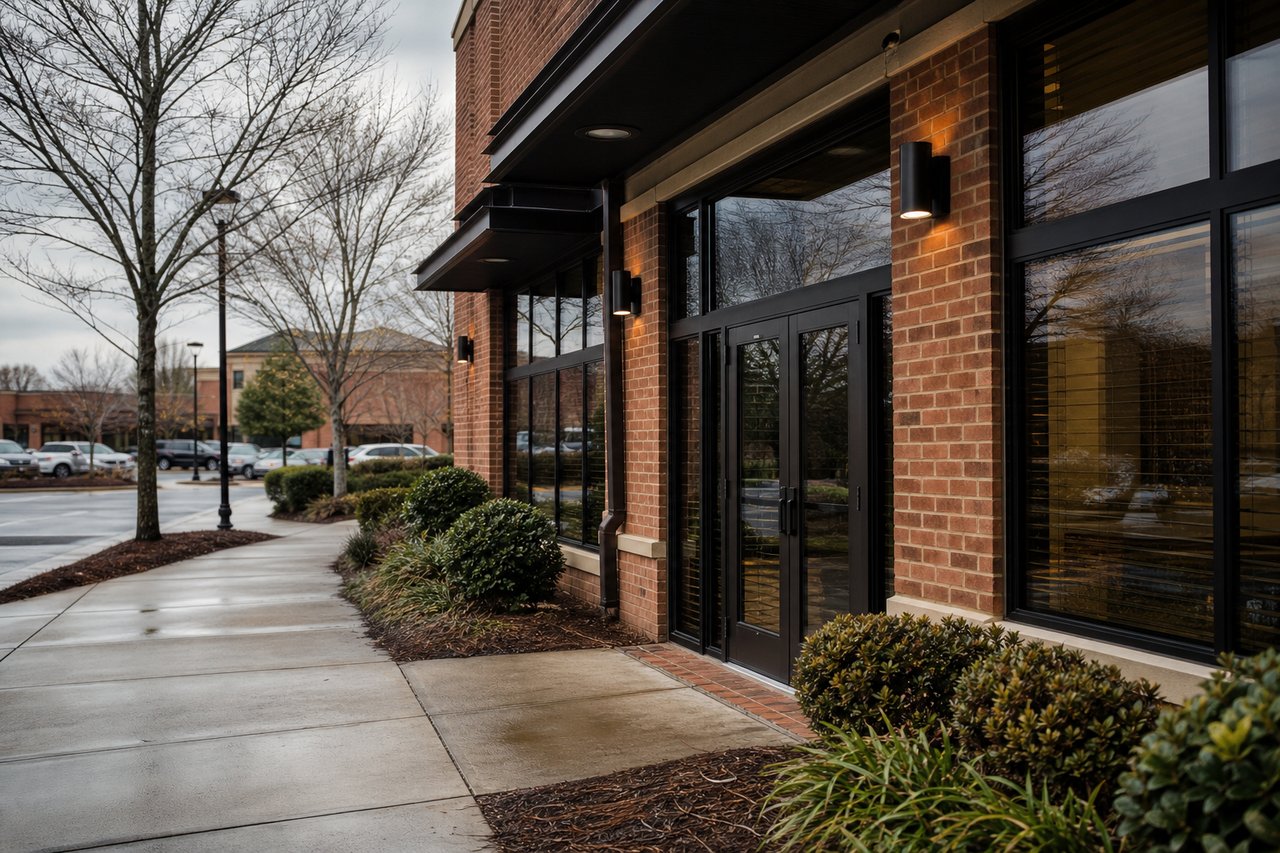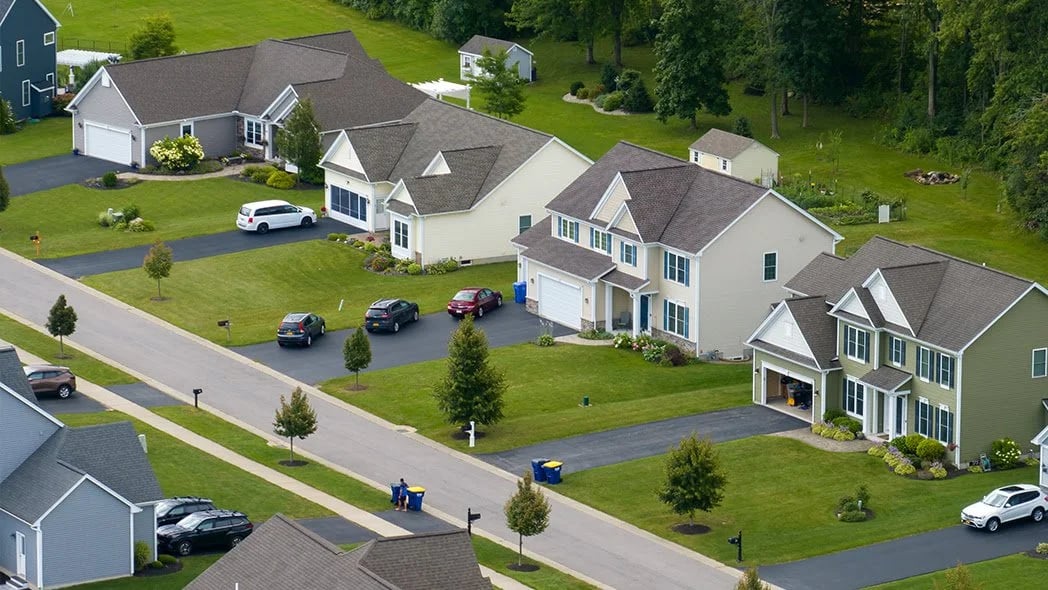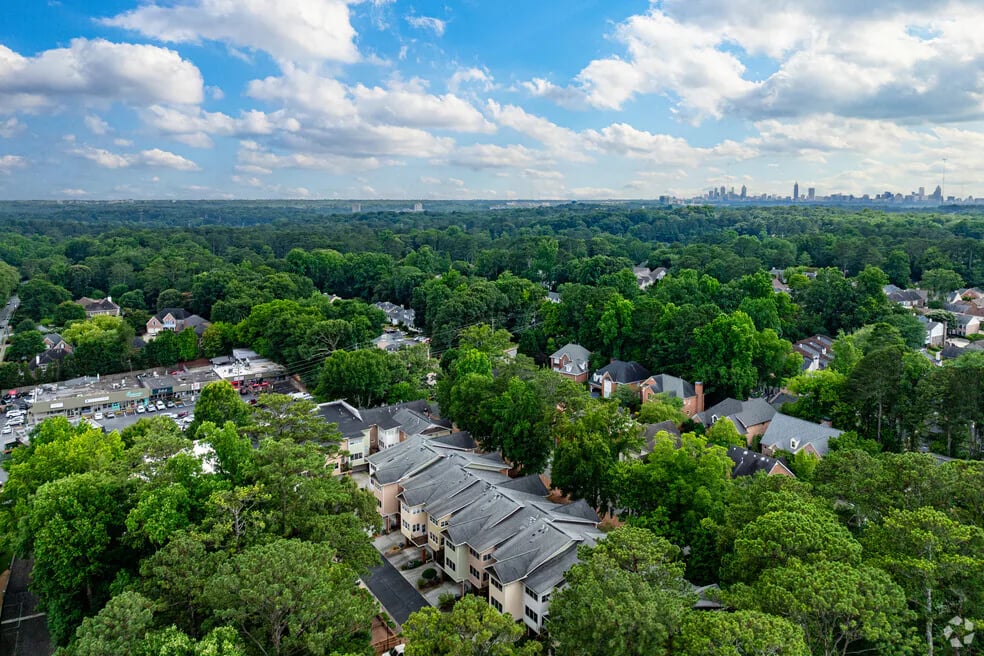
When buying a home in Metro Atlanta, Buyers often end up comparing two very different opportunities: an established neighborhood where most of the roads, homes, landscaping, amenities, and nearby businesses are already in place—or a growing community where new housing, retail, roads, parks, and other development may still be taking shape. Neither is automatically better. The more useful question is how much of the value you are buying already exists today, and how much depends on what you expect the area to become.
How Do Atlanta Buyers Choose Between Established and Growing Neighborhoods?
Compare what is already built with what is still becoming.
Established Neighborhoods
Often Sell You
What Already Exists.
Growing Communities
May Ask You to Place Value on
What Could Exist Later.
Watch the Video
Established vs. Growing Atlanta Neighborhoods
Prefer to watch instead? I break down how Buyers can compare established neighborhoods with developing communities—and which trade-offs matter before making an offer.
Use the Built vs. Becoming Test
When comparing two areas, divide what you are buying into two categories.
Already Exists | Still Becoming |
|---|---|
Existing roads, parks, shopping, mature landscaping, current commute patterns, existing housing stock, current taxes and HOA structure | Proposed retail, future roads, new phases, future parks, planned schools or public facilities, undeveloped parcels, projected community build-out |
The Most Important Question:
“Am I Paying for What Exists Today—or for What I Hope Will Exist Later?”
1. Established Neighborhoods Give You More Current Evidence
In an established neighborhood, Buyers can usually observe more of the ownership environment directly.
You can see:
- How mature the landscaping is.
- What the surrounding homes actually look like.
- How streets and parking function.
- Which shopping and services are already open.
- What traffic currently feels like.
- What the HOA has historically maintained.
- How homes of different ages are holding up.
That does not remove uncertainty.
Neighborhoods continue to change.
But you have more historical and physical evidence available before buying.
Established does not automatically mean better. It usually means more of the environment can already be evaluated rather than projected.
2. Growing Communities May Offer a Different Housing Product
Growing areas often contain more:
- New construction.
- Recently built infrastructure.
- Modern floor plans.
- Newer mechanical systems.
- Energy-efficient construction.
- New amenity packages.
- Future phases of development.
For some Buyers, that is a meaningful advantage.
They may prefer:
newer systems,
less immediate updating,
modern layouts,
or a community that is still expanding.
But buying earlier in a growing area can also mean accepting:
- Construction activity.
- Unfinished roads or phases.
- Changing traffic.
- Limited mature landscaping.
- Amenity plans that are still developing.
Newer Home
Does Not Automatically Mean
More Convenient Location.
Older Neighborhood
Does Not Automatically Mean
Higher Ownership Cost.
3. Compare What Your Budget Actually Buys
Do not compare neighborhood labels.
Compare actual properties.
Suppose your budget is:
$600,000.
In an established area, that might buy:
- An older detached home.
- Mature landscaping.
- A more established commercial area.
- Closer access to existing amenities.
- Potentially older major systems.
In a growing community, the same budget might buy:
- A newer home.
- Modern layout.
- Newer roof and HVAC.
- A smaller or different lot configuration.
- A longer commute.
- Future rather than existing nearby amenities.
Neither package automatically provides more value.
The question is:
which package contains the things you would otherwise have to spend money, time, or daily inconvenience to obtain?
4. Existing Amenities and Planned Amenities Should Not Be Valued the Same Way
Suppose a growing community advertises:
- Future retail.
- A proposed park.
- New road connections.
- Restaurants coming soon.
- Additional phases.
Those plans may eventually improve convenience.
But Buyers should distinguish:
open today
from:
planned, proposed, approved, under construction, or simply discussed.
If a future amenity is a major reason you are willing to pay the price, verify exactly what stage that project is in.
5. Run the “Nothing Else Gets Built” Test
This is one of the simplest ways to evaluate a developing area.
Imagine:
the proposed restaurant takes longer than expected,
the retail center changes,
the next residential phase is delayed,
or the infrastructure schedule moves.
Then ask:
“Would I still want this home based on what exists today?”
“If None of the Proposed Future Improvements Happened, Would I Still Want to Own This Home?”
If the answer is yes:
future development may be upside.
If the answer is no:
you may be buying the plan more than the property.
6. New Development Can Improve Convenience—and Create New Friction
Development is not automatically positive.
It can bring:
- Shopping.
- Restaurants.
- Parks.
- Employment.
- Infrastructure.
- New housing options.
It can also bring:
- More traffic.
- Years of construction.
- Changes to views.
- Different road patterns.
- Additional competing housing inventory.
Instead of asking:
“Is development good for this area?”
ask:
“How could this specific development change this specific property?”
7. Compare Commute Based on the Route You Will Actually Drive
A newer home farther from an employment center may provide:
more square footage,
newer systems,
or a lower purchase price.
But if the trade-off is:
30 additional minutes of driving every weekday,
that should be part of the decision.
Test the actual route during:
- Morning rush hour.
- Evening rush hour.
- Your typical weekday schedule.
You experience the floor plan when you are home. You may experience the commute every workday.
8. Mature Landscaping Has Value—but It Also Has Maintenance
Established neighborhoods may offer:
- Large mature trees.
- More developed landscaping.
- Established yards.
- More visual separation between homes.
Those can be meaningful advantages.
But older landscaping can also involve:
- Tree maintenance.
- Root issues.
- Drainage.
- Irrigation repairs.
- Retaining walls.
- Long-term yard maintenance.
Again:
established does not mean maintenance-free.
9. Newer Infrastructure Does Not Eliminate Due Diligence
Newer homes and communities can reduce some age-related concerns.
But Buyers should not assume:
“New means nothing can be wrong.”
New construction can still require attention to:
- Construction quality.
- Drainage.
- Grading.
- Warranty procedures.
- HOA documents.
- Lot-specific conditions.
- Future construction around the home.
Inspection and property-specific due diligence still matter.
New Construction
Means
Newer.
It Does Not Mean
Risk-Free.
10. HOA Structure Can Be Very Different
Growing master-planned communities may have:
- New pools.
- Clubhouses.
- Pickleball or tennis.
- Common landscaping.
- Architectural controls.
- Developer-controlled HOA periods.
Established communities may have:
older amenity structures,
different reserve needs,
different dues,
or no HOA at all.
Review the current documents rather than assuming:
“new HOA = better HOA”
or:
“older HOA = cheaper HOA.”
11. Growing Communities Can Create Builder Competition Later
Suppose you purchase a resale home while the builder is still selling:
brand-new homes in the next phase.
If you need to sell earlier than expected, future Buyers may compare your home against:
- New construction.
- Builder incentives.
- Rate buy-downs.
- Closing-cost incentives.
- Newer finishes.
That does not mean you should avoid growing communities.
It means:
future competing supply should be part of the exit analysis.
If you may sell while the community is still being built, your future competition may include the builder itself.
12. Established Neighborhoods Have Their Own Resale Question
Established areas can provide more resale history.
But that does not automatically make every property easy to resell.
Consider:
- Home age.
- Renovation level.
- Road position.
- Lot.
- Functional layout.
- Nearby land use.
- Future repair burden.
A renovated home in an established area may compete very differently from an unrenovated home on the same street.
13. Don't Assume “Growing” Means Guaranteed Appreciation
This is one of the most important corrections Buyers should make.
More development can create:
more demand,
more amenities,
and infrastructure improvements.
But it can also create:
more supply,
construction disruption,
traffic,
and changing market conditions.
Future appreciation depends on many factors that cannot be guaranteed.
“Growing”
Does Not Mean
Guaranteed Appreciation.
14. Don't Assume “Established” Means the Area Cannot Change
An established neighborhood may still experience:
- Rezoning.
- Road projects.
- Commercial redevelopment.
- Infill construction.
- Apartment or mixed-use development nearby.
- Changing traffic patterns.
No neighborhood is frozen in time.
Research future land use when nearby changes materially affect your purchase decision.
15. Compare What You Cannot Change
Interior finishes can often be changed.
Location usually cannot.
When comparing an established home and a newer home, pay particular attention to:
- Road exposure.
- Lot configuration.
- Driveway.
- Parking.
- Commute geography.
- Adjacent land.
- Property taxes.
- Jurisdiction.
A beautiful new kitchen should not distract you from a permanent location compromise you already know you dislike.
The Built vs. Becoming Comparison Matrix
Factor | Established Area | Growing Area |
|---|---|---|
Amenities | More can often be evaluated today | Some may still be planned or under construction |
Housing | More established resale inventory | Potentially more new construction / newer systems |
Landscaping | Often more mature | Often less mature initially |
Construction | Usually less community-wide construction | May continue for years depending on build-out |
Market History | Often more resale history | Less historical evidence in newer phases |
Future Supply | Often more constrained | Builder / new-phase competition may remain |
Future Uncertainty | Still exists, but more surroundings are observable | Potentially more tied to development schedules and build-out |
The 100-Point Neighborhood Maturity Fit Scorecard
Category | Score | Buyer Question |
|---|---|---|
Property Fit | ___ / 20 | Which actual house works better? |
Total Ownership Cost | ___ / 15 | Price + tax + insurance + HOA + maintenance + repairs |
Daily-Life Efficiency | ___ / 15 | How well does the exact location fit my recurring routes? |
Existing Amenities | ___ / 10 | What useful infrastructure already exists? |
Development Certainty | ___ / 10 | How dependent is my decision on future plans? |
Construction / Supply Risk | ___ / 10 | Will building activity or future competing inventory matter to me? |
Permanent Location Fit | ___ / 10 | Am I comfortable with what I cannot change? |
Future Flexibility | ___ / 10 | Would this property still work if my life or the area changes? |
Total | ___ / 100 | This measures personal fit—not whether established or growing neighborhoods are universally better. |
25 Questions Before Choosing an Established or Growing Community
☐ 1. What amenities exist today?
☐ 2. Which amenities are only proposed or planned?
☐ 3. What stage are those projects actually in?
☐ 4. Would I still buy if none of those future projects happened?
☐ 5. How much construction remains nearby?
☐ 6. How many future housing phases are planned?
☐ 7. Could builder inventory compete with my home if I sell early?
☐ 8. What does my budget buy in each area today?
☐ 9. Which property has the better layout?
☐ 10. Which property has the stronger lot?
☐ 11. What major systems are older?
☐ 12. What future capital costs should I prepare for?
☐ 13. What are the HOA dues and responsibilities?
☐ 14. Is the HOA still developer-controlled?
☐ 15. What is the current property-tax burden?
☐ 16. What is my actual rush-hour commute?
☐ 17. Which recurring destinations are easier from each property?
☐ 18. What existing parks, shopping and services would I really use?
☐ 19. Does mature landscaping matter enough to me to pay for it?
☐ 20. Am I comfortable living near continuing construction?
☐ 21. What nearby land can still change?
☐ 22. Are road or infrastructure projects relevant to this property?
☐ 23. Which permanent location trade-offs can I not change?
☐ 24. Which property would I choose if I ignored predictions about appreciation?
☐ 25. Am I buying what exists—or paying for what I hope this area becomes?
If You Ask Only One Question:
“If None of the Proposed Future Improvements Happened, Would I Still Want to Own This Home?”
Frequently Asked Questions
Is an established Atlanta neighborhood better than a growing community?
Not universally. Established areas usually allow Buyers to evaluate more of the current environment, while growing communities may provide newer housing and future development opportunities. The better fit depends on the exact property, ownership cost, commute, amenities, development uncertainty and Buyer priorities.
Are growing Atlanta neighborhoods better investments?
Not automatically. Development can improve amenities and demand, but future appreciation cannot be guaranteed. Additional housing supply, traffic, construction and market conditions can also affect outcomes.
Should I trust planned amenities in a new community?
Verify their current status. “Planned,” “proposed,” “approved,” “funded,” and “under construction” are very different stages. If the amenity materially affects your willingness to buy, investigate it carefully.
Is new construction always cheaper to maintain?
Newer major systems can reduce some immediate age-related replacement exposure, but new homes still require maintenance and can have construction, drainage, grading, warranty or other issues. Inspect and evaluate the actual property.
Why does future builder inventory matter?
If you resell before a community is fully built out, Buyers may compare your resale home with new builder inventory, including builder incentives and new finishes. That may affect your competitive environment.
Do established neighborhoods have lower risk?
They may offer more historical information and more observable surroundings, but they still have risks such as aging systems, maintenance, redevelopment, road projects, rezoning and changing market conditions.
How important is commute when comparing the two?
Potentially very important. A newer or larger home may create a longer daily route. Test actual rush-hour driving rather than comparing mileage alone.
Should I choose based on future resale value?
Consider resale flexibility, but do not rely on appreciation predictions. Focus on durable characteristics such as location, lot, layout, total ownership cost, competing supply, commute and permanent property features.
Where can I watch your video about this topic?
You can watch my full video discussion here: Established vs. Growing Atlanta Neighborhoods on YouTube.
What is the best question to ask before buying in a growing community?
Ask: “If none of the future development I am excited about happened on the timeline I expect, would I still be happy owning this property?”
Don't Choose
Established vs. Growing.
Choose
the Trade-Off You Actually Want to Own.
Final Thoughts: Buy the Property That Works Even Without the Story
An established neighborhood may offer:
mature surroundings,
existing amenities,
more resale history,
and a clearer picture of what daily life already looks like.
A growing community may offer:
newer homes,
modern layouts,
new infrastructure,
and future development potential.
Neither automatically wins.
Before deciding, compare:
The actual home.
Total ownership cost.
Commute.
Existing amenities.
Future development certainty.
Construction and future supply.
HOA structure.
Permanent location characteristics.
And resale flexibility without assuming future appreciation.
Then ask:
“Would I still buy this property if I ignored the story about what the neighborhood might become?”
Future development should be potential upside—not the only reason the purchase makes sense.
Watch the Full Discussion
See how I compare established Atlanta neighborhoods with growing communities and the questions Buyers should ask before making an offer.
Comparing Atlanta Neighborhoods?
We can compare actual properties rather than neighborhood labels. That may include current listings, comparable sales, home condition, new-construction competition, property taxes, HOA costs, commute routes, nearby development, major-system age, lot characteristics and resale flexibility. The goal is to understand what already exists, what is still changing, and whether the property works for you even without relying on future predictions.
Tina Jingru Sui | TJS Team
Call or Text: (404) 375-2120
Email: [email protected]
Visit TinaSui.com
About Tina Jingru Sui
Tina Jingru Sui is the founder and leader of the TJS Team, serving home buyers, sellers, investors, new-construction buyers and relocation clients throughout Metro Atlanta.
Tina and her team serve Atlanta, Johns Creek, Alpharetta, Suwanee, Duluth, Buford, Dacula, Sandy Springs, Roswell, Marietta, Smyrna, Peachtree Corners and surrounding Metro Atlanta communities.
Keller Williams Realty Atlanta Partners · (404) 375-2120
This article is provided for general real estate education and information only and does not constitute legal, financial, tax, appraisal, investment, zoning, planning, lending, inspection, engineering, HOA or other professional advice. The Built vs. Becoming Test, 100-point scorecard, comparison matrix, examples and questions are educational decision-making tools only and do not rank any neighborhood, predict appreciation, guarantee resale, or establish that established or growing communities are universally better. Proposed roads, parks, retail, schools, housing, public facilities and other developments may change, be delayed, lose funding, be redesigned or never be completed. Buyers should verify material development information through the appropriate municipality, county, developer, transportation agency or other official source. Current zoning and future-land-use classifications do not guarantee the ultimate use of a parcel. New construction does not guarantee defect-free construction. Older homes do not automatically require more repairs. System age does not by itself establish a defect or remaining useful life. Builder incentives, interest-rate incentives and new-construction supply can change and should be confirmed at the time of purchase. Property taxes, insurance, HOA dues and ownership costs can change after closing. HOA documents, reserves, assessments, rules and developer-control provisions should be reviewed using current documents. Commute times vary by route, traffic, weather, construction and time of day. References to amenities, infrastructure, commute and development are objective property and location characteristics and should not be interpreted as steering toward or away from a neighborhood based on protected characteristics. If schools are part of a Buyer's independent criteria, current school assignment should be verified by exact address with the applicable district. Future resale and appreciation cannot be guaranteed. A Comparative Market Analysis is not an appraisal. Real estate professionals can assist with property search, comparable sales, neighborhood logistics, public-information research, new-construction comparisons, transaction strategy and property-specific analysis but do not replace attorneys, appraisers, inspectors, engineers, lenders, tax professionals, planners, zoning officials, HOA professionals or other qualified specialists. Equal Housing Opportunity. Tina Jingru Sui, GA License #392936, REALTOR®, affiliated with Keller Williams Realty Atlanta Partners.