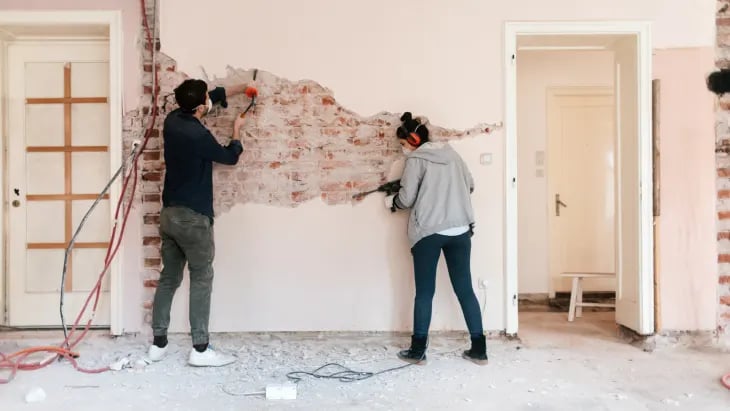
How Much “Fixing Up” Is Too Much? A Reality Check for Atlanta Buyers
Many Atlanta buyers are drawn to homes that “just need a little work.” The price looks attractive, the location checks the boxes, and the updates feel manageable—at least on paper. But once the project begins, expectations often collide with reality.
So how much fixing up is actually too much?
1. Cosmetic Updates vs. Structural Work
Not all fixes are created equal.
Cosmetic updates—paint, flooring, lighting, fixtures—are usually predictable and controllable.
Structural or system issues—roof, foundation, plumbing, electrical, HVAC—can quickly spiral in cost and time.
A good rule: if the home needs work you can’t see, the risk is already higher.
2. The Atlanta-Specific Factor
Many Atlanta homes were built between the 1960s and 1990s. Common issues buyers face include:
-
Aging roofs and original HVAC systems
-
Outdated electrical panels
-
Drainage and grading problems due to clay soil
-
Split-level or compartmentalized layouts that are costly to reconfigure
What looks like a simple update may require permits, specialists, and weeks of delays.
3. Budget vs. Reality
Buyers often underestimate:
-
Labor costs (which fluctuate widely)
-
Permit and inspection requirements
-
Delays from materials or contractor schedules
-
Living costs during renovations
A $30,000 estimate can easily become $50,000 once work begins.
4. Time Is a Cost Too
Even when the budget holds, renovation takes time—time off work, decision fatigue, and constant coordination. Buyers should ask themselves:
-
Can I live through this disruption?
-
Do I have the bandwidth to manage ongoing decisions?
-
Will delays impact my move-in timeline?
Stress is part of the price.
5. Resale Reality
Over-improving a home for its neighborhood rarely pays off. Not all upgrades translate into resale value, especially when:
-
The layout remains compromised
-
The location caps appreciation
-
Buyer expectations don’t align with the price
Fixing up should improve livability—not chase perfection.
6. When Fixing Up Makes Sense
Renovation works best when:
-
The location is strong and stable
-
The home’s fundamentals are solid
-
The upgrades match neighborhood standards
-
Buyers plan to stay long enough to enjoy the improvements
Without these, “fixing up” can become a financial and emotional drain.
Final Thought
In Atlanta’s market, the right fixer can be a smart move—but only with clear eyes. The goal isn’t to buy the cheapest house, but the one that fits your time, budget, and tolerance for disruption.
Sometimes the most affordable choice is the one that needs less fixing.
--
Tina Jingru Sui 隋静儒
Associate Broker | Team Leader of TJS Team, Keller Williams
 Serving Metro Atlanta — Johns Creek, Alpharetta, Duluth, Suwanee, Buford, and beyond
 404-375-2120


 WeChat: tinasuirealty
 Follow me on Instagram / 小红书 / WeChat / Facebook