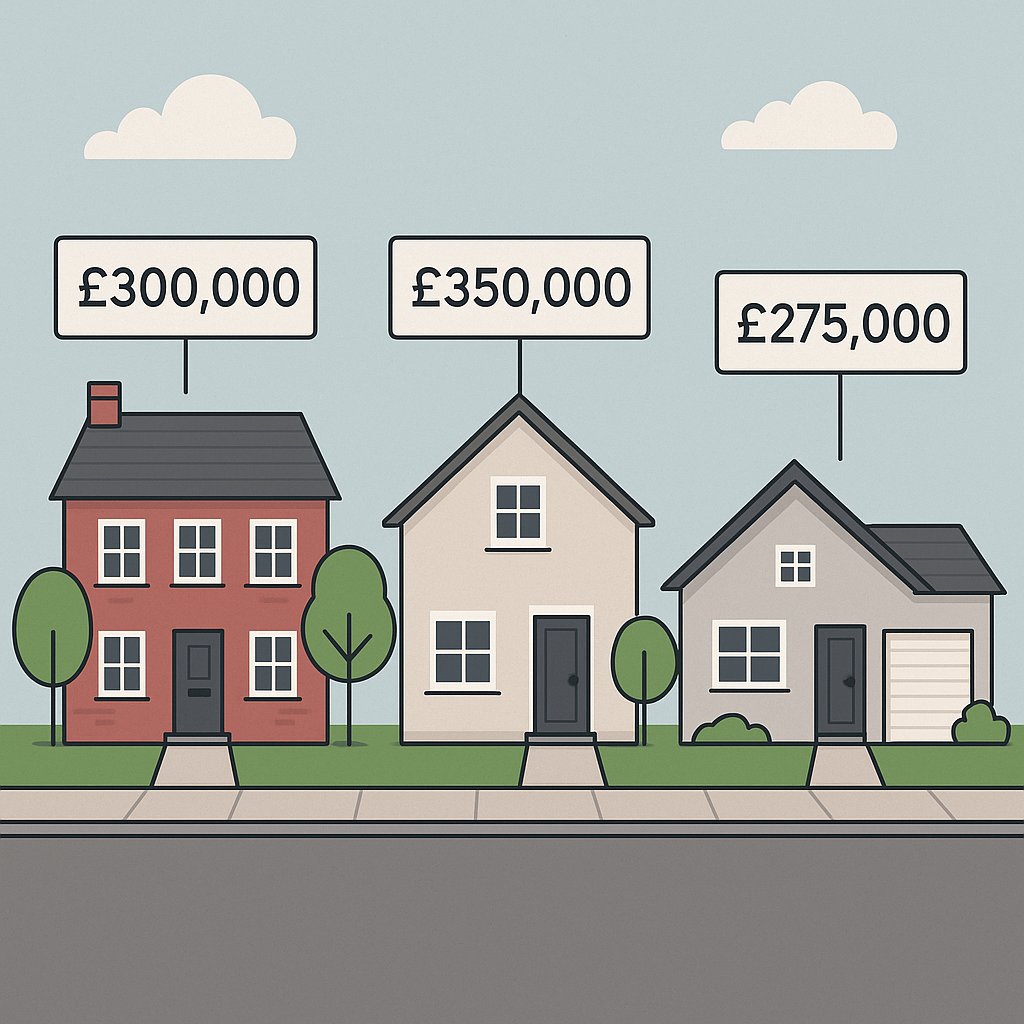
Choosing a listing agent should be a comparison of evidence, strategy, communication, and execution—not just personality or promises. Metro Atlanta sellers should compare agents side by side using local market knowledge, pricing logic, recent relevant results, marketing quality, negotiation experience, communication, technology, transparency, and overall value.
How to Choose the Best Listing Agent in Metro Atlanta in 2026: Side-by-Side Criteria and Red-Flag Comparison
Compare listing agents using practical criteria, performance data, marketing strategies, and red flags before selling your Metro Atlanta home.
Selling a home is a major financial decision, and choosing the right listing agent can affect much more than how quickly your property appears online.
Your agent may help you make decisions about:
- Pricing.
- Repairs and preparation.
- Photography and marketing.
- Showing strategy.
- Offers and counteroffers.
- Inspection negotiations.
- Appraisal issues.
- Closing coordination.
Metro Atlanta is also made up of many different submarkets across Fulton, Gwinnett, Cobb, Forsyth, and DeKalb counties.
Instead of choosing an agent simply because they have a strong reputation, suggest the highest price, or offer the lowest fee, sellers should compare agents using the same clear criteria.
Don't ask only:
“Which agent made the best presentation?”
Ask: “Which agent has the strongest evidence, strategy, communication, and execution plan for my home?”
Side-by-Side Criteria for Comparing Listing Agents
Criteria | Strong Agent | Possible Red Flag |
|---|---|---|
Local Knowledge | Understands neighborhood sales, current competition, and property-specific market factors | Uses broad city averages and has difficulty discussing nearby competition |
Pricing | Provides a detailed CMA and explains the evidence behind the recommendation | Suggests an unusually high price without relevant support |
Track Record | Can show recent results involving similar homes or situations | Relies on broad production claims but cannot provide relevant examples |
Marketing | Uses professional presentation and can show examples of recent marketing | Marketing plan is mostly “put it on the MLS and wait” |
Negotiation | Can explain how price, terms, financing, inspection, appraisal, and closing risk are evaluated | Talks only about getting the highest offer |
Communication | Sets clear expectations for updates, feedback, and responsibilities | Responses are inconsistent or responsibilities are unclear |
Technology | Uses digital tools when they improve presentation, exposure, analysis, or reporting | Uses technology as a buzzword but cannot explain the benefit to your listing |
Transparency | Clearly explains fees, services, agreement terms, risks, and expectations | Avoids detailed questions about fees, strategy, or listing terms |
1. Check Their Local Market Experience
A good listing agent should understand the market where your property is actually located.
That goes beyond knowing the city name.
Sellers should ask about:
- Recent nearby sales.
- Current active competition.
- Pending activity when useful information is available.
- Days on market.
- Price reductions.
- Property types common in the area.
- Nearby new construction and competing inventory.
An agent working in Fulton County may encounter a different buyer pool and housing stock than one working in Gwinnett, Cobb, Forsyth, or DeKalb.
Even within the same county, different neighborhoods and price ranges can behave differently.
Local knowledge should mean knowing what your home is competing against—not simply having sold somewhere in the county before.
2. Review Their Pricing Strategy
Pricing is one of the most important decisions in a home sale.
Ask each agent to prepare a Comparative Market Analysis (CMA) and explain why specific properties were selected.
A useful analysis may consider:
- Recent closed sales.
- Active competing listings.
- Home size.
- Condition and renovation level.
- Lot characteristics.
- Floor-plan functionality.
- Basement characteristics.
- Major-system condition.
- Current buyer activity.
Be cautious if one agent recommends a dramatically higher list price than other agents but cannot clearly explain what justifies the difference.
The highest suggested list price is not automatically the best pricing strategy.
Ask for evidence.
Ask About Original List Price vs. Final List Price
When reviewing an agent's track record, sellers should understand how performance statistics are calculated.
For example:
Original List Price: $700,000
Final List Price: $650,000
Sale Price: $645,000
Saying the property sold for about 99% of the final list price gives a different impression than comparing the sale price with the original $700,000 asking price.
Don't rely on a performance statistic until you understand how it is defined.
3. Evaluate the Marketing Plan
A marketing strategy should go beyond entering the listing into the MLS.
Depending on the home, it may include:
- Professional photography.
- Property videos.
- 3D or virtual tours.
- Floor plans.
- Online property exposure.
- Social media marketing.
- Open houses.
- Email marketing.
- Targeted digital advertising where appropriate.
Sellers should also ask:
“Can you show me examples of your recent listings?”
Look at the quality of the photography, video, listing copy, presentation, staging, and how clearly each home's strongest features were communicated.
Marketing should be judged by the execution—not simply the number of marketing tools listed in a presentation.
4. Look at the Track Record That Actually Matters
Total production can provide context, but sellers should focus on relevant experience.
Ask:
- How many listings have you handled recently?
- How many were similar to my property?
- Do you regularly work in my price range?
- What happened when listings did not sell quickly?
- How have you handled difficult inspection negotiations?
- How have you handled appraisal problems?
Relevant recent experience can sometimes tell you more than the total number of years an agent has held a license.
5. Evaluate Negotiation Skills
Selling a home involves multiple negotiations—not just the initial offer.
A listing agent may need to help the seller evaluate:
- Purchase price.
- Buyer financing.
- Seller concessions.
- Earnest money.
- Due-diligence terms.
- Inspection requests.
- Repair requests.
- Appraisal terms.
- Closing date.
- Other contingencies.
Instead of asking:
“Are you a strong negotiator?”
ask:
“Walk me through how you would compare two offers with different prices and terms.”
Price + Net Proceeds + Terms + Timing + Certainty of Closing
6. Test Their Communication Before You Sign
Good communication is more than returning calls quickly.
A strong agent should also be able to explain:
- What the market data means.
- What showing feedback means.
- What decision the seller needs to make next.
- What risks are involved.
- What happens if the initial strategy does not work.
Before signing, ask:
- How often will I receive updates?
- How will showing feedback be communicated?
- Who is my main point of contact?
- Who negotiates offers?
- Who handles inspection and appraisal issues?
A listing agent should communicate when the market agrees with the strategy—and when it doesn't.
7. Evaluate Technology Based on What It Actually Does
Technology can improve a listing, but sellers should not choose an agent simply because the presentation includes the newest tools.
Useful technology may help with:
- Property presentation.
- Virtual viewing.
- Digital advertising.
- Showing coordination.
- Market reporting.
- Buyer engagement.
The important question is:
“How does this tool improve the way my home is marketed or managed?”
8. Look for Transparency Around Fees and Expectations
Before signing the listing agreement, sellers should understand exactly what they are agreeing to.
Ask about:
- Listing-broker compensation.
- Services included.
- Marketing expenses.
- Administrative or transaction-related fees.
- Listing term.
- Seller obligations.
- Early termination or withdrawal provisions.
Brokerage compensation is negotiable and is not set by law.
The cheapest option is not automatically the best value—and the most expensive option is not automatically the best service.
Listing-Agent Red Flags to Watch For
Red Flag #1: Unrealistic Promises
Be cautious of agents who guarantee:
- A specific sale price.
- An exact number of days on market.
- Multiple offers.
- A bidding war.
A professional can provide analysis and strategy, but market outcomes cannot be guaranteed.
Red Flag #2: Weak Market Knowledge
If an agent cannot explain the relevant comps, active competition, or current buyer response in your market segment, ask more questions.
Red Flag #3: Poor Communication
Delayed responses during the interview stage do not automatically mean the agent will perform poorly, but they can help you understand whether the communication style matches your expectations.
Red Flag #4: Minimal Marketing
If the entire marketing strategy is simply “put the property on the MLS,” ask what additional steps will be taken to present the home effectively.
Red Flag #5: Focusing Only on Commission
Fees matter, but they should be evaluated together with the complete service.
Compare:
Fees + Services + Marketing + Experience + Communication + Negotiation + Execution
Red Flag #6: No Plan if the Home Doesn't Sell Quickly
Ask:
“What information will we review if buyer activity is weaker than expected?”
A listing strategy should include not only the launch plan, but also the process for interpreting market feedback.
Interview Two or Three Agents Using the Same Questions
Interviewing multiple agents can be useful because it allows you to compare different approaches.
The key is to ask similar questions.
Factor | Agent 1 | Agent 2 | Agent 3 |
|---|---|---|---|
Recent Relevant Listings | |||
Local Market Knowledge | |||
CMA / Pricing Logic | |||
Marketing Quality | |||
Negotiation Strategy | |||
Communication Plan | |||
Market Feedback Plan | |||
Fees & Included Services |
12 Questions to Ask Before Hiring a Listing Agent
1. What similar homes have you sold recently?
2. Which comparable sales are most relevant to my home?
3. Why did you exclude other nearby sales?
4. What current listings are competing with mine?
5. What should I repair, improve, or leave alone before listing?
6. Can you show me examples of your recent marketing?
7. How do you compare offers with different prices and terms?
8. How often will I receive updates?
9. Who will be my main point of contact?
10. What happens if the home receives few showings or no offers?
11. What compensation, fees, and expenses should I expect?
12. What happens if I want to cancel or withdraw before the listing agreement expires?
Don't choose a listing agent based only on reputation, the highest suggested price, or the lowest fee.
Compare: Evidence + Strategy + Communication + Negotiation + Execution.
Frequently Asked Questions
What should I ask a listing agent before hiring them?
Ask about recent relevant listings, local market knowledge, comparable sales, pricing strategy, property preparation, marketing, negotiation, communication, market-feedback process, fees, and exactly who will manage each stage of the listing.
How can I tell if an agent's suggested price is realistic?
Ask for a detailed CMA and have the agent explain why each comparable property matters. The analysis should consider recent closed sales, current competition, condition, lot, floor plan, renovations, and buyer demand rather than relying only on nearby asking prices.
Should I choose the agent with the lowest commission?
Not automatically. Brokerage compensation is negotiable, but sellers should compare the complete service, marketing, experience, communication, negotiation support, additional fees, and overall value before deciding.
How many listing agents should I interview?
Interviewing two or three agents is often enough to compare different approaches. Asking the same core questions makes the comparison more useful.
Is the agent with the most listings automatically the best choice?
No. Production can provide useful context, but sellers should also consider relevant recent experience, the agent's service structure, marketing quality, availability, communication, pricing strategy, and who will actually handle the listing.
Final Thoughts
Choosing the best listing agent in Metro Atlanta in 2026 requires more than reading reviews or listening to a listing presentation.
Compare agents based on:
Local Knowledge + Pricing + Relevant Results + Marketing + Negotiation + Communication + Technology + Transparency
Just as importantly, pay attention to what happens when you ask difficult questions.
Can the agent explain the data?
Can they identify weaknesses in your property as well as strengths?
Can they explain what happens if the original strategy does not work?
Can they discuss fees, risks, and agreement terms clearly?
The right listing agent should not simply be good at winning the listing appointment.
They should be good at advising the seller after the listing agreement is signed and real decisions have to be made.
Comparing Listing Agents for Your Metro Atlanta Home?
Before you list, we can review your recent comparable sales, current competition, property condition, preparation priorities, pricing options, marketing strategy, and estimated seller proceeds so you can compare the recommendation based on actual evidence.
Tina Jingru Sui | TJS Team
About Tina Jingru Sui
Tina Jingru Sui is the founder and leader of the TJS Team, serving sellers, buyers, investors, and relocation clients throughout Metro Atlanta.
Tina and her team serve communities including Johns Creek, Alpharetta, Suwanee, Duluth, Buford, Dacula, Marietta, Roswell, Sandy Springs, Smyrna, Lawrenceville, and surrounding Metro Atlanta areas.
Keller Williams Atlanta Partners · (404) 375-2120
This article is provided for general informational and educational purposes only and does not constitute legal, tax, appraisal, investment, or financial advice. Real estate statistics and performance metrics can be calculated differently depending on methodology, time period, original versus final list price, property type, geography, and other factors. Listing results, sale price, number of offers, days on market, marketing performance, appraisal outcomes, buyer demand, and closing results vary by property, pricing, location, condition, market circumstances, contract terms, and other factors. No real estate professional can guarantee a particular sale price, market time, bidding war, number of offers, or closing outcome. Brokerage compensation is negotiable and is not set by law. Sellers should verify an agent's Georgia license, carefully review listing and brokerage agreements, understand fees and termination provisions, and consult appropriate legal, tax, financial, or other professionals when needed. Equal Housing Opportunity. Tina Jingru Sui, GA License #392936, REALTOR®, affiliated with Keller Williams Atlanta Partners and regulated by the Georgia Real Estate Commission.