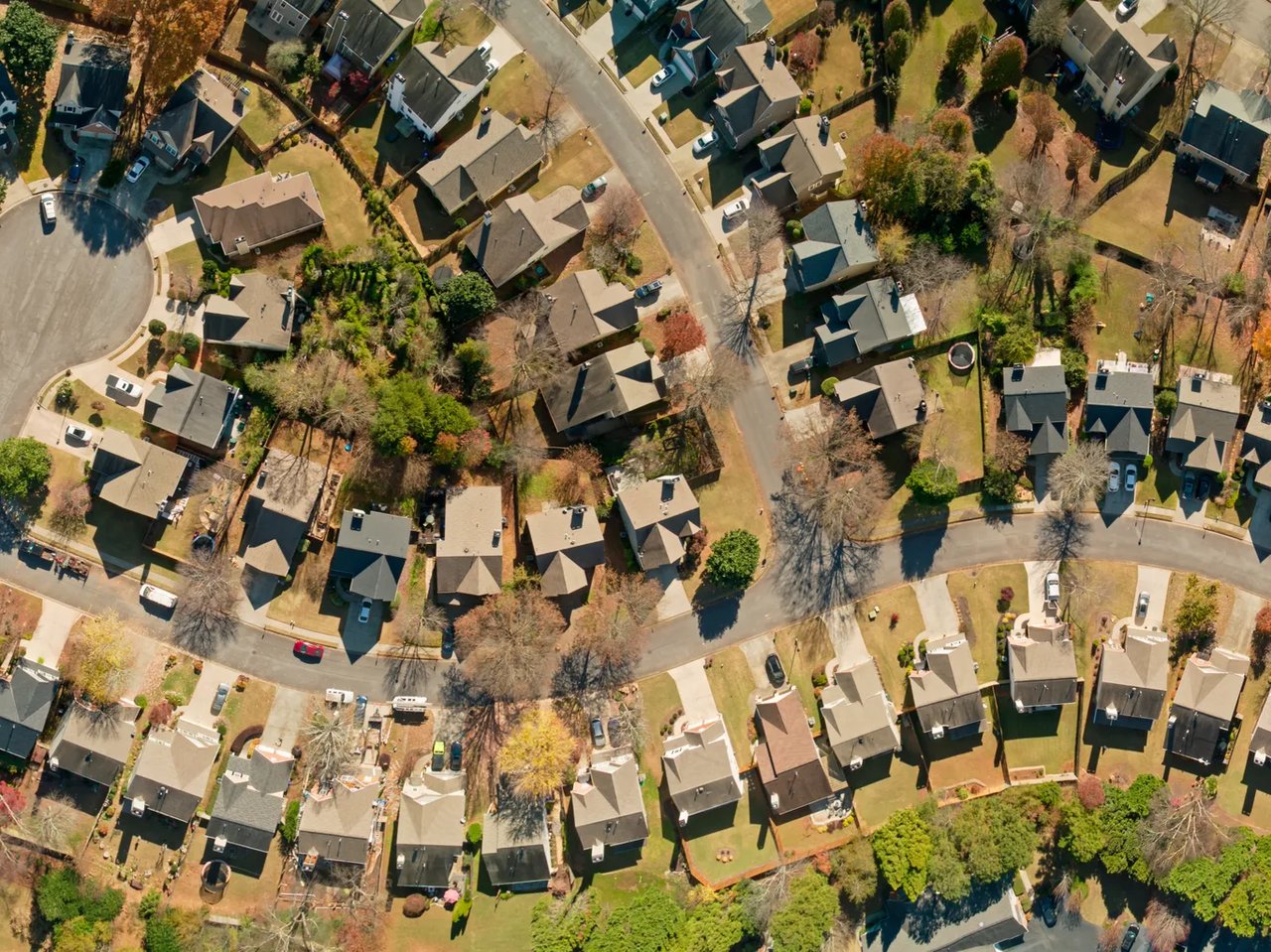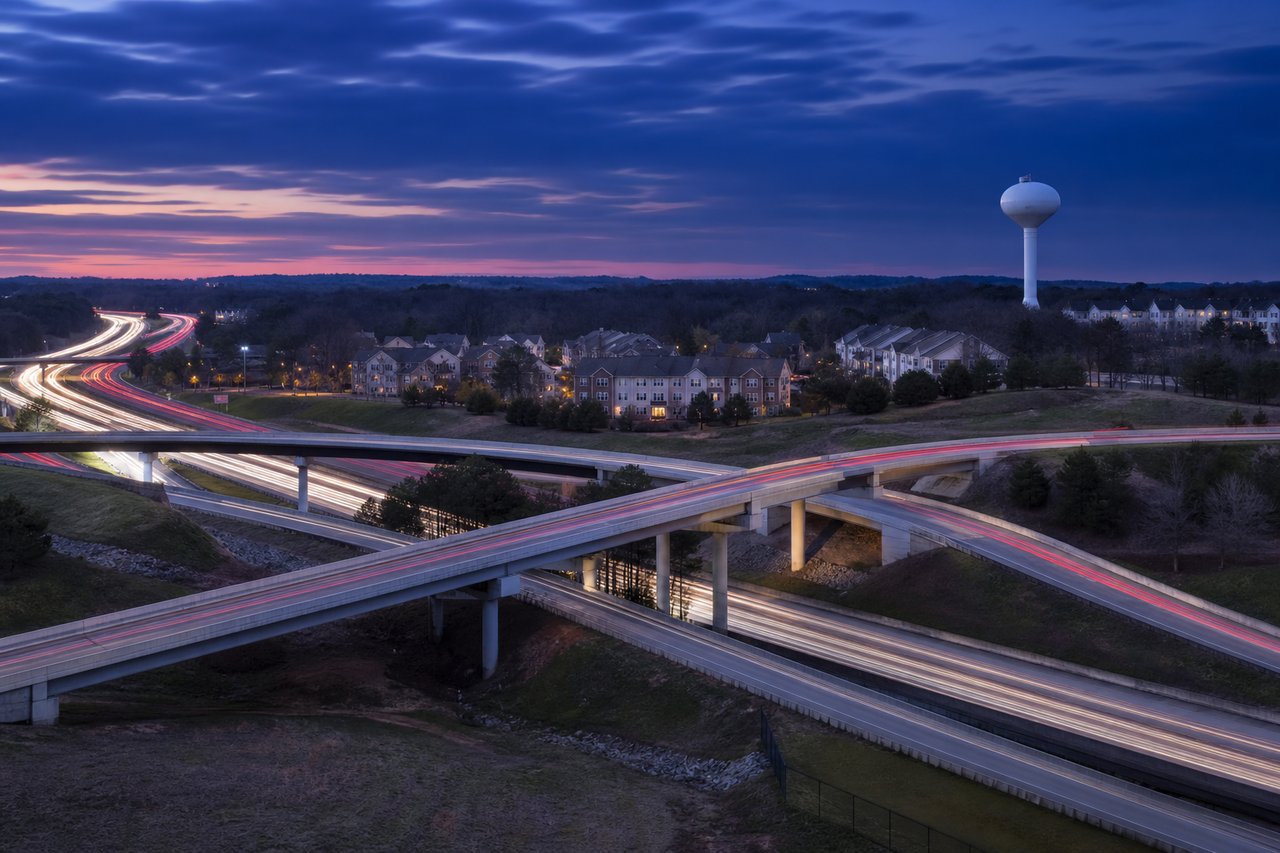
Gwinnett County has a compelling economic-development story in 2026—but a compelling county story does not automatically make every rental property a compelling investment. The County now has more than one million residents, large-scale infrastructure investment, the $2 billion UCB biologics project at Rowen, continued work around Gwinnett Place, and additional redevelopment activity along the I-85 corridor. Those are real catalysts. The investor's job is to determine whether a specific house, townhouse, multifamily property, or development site is actually positioned to capture the demand those catalysts may create.
Investment Opportunities in Gwinnett County in 2026: The Demand-Capture Radius Test
Don't buy near a headline. Buy a property whose economics still work—and then determine whether the headline gives you additional upside.
A County-Level Growth Story
Does Not
Pay Your Mortgage.
A Specific Property's Ability
to Capture That Demand
Does.
The Macro Story Is Real—but Investors Still Have to Convert It Into Property-Level Demand
Gwinnett County reports a population above:
1 million residents.
That makes it Georgia's second-most-populous county.
The County's 2026 budget materials also report that Partnership Gwinnett-supported projects in 2025 generated approximately:
1,112 new jobs
and:
$395.9 million in new capital investment.
Those numbers help establish an economic base.
But they do not tell you:
- What a three-bedroom house on a specific street will rent for.
- How long it will take to lease.
- Whether the property taxes are acceptable.
- Whether insurance will destroy the cash flow.
- Whether new rental supply is being built nearby.
- Whether the tenant pool generated by a new employer would actually choose that property.
Macro growth creates the possibility of demand. Property underwriting determines whether you can monetize it.
1. Start With Today's Property Economics—Not Tomorrow's Development Story
As of August 2026, Zillow's broad Gwinnett County data showed a typical home value around:
$403,103
which was approximately:
2.5% lower year over year.
Its county-level Zillow Observed Rent Index was approximately:
$1,830
with year-over-year rent growth around:
0.4%.
Those are broad indicators—not investment underwriting numbers for a particular property.
But they are useful for one reason:
Gwinnett in 2026 should not be underwritten as a simple “everything is appreciating and rents are rapidly rising” story.
Purchase basis matters.
Cash flow matters.
And submarket selection matters.
Development Headlines
Are
Future Information.
Your Purchase Price
and Current Rent
Are
Today's Economics.
Use the Demand-Capture Radius Test
Verified Catalyst
+
Geographic Relevance
+
Tenant / Buyer Match
+
Timing Match
+
Current Rent Support
−
Competing Supply
−
Ownership Costs
−
Execution Risk
=
Demand-Capture Potential
Before Buying Near Any Major Project, Ask:
“What Has to Happen for This Development Headline to Actually Show Up in This Property's Rent, Occupancy, or Resale Demand?”
2. Put Every Development Catalyst on the Catalyst Ladder
Not all development announcements deserve the same underwriting weight.
Stage | Investor Interpretation |
|---|---|
1. Announced | Interesting—but still highly dependent on future execution. |
2. Funded / Contracted | Capital commitment is more concrete, but delivery remains ahead. |
3. Infrastructure / Site Work | Physical progress exists; still ask when end users arrive. |
4. Vertical Construction | More execution risk has been removed. |
5. Operational | Jobs, tenants, residents or users now exist rather than being projected. |
6. Demonstrated Housing Demand | You can begin measuring whether rents, absorption or buyer demand actually responded. |
An announcement and an occupied employment center are not the same demand driver. The distance between those two stages is development risk.
3. Rowen / UCB: Gwinnett's Most Important New Employment Catalyst
In March 2026, UCB announced plans for its first U.S. pharmaceutical biologics manufacturing facility at Rowen.
The announced investment is:
$2 billion.
Gwinnett County says the project is expected to create:
- 330+ permanent jobs.
- Average annual salaries above $72,000.
- More than 1,000 construction jobs.
Rowen itself is a planned approximately:
2,000-acre knowledge community.
Its first phase of roads and utilities was completed in 2025.
Rowen's June 2026 update said its Convergence Center groundbreaking was expected in fall 2026.
That last detail is important.
As an investor, I would not convert:
“scheduled to break ground”
into:
“completed and producing housing demand.”
$2 Billion of Investment
Is a
Real Catalyst.
But the Rental Question Is:
Where Will the Permanent Workforce Actually Choose to Live?
Construction Demand and Permanent Employment Demand Are Different
More than 1,000 construction jobs can create temporary housing and service demand.
The 330+ permanent positions represent a different, longer-term employment base.
Do not underwrite both groups the same way.
For a long-term rental property, ask:
- When are permanent employees expected to begin working on site?
- What housing types are likely to appeal to those households?
- What commute radius is realistic?
- Will employees choose existing Gwinnett housing or new housing closer to the project?
- How much competing supply may be delivered before the employment ramp-up?
Don't Use “Near Rowen” as an Investment Thesis
A property that is:
8 minutes away
may capture different demand from one that is:
28 minutes away in traffic.
But distance alone is not enough.
Also evaluate:
- Road connectivity.
- Housing quality.
- Rent level relative to expected employee incomes.
- Shopping and daily services.
- School assignment if relevant to the property's likely renter pool and independently verified.
- Competing new construction.
4. Gwinnett Place Mall and Gateway Gwinnett Are Two Different Investment Stories
This distinction matters because the two projects are easy to confuse.
Project | What It Is | Investor Question |
|---|---|---|
Gwinnett Place Mall Redevelopment | Former mall site near I-85 / SR 120; the 2025 RFP described more than 72 acres for redevelopment, with County / URA ownership extending across a larger assembled site. | When will a master development plan translate into delivered housing, retail, employment and transportation improvements? |
Gateway Gwinnett | Separate 106-acre redevelopment site along Jimmy Carter Boulevard near I-85 in Norcross; RFP issued March 2026. | Which proposed uses are ultimately selected, financed, permitted and delivered? |
Never underwrite “the Gwinnett Place redevelopment” as one vague catalyst. Identify the exact project, exact parcel, exact stage, and exact distance from your investment.
5. The Gwinnett Place Corridor Has Real Infrastructure Commitment
The County has already taken meaningful steps around the former Gwinnett Place Mall redevelopment.
Its 2025 redevelopment RFP described nearly:
$50 million in committed infrastructure
to support the area.
In early 2026, Commissioners approved approximately:
$9.5 million
for Gwinnett Place sewer-capacity improvements.
The project involves roughly 1.5 miles of sewer infrastructure downstream from the mall area.
The County also approved Beaver Ruin Road operational improvements, including added travel capacity and interchange improvements near I-85.
Those investments are more concrete than a conceptual rendering.
But:
new sewer capacity does not automatically equal higher rent for the townhouse you are buying nearby.
Infrastructure
Can Enable
Future Demand.
It Does Not Automatically Create
Current Rent.
For Duluth / Norcross Corridor Investments, Track the Development Sequence
Instead of asking:
“Is the mall redevelopment good?”
track:
- Master-development partner selection.
- Final site plan.
- Entitlements and permits.
- Financing.
- Demolition / site work.
- Vertical construction.
- Delivery of housing, retail, office or other uses.
- Actual absorption after delivery.
The County's current Gwinnett Place page still describes additional timeline details as forthcoming as the development-partner process takes shape.
6. Gateway Gwinnett: A Separate 106-Acre Redevelopment Opportunity
In March 2026, Gwinnett County issued an RFP for the separate Gateway Gwinnett site.
This approximately:
106-acre
property is located along Jimmy Carter Boulevard near I-85 in Norcross.
The County's RFP allowed for proposals involving combinations of:
- Multifamily housing.
- Office.
- Retail.
- Industrial.
- Flex industrial.
For an investor, that flexibility is both:
opportunity and uncertainty.
Until the final development program is known, do not assume which exact demand driver will emerge.
7. Be Careful Paying a “Development Premium” Too Early
Suppose Property A would normally be worth approximately:
$325,000.
But because it is marketed as:
“near major future redevelopment,”
Seller wants:
$350,000.
Now the investor is paying:
$25,000 today
for benefits that may arrive later.
Ask:
- What part of the development is already committed?
- What part is still proposed?
- When would demand realistically arrive?
- Does today's rent support the higher purchase price?
- How long can I carry the property if the catalyst is delayed?
If you pay tomorrow's value today, the development has to go right just to justify your entry basis.
My Favorite Development-Catalyst Stress Test:
“If This Project Were Delayed Three Years, Would I Still Buy the Property at Today's Price?”
8. Current Rent Comps Should Support the Deal Without Future Growth
If your investment only works because you assume:
rent will rise significantly after a future project opens,
you are underwriting speculation rather than current cash flow.
Start with:
- Current leased comps where available.
- Current competing rentals.
- Property type.
- Bedroom / bathroom count.
- Condition.
- Square footage.
- Neighborhood or subdivision.
- HOA rental restrictions.
- Lease terms.
Broad portal rent indices can provide context.
They should not replace:
property-specific rental comps.
9. Gwinnett Is Not One Rental Market
Consider how broad August 2026 Zillow rent indices vary across the county:
Broad Geography | August 2026 ZORI | YoY Change |
|---|---|---|
Gwinnett County | $1,830 | +0.4% |
Lawrenceville | $1,895 | +0.7% |
Dacula | $2,551 | +2.2% |
Duluth | $1,658 | −0.4% |
Norcross | $1,428 | −2.2% |
Sugar Hill | $1,968 | +1.2% |
Source: Zillow Observed Rent Index, August 31, 2026. These are broad geographic indices across housing types and should not be treated as rent estimates for a specific investment property.
The point is not:
“Dacula is better than Norcross because the index is higher.”
Different markets contain different housing mixes.
The point is:
countywide averages hide enormous submarket differences.
10. New Jobs Can Create Demand—and New Construction Can Compete for It
Investors often look at one side:
“New employer = more renters.”
But a development corridor can also attract:
- New apartments.
- Build-to-rent communities.
- Townhomes.
- New single-family subdivisions.
- Mixed-use housing.
Now demand may grow,
but supply may grow too.
For each property, ask:
“How many new housing units may compete for the same tenant before this catalyst reaches maturity?”
Verify the Pipeline Instead of Repeating It
Gwinnett County publishes current development and building permits for projects in unincorporated areas.
Use those records to distinguish:
rumor,
rezoning,
entitlement,
permit,
and actual construction.
Pipeline does not mean supply today. But ignoring pipeline can make today's rent assumption look safer than it really is.
11. County Infrastructure Spending Is Useful Only When It Is Property-Relevant
Gwinnett approved a residential road-resurfacing contract of approximately:
$43.9 million
covering more than:
181 miles of County roads.
That is meaningful public investment.
But if the road serving your investment is not part of the work,
the countywide headline may have little immediate relevance to your property.
Always move from:
county announcement
to:
property-specific effect.
12. Infrastructure Can Improve Access—and Create Temporary Friction
A road-widening project may eventually improve mobility.
During construction, however, a nearby rental may experience:
- Traffic disruption.
- Noise.
- Temporary access issues.
- Construction activity.
Similarly, improved access can increase long-term attractiveness while also enabling additional development and competing supply.
Avoid one-dimensional assumptions such as:
“New road = property values go up.”
13. Underwrite the Property Before You Underwrite the Appreciation
For a long-term rental, I would start with:
Current Achievable Rent
− Vacancy
− Property Taxes
− Insurance
− HOA
− Maintenance
− Property Management
− Capital Reserves
− Financing Cost
=
Current Property Cash Flow
Then ask:
“Does the deal work before I assume appreciation or major future rent growth?”
Appreciation
Should Be
Potential Upside.
Not the Number
Required to Rescue
Weak Current Economics.
14. Property Tax Needs to Be Underwritten for the Investor—not Copied From the Seller's Bill
The Seller's current tax bill may reflect:
- A prior assessed value.
- Exemptions.
- A different ownership situation.
- Another tax year.
Before buying, estimate:
what the property tax is likely to look like under your ownership assumptions.
For a low-margin rental,
a tax difference of even a few thousand dollars can materially change cash flow.
15. Get the Insurance Quote Before You Decide the Deal “Cash Flows”
Do not use:
a generic insurance estimate from your last property.
Insurance can vary based on:
- Property.
- Roof.
- Claims history where relevant.
- Coverage.
- Deductible.
- Insurer.
- Other underwriting characteristics.
For an investor targeting a modest monthly spread,
a higher-than-expected premium can erase a large percentage of projected cash flow.
16. HOA Rental Restrictions Can Destroy an Otherwise Good Rental Thesis
A townhouse may appear perfect:
good price,
strong rent,
good condition.
But before underwriting it as a rental, verify:
- Whether rentals are permitted.
- Rental caps.
- Waiting periods.
- Lease-term requirements.
- Application or leasing fees.
- Current HOA dues.
- Known assessments.
A strong rent comp is irrelevant if the governing documents do not permit your intended rental strategy.
17. Match the Property Type to the Demand Driver
Not every demand catalyst supports every property type equally.
A future advanced-manufacturing employee,
a construction worker,
a corporate relocation household,
a local renter,
and a young professional
may want very different housing.
The investment question becomes:
“Is the property I am buying actually the product this demand driver is likely to consume?”
2026 Gwinnett Catalyst Map for Investors
Investment Node | Verified Catalyst | Current Stage | Primary Underwriting Question |
|---|---|---|---|
Rowen / Eastern Gwinnett | UCB $2B facility; 330+ permanent jobs; 1,000+ construction jobs | Phase 1 infrastructure complete; major vertical development progressing through 2026 milestones | Can this property capture permanent workforce demand without overpaying for future growth? |
Gwinnett Place / Duluth Corridor | Former mall redevelopment; major sewer and road infrastructure commitments | Master-development / infrastructure phase | What is actually delivered, and does existing rent justify the purchase before redevelopment matures? |
Gateway Gwinnett / Norcross | Separate 106-acre redevelopment site near Jimmy Carter Blvd / I-85 | 2026 developer-proposal stage | Which uses actually win, receive approval, financing and construction? |
Dacula / Lawrenceville Growth Areas | Residential growth + proximity to eastern Gwinnett / Rowen corridor | Active existing market plus additional pipeline | Does current rent support current basis after taxes, insurance and competing supply? |
Countywide Infrastructure | $43.9M residential road resurfacing covering 181+ miles | Active 2026 work | Does the project materially improve the specific property's access or desirability? |
18. Build the Buy Box Before You Fall in Love With the Catalyst
A development story should not determine your entire buy box.
Set property-level requirements first.
For example:
☐ Maximum purchase price: __________
☐ Minimum bedrooms / bathrooms: __________
☐ Minimum current achievable rent: __________
☐ Maximum HOA: __________
☐ Minimum cash-on-cash return: __________
☐ Maximum initial renovation budget: __________
☐ Minimum cash reserve after closing: __________
☐ Maximum realistic vacancy assumption: __________
☐ Maximum major-system exposure: __________
☐ Maximum commute / distance from target demand node: __________
Then evaluate catalysts only among properties that already satisfy the basic investment framework.
19. In a Higher-Inventory Environment, Entry Basis Becomes Even More Important
When investors have more options,
the goal should not automatically be:
“Which area has the best growth story?”
Sometimes the better question is:
“Where can I buy the strongest existing economics without already paying the full price for future growth?”
Look for:
- Longer days on market.
- Price reductions.
- Tenant-occupied properties where rent can be verified.
- Properties needing manageable cosmetic work.
- Seller motivation.
- Properties where poor marketing may have reduced competition.
But distinguish discount from defect.
20. Underwrite Three Scenarios—not One
Scenario | Assumption |
|---|---|
Base Case | Today's rent, realistic vacancy and expenses; no meaningful catalyst benefit yet. |
Upside Case | Catalyst delivers on schedule and supports stronger demand over time. |
Delay Case | Development takes three years longer than expected while taxes, insurance and maintenance continue normally. |
If only the upside case makes the investment acceptable:
you are making a development bet, not simply buying a rental.
The 100-Point Gwinnett Demand-Capture Scorecard
Category | Score | Investor Question |
|---|---|---|
Current Property Economics | ___ / 25 | Does it work today without appreciation? |
Rent Evidence | ___ / 15 | How strong are the property-specific rent comps? |
Catalyst Certainty | ___ / 15 | Announcement, funded, construction, operational—or demonstrated demand? |
Demand-Capture Geography | ___ / 10 | Would the target tenant realistically choose this location? |
Housing-Product Match | ___ / 10 | Is this the type of property the demand driver is likely to consume? |
Competing Supply Risk | ___ / 10 | What new housing may compete before demand arrives? |
Tax / Insurance / HOA Visibility | ___ / 10 | Have major recurring expenses been verified? |
Exit Flexibility | ___ / 5 | Who else would buy this property if my original thesis changes? |
Total | ___ / 100 | This is an underwriting framework—not a prediction of investment return. |
30 Questions Before Buying an Investment Property in Gwinnett County
☐ 1. What is the realistic current rent for this exact property type?
☐ 2. Which leased comps support that number?
☐ 3. How many competing rentals are currently available?
☐ 4. What vacancy assumption am I using?
☐ 5. What property-management cost am I underwriting?
☐ 6. What are the actual property taxes?
☐ 7. Have I estimated taxes under my ownership rather than copying Seller's bill?
☐ 8. Do I have a property-specific insurance quote?
☐ 9. What are the HOA dues?
☐ 10. Are rentals permitted under current HOA documents?
☐ 11. What maintenance reserve am I using?
☐ 12. What capital-expenditure reserve am I using?
☐ 13. How old are the roof and HVAC systems?
☐ 14. What initial repairs are actually necessary?
☐ 15. How much cash remains after closing and initial repairs?
☐ 16. Which economic-development catalyst is part of my thesis?
☐ 17. Where is that catalyst on the Catalyst Ladder?
☐ 18. How far is the property in actual drive time from the catalyst?
☐ 19. Would the expected employees or users realistically choose this housing product?
☐ 20. When is permanent demand actually expected to begin?
☐ 21. How much competing housing is under construction or in the pipeline?
☐ 22. Have I verified permits rather than relying on announcements?
☐ 23. Am I paying a premium because of the development story?
☐ 24. Does today's rent justify that premium?
☐ 25. Does my base case work with no appreciation?
☐ 26. What happens if rent growth is zero for three years?
☐ 27. What happens if the catalyst is delayed three years?
☐ 28. Who is my future resale buyer if the rental strategy changes?
☐ 29. Is this still a good property without the headline?
☐ 30. What has to happen for the development story to actually show up in this property's economics?
The Question I Would Ask Before Paying for Future Growth:
“If the Catalyst Were Delayed Three Years, Would I Still Buy This Property at Today's Price?”
Frequently Asked Questions
Is Gwinnett County a good place to buy investment property in 2026?
Gwinnett has meaningful long-term demand drivers, including a population above one million residents, major employment investment, infrastructure spending and redevelopment activity. But a county-level growth story does not determine whether an individual property is a good investment. Current rent, purchase basis, taxes, insurance, HOA restrictions, maintenance, financing and competing supply must still support the deal.
Is Rowen a good reason to buy investment property in Dacula or Lawrenceville?
Rowen and UCB are meaningful economic-development catalysts, but investors should not automatically pay a premium simply because a property is described as “near Rowen.” Evaluate actual drive time, housing type, rent support, competing supply, project timing and whether the property works financially if employment growth arrives later than expected.
How many jobs is the UCB project expected to create?
Gwinnett County says the $2 billion UCB facility is expected to create more than 330 permanent jobs with average annual salaries above $72,000, plus more than 1,000 construction jobs. Construction-period and permanent employment should not be treated as identical rental-demand drivers.
Is Gateway Gwinnett the same project as the Gwinnett Place Mall redevelopment?
No. They are separate redevelopment sites. The former Gwinnett Place Mall site is a separate redevelopment effort near I-85 and State Route 120. Gateway Gwinnett is an approximately 106-acre site along Jimmy Carter Boulevard near I-85 in Norcross for which the County issued an RFP in March 2026.
Should I buy near the Gwinnett Place redevelopment?
Potentially, but the property should be evaluated using today's rent and purchase economics first. Track the master-development process, infrastructure delivery, future housing supply and actual construction milestones rather than assuming redevelopment automatically produces rent growth or appreciation.
What is the most important number for a Gwinnett rental investment?
There is no single number. Current achievable rent must be analyzed together with purchase price, vacancy, taxes, insurance, HOA, maintenance, capital reserves, management and financing. A headline cap rate or rent estimate without those inputs can be misleading.
Should I use countywide average rent to underwrite a property?
No. County and city-level rent indices can provide broad context, but property-specific leased and active rental comparables should drive the rent assumption for a particular home.
Is Dacula better than Duluth or Norcross for investment because rents can be higher?
Not necessarily. Different areas contain different property types, purchase prices, tenant profiles, taxes, HOA structures and housing supply. Higher rent alone does not mean stronger yield or better risk-adjusted return.
Should appreciation be included in my investment analysis?
You can model an upside scenario, but future appreciation should not be treated as guaranteed. A conservative base case should show what happens if appreciation contributes little or nothing during the hold period.
What is the best question when buying near a development project?
Ask: “If this project were delayed three years, would I still buy this property at today's price?” If the answer is no, understand that a significant portion of the investment thesis depends on development execution outside your control.
Don't Buy
Near a Headline.
Buy a Property
Whose Current Economics Work—
Then Ask Whether
the Headline Creates Additional Upside.
Final Thoughts: Gwinnett Has Real Catalysts, but the Property Still Has to Pencil
Gwinnett County's 2026 investment story has legitimate substance.
There is real capital investment.
There are real infrastructure contracts.
There is a real $2 billion UCB commitment at Rowen.
There are real redevelopment efforts around Gwinnett Place and Gateway Gwinnett.
But an investor should still ask:
What does this property rent for today?
What is my real purchase basis?
What are taxes and insurance?
What repairs and reserves are required?
What competing rentals exist?
What new supply is coming?
How close am I to the demand driver in actual drive time?
What stage is the catalyst really in?
And does the investment still work if the catalyst takes longer than expected?
That is the difference between:
buying a growth story
and:
buying an investment.
The strongest Gwinnett investment is not automatically the property closest to the biggest development announcement.
It is the property where current economics are defensible, future demand is geographically relevant, competing supply is understood, and the development catalyst provides upside rather than serving as the only reason the deal works.
Evaluating an Investment Property in Gwinnett County?
We can help you move from the county-level story to property-level underwriting. That includes purchase-price analysis, current rental comparables, competing rentals, property condition, taxes, HOA rental restrictions, major-system exposure, current resale comparables, nearby development, construction and permit status, and how realistically a specific property may capture demand from major employment and infrastructure nodes. The goal is not to sell you a development story—it is to determine whether the actual property makes sense.
Tina Jingru Sui | TJS Team
Call or Text: (404) 375-2120
Email: [email protected]
Visit TinaSui.com
About Tina Jingru Sui
Tina Jingru Sui is the founder and leader of the TJS Team, serving home buyers, sellers and real estate investors throughout Metro Atlanta.
Tina and her team work across Gwinnett County and surrounding Metro Atlanta markets, including Lawrenceville, Dacula, Duluth, Suwanee, Buford, Sugar Hill, Norcross, Peachtree Corners, Johns Creek, Alpharetta and surrounding communities.
2026 Data & Public Information Sources
Current public information referenced in this article includes Gwinnett County economic-development materials and its 2026 budget; Gwinnett County's March 2026 UCB / Rowen announcements; Rowen Foundation project updates; Gwinnett County Gwinnett Place Mall and Gateway Gwinnett redevelopment materials; Gwinnett County Board of Commissioners infrastructure awards; Gwinnett County development- and building-permit resources; and Zillow August 2026 housing and ZORI rental-market data. Development plans, permits, construction schedules, employment projections, rents and market conditions can change and should be re-verified when underwriting a specific purchase.
Keller Williams Realty Atlanta Partners · (404) 375-2120
This article is provided for general real estate education and information only and does not constitute financial, legal, tax, investment, securities, lending, appraisal, engineering, insurance, accounting, property-management, zoning or other professional advice. The Demand-Capture Radius Test, Catalyst Ladder, Demand-Capture Scorecard, scenarios, formulas and examples are educational underwriting frameworks only and do not predict investment return, appreciation, rental income, occupancy, capitalization rate, cash-on-cash return, resale value or project completion. Announced employment, investment, development, infrastructure, economic-impact and construction figures are based on public statements and projections by the applicable governmental entities, developers or companies and are not guarantees of actual delivery, job creation, salary levels, economic impact or housing demand. A development announcement, RFP, rezoning, infrastructure contract, permit or planned groundbreaking is not the same as a completed and occupied project. Project scope, timing, funding, ownership, tenants and delivery dates may change. Public infrastructure spending does not guarantee appreciation or increased rents for a nearby property. Broad Zillow home-value and rental indices reflect market-level methodologies and should not be used as rent estimates, appraisals or property valuations for a specific home. Rental underwriting should use current property-specific leased and active comparables whenever available. Different cities, ZIP codes and housing types have different mixes of rentals, so broad rent indices should not be used to rank investment returns without controlling for purchase price, property type and expenses. Property taxes, insurance premiums, HOA dues, maintenance, vacancy, management expenses, financing costs and capital expenditures can change materially during ownership. Seller property-tax bills may reflect exemptions or assessment circumstances that will not apply to the investor. HOA and condominium rental restrictions, caps, waiting periods, fees, assessments and leasing requirements should be verified through current governing documents. System age does not by itself establish defect or remaining useful life. Current rent does not guarantee future rent. Current occupancy does not guarantee future occupancy. Appreciation and employment growth should be modeled as potential upside rather than guaranteed returns. Development and building permits published by Gwinnett County primarily cover applicable County jurisdiction and may not represent all municipal development activity. Investors should independently verify zoning, permits, entitlement, property condition, leases, rent rolls, taxes, insurance, title, financing and development status when material. Real estate professionals can assist with market analysis, comparable sales, rental comparables, property search, development research and transaction strategy but do not replace CPAs, attorneys, lenders, appraisers, inspectors, engineers, insurance professionals, property managers or other qualified specialists. Equal Housing Opportunity. Tina Jingru Sui, GA License #392936, REALTOR®, affiliated with Keller Williams Realty Atlanta Partners.