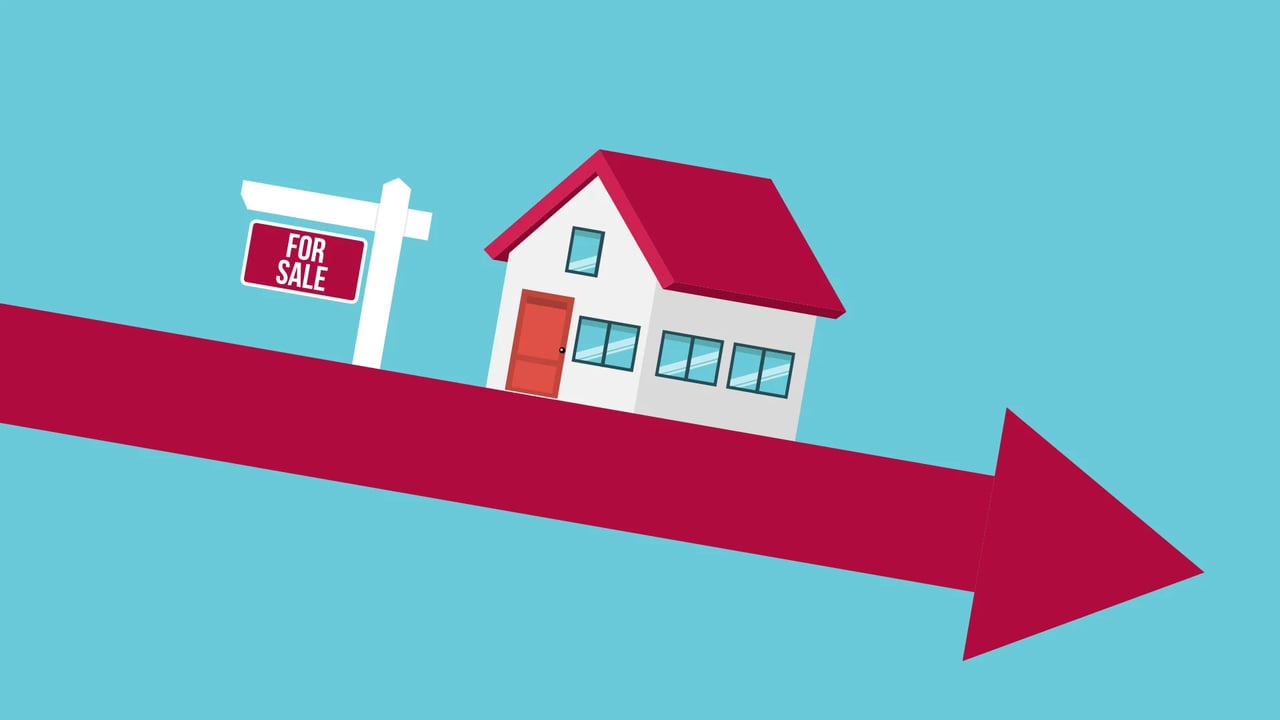
Should you buy now or wait for home prices to fall? There is no way to know with certainty where prices or mortgage rates will be months from now. A better decision comes from looking at your monthly payment, savings, local inventory, negotiating leverage, expected time in the home, and whether the property fits your long-term plans.
Should You Wait for Home Prices to Drop Before Buying?
Understand the pros and cons of waiting for lower home prices and what buyers should consider before delaying a purchase.
If you're thinking about buying a home, you may be asking:
“Should I buy now—or wait for home prices to drop?”
It's a reasonable question, especially when mortgage rates are higher, inventory is changing, and housing headlines seem to move in different directions.
The problem is that nobody can consistently predict the exact bottom of a housing market.
Prices may fall in one area and stay relatively stable in another.
Mortgage rates may fall while buyer competition increases.
Or prices may soften, but the homes you actually want may remain limited.
Instead of trying to perfectly time the market, ask whether the home, the payment, and your personal timeline make sense together.
Buying Now vs. Waiting
Factor | Buying Now | Waiting |
|---|---|---|
Purchase Price | You buy at today's negotiated market price | Prices could be lower, higher, or similar later |
Mortgage Rate | Based on rates available when you finance | Future rates are uncertain |
Negotiating Power | Depends on current inventory and buyer demand | Could improve or weaken depending on future competition |
Financial Readiness | Requires sufficient savings and comfortable payment today | Gives you more time to save or reduce debt |
Inventory | You choose from what is available now | Future selection may be better—or worse |
1. Waiting Could Mean a Lower Purchase Price
One possible advantage of waiting is obvious:
If prices fall in the market you want, you may be able to buy a similar home for less.
A lower purchase price can potentially mean:
- A smaller down payment in dollar terms.
- A lower mortgage balance.
- Potentially lower monthly principal and interest.
- Access to homes that were previously outside your target budget.
But the important word is if.
There is no guarantee that prices will decline in the exact community, school assignment, neighborhood, property type, or price range you are targeting.
A national housing headline does not tell you what will happen to one specific neighborhood or one specific house.
2. Home Prices Are Only Half of the Affordability Equation
Mortgage rates can have a major impact on what a home costs each month.
That means a lower future purchase price does not automatically produce a lower future payment.
If home prices fall but borrowing costs rise, some or all of the savings from the lower price could be offset.
The reverse can also happen.
If mortgage rates fall, buyers may gain purchasing power—but lower rates can also encourage more buyers to re-enter the market and increase competition.
Don't compare home prices alone.
Compare the purchase price, financing cost, total monthly payment, and cash required to close.
And while refinancing may be possible for some homeowners later, future refinancing terms and eligibility are never guaranteed.
3. Waiting Can Be Smart If You Need More Time to Prepare Financially
There are good reasons to wait that have nothing to do with predicting a housing crash.
If you aren't financially ready, additional time can help you build savings for:
- Down payment.
- Closing costs.
- Emergency reserves.
- Moving expenses.
- Inspection and due-diligence costs.
- Future repairs.
You may also use the time to reduce debt, improve your credit profile, or create more stability in your income and monthly budget.
Waiting because you need to become financially stronger is very different from waiting because you are trying to guess the bottom of the market.
4. Waiting Also Has an Opportunity Cost
Waiting is not automatically free.
If you continue renting, you will continue paying for housing while maintaining the flexibility that renting provides.
If you buy, part of your mortgage payment may reduce your loan principal over time, while ownership also brings transaction costs, maintenance responsibilities, taxes, insurance, and exposure to changes in property value.
Neither choice is automatically financially superior.
Compare the full cost of both.
Renting Longer | Buying |
|---|---|
Greater flexibility to move | Greater control over the property |
Generally fewer direct repair responsibilities | Owner is responsible for maintenance and repairs |
No exposure to home-price movements on the rented property | Property value may increase or decrease |
More time to build savings | Opportunity to pay down mortgage principal over time |
5. Waiting Could Mean Missing the Right Property
Sometimes the most important part of the decision isn't the overall market.
It's the specific home.
You may care about:
- A particular location.
- A specific public-school assignment.
- A certain floor plan.
- A main-level bedroom.
- A larger or flatter lot.
- No HOA or particular HOA terms.
- Proximity to work or other important destinations.
The exact combination you want may not appear regularly.
If a property meets your needs, is supported by market data, and fits your budget, waiting solely for an uncertain future price drop may not necessarily improve your outcome.
Public-school boundaries and assignments can change. Verify the specific property address directly with the applicable school district if assignment is important to your decision.
6. Buyers Don't Need a Market Crash to Find Opportunity
A slower or more balanced market can create opportunities even if home prices do not fall dramatically.
Depending on the property and level of competition, buyers may have more room to negotiate:
- Purchase price.
- Seller-paid closing-cost assistance.
- Inspection-related repairs or credits.
- Closing timeline.
- Other contract terms.
You may also have more time to compare properties and complete due diligence when fewer buyers are competing aggressively.
A “better deal” doesn't always come from a lower headline price.
It can also come from stronger negotiating leverage and better contract terms.
7. Local Market Conditions Matter More Than National Headlines
Real estate is highly local.
Market conditions in Suwanee can differ from Marietta, Alpharetta, Johns Creek, Mableton, or another Metro Atlanta community.
Before deciding to wait, look at the actual market you are considering:
- Recent closed sales.
- Current inventory.
- Days on market.
- Price reductions.
- Pending sales.
- Competing buyer activity.
- New construction competition.
- Relevant local development.
You don't buy “the U.S. housing market.”
You buy one property in one local market at one specific price and set of terms.
8. Think About How Long You Plan to Stay
Your expected ownership period matters.
Buying and later selling a home involves transaction costs.
If you think you may move again in a year or two, short-term market changes can create more risk because you have less time to absorb those costs or a decline in property value.
If you realistically expect to stay for many years, a short-term change in market value may matter less to your lifestyle decision—although appreciation is never guaranteed.
Ask:
“How long do I realistically expect this home to fit my life?”
9. A Lower Price Doesn't Automatically Mean an Affordable Home
Even if home prices decline, buyers should still evaluate the total ownership cost.
Include:
- Mortgage principal and interest.
- Property taxes.
- Homeowners insurance.
- HOA or condominium fees.
- Mortgage insurance when applicable.
- Utilities.
- Maintenance and repairs.
A cheaper house can still be expensive to own.
10. There Is No Perfect Time to Buy
Many buyers understandably hope for the perfect combination:
Lowest Price + Lowest Mortgage Rate + Best Inventory + No Competition
Those conditions rarely line up perfectly.
Lower rates can bring more buyers into the market.
Lower prices may occur when economic uncertainty is higher.
Better inventory may come with stronger competition.
Instead of waiting for perfection, focus on whether:
- Your income is reasonably stable.
- You have enough savings.
- The monthly payment is comfortable.
- You understand the local market.
- You expect to stay long enough for buying to make sense.
- The property fits your actual needs.
Should You Buy Now or Wait?
Buying May Make Sense If... | Waiting May Make Sense If... |
|---|---|
Your income is stable | Your income situation is uncertain |
You have adequate savings | You need more time to build reserves |
The monthly payment feels comfortable | The payment would stretch your budget |
You found a home and location that fit | You are still uncertain where you want to live |
You expect to stay for several years | You may need to move again soon |
You can maintain emergency reserves after closing | Buying would leave you with almost no reserves |
The “Wait or Buy?” Test
☐ Can I comfortably afford the total monthly housing payment?
☐ Will I still have savings after closing?
☐ Do I have an emergency fund?
☐ Do I realistically plan to stay for several years?
☐ Does this location work for my actual life?
☐ Is the price reasonably supported by recent comparable sales?
☐ Could I financially and emotionally handle a temporary decline in the home's value?
☐ Am I waiting because I'm financially unprepared—or simply because I'm hoping for a market crash?
Frequently Asked Questions
Is it better to wait until home prices fall?
Not necessarily. A lower purchase price can help, but mortgage rates, local inventory, competition, your monthly payment, and your financial readiness also matter. Future home prices cannot be predicted with certainty.
What if mortgage rates fall after I buy?
Some homeowners may later have an opportunity to refinance, but refinancing is not guaranteed. Future rates, home value, credit, income, loan guidelines, closing costs, and other factors all affect whether refinancing is available or worthwhile.
How long should I plan to stay in a home?
There is no universal minimum. Because buying and selling involve transaction costs and property values can change, buyers expecting to move again very soon should carefully compare the costs and risks with renting.
Does a slower market help buyers?
It can. When there is less buyer competition, some properties may offer better opportunities to negotiate price, concessions, repairs, timing, or other terms. The amount of leverage depends on the specific property and local market.
Don't buy because you're afraid prices will rise.
Don't wait simply because you're hoping prices will fall.
Buy when the property, the numbers, and your personal situation make sense together.
Final Thoughts
Waiting for home prices to drop can be a reasonable decision in some situations.
If buying today would stretch your budget, drain your savings, or force you into a location that doesn't fit your plans, more time may be exactly what you need.
But waiting solely because you believe you can perfectly predict lower prices is a different strategy—and one that comes with uncertainty.
Instead of asking only:
“Will home prices go down?”
Ask:
“Would buying this home, at this price and payment, make sense for my life and finances?”
If the answer is yes, you may not need to wait for a perfect market.
If the answer is no, taking more time to save, prepare, or clarify your plans may be the smarter choice.
The best time to buy isn't necessarily when prices are at their lowest.
It's when the home, the numbers, and your long-term plans all make sense.
Wondering Whether to Buy Now or Wait in Metro Atlanta?
We can look at the specific market you're considering—not just national headlines. That means reviewing recent comparable sales, current inventory, price reductions, competing listings, property condition, estimated monthly costs, and negotiating opportunities so you can decide based on real numbers.
Tina Jingru Sui | TJS Team
About Tina Jingru Sui
Tina Jingru Sui is the founder and leader of the TJS Team, serving buyers, sellers, investors, and relocation clients throughout Metro Atlanta.
Tina and her team serve communities including Johns Creek, Alpharetta, Suwanee, Duluth, Buford, Marietta, Roswell, Sandy Springs, Smyrna, Mableton, and surrounding Metro Atlanta areas.
Keller Williams Atlanta Partners · (404) 375-2120
This article is provided for general informational purposes only and does not constitute legal, tax, mortgage, appraisal, investment, or financial advice. Future home prices, mortgage rates, inventory levels, appreciation, refinancing opportunities, and market conditions cannot be predicted or guaranteed. Property values can rise or fall. Financing terms, interest rates, taxes, insurance, HOA fees, maintenance costs, and eligibility vary by borrower, property, lender, and transaction. Buyers should evaluate their personal budget and obtain property- and loan-specific advice from appropriately licensed mortgage, tax, insurance, legal, and financial professionals. Public-school boundaries and assignments can change and should be verified directly with the applicable school district. Equal Housing Opportunity. Tina Jingru Sui, GA License #392936, REALTOR®, affiliated with Keller Williams Atlanta Partners and regulated by the Georgia Real Estate Commission.