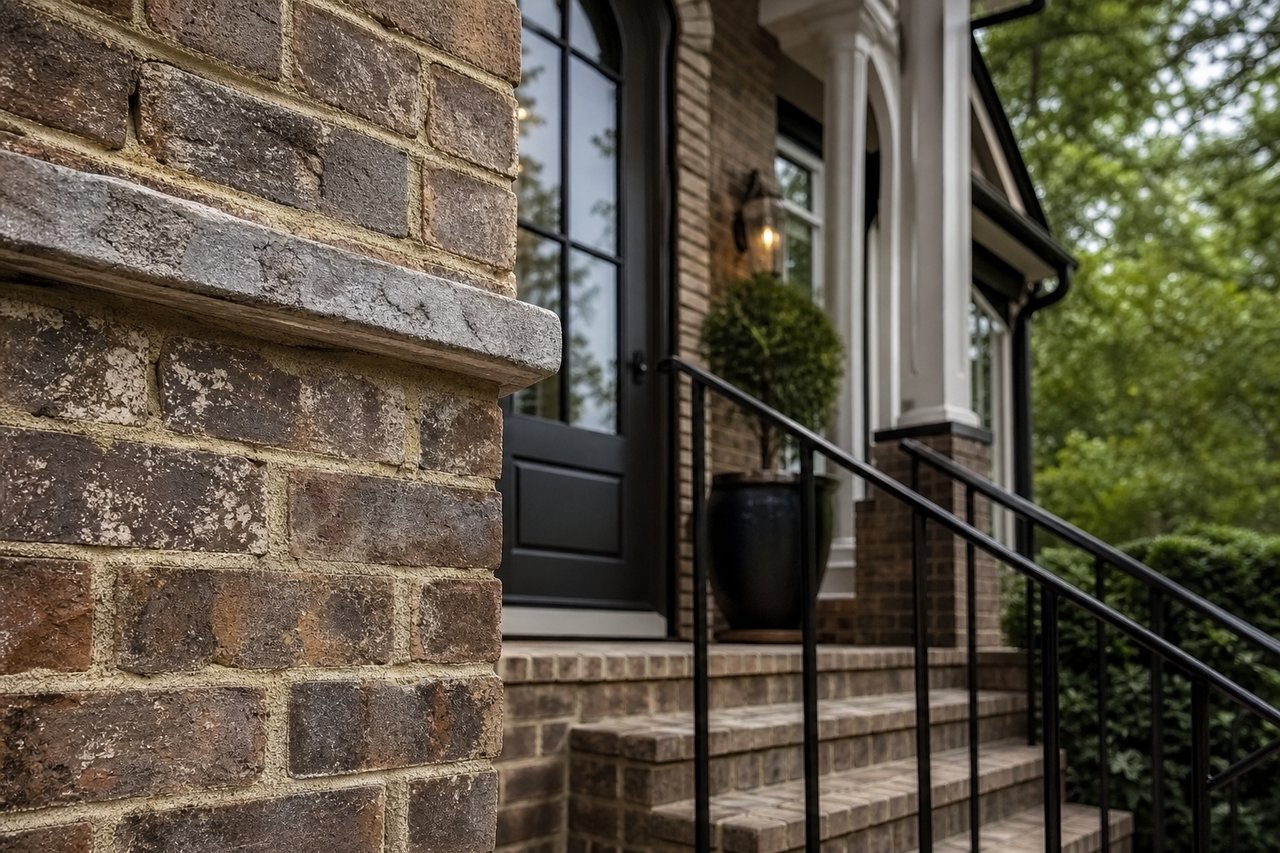
A home that has been on the market for months is not automatically a bad property—and it is not automatically a bargain. Long market time can result from pricing, condition, layout, location factors, limited buyer demand, previous contract issues, or simply a mismatch between the seller's expectations and the market. The key is to investigate why the listing has been sitting before deciding whether it represents an opportunity.
The Listing Has Been on the Market for Months—Opportunity or Warning Sign?
Learn how buyers can evaluate a long-time-on-market home by reviewing price, condition, listing history, location, competition, and potential negotiation opportunities.
You find a home you like.
The photos look good.
The location works.
Then you notice:
It has been on the market for 90, 120, or even 180 days.
Your first reaction may be:
“What is wrong with it?”
Sometimes there is an important issue.
Sometimes there isn't.
A property can accumulate market time because of pricing, presentation, condition, unusual features, financing challenges, previous contract problems, or simply because the right buyer has not yet matched the seller's expectations.
Don't ask only:
“Why hasn't anyone bought this?”
Ask: “What does the listing history, condition, pricing, and current competition tell me?”
Long Market Time: Opportunity or Warning Sign?
Possible Situation | What It Might Mean |
|---|---|
Started Overpriced | The property may be reasonable now after reductions, even though the accumulated market time looks high |
Condition Issues | Buyers may be factoring repair or maintenance exposure into their decisions |
Unusual Layout or Features | The home may appeal to a narrower buyer pool without necessarily being defective |
Previous Contract Fell Through | Could involve inspection, financing, appraisal, buyer circumstances, or another transaction issue |
Seller Expectations | The seller may have been unwilling to accept offers or negotiate previously |
Changing Market Conditions | The home may have entered the market under different competition, demand, or financing conditions |
1. Start With the Most Important Question: Why Hasn't It Sold?
Days on market is a signal.
It is not a diagnosis.
A listing may have been sitting because:
- It started at an unrealistic price.
- The seller has been slow to adjust.
- The home needs repairs or updating.
- The floor plan appeals to fewer buyers.
- The lot or location has trade-offs.
- The listing presentation was weak.
- A previous contract terminated.
- The market changed after the property was listed.
A long listing history does not tell you what the problem is.
It tells you that you should investigate further.
2. Review the Entire Listing History
Don't look only at today's asking price.
Look at how the property arrived there.
For example:
Original List Price: $650,000
First Reduction: $625,000
Second Reduction: $599,000
Current Price: $575,000
A buyer looking only at “120 days on market” might assume the current $575,000 price has been rejected for four months.
But perhaps much of the market time occurred when the home was priced substantially higher.
That changes the analysis.
Also review, when information is available:
- Previous listing periods.
- Price changes.
- Pending or under-contract periods.
- Back-on-market activity.
- Previous sales history.
Don't evaluate only how long the home has been listed.
Evaluate how long it has been offered at today's price and condition.
3. Compare the Current Price With Real Comps
A stale listing can still be overpriced.
Long market time does not automatically create a bargain.
Compare the property with recent relevant sales based on:
- Location.
- Above-grade size.
- Bedrooms and bathrooms.
- Condition.
- Renovation level.
- Lot characteristics.
- Basement.
- Floor-plan functionality.
Then look at current active listings.
Those homes represent what buyers can choose instead.
Days on market does not determine value.
Comparable sales, current competition, condition, and buyer demand provide more useful context.
4. Look Carefully at the Condition
Sometimes the price looks attractive because buyers have already been discounting the property for condition.
Pay attention to:
- Roof.
- HVAC systems.
- Water heater.
- Plumbing.
- Electrical systems.
- Windows.
- Exterior condition.
- Drainage.
- Visible moisture indicators.
- Deferred cosmetic maintenance.
An older system is not automatically defective.
Likewise, a visible stain does not automatically prove there is an active leak.
Use your observations to identify questions, then investigate appropriately during due diligence if you move forward.
A home that is $30,000 cheaper may not be the better value if it carries $50,000 of near-term work.
5. Separate Fixable Problems From Location Trade-Offs
Some reasons a home sits can be changed.
Others cannot.
Potentially Changeable | Difficult or Impossible to Change |
|---|---|
Paint | Major road proximity |
Consider objective location factors such as:
- Road access.
- Traffic.
- Nearby commercial uses.
- External noise.
- Commute routes.
- Shopping, parks, and everyday services.
If public-school attendance assignment matters to your decision, verify the exact address with the applicable school district because boundaries may change.
6. If It Went Under Contract Before, Find Out What Information Is Available
A listing that went pending and later returned to the market deserves a closer look.
But do not automatically assume:
“The inspection must have been terrible.”
Transactions can fall apart for many reasons, including:
- Buyer financing.
- Appraisal.
- Inspection negotiations.
- Buyer circumstances.
- Contract deadlines.
- Other transaction-specific issues.
Your agent can ask the listing side what information the seller is willing or required to provide regarding previous contract activity and known property issues.
However, not every detail of a previous buyer's transaction, inspection, negotiation, or decision will necessarily be available to you.
Back on market is a reason to ask questions—not proof of a defect.
7. Use Due Diligence to Investigate the Property
If you decide to pursue the home, your contract and due-diligence rights become important.
A professional home inspection can help identify visible conditions within the inspector's scope at the time of inspection.
Depending on what is found, additional specialist evaluation may be appropriate for areas such as:
- Roofing.
- HVAC.
- Plumbing.
- Electrical.
- Structural concerns.
- Drainage or moisture concerns.
An inspection is not a guarantee that every hidden or future problem will be discovered.
It is one important part of the buyer's broader due diligence.
8. Long Market Time May Create Negotiation Opportunity—but Don't Assume
A seller whose property has been listed for months may be more open to discussing:
- Purchase price.
- Seller concessions.
- Closing timeline.
- Other contract terms.
But market time alone does not tell you seller motivation.
Some sellers become increasingly flexible.
Others may remain firm regardless of how long the property has been available.
Long Days on Market ≠ Guaranteed Discount
But it can be useful information when building a negotiation strategy.
9. Separate Seller Motivation From Property Value
A seller may be highly motivated.
That does not automatically mean the property is worth dramatically less.
Likewise, an unmotivated seller can still have an overpriced home.
These are separate questions:
Question 1: What does the property appear to be worth relative to comparable alternatives?
Question 2: What terms might this particular seller be willing to accept?
A strong offer strategy considers both.
When a Long-Time Listing May Be Worth a Closer Look
A stale listing may deserve more attention when:
✓ The current price is now supported by relevant comparable sales
✓ Much of the market time occurred at a substantially higher price
✓ The condition issues are understandable and financially manageable
✓ The property's unusual features work well for your needs
✓ You have enough information and due diligence to evaluate the risk
✓ The overall price and terms compare favorably with your alternatives
When Long Market Time Deserves Extra Caution
⚠ The property still appears overpriced after multiple reductions
⚠ Several major systems or repairs may require substantial near-term spending
⚠ The property has repeatedly gone under contract and returned to market without a clear explanation
⚠ The floor plan or lot has permanent limitations that matter to you
⚠ The seller's price expectations remain far above the available market evidence
⚠ The apparent discount disappears after accounting for repairs and ownership costs
The Stale Listing Evaluation
Question | Why It Matters |
|---|---|
What was the original price? | Shows whether accumulated market time occurred at a different price point |
What do the comps support now? | Helps separate an opportunity from an overpriced stale listing |
Has it been under contract? | May indicate additional history worth investigating |
What condition issues exist? | Helps estimate maintenance and repair exposure |
What cannot be changed? | Highlights permanent location, lot, or layout trade-offs |
How does it compare with today's alternatives? | Ultimately determines whether it offers competitive value |
Before Making an Offer on a Long-Time Listing
☐ Review the full available listing and price history
☐ Compare current price with recent relevant sales
☐ Compare the home with current active competition
☐ Ask about previous contract activity if applicable
☐ Evaluate roof and major-system condition
☐ Separate cosmetic issues from expensive repairs
☐ Identify permanent location or floor-plan trade-offs
☐ Use appropriate inspections and due diligence
☐ Do not assume long market time guarantees seller flexibility
☐ Evaluate the total value of the property at the terms you can actually negotiate
Frequently Asked Questions
Is a home that has been on the market for months usually overpriced?
It may have been overpriced at some point, but long market time alone does not prove that the current price is too high. Review the price history, comparable sales, active competition, condition, and current market response.
Can I make a lower offer because the home has been sitting?
You can structure an offer based on your analysis of value and circumstances, but the seller is not required to accept a discount. Days on market may affect negotiation strategy, but seller motivation and market value are separate questions.
Is a back-on-market listing a red flag?
It is a reason to ask questions, but it does not automatically mean the home has a defect. Previous contracts can terminate because of financing, appraisal, inspections, buyer circumstances, deadlines, or other transaction-specific issues.
Should I get an inspection on an older listing?
If your contract provides inspection and due-diligence rights, a professional inspection can be an important part of evaluating the property. Additional specialist evaluations may also be appropriate depending on findings and property-specific concerns.
How do I know whether a stale listing is actually a good deal?
Compare the current price with relevant recent sales and active alternatives, then factor in condition, repair exposure, location, floor-plan limitations, HOA costs, and negotiated terms. A good deal is not simply a property that has been listed for a long time—it is a property whose overall value makes sense relative to your alternatives.
Long market time is information—not a verdict.
Investigate the price, history, condition, competition, and trade-offs before deciding whether you found an opportunity.
Final Thoughts
A home that has been on the market for months can be either an opportunity or a warning sign.
The days-on-market number alone cannot tell you which one.
Look at:
Price History + Comps + Current Competition + Condition + Contract History + Location + Negotiation
Sometimes a property has simply taken too long to reach a realistic price.
Sometimes buyers have been correctly identifying a problem that the seller's price still does not reflect.
And sometimes a home with fewer obvious buyers happens to fit your needs extremely well.
Don't reject a stale listing because everyone else passed on it.
But don't buy it simply because you assume the seller must be desperate either. Do the analysis and decide what the property is worth to you based on the facts.
Found a Metro Atlanta Listing That Has Been Sitting?
Before writing an offer, we can help you review the available listing history, price changes, recent comparable sales, active competition, property condition, major systems, previous contract activity when available, and negotiation considerations so you can understand whether the property represents value—or simply looks inexpensive because of its market time.
Tina Jingru Sui | TJS Team
Search Metro Atlanta Homes at TinaSui.com →
About Tina Jingru Sui
Tina Jingru Sui is the founder and leader of the TJS Team, serving buyers, sellers, investors, and relocation clients throughout Metro Atlanta.
Tina and her team serve communities including Johns Creek, Alpharetta, Suwanee, Duluth, Buford, Dacula, Marietta, Roswell, Sandy Springs, Smyrna, Lawrenceville, and surrounding Metro Atlanta areas.
Keller Williams Atlanta Partners · (404) 375-2120
This article is provided for general informational and educational purposes only and does not constitute legal, inspection, engineering, appraisal, mortgage, investment, financial, or other professional advice. Days on market, listing history, price reductions, prior contract activity, seller motivation, property condition, comparable sales, and negotiation outcomes vary by property and transaction. Long market time does not establish that a property is defective, overpriced, or available at a discount, and a seller is not required to accept an offer below list price. Information regarding prior contracts, inspections, negotiations, or buyer decisions may be incomplete, confidential, unavailable, or subject to contractual and legal limitations. A home inspection is limited to the inspector's scope and conditions observable at the time and does not guarantee discovery of every hidden or future defect. Public-school attendance assignments should be verified by exact property address with the applicable school district. Buyers should independently verify material information and consult appropriate inspectors, contractors, lenders, attorneys, appraisers, and other qualified professionals when needed. Equal Housing Opportunity. Tina Jingru Sui, GA License #392936, REALTOR®, affiliated with Keller Williams Atlanta Partners and regulated by the Georgia Real Estate Commission.