What happens if you agree to pay $500,000 for a home but the appraisal says $475,000? That difference can affect financing, negotiations, and how much cash a buyer may need at closing. Understanding the appraisal process before writing an offer—or accepting one—can help both buyers and sellers avoid surprises.
What Is a Home Appraisal and Why Does It Matter?
A simple guide to home appraisals, how they work, and why the appraised value matters when buying or selling a home.
If you're buying or selling a home, you've probably heard the term “home appraisal.”
But an appraisal is not the same thing as the purchase price, an online home-value estimate, or a home inspection.
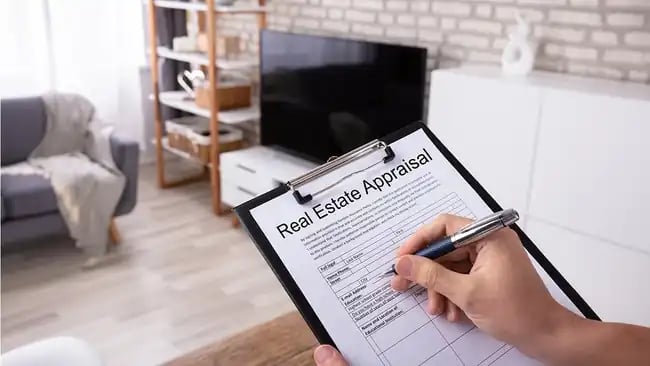
A real estate appraisal is an independent professional opinion of a property's value as of a particular date.
In many financed purchases, the lender requires an appraisal because the property serves as collateral for the mortgage.
The purchase price is what the buyer and seller agreed to.
The appraised value is an appraiser's opinion of what the property is worth for the appraisal assignment.
What Does a Home Appraiser Do?
A licensed or certified appraiser evaluates the property and relevant market information before developing an opinion of value.
Depending on the property and assignment, the appraiser may consider factors such as:
- Location.
- Living area and overall size.
- Lot characteristics.
- Bedrooms and bathrooms.
- Age and design.
- Overall condition.
- Renovations and improvements.
- Basement and finished space.
- Property features.
- Recent comparable sales.
The appraiser then prepares a report documenting the property, market information, comparable sales, adjustments where appropriate, and the final opinion of value.
Appraisal vs. Home Inspection
These two parts of a real estate transaction are often confused, but they serve different purposes.
Home Appraisal | Home Inspection |
|---|---|
Primarily develops an opinion of property value | Evaluates visible and accessible physical conditions |
Often required by a mortgage lender | Commonly obtained by buyers as part of due diligence |
Relies heavily on property characteristics and market data | Focuses on systems, components, defects, and maintenance concerns |
Helps a lender evaluate collateral | Helps the buyer understand the property's condition |
An appraisal should not be treated as a substitute for a home inspection.
Why Does the Appraisal Matter to Buyers?
The appraisal can become especially important when the buyer is financing the purchase.
Imagine you agree to buy a home for:
Item | Amount |
|---|---|
Purchase Price | $500,000 |
Appraised Value | $475,000 |
Difference | $25,000 |
That $25,000 difference is commonly referred to as an appraisal gap.
Depending on the loan structure, the lender may calculate the permitted loan amount using the lower appraised value rather than simply lending against the full contract price.
That can create a new question:
Who is going to cover the difference?
What Happens If the Appraisal Comes in Low?
A low appraisal does not automatically mean the transaction is over.
The parties may have several possible paths depending on the contract, financing, deadlines, and available cash.
Option 1: Renegotiate the Price
The buyer may ask the seller to reduce the purchase price.
The seller is not necessarily required to agree unless the contract creates that obligation.
Option 2: Request a Reconsideration of Value
If there appears to be relevant information that was overlooked or materially incorrect, the lender may have a process for requesting a reconsideration of value.
Supporting information might include:
- Relevant comparable sales.
- Corrections to factual property information.
- Documented improvements or features.
A reconsideration request is not a guarantee that the value will change.
The goal is to provide relevant factual or market information for review.
Option 3: The Buyer Brings Additional Cash
A buyer may choose to proceed with the purchase and contribute additional cash to cover some or all of the appraisal gap.
Whether that is financially appropriate depends on the buyer's contract obligations, available cash, financing, and comfort with the purchase.
Option 4: Terminate If the Contract Allows It
Depending on the contract, appraisal contingency, financing contingency, due-diligence rights, and applicable deadlines, a buyer may have a contractual right to terminate.
Never assume a low appraisal automatically creates a cancellation right.
Your options are determined by the actual contract—not by a general rule from the internet.
Why Does the Appraisal Matter to Sellers?
Sellers should pay attention to appraisal risk too.
Imagine you receive an offer with:
Purchase Price: $550,000
Appraised Value: $525,000
At first glance, the $550,000 offer may look excellent.
But if that buyer is financing most of the purchase and has limited cash available for an appraisal gap, the strength of the offer may depend on what happens after the appraisal.
This is why sellers should evaluate more than the headline offer price.
The highest offer is not automatically the strongest offer.
Financing, appraisal terms, contingencies, cash reserves, concessions, and probability of closing also matter.
How Do Comparable Sales Affect an Appraisal?
Comparable properties—often called “comps”—can be an important part of residential valuation.
An appraiser may compare the subject property with recently sold homes and analyze differences involving:
- Location.
- Living area.
- Lot.
- Age.
- Design and style.
- Condition.
- Basement.
- Garage.
- Renovations.
- Other material property features.
The closest sale geographically is not automatically the best comparable.
And the most recent sale is not automatically the best comparable either.
The appraiser's job is to identify appropriate market evidence and analyze the relevant differences.
Does the Home's Condition Matter?
Yes.
Condition and improvements can affect how the property compares with recent sales.
A renovated home may compare differently with an outdated home of similar size in the same area.
But homeowners should be careful about assuming renovation cost equals value.
Spending $30,000 on an improvement does not automatically add $30,000 to the appraised value.
The market's reaction to that improvement is what matters—not simply what the homeowner spent.
How Can Buyers Think About Appraisal Risk Before Making an Offer?
Buyers generally do not control the appraisal result.
But you can evaluate appraisal risk before writing the offer.
Review:
- Recent comparable sales.
- Recent pending properties when relevant information is available.
- Current competing listings.
- Property condition.
- Renovations and improvements.
- How far the proposed offer price is above recent supporting sales.
If you're considering offering substantially above recent comparable sales, ask:
“What happens if this doesn't appraise?”
“How much additional cash would I actually be willing and able to bring?”
Can Sellers Prepare for the Appraisal?
Sellers cannot dictate the appraised value, and the appraiser must remain independent.
But it can be helpful to make sure accurate, relevant property information is available.
Depending on the property, useful documentation may include:
- A list of significant renovations.
- Permit information when applicable.
- Roof replacement information.
- HVAC replacement information.
- Major additions or finished-space information.
- Other documented property improvements.
The purpose is not to pressure the appraiser.
It is to help ensure that relevant factual information about the home is available.
The Simple Appraisal Test
☐ What have similar homes recently sold for?
☐ Is the purchase price reasonably supported by market evidence?
☐ Has the property been significantly renovated?
☐ Could there be an appraisal gap?
☐ What happens under the contract if the appraisal is low?
☐ Is there an appraisal contingency or other relevant contractual protection?
☐ How much additional cash would the buyer be willing and able to contribute?
Frequently Asked Questions
Does an appraisal determine what I have to pay for the home?
Not by itself. The purchase price is established by the contract between buyer and seller. However, a lower appraised value can affect the buyer's financing and may trigger contractual rights or further negotiation depending on the agreement.
Does a low appraisal automatically cancel the deal?
No. The parties may renegotiate, pursue the lender's reconsideration process, contribute additional cash, or exercise contractual rights if applicable. The available options depend on the actual purchase agreement and financing.
Is an appraisal the same as a home inspection?
No. An appraisal primarily addresses value and lender collateral considerations. A home inspection focuses on visible and accessible physical conditions and potential defects.
Can a seller challenge a low appraisal?
Because the lender typically controls the appraisal process in a financed transaction, concerns are generally raised through the lender's established process. Relevant factual corrections or comparable-sales information may be submitted for review, but a change in value is not guaranteed.
The purchase price and the appraised value are not always the same.
The important question is whether you understand what happens if they are different.
Final Thoughts
A home appraisal is an important part of many financed real estate transactions.
For lenders, the appraisal helps evaluate the property serving as collateral for the loan.
For buyers, a low appraisal can affect financing, cash requirements, and negotiation.
For sellers, appraisal risk can affect how strong a financed offer really is.
That's why I think appraisal strategy should begin before the appraisal is ordered.
Buyers should understand the comparable sales and appraisal-gap risk before making an aggressive offer.
Sellers should understand the financing and appraisal terms before assuming the highest offer will automatically produce the highest closing price.
A good real estate strategy isn't just about getting under contract.
It's about understanding what could happen between contract and closing—and preparing for it before it becomes a problem.
Buying or Selling a Home in Metro Atlanta?
We can review recent comparable sales, current competition, property condition, offer structure, and potential appraisal risk before you make a major decision. Understanding the numbers before you write or accept an offer can make the transaction much easier to navigate.
Tina Jingru Sui | TJS Team
About Tina Jingru Sui
Tina Jingru Sui is the founder and leader of the TJS Team, serving buyers, sellers, investors, and relocation clients throughout Metro Atlanta.
Tina and her team serve communities including Johns Creek, Alpharetta, Suwanee, Duluth, Buford, Marietta, Roswell, Sandy Springs, Smyrna, and surrounding Metro Atlanta areas.
Keller Williams Atlanta Partners · (404) 375-2120
This article is provided for general informational purposes only and does not constitute legal, appraisal, mortgage, tax, investment, or financial advice. Appraisal requirements, appraisal-contingency rights, financing conditions, reconsideration-of-value procedures, loan-to-value calculations, property requirements, and contractual remedies vary by lender, loan program, property, and purchase agreement. An appraisal is an independent opinion of value and does not guarantee a particular sale price or loan approval. Buyers and sellers should review their specific contract and financing documents and consult their lender, appraiser, closing attorney, and other appropriately qualified professionals regarding transaction-specific questions. Equal Housing Opportunity. Tina Jingru Sui, GA License #392936, REALTOR®, affiliated with Keller Williams Atlanta Partners and regulated by the Georgia Real Estate Commission.