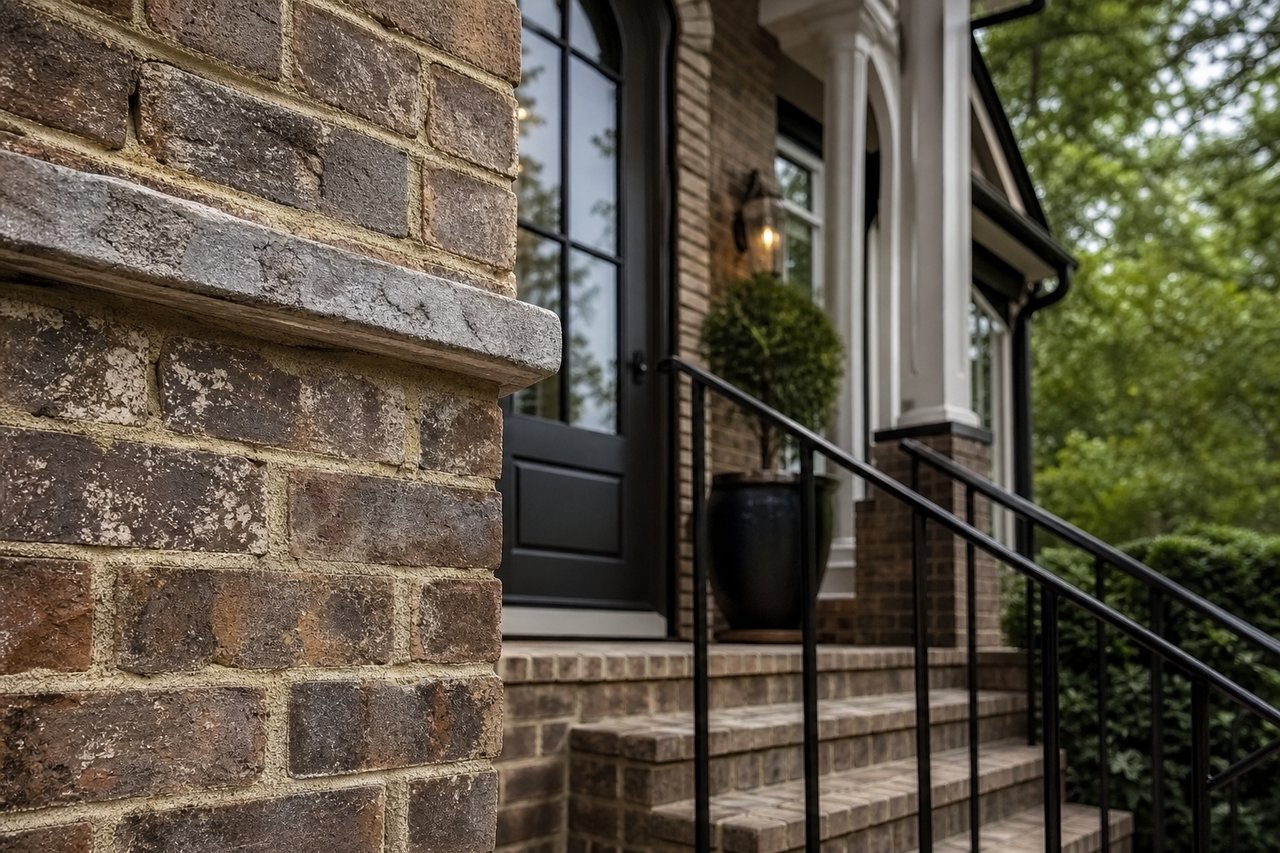
A bigger house can give you more space—but it can also consume more of your monthly budget. Before choosing the largest home you can purchase, consider not only the mortgage but also property taxes, insurance, utilities, maintenance, repairs, landscaping, furnishings, cleaning, and how much of the space you will actually use.
When a Bigger House Creates a Smaller Budget
More bedrooms and more square footage can feel like an upgrade. But every additional space also becomes something you own, maintain, furnish, heat, cool, clean, and eventually repair.
Buyers naturally compare houses by size.
Four bedrooms sounds better than three.
3,500 square feet sounds better than 2,700.
A large basement, oversized yard, additional bathroom, and bonus room can all make a house feel like a better deal.
Sometimes they are.
But there is another side to the comparison:
Every additional square foot is not just space you get.
It is also space you become responsible for.
More House =
More Space + More Responsibility + More Ongoing Cost
1. Start With More Than the Mortgage Payment
The purchase price is usually the easiest number to see.
But the total ownership cost may include:
- Mortgage principal and interest.
- Property taxes.
- Homeowners insurance.
- HOA dues where applicable.
- Utilities.
- Routine maintenance.
- Future repairs.
- Landscaping.
- Cleaning.
- Furniture and window treatments.
Mortgage qualification is not the same as comfortable ownership.
A lender evaluates financing eligibility. You still need to decide how much of your income and savings you personally want committed to housing.
2. More Square Footage Can Mean More Space to Heat and Cool
Utility costs depend on much more than square footage.
Energy efficiency, insulation, HVAC systems, windows, thermostat settings, ceiling height, construction, weather, and household usage all matter.
But generally, a larger conditioned area gives you more space that may need:
- Heating.
- Cooling.
- Lighting.
- Cleaning.
If comparing two homes, ask for available utility information where appropriate—but remember that the seller's usage may differ significantly from yours.
3. A Larger Home May Have More Components to Maintain
Bigger homes can sometimes come with more:
- Bathrooms.
- HVAC zones or systems.
- Windows.
- Exterior surface area.
- Plumbing fixtures.
- Appliances.
- Roof area.
None of these automatically creates a problem.
But everything you own eventually requires some level of maintenance.
More features can mean more convenience.
They can also mean more future repair exposure.
4. Count the Rooms You Will Actually Use
Imagine two homes.
Home A has:
- Six bedrooms.
- Formal dining room.
- Formal living room.
- Bonus room.
- Finished basement.
Home B is considerably smaller but has a layout where almost every room would be used regularly.
The bigger house has more square footage.
The smaller house may have more useful square footage for you.
Don't Measure Only
How Much Space You Can Buy.
Measure
How Much Space You Will Actually Use.
Try a Simple Room-Utilization Test
Space | Expected Use |
|---|---|
Daily | Strong practical value to your lifestyle |
Several Times Per Week | Likely useful space |
Several Times Per Month | Useful, but weigh against cost |
A Few Times Per Year | Ask whether dedicated space is necessary |
5. Empty Rooms Usually Don't Stay Free
Buyers often budget carefully for the purchase itself and then discover how much it costs to make a larger home feel complete.
Additional rooms may eventually require:
- Beds and mattresses.
- Tables and seating.
- Rugs.
- Window treatments.
- Lighting.
- Decor.
- Office furniture.
You do not have to furnish everything immediately.
But those future purchases are still worth recognizing when evaluating how much house you really want.
6. A Bigger Yard Is More Than Extra Land
A large lot can be a wonderful feature.
But evaluate the ownership side too.
Depending on the property, a larger outdoor area may involve more:
- Mowing.
- Leaf removal.
- Tree maintenance.
- Irrigation.
- Landscaping.
- Fence maintenance.
- General exterior upkeep.
A big yard is valuable if it supports something you genuinely want.
If you rarely expect to use it, make sure you are comfortable maintaining it anyway.
7. Don't Forget the Cost of Your Time
Bigger homes do not only require more money.
They can require more time.
More floors to vacuum.
More bathrooms to clean.
More windows.
More rooms to organize.
More outdoor area to maintain.
You may decide to outsource some of that work, which turns time into an additional financial expense.
Ownership cost is not only dollars.
It can also be the time required to take care of what you own.
8. Leave Room for the Repair You Didn't Plan
Maintenance rarely arrives in a perfectly predictable monthly payment.
A year may pass with only minor expenses.
Then several things may need attention close together.
Depending on the home, future costs could involve:
- HVAC.
- Water heater.
- Roof repairs.
- Plumbing.
- Appliances.
- Exterior repairs.
The issue is not that these items will definitely fail.
It is that homeowners need enough flexibility to handle unexpected costs if and when they occur.
Don't Spend So Much Buying the House
That You Have No Room
to Own the House.
An older roof, HVAC system, or water heater is not automatically defective or due for immediate replacement.
A better evaluation considers:
Age + Condition + Maintenance History + Inspection Findings + Future Repair Exposure
9. Every Extra Housing Dollar Comes From Somewhere
Suppose two homes both fit within the maximum amount you could technically purchase.
One leaves you with substantially more monthly flexibility.
That flexibility could support other priorities such as:
- Emergency savings.
- Retirement contributions.
- Investments.
- Travel.
- Education.
- Business goals.
- Other personal priorities.
Buying a more expensive home may still be the right decision.
The important thing is to recognize the trade-off.
Your housing budget and your life budget are the same pool of money.
10. Sometimes the Bigger House Is Absolutely Worth It
This article is not an argument for always buying smaller.
Extra space can be extremely useful.
A larger home may make sense if you genuinely need:
- Additional bedrooms.
- Dedicated workspaces.
- Storage.
- Hobby or exercise space.
- Guest accommodations.
- A larger outdoor area.
If you will use the space and the ownership cost comfortably fits your broader finances, bigger may be the better choice.
The issue isn't “big house vs. small house.”
It is: useful space vs. expensive unused space.
Compare Two Homes by More Than Square Footage
Question | Home A | Home B |
|---|---|---|
Purchase Price | ||
Square Footage | ||
Rooms I Would Use Regularly | ||
Property Tax Estimate | ||
Insurance Quote | ||
HOA | ||
Major-System Condition | ||
Expected Maintenance Burden | ||
Monthly Budget Remaining |
Think “Right-Sized,” Not Simply “Bigger”
A right-sized home is not necessarily small.
It simply provides enough space for the way you actually plan to live without requiring you to carry substantially more space than you want or need.
The right size may depend on:
- How you use your current home.
- Work-from-home needs.
- Storage requirements.
- How often you host guests.
- Outdoor-space preferences.
- Expected ownership period.
- Comfort with maintenance.
15 Questions Before You Choose the Bigger House
☐ 1. How much space do I actually use today?
☐ 2. Which additional rooms do I genuinely need?
☐ 3. How often would I use them?
☐ 4. Would a smaller home with a better layout solve the same problem?
☐ 5. What is the true monthly ownership cost?
☐ 6. What are the property-tax implications?
☐ 7. What does insurance cost?
☐ 8. How many major mechanical systems does the house have?
☐ 9. How much yard and exterior maintenance am I taking on?
☐ 10. How much would furnishing additional space cost?
☐ 11. How much savings will remain after closing?
☐ 12. Can I handle an unexpected major repair without creating financial pressure?
☐ 13. What other goals become harder if I buy this house?
☐ 14. Am I buying more space because I need it—or because it feels like a better deal?
☐ 15. Would I still choose this house if nobody told me its square footage?
A Better Definition of “Affordable”
Comfortable Ownership =
Housing Payment
+ Ownership Costs
+ Repair Capacity
+ Cash Reserves
+ Room for the Rest of Your Life
Frequently Asked Questions
Is a bigger house always more expensive to own?
Not necessarily. Ownership costs depend on purchase price, taxes, insurance, energy efficiency, condition, HOA, major systems, lot, maintenance requirements, and many other factors. Square footage is only one part of the analysis.
Should I buy the largest house I can qualify for?
Loan qualification does not determine what level of housing expense is personally comfortable. Consider your total housing cost, savings after closing, repair capacity, lifestyle goals, and other financial priorities before choosing a price range.
Is price per square foot a good way to decide which house is the better value?
Price per square foot can provide one comparison point, but it does not capture differences in location, condition, lot, architecture, basement space, renovations, floor-plan functionality, quality, or other property characteristics. It should not be used by itself.
Are utility bills always higher in a bigger home?
No. Utility costs depend on energy efficiency, HVAC systems, insulation, windows, climate, thermostat settings, occupant behavior, and other factors. Larger conditioned space can affect energy usage, but square footage alone does not determine the bill.
How much should I budget for home maintenance?
There is no percentage that works accurately for every home. Maintenance exposure depends on the property's age, condition, systems, construction, lot, prior upkeep, and specific upcoming needs. A property-specific inspection and budget are more useful than a universal rule.
Is a smaller house always the financially smarter purchase?
No. A larger home may better meet your long-term needs and potentially avoid another move. The goal is not to minimize square footage; it is to determine whether the additional space provides enough usefulness to justify its purchase and ownership costs.
Should I keep cash reserves after buying?
Maintaining financial reserves can help homeowners handle unexpected expenses, but the appropriate amount depends on your personal financial circumstances. A qualified financial professional can provide advice specific to your overall financial plan.
Don't Buy the Biggest House
Your Budget Can Reach.
Buy the Amount of House
Your Life Can Comfortably Carry.
Final Thoughts: A Home Should Leave Room for the Rest of Your Life
There is nothing wrong with wanting a larger home.
If the space genuinely improves the way you live and the ownership costs fit comfortably within your finances, more space may be exactly what you need.
But more square footage is not automatically more value.
Before choosing the bigger house, compare:
How much space you will use.
What the home costs every month.
What it may cost to maintain.
How much cash remains after closing.
What other priorities still fit into your budget.
A bigger house is not automatically a better home.
Sometimes the better home is the one that gives you enough space to live comfortably while still leaving enough financial room to enjoy everything outside the house too.
Comparing a Bigger Atlanta Home With a Smaller One?
We can compare more than purchase price and square footage. We can look at layout, usable space, relevant sales, property taxes, HOA, major-system condition, lot, expected maintenance, commute, and resale considerations, while your lender can provide buyer-specific financing and monthly-payment estimates. That makes it easier to see which home gives you the better overall fit—not simply the most square footage.
Tina Jingru Sui | TJS Team
About Tina Jingru Sui
Tina Jingru Sui is the founder and leader of the TJS Team, serving buyers, sellers, investors, and relocation clients throughout Metro Atlanta.
Tina and her team serve communities including Johns Creek, Alpharetta, Suwanee, Duluth, Buford, Dacula, Marietta, Roswell, Sandy Springs, Smyrna, Lawrenceville, and surrounding Metro Atlanta areas.
Keller Williams Atlanta Partners · (404) 375-2120
This article is provided for general informational and educational purposes only and does not constitute financial, tax, legal, lending, appraisal, investment, insurance, inspection, construction, energy-efficiency, or other professional advice. Mortgage qualification does not determine whether a particular home or payment is personally affordable or financially advisable. Property taxes, insurance, utilities, HOA dues, maintenance costs, repair costs, landscaping expenses, furnishing costs, and other ownership expenses vary significantly by property and owner and may change over time. Larger square footage does not automatically result in higher or lower utility, maintenance, insurance, tax, appraisal, or resale costs. Component age alone does not establish that a roof, HVAC system, water heater, appliance, or other system is defective or requires immediate replacement. Buyers should independently investigate property condition, taxes, insurance, utility information, HOA obligations, inspections, financing, and other relevant factors and consult appropriate lenders, financial professionals, inspectors, contractors, tax professionals, insurance professionals, attorneys, or other specialists when needed. Price per square foot should not be used as the sole measure of property value. No home size, layout, renovation, or feature guarantees appreciation, future demand, resale price, or marketability. Equal Housing Opportunity. Tina Jingru Sui, GA License #392936, REALTOR®, affiliated with Keller Williams Atlanta Partners and regulated by the Georgia Real Estate Commission.