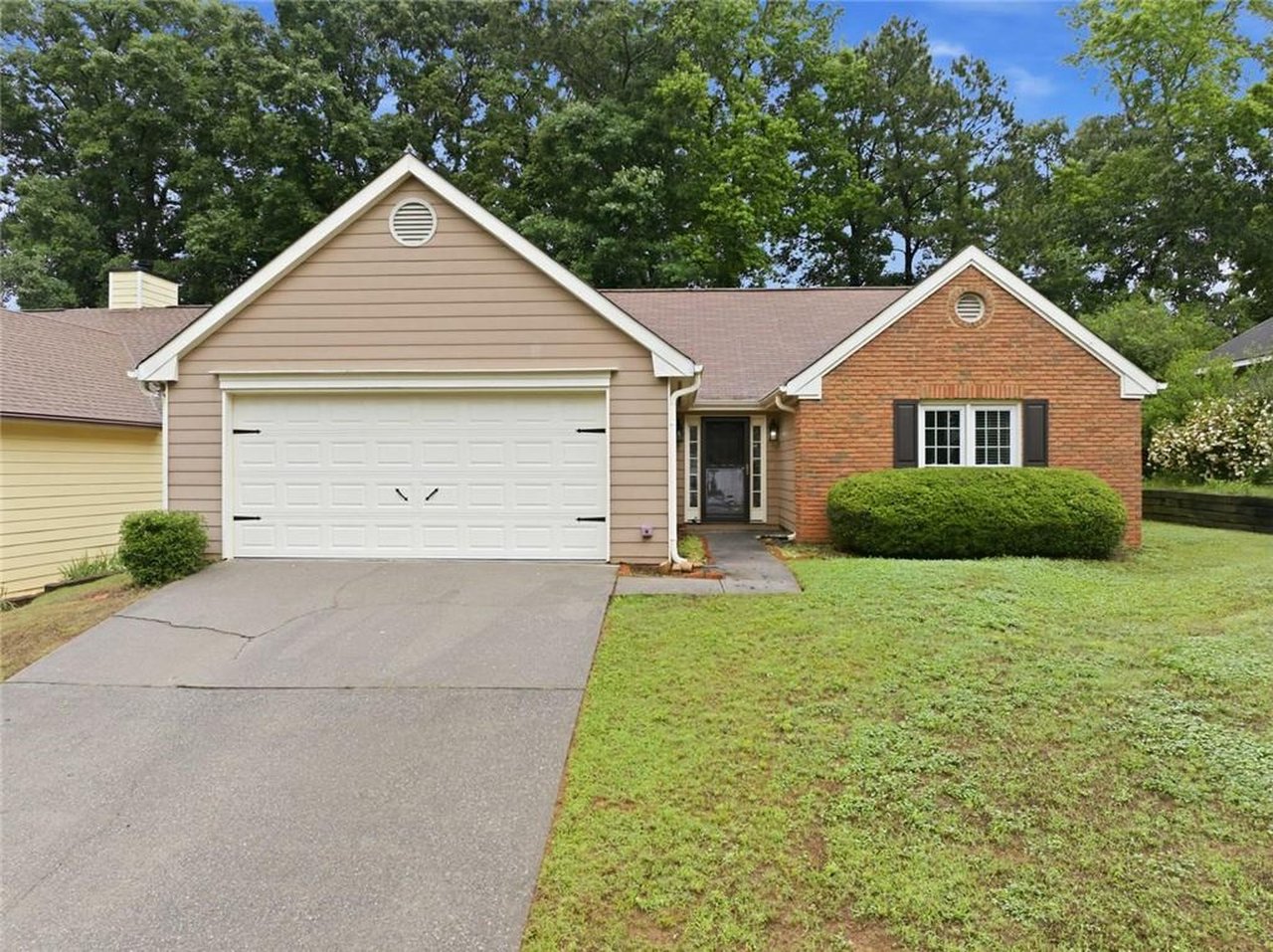
A data-driven listing agent should be able to do more than tell you what your home might sell for. They should explain which comparable sales matter, what buyers can purchase instead, how your home's condition and functionality affect value, how the marketing strategy supports the price, and what market feedback will trigger a change in strategy.
Best Real Estate Agents in Metro Atlanta for 2026: How to Choose a Data-Driven Listing Agent
Learn how to choose a data-driven listing agent in Fulton, Gwinnett, Cobb, Forsyth, and DeKalb counties.
Selling a home in Metro Atlanta requires more than putting the property into the MLS and waiting for buyers.
A strong listing strategy should answer several questions before the home ever goes live:
- What have truly comparable homes recently sold for?
- What other homes are competing for the same buyers right now?
- How does my home's condition compare?
- What price range gives us the strongest positioning?
- What marketing will help buyers understand the property's value?
- What will we do if the market response is weaker than expected?
That is what makes a listing strategy data-driven.
Don't ask only:
“How much do you think my house is worth?”
Ask: “Show me the evidence behind your pricing and selling strategy.”
What Does “Data-Driven Listing Agent” Actually Mean?
Using data is not the same as printing a list of nearby sales.
The real skill is knowing which information matters, which properties are truly comparable, and how to interpret the differences.
Data Point | What It Can Tell a Seller |
|---|---|
Closed Sales | What buyers have recently paid for comparable homes |
Active Listings | What alternatives today's buyers can choose instead |
Pending Listings | Where buyers appear to be responding, subject to available information |
Days on Market | How quickly buyers are responding to similar properties |
Price Reductions | Where sellers may have needed to adjust after weaker market response |
Condition & Features | Why two similarly sized homes may deserve different pricing |
1. Look for Strong Local Market Knowledge
Metro Atlanta is made up of many different submarkets.
Fulton, Gwinnett, Cobb, Forsyth, and DeKalb counties contain different housing types, price points, inventory levels, development patterns, and buyer pools.
Even within the same city, two neighborhoods may perform differently.
An agent evaluating a property in Alpharetta, Johns Creek, Duluth, Suwanee, Buford, Marietta, or another Metro Atlanta community should be able to explain the specific competition around that property.
Ask:
- What has sold recently?
- What is currently competing with my home?
- Which listings have reduced their prices?
- How long are comparable homes staying on the market?
- What features separate my property from the competition?
Your house does not compete with the average home in Metro Atlanta.
It competes with the properties the same buyer would realistically consider instead.
2. Ask How the Agent Chooses Comparable Sales
A CMA is only as useful as the properties selected for comparison.
Two homes may be physically close and still not be good functional comparables.
A thoughtful analysis may consider:
- Above-grade living area.
- Bedroom and bathroom count.
- Basement type and finish.
- Lot size and usability.
- Renovation level.
- Roof and major-system condition.
- Floor-plan functionality.
- Property location within the community.
- Timing of the sale.
Nearby does not automatically mean comparable.
Functionality, condition, lot, layout, and buyer appeal matter too.
3. Ask How the Agent Determines the Listing Price
Pricing should not begin with:
“What number would make the seller happy?”
It should begin with evidence.
A data-driven pricing strategy should combine:
Closed Comps + Active Competition + Property Condition + Functionality + Current Buyer Demand
Ask the agent to explain:
- What price range the data supports.
- Why certain comps were included or excluded.
- What premium or discount the home's condition may justify.
- How the property compares with today's active listings.
- What buyer response would cause the strategy to be reconsidered.
The highest recommended listing price is not automatically the best pricing strategy.
A strong recommendation should be supported by the market.
4. Review the Agent's Track Record Carefully
Production numbers can be useful, but sellers should understand what those numbers actually mean.
Ask about:
- Recent listing transactions.
- Experience with properties similar to yours.
- Original list price.
- Final list price.
- Final sale price.
- Days on market.
- How often listings required price adjustments.
Be Careful With Sale-to-List Price Statistics
Suppose a home:
Original List Price: $600,000
Final List Price: $550,000
Sale Price: $545,000
Saying the home sold for approximately 99% of the final list price tells a different story than comparing the sale price with the original $600,000 asking price.
Don't be impressed by a statistic until you understand the definition behind it.
5. Review the Marketing Strategy
Data determines how a property should be positioned.
Marketing helps communicate that positioning to buyers.
Depending on the property, a listing strategy may include:
- Professional photography.
- Video marketing.
- 3D or virtual tours.
- Floor plans.
- MLS and online syndication.
- Social media content.
- Open houses.
- Email promotion.
- Targeted digital advertising where appropriate.
But sellers should ask for examples rather than relying on a marketing checklist.
“Show me several listings you marketed recently.”
Look at photography quality, video, listing copy, staging, feature presentation, and how clearly each home is differentiated.
A marketing plan should be visible in the agent's actual work—not only in the listing presentation.
6. Ask How the Agent Uses Market Feedback
A data-driven strategy does not stop when the property goes live.
Actual buyer behavior becomes new data.
Market Response | Possible Question to Ask |
|---|---|
Few Showings | Are price, exposure, or current demand limiting buyer interest? |
Many Showings, No Offers | Are buyers seeing a value, condition, layout, or price objection? |
Repeated Low Offers | Is market feedback clustering below the seller's expectation? |
Strong Early Activity | How should offers be compared based on both price and terms? |
Market feedback is data too.
A strong listing agent should know when to stay the course—and when the evidence supports an adjustment.
7. Evaluate Negotiation Skills
Once an offer arrives, the seller needs more than a marketer.
The agent should help evaluate:
- Purchase price.
- Financing strength.
- Seller credits.
- Earnest money.
- Due-diligence terms.
- Inspection negotiations.
- Appraisal provisions.
- Closing date.
- Other contingencies and risks.
A data-driven agent should also be able to help the seller estimate how credits and other terms affect the real economics of the offer.
Price + Net Proceeds + Terms + Timing + Certainty of Closing
8. Read Reviews for Patterns
Client reviews can help sellers understand how an agent performs beyond the initial listing presentation.
Look for repeated comments involving:
- Communication.
- Responsiveness.
- Pricing advice.
- Negotiation.
- Marketing.
- Problem solving.
- Professionalism.
- Follow-through.
Reviews are most useful when you look for patterns across many client experiences rather than relying on one comment or the overall star rating alone.
9. Choose an Agent Who Can Explain the Data Clearly
Having access to market information is not enough.
Your agent should also be able to explain what it means.
Sellers should feel comfortable asking:
- Why are you recommending this price?
- Why is this home a comp and that one isn't?
- What does the showing activity tell us?
- Why should we accept or counter this offer?
- What is the risk if we wait?
- What would cause you to change the strategy?
Good communication is not just providing numbers.
It is helping the seller understand what those numbers mean and what decision should come next.
10. Don't Forget Professionalism and Transparency
A professional listing agent should be transparent about:
- Pricing recommendations.
- Marketing responsibilities.
- Brokerage compensation.
- Additional fees and expenses.
- Listing-agreement terms.
- Communication expectations.
- Termination provisions.
- Potential transaction risks.
Brokerage compensation is negotiable and is not set by law.
Sellers should also verify that the agent is properly licensed in Georgia.
Be cautious of guarantees about exact sale price, market time, multiple offers, or other outcomes that cannot be guaranteed.
The Data-Driven Listing Agent Scorecard
Factor | Agent 1 | Agent 2 | Agent 3 |
|---|---|---|---|
Relevant Local Sales | |||
Comp Selection Quality | |||
Pricing Explanation | |||
Marketing Quality | |||
Negotiation | |||
Market Feedback Process | |||
Communication | |||
Reviews / References | |||
Fees & Overall Value |
12 Questions to Ask a Data-Driven Listing Agent
1. Which recent sales are the best comps for my home, and why?
2. Which nearby sales did you exclude, and why?
3. What active listings are competing for the same buyer?
4. What price range does the evidence support?
5. How does my home's condition affect its position?
6. What should I repair or improve before listing?
7. Show me examples of your recent marketing.
8. How will you measure buyer response after we list?
9. What would cause you to recommend a strategy change?
10. How do you compare multiple offers?
11. How often will you update me on the market?
12. What compensation, fees, and other expenses should I understand before signing?
Data Red Flags Sellers Should Watch For
⚠ Uses only active asking prices to justify value
⚠ Selects comps mainly because they support a higher listing price
⚠ Cannot explain why a comp is functionally similar
⚠ Quotes sale-to-list ratios without explaining original vs. final list price
⚠ Ignores active competition
⚠ Has no plan for interpreting showing and offer activity
⚠ Guarantees a particular price or market time
⚠ Uses “data” primarily to confirm what the seller already wants to hear
A data-driven agent does not use numbers to impress the seller.
They use numbers to help the seller make better decisions.
Frequently Asked Questions
What makes a listing agent data-driven?
A data-driven agent uses relevant comparable sales, active competition, market time, property condition, price history, buyer response, and other property-specific information to support recommendations. Just as importantly, the agent should be able to explain what the information means rather than simply presenting statistics.
Should I choose the agent who recommends the highest listing price?
Not automatically. Ask what evidence supports the recommendation. A higher initial asking price does not guarantee a higher final sale price, and an unrealistic price can affect buyer activity and market time.
How important are recent sales?
Recent sales are useful, but relevance matters more than simply having a large number of transactions. Look for experience with properties, price ranges, and market situations similar to yours.
Are online reviews useful when choosing an agent?
Yes, especially when you look for repeated themes involving communication, professionalism, negotiation, pricing advice, marketing, and problem solving rather than relying only on the overall rating.
Should I interview several listing agents?
Interviewing two or three agents can help you compare the evidence behind their pricing recommendations, marketing quality, recent experience, communication process, negotiation approach, fees, and overall strategy.
Final Thoughts
Choosing one of the best real estate agents for your Metro Atlanta home is not about finding the person with the most impressive sales pitch.
Look for someone who can combine:
Local Knowledge + Comparable Sales Analysis + Pricing Strategy + Marketing + Negotiation + Communication + Professionalism
The best data-driven advice should also be understandable.
Your agent should be able to explain what the market is doing, how your property compares, why a recommendation makes sense, and when the evidence supports changing direction.
The goal is not to find an agent who has the most data.
It is to find an agent who knows how to turn the right data into a better pricing, marketing, negotiation, and selling strategy.
Want a Data-Driven Analysis of Your Metro Atlanta Home?
Before listing, we can review recent comparable sales, current competition, price reductions, property condition, floor-plan functionality, major-system considerations, preparation options, and likely buyer objections to build a pricing and marketing strategy around your specific home.
Tina Jingru Sui | TJS Team
About Tina Jingru Sui
Tina Jingru Sui is the founder and leader of the TJS Team, serving sellers, buyers, investors, and relocation clients throughout Metro Atlanta.
Tina and her team serve communities including Johns Creek, Alpharetta, Suwanee, Duluth, Buford, Dacula, Marietta, Roswell, Sandy Springs, Smyrna, Lawrenceville, and surrounding Metro Atlanta areas.
Keller Williams Atlanta Partners · (404) 375-2120
This article is provided for general informational and educational purposes only and does not constitute legal, tax, appraisal, investment, or financial advice. Real estate statistics and performance metrics can be calculated differently depending on methodology, time period, property type, original versus final list price, and other factors. Listing results, sale price, buyer demand, days on market, marketing performance, appraisal outcomes, and closing results vary by property, pricing, condition, market circumstances, contract terms, and other factors. No real estate professional can guarantee a particular sale price, number of offers, market time, or closing outcome. Brokerage compensation is negotiable and is not set by law. Sellers should verify an agent's Georgia license, carefully review brokerage agreements and fees, and consult appropriate legal, tax, financial, or other professionals when needed. Equal Housing Opportunity. Tina Jingru Sui, GA License #392936, REALTOR®, affiliated with Keller Williams Atlanta Partners and regulated by the Georgia Real Estate Commission.