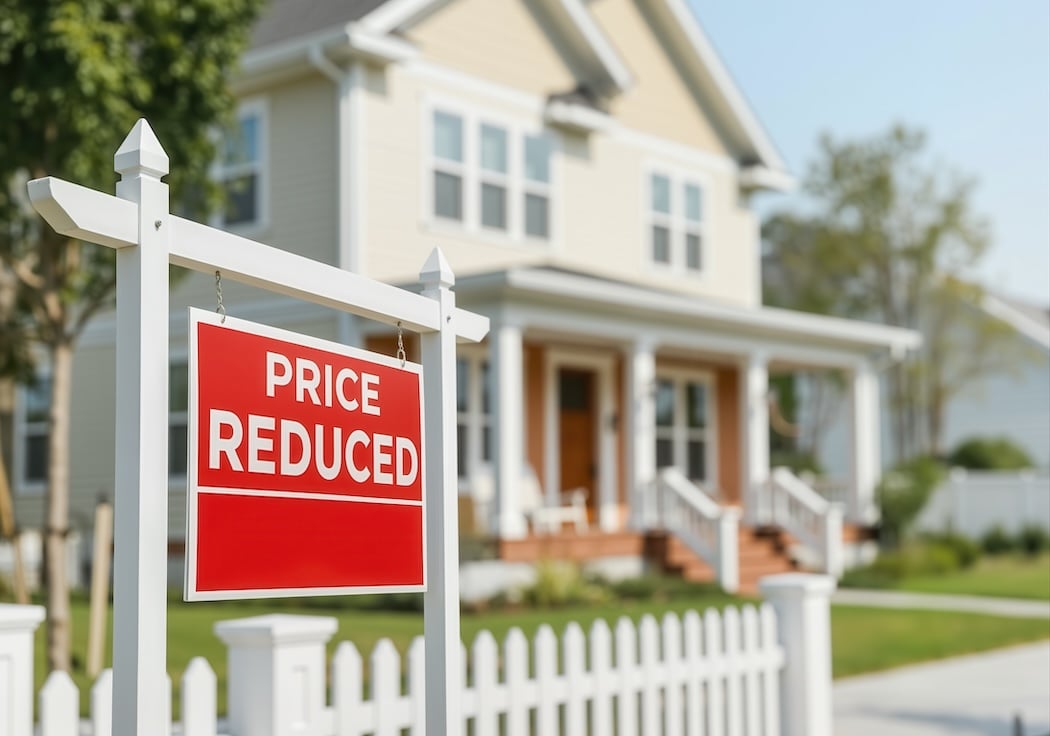
If your home is not getting the attention or offers you expected, reducing the price may help—but it should not automatically be the first move. A listing can underperform for several different reasons: buyers may not be seeing it, the online presentation may not be converting, showing access may be difficult, the home may disappoint in person, or buyers may simply see stronger alternatives at the same price. The first step is figuring out which problem you actually have.
Beyond Price Reductions: Creative Strategies to Help Your Home Stand Out
Before you reduce the price, identify what is preventing buyers from moving from “interested” to “offer.”
Watch: What to Do Before You Reduce the Price
Prefer video? Watch this TJS Team discussion on ways to improve a listing's competitive position before automatically relying on another price reduction.
Price Reduction Is a Tool—not a Diagnosis
When a listing is not performing, Sellers often hear:
“We need to reduce the price.”
Sometimes that is exactly right.
But consider two very different listings:
Listing A has almost no online engagement and very few showings.
Listing B receives plenty of showings, strong online activity, and repeated second visits—but no offers.
They may both eventually require a pricing adjustment.
But they are not showing the same symptoms.
Price Is Powerful.
But It Should Solve
a Price Problem.
Not Substitute for Diagnosing
a Different Problem.
Use the Listing Reset Ladder
Exposure
↓
Online Conversion
↓
Showing Access
↓
In-Person Experience
↓
Value Communication
↓
Buyer Economics
↓
Price Position
“Before Changing the Price, Do We Know Exactly Where Buyers Are Dropping Out?”
1. Improve the First Five Seconds
Most Buyers do not encounter your home at the front door.
They encounter it on a screen.
That means your listing is competing for attention against many other homes at once.
Review:
- The main listing photo.
- The first five images.
- Lighting and image quality.
- Photo order.
- Whether the best feature appears early enough.
- Whether the images accurately explain the layout.
Professional photography is important, but photography alone is not the goal.
The goal is:
to make the right Buyer curious enough to schedule a showing.
If Buyers never click on the listing, they never get the opportunity to appreciate the house in person.
2. Rewrite the Listing Around the Buyer's Decision
A listing description should not simply inventory the house.
Instead of:
“5 bedrooms, 4 bathrooms, finished basement.”
explain why those features matter.
For example:
- Does a main-level bedroom solve a common layout need?
- Can the basement function as office, recreation, guest, or flexible living space?
- Does the backyard provide usable outdoor space?
- Have major systems recently been updated?
- Does the location shorten access to recurring destinations?
The listing should make it easy for Buyers to understand:
“Why this one?”
3. Fix the Showing Experience
A listing can perform well online and still lose momentum once Buyers arrive.
Look for:
- Odors.
- Dark rooms.
- Clutter.
- Uncomfortable temperature.
- Visible deferred maintenance.
- Overgrown landscaping.
- Hard-to-understand room use.
- Personal items distracting from the property.
The objective is not to make the home look like a showroom nobody lives in.
It is to reduce distractions and make the home's strongest qualities easier to experience.
Online Presentation
Gets the Showing.
The Showing Experience
Has to
Keep the Interest.
4. Remove Small Problems That Create Big Questions
Some inexpensive problems can create disproportionate Buyer concern.
Examples may include:
- Visible water staining after the underlying issue has already been repaired.
- Damaged trim.
- Loose fixtures.
- Peeling exterior paint.
- Poorly maintained landscaping.
- Unfinished small projects.
The Buyer may not think:
“That repair costs $300.”
They may think:
“What else has been neglected?”
The purpose of pre-listing preparation is often not to add dollar-for-dollar value. It is to remove reasons for Buyers to discount the property.
5. Make the Home Easier to See
If Buyers have many alternatives, showing friction becomes more important.
Suppose a Buyer can see:
House A today at 5:30 p.m.
House B tomorrow between 1:00 and 2:00 p.m. only.
House C requires 24-hour notice.
House A may get the first opportunity simply because it was easier to evaluate.
Seller circumstances can legitimately limit showing access.
Occupied homes,
pets,
tenants,
work schedules,
and other factors matter.
But Sellers should understand the trade-off between:
convenience for the Seller and access for the Buyer.
In a Market With Many Choices,
the Home That Is Harder to See
Can Be
Easier to Skip.
6. Reposition the Home Against the Actual Competition
Don't evaluate your listing only against old sold comps.
Sold comps help explain market value.
Active listings tell you:
what Buyers can choose instead today.
Review the three to five properties most likely competing for the same Buyer.
Compare:
- Price.
- Condition.
- Renovations.
- Lot.
- Road position.
- Major-system age.
- Layout.
- Photography.
- Showing access.
Then ask:
“At today's price, why would a Buyer choose ours?”
7. Consider Buyer-Friendly Economics Before Simply Cutting Price
Depending on the market, financing, contract, and Seller goals, another option may be to address a specific Buyer obstacle.
Examples could include:
- An allowable Seller contribution toward Buyer closing costs.
- A specific repair.
- A home warranty if appropriate.
- Another negotiated concession tied to a real Buyer concern.
The key is to compare:
what the incentive costs the Seller versus what problem it solves for the Buyer.
For example, a $10,000 price reduction and a $10,000 Seller concession do not necessarily affect every Buyer in exactly the same way.
Loan structure matters.
Seller net matters.
And applicable lender limits matter.
Use incentives to solve a defined Buyer problem—not simply because the listing needs “something new.”
8. Change the Marketing Message When the House Is Being Misunderstood
Sometimes the property has a strong feature that Buyers are simply not understanding.
Maybe:
- The basement's functionality is unclear.
- The backyard is larger than photos suggest.
- A flexible room can solve an office need.
- The home has newer systems that are buried in the description.
- The location advantage is not obvious.
A listing reset can include:
- New lead photography.
- Reordered images.
- Updated copy.
- New video.
- Short-form property content.
- A floor plan or 3D tour.
- New targeted promotion.
The objective is not simply:
“Do more marketing.”
It is:
“Communicate the value more clearly.”
9. Use Buyer Feedback Carefully
One Buyer says:
“The kitchen isn't my style.”
That may not mean much.
But if many Buyers repeatedly say:
“At this price, the competing homes require less updating,”
that is more important.
Look for:
- Repeated comments.
- Repeated objections.
- Repeated behavior.
- Which competing properties Buyers ultimately choose.
One Comment
Is Feedback.
A Repeated Pattern
Connected to Buyer Behavior
Can Become
Market Evidence.
10. Know When Price Really Is the Problem
A Seller should not avoid a necessary price adjustment simply because there are other marketing ideas available.
Price deserves serious review when:
- The listing is getting appropriate exposure.
- Presentation is competitive.
- Showing access is reasonable.
- Qualified Buyers are touring.
- Repeated feedback points to value.
- Competing homes are being selected instead.
- Current market evidence no longer supports the position.
At that point:
a price adjustment may be the strategy—not a failure of the strategy.
The objective is not to avoid price reductions. It is to avoid making one without knowing what problem you are trying to solve.
The Listing Reset Diagnostic
Symptom | Investigate First | Possible Reset |
|---|---|---|
Very Few Listing Views | Exposure, price bracket, distribution | Reposition marketing / review price |
Views but Few Showings | Photography, value perception, showing access | New lead images, copy, access strategy |
Many Showings, No Strong Interest | In-person condition, layout, lot, price | Presentation fixes / value repositioning |
Second Visits, No Offers | Buyer economics, competition, perceived value | Incentive or price review |
Competitors Keep Going Pending | Direct side-by-side comparison | Reposition the value proposition |
Repeated “Too Expensive” Feedback | Current comps and direct competition | Price adjustment may be appropriate |
20 Questions Before Reducing the Price
☐ 1. Are enough Buyers seeing the listing online?
☐ 2. Does the first photo earn the click?
☐ 3. Do the first five photos show the home's strongest advantages?
☐ 4. Does the listing clearly explain “why this home”?
☐ 5. Is showing access limiting Buyer opportunities?
☐ 6. Does the house feel as good in person as it looks online?
☐ 7. Are odors, lighting, clutter or temperature hurting the experience?
☐ 8. Are small maintenance items creating larger confidence problems?
☐ 9. Which three listings compete most directly with ours?
☐ 10. Why would a Buyer choose each competitor over us?
☐ 11. Which competing listings recently went pending?
☐ 12. What repeated Buyer feedback are we receiving?
☐ 13. Are Buyers objecting to condition or value?
☐ 14. Would a specific repair solve a repeated objection?
☐ 15. Would an allowable concession solve a Buyer affordability issue?
☐ 16. Is the marketing message emphasizing the wrong features?
☐ 17. Does the home's strongest feature appear early enough online?
☐ 18. Has market competition changed since we listed?
☐ 19. Does current evidence still support our price?
☐ 20. What exact problem would a price reduction solve?
Frequently Asked Questions
Should I reduce my home's price if I am not getting showings?
Possibly, but first determine whether the problem is price, online presentation, showing restrictions, market exposure, or competition. Very low showing activity can be a pricing signal, but it should be evaluated alongside current market data.
Can better photos help instead of a price reduction?
Better photography can improve online presentation and may help generate additional showing interest. It cannot guarantee a sale or compensate indefinitely for an unsupported price.
Can Seller credits be used instead of lowering the price?
Depending on the contract, market and Buyer's financing, an allowable Seller contribution may address certain Buyer closing-cost or affordability concerns. Seller and Buyer should review the economics and applicable loan requirements with the appropriate professionals.
Should I make repairs before reducing the price?
It depends on the repair. Focus on issues that repeatedly create Buyer concern or uncertainty. Spending money on improvements simply to avoid a price reduction does not automatically produce a better Seller outcome.
How important is showing availability?
Showing access can matter when Buyers have many competing options. Reasonable access may increase the number of qualified Buyers able to evaluate the property, although Seller circumstances may legitimately require restrictions.
When is a price reduction actually the right strategy?
Price deserves serious review when exposure and presentation are competitive, qualified Buyers are touring, competing homes are being selected instead, and current market evidence indicates that the home's value position is weaker than expected.
How much should I reduce the price?
There is no universal percentage. The adjustment should be based on current competing listings, recent market activity, relevant sold properties, Buyer feedback, search-price brackets, and the specific goal of the repositioning.
What is the most important question before reducing the price?
Ask: “What exact problem are we trying to solve with this price change?” If that question cannot be answered clearly, diagnose the listing before changing the number.
Don't Reduce the Price
Simply Because
“Something Needs to Change.”
Identify
What Needs to Change.
Final Thoughts: Diagnose First, Reset Second
When a home is not selling, there are several levers available.
You can improve:
Photography.
Listing copy.
Property presentation.
Showing access.
Minor repairs.
Buyer-value communication.
Marketing distribution.
Buyer economics.
And price positioning.
But each tool should solve a specific problem.
Better photography cannot repair an unsupported price.
A Seller credit cannot fix a permanent location objection.
A price reduction cannot fix Buyers being unable to schedule a showing.
And more marketing cannot force Buyers to prefer a property that they believe offers less value than the alternatives.
The strongest listing reset begins with one question:
“Where are Buyers dropping out—and what change is most likely to move them to the next step?”
Watch the Full Video
For more on how to rethink an underperforming listing before automatically reducing the price, watch the full video from TJS Team.
Is Your Metro Atlanta Home Listed but Not Selling?
Before automatically reducing the price again, we can review the listing funnel: online presentation, showing activity, Buyer feedback, current competition, recent pending listings, property condition, showing access, marketing execution, Buyer incentives, and current price positioning. The goal is to identify what Buyers are responding to—and what is preventing them from moving forward.
Tina Jingru Sui | TJS Team
Call or Text: (404) 375-2120
Email: [email protected]
Visit TinaSui.com
About Tina Jingru Sui
Tina Jingru Sui is the founder and leader of the TJS Team, serving home sellers, buyers, investors, new-construction buyers and relocation clients throughout Metro Atlanta.
Tina and her team serve Atlanta, Johns Creek, Alpharetta, Suwanee, Duluth, Buford, Dacula, Sandy Springs, Roswell, Marietta, Smyrna, Peachtree Corners and surrounding Metro Atlanta communities.
Keller Williams Realty Atlanta Partners · (404) 375-2120
This article is provided for general real estate education and marketing information only and does not constitute legal, financial, tax, lending, appraisal, inspection, construction, investment, brokerage-contract interpretation or other professional advice. The Listing Reset Ladder, Listing Reset Diagnostic, examples, checklists and related concepts are educational tools only and do not guarantee showings, offers, sale price, days on market, appraisal results, Seller net proceeds or closing. A price reduction may be appropriate depending on property-specific market conditions, and no marketing, photography, repair, staging, open-house, video, advertising or Seller-incentive strategy can guarantee a particular outcome. Buyer feedback reflects individual preferences and should be evaluated together with repeated patterns, showing activity, competing listings, recent pending activity and relevant market data. Active listing prices do not establish market value, and pending listings do not establish final sale price or contract terms. A Comparative Market Analysis is not an appraisal. Seller contributions and other concessions are subject to negotiation, contract terms, loan-program limitations and lender requirements. Repairs and improvements do not necessarily produce dollar-for-dollar increases in market value or Seller net proceeds. Showing availability should be balanced with Seller occupancy, privacy, safety, tenant, pet and other legitimate property-access needs. Real estate professionals can assist Sellers with pricing, market analysis, marketing, showing strategy, Buyer feedback, offer review and negotiation but do not replace attorneys, lenders, appraisers, inspectors, engineers, contractors, CPAs or other qualified professionals. Equal Housing Opportunity. Tina Jingru Sui, GA License #392936, REALTOR®, affiliated with Keller Williams Realty Atlanta Partners.