If you are thinking about building a rental portfolio in Johns Creek and North Fulton, the first question is simple: are you buying for cash flow today, or stability and appreciation over time? That matters here because Johns Creek is not a bargain-basis market where every deal pencils as a high-yield rental. It is a premium suburban market where strong tenant demand, higher home values, and lower turnover can support a durable long-term strategy. In this guide, you will learn how to think about property type, renter demand, taxes, and submarket mix so you can build a portfolio with clearer expectations. Let’s dive in.
Why Johns Creek fits a hold strategy
Johns Creek looks strongest as a long-term hold market. Census QuickFacts reports an owner-occupied housing unit rate of 80.4%, a median owner-occupied value of $629,400, a median gross rent of $2,257, and median household income of $160,093. It also shows that 86.9% of residents lived in the same house one year earlier.
Taken together, those numbers point to a market with relative stability, high housing costs, and lower turnover. For you as an investor, that usually means tenant quality, careful screening, and long-run asset performance may matter more than chasing the highest immediate yield. Select deals can still produce cash flow, but the market profile leans more toward appreciation and consistency.
What makes demand durable
Johns Creek also benefits from a strong employment base. The city says it is home to more than 700 professional, scientific, and technical services companies, along with more than 450 healthcare and social service companies employing more than 13,000 healthcare practitioners and technical employees. That helps support steady housing demand from relocating professionals and long-term renters.
The city also highlights transportation and connectivity as strategic priorities, with several major engineering projects expected to move into right-of-way and construction in 2026. For a buy-and-hold investor, that matters because long-range livability and access often support renter demand over time. It does not guarantee performance, but it strengthens the case for patient ownership.
Which rentals fit Johns Creek best
Single-family homes lead
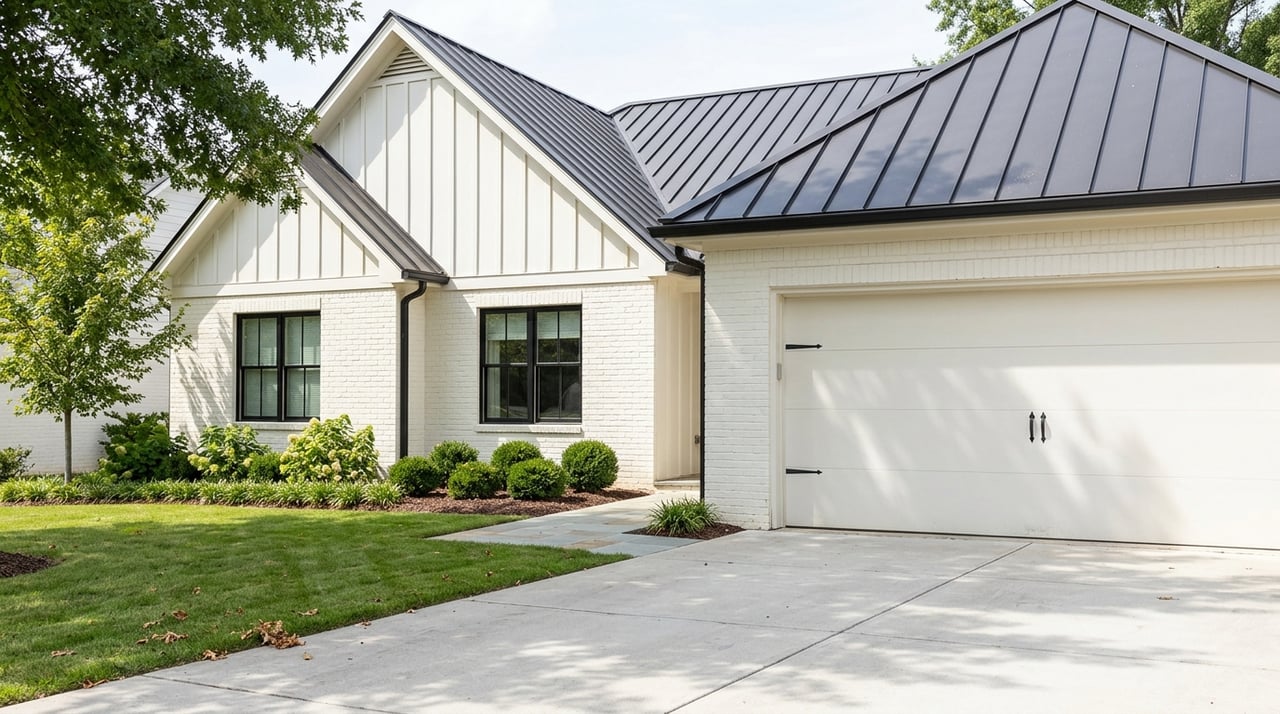
Johns Creek zoning is weighted heavily toward single-family housing. The zoning ordinance includes multiple single-family districts, plus limited two-family, townhouse, and apartment districts. That means detached homes, and in some cases select townhomes, are the most natural fit for long-term rentals in this market.
This is important because the easiest property to own is often the one that already matches the market. In Johns Creek, that usually means housing that feels practical, spacious, and easy to live in for more than one lease cycle. A property that fits local expectations tends to be easier to market and easier to hold.
Features renters are likely to value
For suburban rentals here, function matters. Homes with updated kitchens and baths, garage parking, practical floor plans, and enough bedrooms for a conventional household are likely to align well with the market profile. Johns Creek’s average household size is 2.82 persons, which supports the idea that layout and usable space matter.
In plain terms, you may do better with a home that feels move-in ready than one that relies on trendy upgrades alone. A clean, well-maintained property with everyday convenience can appeal to renters who want stability and a predictable living experience.
Why address details matter
One local factor deserves extra attention: school assignment is address-based through Fulton County Schools. If a renter is focused on a specific attendance area, the exact parcel matters. For you as a buyer, that means you should verify the property’s assigned school using the official address lookup before closing.
Even if you are buying primarily for investment metrics, this can affect leasing demand and marketing clarity. It is better to verify early than to make assumptions based on a subdivision name or nearby location.
How to underwrite Johns Creek rentals
Model taxes correctly
One of the biggest underwriting mistakes in premium suburbs is being too optimistic about carrying costs. In Johns Creek, property values are assessed by Fulton County’s Board of Assessors, and tax bills come through Fulton County. The city also notes that homestead exemption applies to a primary residence occupied by the owner.
For a rental property, you should generally not model taxes as if homestead relief will apply. That sounds basic, but it can materially change your numbers. If your projected return only works with owner-occupied tax treatment, the deal likely needs a second look.
Focus on realistic returns
Because Johns Creek has high values and solid rents, your return will often depend on basis, financing, and renovation discipline. This is not usually the kind of market where a loose buy box gets rescued by unusually high rent. You want to be precise on purchase price, rehab scope, tax assumptions, and lease-ready costs.
That is where investor-grade analysis matters. Looking at cash flow, cap rate, reserve planning, and hold timeline together can help you decide whether a property belongs in your portfolio or in the pass pile.
How Johns Creek compares in North Fulton
A smart portfolio does not treat every city the same. Nearby North Fulton markets sit in a similar premium band, but they are not identical. Census QuickFacts shows median owner-occupied values and median gross rents as follows:
| City | Median Home Value | Median Gross Rent |
|---|---|---|
| Johns Creek | $629,400 | $2,257 |
| Alpharetta | $649,000 | $1,948 |
| Roswell | $567,100 | $1,810 |
| Sandy Springs | $619,800 | $1,870 |
| Milton | $789,000 | $2,065 |
Johns Creek stands out with rent at the upper end of this comparison group. That suggests it can play a strong role as a stability and appreciation anchor in a broader Metro Atlanta portfolio. If you are balancing for total portfolio performance, you might pair Johns Creek with other submarkets that carry more of the immediate cash-flow burden.
A practical portfolio approach
Use Johns Creek as an anchor
If your goal is long-term wealth building, Johns Creek may work well as the steady piece of the portfolio. You are buying into a suburb with high owner occupancy, strong household income, and a housing stock that supports durable rental demand. That can be attractive if you value consistency, lower turnover potential, and quality tenant appeal.
This does not mean every property is a good investment. It means the market often rewards disciplined buying and patient holding. In a portfolio context, that can be very useful.
Balance with other North Fulton options
North Fulton gives you room to compare price points and rent levels across nearby cities. Depending on your goals, one market may offer a better entry basis while another offers stronger rent positioning. Johns Creek can make sense when you want a premium suburban asset rather than a pure yield play.
This kind of balancing act is often better than trying to force one city to do everything. A portfolio can have different jobs for different properties, as long as each purchase matches your strategy.
Who typically rents here
You can think about the renter pool in broad, practical terms rather than narrow labels. Johns Creek may appeal to relocating professionals connected to healthcare, life sciences, and technical industries. It may also attract households that want more indoor space, garage parking, stable commute patterns, and long-term neighborhood comfort.
Some renters will also care deeply about address-based school assignment and move-in-ready condition. Those preferences are consistent with the city’s employer base, suburban housing pattern, and the way school assignment works in Fulton County.
What to look for before you buy
If you are evaluating a Johns Creek rental, keep your checklist simple and disciplined:
- Verify the exact tax assumptions for a non-owner-occupied property
- Confirm school assignment by the property’s address
- Prioritize detached homes or select townhomes that fit the local housing pattern
- Favor practical layouts, garage parking, and solid bedroom counts
- Underwrite with realistic lease-up, maintenance, and reserve numbers
- Compare the deal against nearby North Fulton alternatives, not just against your ideal outcome
A premium suburb can reward disciplined decision-making. It usually does not reward vague assumptions.
When Johns Creek makes sense
Johns Creek may be a strong fit if you want to own in a market where renter demand is tied to a stable suburban lifestyle and a deep professional employment base. It may also fit if your strategy values capital preservation, long-term appreciation potential, and homes that tend to attract longer-term tenants.
If you are looking only for the highest possible yield, you may need to be much more selective here. But if you are building a portfolio for durability, Johns Creek deserves a serious look.
If you want help comparing Johns Creek with the rest of North Fulton, modeling a buy-and-hold acquisition, or identifying a property that fits your numbers and timeline, Tina Jingru Sui can help you build a smarter suburban portfolio.
FAQs
Is Johns Creek better for cash flow or appreciation?
- Johns Creek looks more like a stability and appreciation market than a pure cash-flow market, based on its high home values, solid rents, high owner-occupancy rate, and low turnover.
What property type is easiest to rent in Johns Creek?
- Detached single-family homes and select townhomes are generally the cleanest fit with Johns Creek’s zoning structure and suburban market profile.
How important is school assignment for a Johns Creek rental?
- School assignment can be very important because Fulton County Schools uses an address-based lookup, so you should verify the exact parcel before closing.
How should you model property taxes on a Johns Creek rental?
- You should model taxes as a non-owner-occupied property because homestead exemption is for a primary residence occupied by the owner.
How does Johns Creek compare with other North Fulton cities for rentals?
- Johns Creek sits in a premium North Fulton group and stands out with median gross rent at the higher end, which can make it a strong anchor market in a broader portfolio.
Who typically rents homes in Johns Creek?
- The renter pool may include relocating professionals, households seeking more suburban space, renters who want address certainty for school assignment, and long-term tenants who value garages, quiet surroundings, and stable commute patterns.




