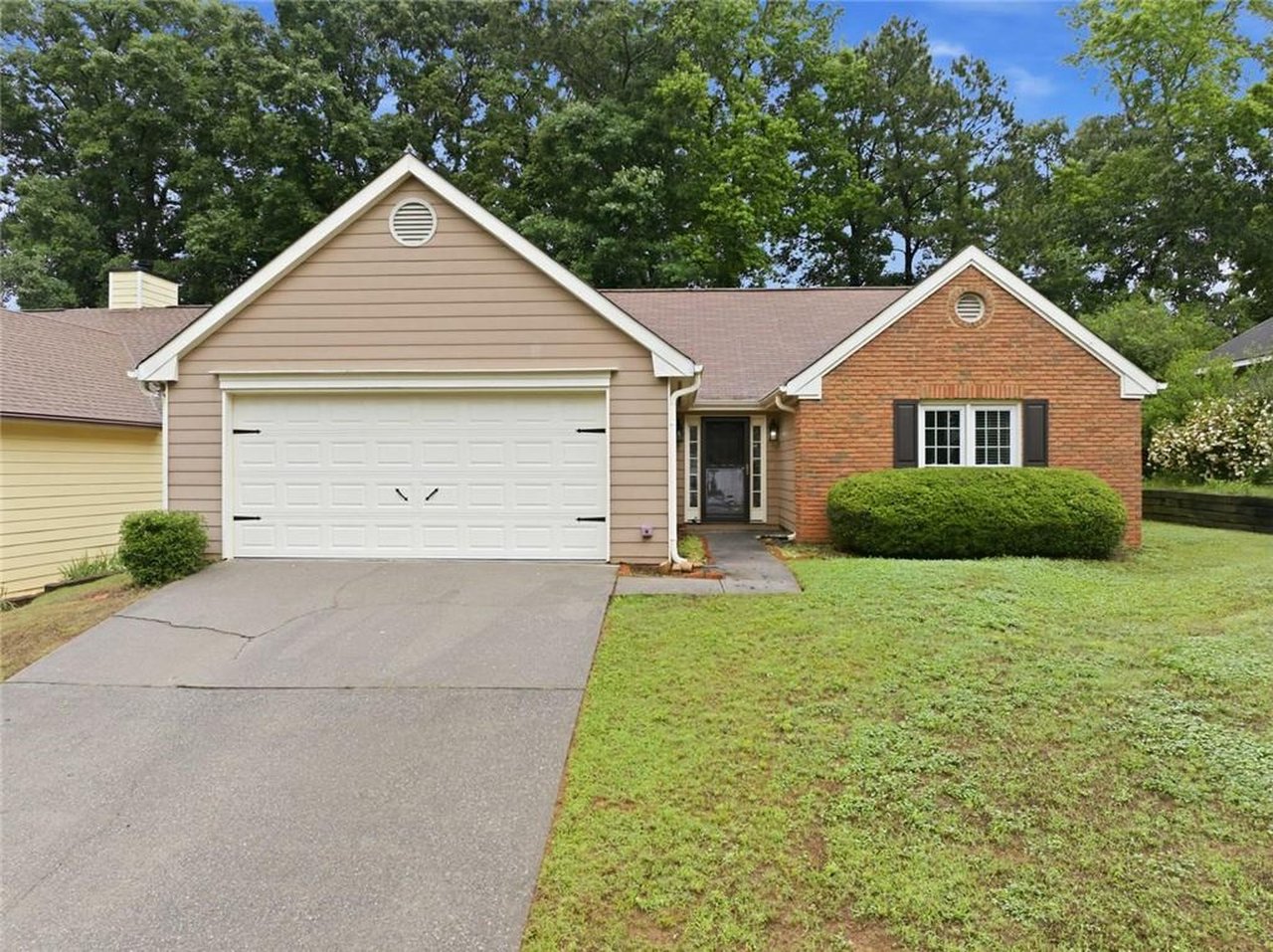
Should you buy ITP or OTP in Metro Atlanta? Inside the Perimeter can offer closer access to many central Atlanta destinations and a wider selection of urban-style neighborhoods, while Outside the Perimeter often provides more suburban housing choices and, in some locations, more space for the budget. Neither is automatically better—the right choice depends on your commute, monthly payment, preferred home type, and everyday lifestyle.
Buying a Home Inside the Perimeter vs. Outside the Perimeter: Which Is Right for You?
Compare ITP and OTP Atlanta living based on home prices, commute, space, lifestyle, schools, and long-term goals.
If you're shopping for a home in Metro Atlanta, you'll probably hear two terms very quickly:
ITP — Inside the Perimeter
OTP — Outside the Perimeter
“The Perimeter” refers to Interstate 285, the beltway that circles much of Atlanta.
These terms are local shorthand rather than official real estate market designations, but they can be useful because living inside versus outside I-285 often comes with different trade-offs.
Where you choose to live can influence:
- Purchase price.
- Commute.
- Home and lot size.
- Housing style.
- Access to restaurants and entertainment.
- Walkability.
- Maintenance requirements.
- Your everyday routine.
So which is better?
There isn't one right answer. It depends on what you want your home—and your daily life—to look like.
ITP vs. OTP at a Glance
Factor | Inside the Perimeter | Outside the Perimeter |
|---|---|---|
Overall Pattern | More urban and closer-in options | More traditional suburban options |
Central Atlanta Access | Often closer | May involve a longer drive |
Housing | Older homes, condos, townhomes, infill, renovated properties | Detached homes, planned communities, townhomes, newer construction |
Lot Size | Often smaller in denser locations | Larger lots may be more available in some areas |
Amenities | Restaurants, entertainment, cultural destinations, walkable districts | Shopping, parks, community amenities, suburban town centers |
May Appeal To Buyers Prioritizing | Location and access to city destinations | Space and suburban housing choices |
These are broad patterns only. Some OTP communities are highly walkable and expensive, while some ITP neighborhoods offer detached homes, larger lots, and quieter residential streets.
1. What Does ITP Mean?
ITP generally refers to neighborhoods and communities located inside I-285.
Examples include areas such as:
- Midtown.
- Much of Buckhead.
- Virginia-Highland.
- Grant Park.
- West Midtown.
- Decatur-area neighborhoods.
- East Atlanta.
ITP can appeal to buyers who place a high value on proximity to employment centers, restaurants, entertainment, hospitals, cultural attractions, universities, and other central Atlanta destinations.
2. What Does OTP Mean?
OTP generally refers to communities located outside I-285.
Popular OTP markets include:
- Alpharetta.
- Johns Creek.
- Suwanee.
- Buford.
- Marietta.
- Roswell.
- Lawrenceville.
- Cumming.
- Kennesaw.
These communities often provide a larger inventory of traditional suburban subdivisions, detached homes, newer construction, and planned communities.
Depending on the specific market, buyers may also find more square footage or land for the same budget.
But OTP does not automatically mean cheaper.
Markets such as Alpharetta, Johns Creek, Milton, and parts of East Cobb can command prices well above many ITP neighborhoods.
3. ITP Can Offer Greater Convenience to Central Atlanta
Location is one of the biggest reasons buyers consider ITP.
If your job, restaurants, social activities, medical appointments, or other frequent destinations are concentrated near central Atlanta, reducing travel distance may meaningfully change your daily routine.
Depending on the neighborhood, ITP buyers may prioritize:
- Closer access to central Atlanta employment centers.
- Restaurants and nightlife.
- Walkable commercial districts.
- Parks and trails.
- Museums, entertainment, and cultural attractions.
- Older homes with architectural character.
For a buyer who uses those amenities frequently, paying more for location can sometimes be worth the trade-off.
4. OTP Can Offer More Space and Housing Variety
Outside the Perimeter, buyers often encounter more traditional suburban housing.
Depending on the area and price point, that may include:
- Larger detached homes
- Larger yards
- Two- and three-car garages
- Newer construction
- Swim and tennis communities
- Planned neighborhoods
For the same general budget, moving farther from Atlanta may sometimes allow a buyer to purchase more square footage.
But this is very location-dependent.
A home in a high-demand OTP market may cost substantially more than an ITP property elsewhere in Metro Atlanta.
5. Your Commute May Be the Most Important Difference
Atlanta traffic can make location more important than mileage suggests.
A home that saves you money on the purchase price may feel less attractive if it adds significant commuting time every week.
On the other hand, if you work remotely, work in an OTP employment center, or commute only occasionally, paying a major premium to live closer to Downtown Atlanta may provide less value to you.
Ask yourself: “How much is my time worth?”
If you commute five days a week, a 20- or 30-minute difference each way can add up to hundreds of hours over several years.
That's why I recommend testing the actual commute from any property you're seriously considering.
And test it during the hours you would normally drive—not on a quiet Sunday afternoon.
6. Think About the Lifestyle You Actually Want
ITP and OTP can offer very different everyday experiences.
Some ITP neighborhoods offer denser development, walkability, restaurants, nightlife, and easier access to Atlanta's city destinations.
Many OTP communities offer lower-density residential neighborhoods, larger properties, suburban town centers, parks, community amenities, and newer development.
Neither lifestyle is automatically better.
Think about your normal week.
If You Value... | You May Want to Explore... |
|---|---|
Walking to restaurants or coffee shops | Walkable ITP neighborhoods or walkable OTP town centers |
Larger yard and more outdoor space | Many OTP communities |
City entertainment and cultural destinations | Many ITP locations |
Newer planned neighborhoods | Many OTP markets |
7. Evaluate Schools by the Specific Address
If a particular public-school assignment is important to your household, don't make the decision based simply on ITP versus OTP—or even on the city name.
School assignments are property-specific and can vary between nearby neighborhoods.
Boundaries may also change.
Always verify any school assignment important to your purchase directly with the applicable school district.
8. Housing Styles Can Be Very Different
Your preferred home style may make the decision easier.
ITP buyers may encounter more:
- Older bungalows.
- Renovated historic properties.
- Condos.
- Townhomes.
- Modern infill construction.
- Smaller-lot detached homes.
OTP buyers may encounter more:
- Traditional suburban detached homes.
- New construction.
- Larger single-family properties.
- Townhome communities.
- Planned subdivisions.
- Homes with basements and larger garages.
Again, these are broad patterns rather than rules.
9. Compare Total Housing Cost—not Just Purchase Price
The list price is only one part of the financial decision.
Compare:
- Mortgage principal and interest
- Property taxes
- Homeowners insurance
- HOA or condominium fees
- Maintenance
- Utilities
- Transportation and commuting costs
A less expensive house farther from your daily destinations may not create as much savings as it appears to on paper.
And a smaller, more expensive home closer to work might reduce transportation time and cost—but still carry higher taxes, HOA expenses, or maintenance needs.
The goal is to compare the total cost of the lifestyle, not just the price of the property.
The 2026 Atlanta Market Gives Buyers More Reason to Compare Carefully
Realtor.com reported that the Atlanta-Sandy Springs-Roswell metro had a median list price of approximately $425,000 in July 2026.
Homes spent a median of approximately 56 days on market, while about 24.8% of active listings had experienced a price reduction.
Those are metro-wide figures and should not be applied directly to an individual ITP or OTP neighborhood.
But they do reinforce an important point:
In 2026, buyers often have more reason to compare the complete package before rushing into a decision.
10. Think About Future Resale
Your lifestyle may change.
The property that works for you today may eventually become the home you need to sell.
Whether you're buying ITP or OTP, I would still evaluate:
- Location.
- Commute access.
- Functional floor plan.
- Property condition.
- Parking and garage availability.
- Neighborhood condition.
- Access to amenities.
- Property taxes and recurring ownership costs.
- School assignment when relevant to future buyer demand.
- Future development nearby.
ITP or OTP does not determine whether a home is a good investment.
The individual property's price, condition, location, functionality, and future buyer appeal still matter.
The “ITP vs. OTP” Test
Before making a decision, ask:
☐ Where do I actually work?
☐ How many days a week do I commute?
☐ How much space do I really need?
☐ What type of neighborhood environment do I prefer?
☐ How important is walkability to me?
☐ Would I actually use a large yard?
☐ Have I verified any school assignment important to my household?
☐ What total monthly housing cost is comfortable for me?
☐ What will commuting cost me in both time and money?
☐ Would I still be happy with this location five years from now?
Which One Is Right for You?
Explore ITP if you place a high value on proximity to central Atlanta destinations, restaurants, entertainment, walkability, and a more urban or closer-in environment.
Explore OTP if your priorities include larger housing options, more suburban neighborhoods, newer construction, community amenities, or potentially more space for your budget.
But I would never choose a house simply because it is ITP or OTP.
There are excellent properties—and poor-value properties—on both sides of I-285.
Don't just ask:
“Where can I afford to buy?”
Ask:
“Where do I actually want to live?”
Final Thoughts
Buying ITP versus OTP isn't simply a decision about “city versus suburbs.”
It is a decision about how you want to spend your time, money, and everyday life.
ITP may make sense for someone who places a high value on proximity to Atlanta's employment centers, restaurants, entertainment, and cultural destinations.
OTP may make more sense for someone who wants a larger home, newer construction, a bigger yard, or a more traditional suburban environment.
But the best choice is ultimately the one that balances:
Price. Location. Commute. Space. Lifestyle. And long-term goals.
Once those pieces fit together, the ITP-versus-OTP label becomes much less important.
Not Sure Whether to Buy ITP or OTP?
Tell me your budget, work location, commute schedule, preferred home style, desired amount of space, and the amenities you use most often. We can compare ITP and OTP options side by side so you understand what you're gaining—and what you're giving up—with each location.
Tina Jingru Sui | TJS Team
About Tina Jingru Sui
Tina Jingru Sui is the founder and leader of the TJS Team, serving buyers, sellers, investors, relocation clients, and homeowners throughout Metro Atlanta.
Tina and her team serve both ITP and OTP communities throughout Fulton, Forsyth, Gwinnett, Cobb, and surrounding counties, including Atlanta, Sandy Springs, Smyrna, Marietta, Alpharetta, Johns Creek, Roswell, Suwanee, Duluth, Buford, and beyond.
Keller Williams Atlanta Partners · (404) 375-2120
This article is provided for general informational purposes only and does not constitute legal, tax, mortgage, investment, school-placement, appraisal, or financial advice. “ITP” and “OTP” are informal geographic descriptions and do not define uniform housing markets or lifestyle characteristics. Home prices, commute times, school assignments, taxes, HOA requirements, insurance costs, inventory, neighborhood characteristics, and market conditions can vary significantly by property and can change over time. Buyers should independently verify information important to their purchase, including school assignments, commute considerations, property taxes, HOA restrictions, and current market data. Equal Housing Opportunity. Tina Jingru Sui, GA License #392936, REALTOR®, affiliated with Keller Williams Atlanta Partners and regulated by the Georgia Real Estate Commission.