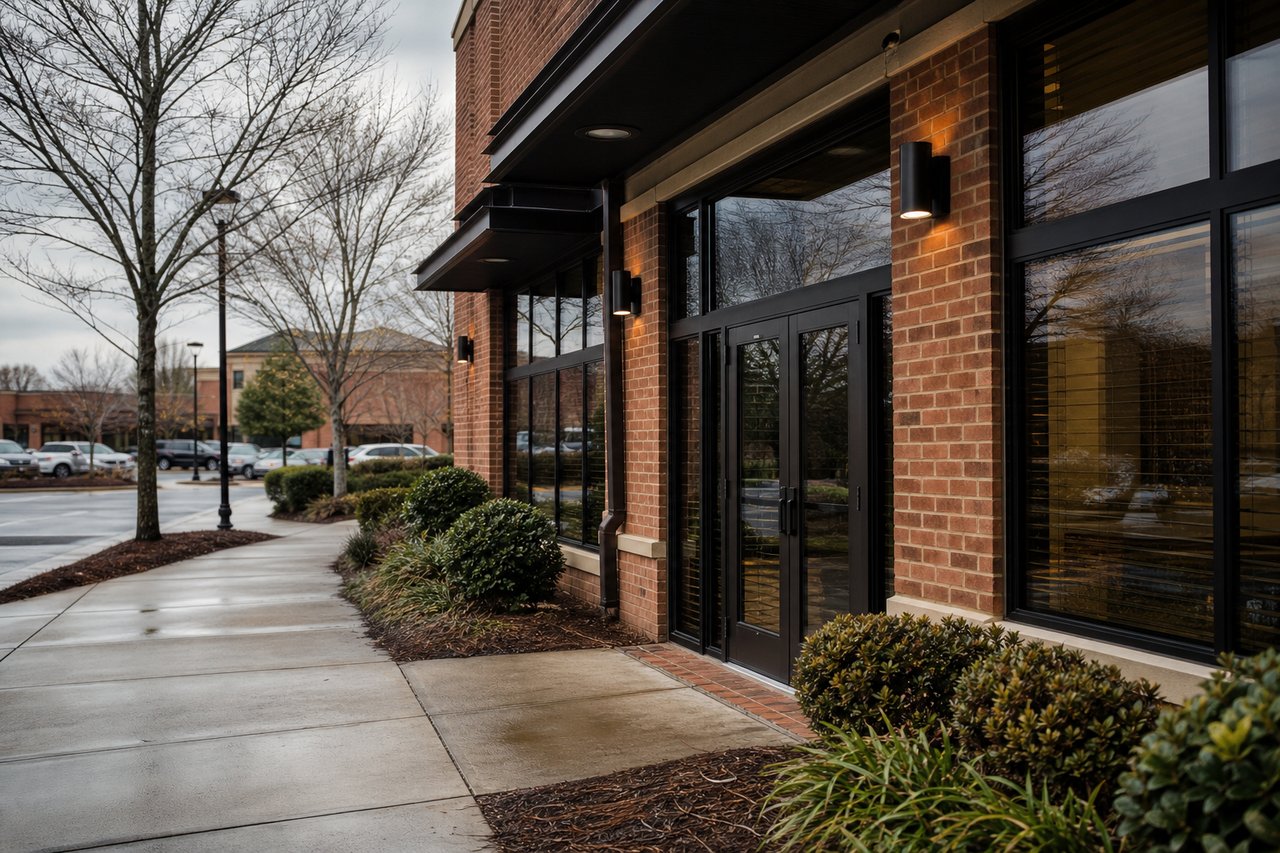
When Buyers tour a home, they naturally look at the house first. But the land can create just as important a decision. A fence may look like the property line. A driveway may appear to belong entirely to the home. A wooded strip may feel like private backyard space. None of those visual impressions, by themselves, necessarily answer the legal question of where the property boundary is or what rights affect the land.
How Do Property Boundaries Affect Atlanta Home Purchases?
Before you buy the yard you see, understand the land you are actually acquiring—and the rights and restrictions attached to it.
What Looks Like
Your Yard
Is Not Always the Same as
What You
Own, Control, or Can Build On.
Use the Property Control Map
Instead of asking only:
“Where is my property line?”
I would separate the land into six questions:
Layer | Buyer Question |
|---|---|
Legal Boundary | Where does the parcel legally begin and end? |
Physical Improvements | Where are the fence, driveway, retaining wall, shed, deck, pool and landscaping relative to the boundary? |
Easement / Shared Rights | Does another person, utility, HOA, government entity or neighboring property have rights affecting part of the land? |
Government Restrictions | What zoning, setbacks or other rules affect what can be built? |
HOA Restrictions | What additional community rules affect fences, sheds, pools, additions or exterior changes? |
Future Use | Can I actually use the property the way I am imagining after closing? |
The Most Important Buyer Question:
“Can I Legally Use This Land the Way I Think I Can?”
1. Start With the Legal Boundary—not What the Yard Looks Like
A property's legal description defines the land being conveyed.
A qualified land surveyor can use deeds, recorded plats, monuments, adjacent descriptions, rights-of-way and other available evidence to locate the boundary on the ground.
That is different from simply looking at:
- The lawn line.
- A row of trees.
- A fence.
- A driveway edge.
- Where the Seller has historically maintained the property.
Maintenance pattern is not the same thing as a professionally established property boundary.
2. A Fence Is a Clue—not Automatically the Answer
Buyers often assume:
“The fence is my property line.”
Do not automatically make that assumption.
A fence may have been installed:
- Inside the owner's property line.
- Near the line but not exactly on it.
- For privacy or pet control rather than boundary identification.
- Many years ago without a recent survey.
Georgia boundary law can become fact-specific, and certain long-standing monuments, agreements, recorded documents or boundary circumstances may have legal significance.
So if the fence location materially affects the purchase:
don't guess from the fence—investigate the boundary.
3. Driveways Deserve Special Attention
A driveway can create several different questions.
Does it sit entirely inside the property?
Is part of it shared?
Does someone else have an access easement?
Does the property rely on an easement across neighboring land to reach the road?
Does the driveway cross a utility or drainage easement?
If a driveway is unusual,
shared,
or appears close to a property line,
understand the underlying rights before closing.
Watch the Video
Property Boundaries: What Home Buyers Should Understand
If you prefer a visual explanation, watch my video covering why property lines, surveys, easements, fences, and future improvement plans deserve attention before you close on a home.
4. Understand What Kind of Survey You Are Looking At
Not every drawing showing a property is the same thing.
For example:
- A recorded subdivision plat can contain important lot information.
- An older boundary survey may show boundary lines and improvements existing at that time.
- A new boundary survey can provide current field information.
- A topographic survey serves a different purpose and should not automatically be treated as a boundary survey.
Georgia's surveying standards specifically distinguish boundary-related plats from topographic work.
So when someone says:
“We have a survey.”
ask:
“What type of survey is it, when was it prepared, and what exactly does it establish?”
A Drawing of the Property
Is Not Automatically
a Current Boundary Survey.
5. An Older Survey Can Be Useful—but Ask What Has Changed
Suppose Seller provides a survey from 15 years ago.
It may still contain valuable information.
But since then:
- A new fence may have been installed.
- A deck may have been added.
- A retaining wall may have been built.
- The driveway may have been widened.
- A shed may have been added.
- A pool may have been installed.
- Neighboring improvements may have changed.
The question becomes:
“Does the old survey answer the question I have today?”
If not, discuss with the appropriate surveyor, closing attorney, lender or other professional whether updated work is appropriate.
6. Recorded Plats and Real Estate Records Can Add Important Context
Georgia's county Clerks of Superior Court maintain official deed, lien and plat records.
The Georgia Superior Court Clerks' Cooperative Authority also provides online access to statewide real estate and plat indexes.
Recorded documents may help identify:
- Recorded plats.
- Legal descriptions.
- Recorded easements.
- Rights-of-way.
- Other property-related documents.
But locating a document is different from interpreting its legal effect.
When the issue materially affects ownership or use:
have the appropriate professional interpret it.
7. An Easement Can Mean You Own the Land but Do Not Have Exclusive Control Over It
This concept surprises many Buyers.
An easement can give another party certain rights affecting part of the property.
Examples may include:
- Utility easements.
- Drainage easements.
- Access easements.
- Shared-driveway rights.
- Other recorded rights affecting property use.
That does not automatically mean the property has a problem.
Easements are common.
The important questions are:
- Where is it?
- Who benefits from it?
- What rights does it create?
- What restrictions does it place on the owner?
- Does it interfere with something you want to build or change?
Owning the underlying land does not necessarily mean you have unrestricted use of every square foot.
8. Translate the Easement From Paper to the Actual Yard
An easement on a document may look abstract.
Try to understand what it means physically.
Does it run:
through the side yard?
across the driveway?
behind the house?
through the part of the backyard where you want a pool?
along the area where you want to build a detached garage?
That is where a survey becomes especially useful:
connecting legal information with the land you are actually looking at.
9. Look for Potential Encroachment Questions
An encroachment issue can arise when an improvement appears to extend across a property boundary or into an area affected by another right.
Examples can include:
- A neighbor's fence crossing the line.
- Your prospective home's driveway extending onto neighboring land.
- A retaining wall near or across the boundary.
- A shed or accessory structure in a questionable location.
- Landscaping or hardscape extending across the line.
Do not diagnose the legal outcome yourself from an aerial map.
If something looks questionable:
identify the issue before closing and bring in the appropriate professionals.
10. Don't Treat an Online Tax Map as a Boundary Survey
County GIS and tax-assessor maps can be extremely useful for:
- Identifying parcels.
- Reviewing tax information.
- Understanding general property configuration.
- Locating nearby parcels.
But a map on your phone or computer should not automatically be treated as field-verified proof of the exact property line.
If a difference of:
one foot, three feet, or ten feet
would materially affect your purchase,
then approximate visual information may not be enough.
Useful Map
≠
Boundary Certification.
11. Buying the Land Does Not Mean You Can Build Anywhere on It
Suppose you buy a large backyard because you want to add:
- A pool.
- A detached garage.
- A shed.
- A deck.
- A home addition.
- An outdoor kitchen.
The boundary is only the first question.
You may also need to investigate:
- Setback requirements.
- Zoning.
- Easements.
- Utility locations.
- Drainage considerations.
- HOA architectural requirements.
- Permit requirements.
- Other property-specific restrictions.
So a Buyer should not ask only:
“Is the yard big enough?”
Ask:
“Is the usable and buildable area big enough for what I want?”
Lot Size
≠
Usable Area
≠
Buildable Area.
12. HOA Rules Can Create Another Layer of Control
Even if zoning allows a project,
the HOA may have additional restrictions or approval requirements.
That can matter for:
- Fence type and height.
- Exterior structures.
- Pool design.
- Sheds.
- Driveway modifications.
- Exterior paint.
- Landscaping.
- Additions.
If you are buying specifically because you plan to make an improvement:
investigate feasibility before assuming approval.
13. Retaining Walls Can Create More Questions Than Buyers Expect
A retaining wall near a boundary may raise questions such as:
- Whose property is it on?
- Who built it?
- Who maintains it?
- Does it extend across the line?
- Does drainage from one property affect the other?
Those questions may involve surveying,
engineering,
title,
or legal analysis depending on the facts.
If the wall is substantial or appears important to the property's support or drainage:
do not leave the question until after closing.
14. Property Boundary and View Are Two Different Things
A Buyer may fall in love with:
a wooded view behind the house.
But where does the property actually end?
If the trees are on neighboring land,
the Buyer may own the view today,
but not control the trees or future use of the neighboring parcel.
Understanding the boundary helps separate:
what you own
from:
what you currently enjoy seeing.
15. Seller Knowledge Is Useful—but It Is Not a Substitute for Verification
Seller may say:
“The line is right by that tree.”
“The neighbor and I have always shared the driveway.”
“The fence has been there forever.”
“Nobody has ever had a problem with the shed.”
Those statements can provide useful context.
But if the location or legal right materially affects your decision:
verify rather than rely solely on informal understanding.
16. Match the Boundary Investigation to Your Actual Concern
Not every Buyer needs the same level of boundary investigation.
A straightforward subdivision lot with:
no planned exterior improvements,
no unusual driveway,
no visible boundary concern,
and clear recorded information
may present a different decision from a property where:
- You plan a pool.
- The fence appears unusual.
- The driveway is shared.
- There is a large easement.
- The lot is irregular.
- A retaining wall crosses near the property edge.
- You are buying specifically for acreage.
- You intend to subdivide or add structures.
The right question is not “Does every Buyer need a new survey?” It is “What uncertainty about this particular property do I need resolved before closing?”
17. Separate Ownership From Control
This is the concept I want Buyers to remember.
Question | Meaning |
|---|---|
Do I Own It? | Is it inside the parcel conveyed to me? |
Does Someone Else Have Rights? | Is there an easement, right-of-way, shared use or other recorded interest? |
Can I Build There? | Do zoning, setbacks, easements, HOA rules or permits restrict the plan? |
Can I Control What Happens Next Door? | Usually only to the extent law, agreements or recorded rights provide |
18. Example: The “Perfect Pool Backyard”
Buyer tours a house and says:
“This backyard is perfect. We can put the pool right there.”
Before paying a premium for that possibility, the Buyer should consider:
- Where the rear and side property lines actually are.
- Whether easements cross the proposed area.
- Applicable setbacks.
- Topography and drainage.
- HOA requirements.
- Utility conflicts.
- Permit requirements.
If the pool is one of the main reasons you are buying the property:
pool feasibility is part of the purchase decision—not a question for six months after closing.
19. Boundary Problems Can Change the Value of Features You Thought You Were Buying
Suppose you paid more because the home appeared to have:
a huge backyard.
Then you learn:
the usable part is much smaller,
a large easement crosses the yard,
or part of what appeared to be private space is outside the parcel.
That information could affect:
- Your enjoyment.
- Your building plans.
- How you compare the home with alternatives.
- What you personally are willing to pay.
- Future Buyer perception.
This is why boundary analysis belongs:
before the irreversible part of the decision.
20. Know Which Professional Answers Which Question
Professional / Source | Typical Role |
|---|---|
Land Surveyor | Boundary location, field measurements, survey plats and survey-related property information within professional scope |
Closing / Real Estate Attorney | Legal effect of title documents, easements, ownership rights, boundary disputes and contract / title questions |
Local Government | Zoning, setbacks, permits and applicable development requirements |
HOA / Architectural Committee | Current community restrictions and approval requirements |
Real Estate Agent | Identify questions, obtain available documents, coordinate professionals, and help Buyer evaluate how the information affects the transaction decision |
The Property Control Audit
Feature | Question | Possible Verification |
|---|---|---|
Fence | Is it actually on or related to the legal line? | Survey / recorded documents / professional advice |
Driveway | Owned, shared or easement access? | Survey + deed / easement review |
Retaining Wall | Whose property? Who maintains it? | Survey + engineering / legal review where necessary |
Backyard | How much is legally within the parcel? | Boundary survey / recorded plat |
Easement Area | What rights exist and how does that affect use? | Recorded documents + attorney / surveyor as appropriate |
Future Pool / Addition | Is enough usable / buildable area available? | Survey + zoning / setback + HOA + contractor / design review |
25 Questions to Ask Before Closing
☐ 1. What legal description is being conveyed?
☐ 2. Is a recorded plat available?
☐ 3. Is an existing survey available?
☐ 4. What type of survey is it?
☐ 5. When was it prepared?
☐ 6. What physical improvements have changed since that survey?
☐ 7. Does the fence correspond with the surveyed boundary?
☐ 8. Is the driveway entirely within the parcel?
☐ 9. Is any driveway or access shared?
☐ 10. Are there recorded easements?
☐ 11. Where do those easements physically run?
☐ 12. Who has rights under them?
☐ 13. Do they affect how I want to use the property?
☐ 14. Are any structures close to or across a boundary?
☐ 15. Is there a retaining wall near the property line?
☐ 16. Are setbacks relevant to my plans?
☐ 17. What zoning applies?
☐ 18. What HOA rules affect exterior improvements?
☐ 19. Do I want a pool, shed, garage, fence, deck or addition?
☐ 20. Have I investigated whether that project is feasible?
☐ 21. Am I relying on trees, landscaping or open land that I do not own?
☐ 22. Does a GIS map conflict with what I see on the ground?
☐ 23. Would a boundary difference materially change what I am willing to pay?
☐ 24. Is there any boundary question I am planning to “figure out later”?
☐ 25. Can I legally use this land the way I think I can?
If You Ask Only One Question:
“Can I Legally Use This Land the Way I Think I Can?”
Frequently Asked Questions
Does a fence show the exact property line?
Not necessarily. A fence can provide useful physical evidence, but it should not automatically be assumed to be the legal boundary. Georgia boundary issues can also become legally fact-specific, so where the line materially matters, obtain appropriate survey and legal guidance.
Can I use a county GIS map to determine the property line?
GIS and tax maps can be useful for general parcel information, but they should not automatically be treated as a field-verified boundary survey. If precise line location matters, consult a qualified land surveyor.
What does a boundary survey show?
A boundary survey can identify the surveyed parcel boundaries and may depict monuments, measurements, adjoining property information and other requested or required property features in accordance with applicable professional standards.
Is a topographic survey the same as a boundary survey?
No. They serve different purposes. Georgia surveying standards specifically distinguish topographic work from boundary surveys, so Buyers should understand what type of document they are reviewing.
What is an easement?
An easement is a legal right affecting the use of land. Depending on the document, it may provide access, utility, drainage or another right to another person or entity. The existence of an easement does not automatically make a property undesirable; Buyers should understand its location and effect.
Should every Atlanta Buyer order a new survey?
There is no universal answer for every transaction. The need for updated survey work depends on the property, existing documents, lender or title requirements, visible conditions, future improvement plans and the particular boundary questions that matter to the Buyer.
Where can Georgia recorded plats be found?
Official plat records are maintained through county Clerks of Superior Court. The Georgia Superior Court Clerks' Cooperative Authority also provides an online statewide Plat Index that can help locate recorded plats and maps.
Can an easement prevent me from building a pool or shed?
Potentially, depending on the location and terms of the easement and other applicable restrictions. Zoning, setbacks, HOA requirements, utilities and other rules may also affect the project. Verify feasibility before relying on future improvement plans.
What if a driveway appears to cross the neighbor's property?
Investigate before closing. A survey can help establish physical location, while recorded documents and qualified legal advice can help determine whether an easement or other right exists and what it means.
Can boundary issues affect resale?
They can. Future Buyers may ask the same questions about fences, access, easements, usable yard area, encroachments or improvement restrictions. The significance depends on the specific property and issue.
Don't Ask Only
“How Big Is the Lot?”
Ask
“How Much of It Can I Actually Control and Use?”
Final Thoughts: Buy the Rights Along With the Land
When you buy a home, the backyard is not just grass.
The driveway is not just concrete.
The fence is not just a visual edge.
The wooded area behind the home is not automatically part of what you own.
Before closing, understand:
The legal boundary.
The physical improvements.
The recorded plats.
The easements.
The access rights.
The potential encroachments.
The zoning and setbacks.
The HOA restrictions.
And whether your future plans actually fit inside the property you are buying.
A Buyer does not need to become a surveyor or real estate attorney.
But a Buyer should know when the question has become important enough to involve one.
The best time to discover that your future pool, fence, garage, driveway expansion or backyard plan does not fit the property's legal reality is before you buy—not after.
Buying a Home in Metro Atlanta?
When a property has an unusual lot, fence, driveway, easement, retaining wall, acreage question, or future improvement plan, we can help identify the questions that should be investigated before closing and coordinate the appropriate survey, title, legal, HOA or local-government resources. The goal is not simply to understand the house—it is to understand what you are actually buying and how you can use it.
Tina Jingru Sui | TJS Team
Call or Text: (404) 375-2120
Email: [email protected]
Visit TinaSui.com
About Tina Jingru Sui
Tina Jingru Sui is the founder and leader of the TJS Team, serving home buyers, sellers, investors, new-construction buyers and relocation clients throughout Metro Atlanta.
Tina and her team serve Atlanta, Johns Creek, Alpharetta, Suwanee, Duluth, Buford, Dacula, Sandy Springs, Roswell, Marietta, Smyrna, Peachtree Corners and surrounding Metro Atlanta communities.
Georgia Property-Record & Survey Resources
Georgia property surveys are governed by technical standards of the Georgia Professional Engineers and Land Surveyors Board. Georgia county Clerks of Superior Court maintain official deed, lien and plat records, while the Georgia Superior Court Clerks' Cooperative Authority provides statewide online real-estate and Plat Index access. Property-boundary, easement and title questions can be legally fact-specific; Buyers should use qualified surveyors and attorneys when a specific issue materially affects the purchase.
Keller Williams Realty Atlanta Partners · (404) 375-2120
This article is provided for general real estate education and information only and does not constitute legal, surveying, engineering, zoning, title, HOA, environmental, construction, permitting, financial, tax or other professional advice. Property boundaries, easements, encroachments, access rights, rights-of-way, boundary agreements, acquiescence, adverse possession, deed interpretation, title matters and ownership disputes can involve highly fact-specific legal issues. A fence, driveway, landscaping feature, tax map, GIS line, aerial image or Seller statement should not automatically be treated as definitive proof of a legal property boundary. Georgia law may give legal significance to certain monuments, recorded plats, deeds, agreements or long-standing boundary circumstances depending on the facts. Qualified legal counsel should interpret legal rights and disputes. Land surveyors perform professional surveying services within their scope and Georgia technical standards; Buyers should confirm what type of survey or plat they are reviewing because a topographic survey, subdivision plat and boundary survey can serve different purposes. Older surveys may not reflect later improvements or changed physical conditions. Recorded plats, deeds and easements should be reviewed in context and do not eliminate the need for professional interpretation when material. County tax-assessor and GIS maps can be useful informational tools but should not automatically be treated as boundary surveys. Lot area does not establish usable or buildable area. Zoning, setbacks, easements, utilities, drainage, permit requirements, HOA restrictions and other limitations may affect pools, fences, decks, garages, sheds, additions, driveways and other proposed improvements. Approval of any future project cannot be guaranteed. Recorded easements are not automatically defects and may be common in residential ownership; their impact depends on their location, terms and the Buyer's intended use. A real estate agent can help identify questions, obtain available records and coordinate professionals but does not replace a licensed land surveyor, attorney, engineer, title professional, municipality, county, HOA or other qualified specialist. Buyers should perform appropriate Due Diligence within the deadlines and rights provided by their actual contract. Equal Housing Opportunity. Tina Jingru Sui, GA License #392936, REALTOR®, affiliated with Keller Williams Realty Atlanta Partners.