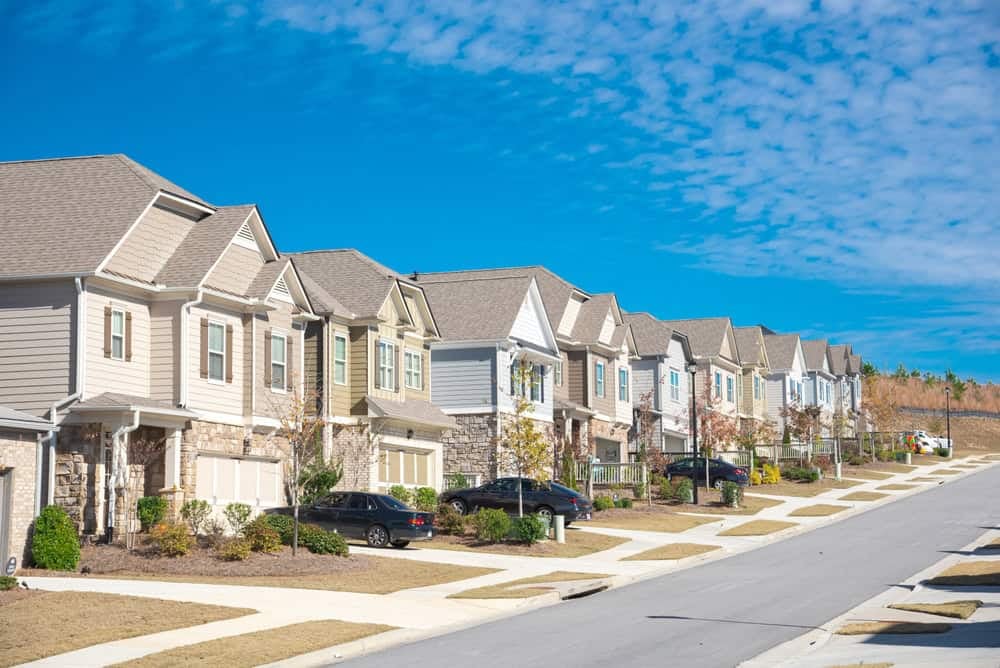
Two homes can be in the same Atlanta subdivision, have similar square footage, similar condition, and the same school assignment—and still receive very different Buyer reactions. The reason is often micro-location. One home may sit on an interior lot with a usable backyard, while another backs to a heavily traveled road. One may overlook open space, while another faces a retention area or adjoining development. The neighborhood name is the same, but the ownership experience is not.
How Does Location Within an Atlanta Neighborhood Affect Home Value?
The subdivision may establish the general value range. The exact lot can determine where inside that range a home competes.
Prefer to watch this topic?
Same Neighborhood Does Not Mean Same Location
Imagine two homes in the same subdivision.
Both are:
- Approximately 3,500 square feet.
- Built within a few years of each other.
- Four bedrooms.
- Similar interior condition.
- Within the same HOA.
Home A:
- Sits deeper inside the neighborhood.
- Has a mostly level backyard.
- Backs to neighborhood green space.
- Has straightforward guest parking.
Home B:
- Backs to a heavily traveled road.
- Has a steep rear yard.
- Has limited backyard usability.
- Receives more traffic noise.
On paper, they may look almost interchangeable.
To Buyers, they may not be.
Same Subdivision
Does Not Mean
Same Buyer Experience.
And Same Buyer Experience
Does Not Automatically Mean
Same Market Value.
Use the Micro-Location Adjustment Test
Micro-Location Value
=
Base Neighborhood Position
+
Lot Utility
+
Privacy / View Benefit
+
Access Convenience
−
Road / Noise Exposure
−
Adjoining-Use Friction
−
Terrain / Drainage Burden
−
Buyer-Use Limitations
This is a framework—not an appraisal formula.
There is no universal rule saying:
“Busy road = minus $25,000”
or:
“Cul-de-sac = plus $15,000.”
Any actual value adjustment should be supported by market evidence showing how Buyers in that market respond to the characteristic.
The question is not whether a location feature sounds positive or negative. The question is whether Buyers in that specific market consistently pay differently for it.
1. Appraisers Look Beyond the Neighborhood Name Too
Comparable properties from the same neighborhood can be extremely useful because they share many broad location characteristics.
But an appraiser still has to consider meaningful differences in:
- Site.
- Lot size.
- Shape.
- Topography.
- Street characteristics.
- Adjoining uses.
- Easements.
- Access.
- Other features that affect marketability.
That means:
a sale three doors away is not automatically a perfect comp simply because it is three doors away.
Close in Distance
Does Not Automatically Mean
Close in Market Appeal.
2. Street Position Can Change the Buyer Pool
Within the same subdivision, one house may sit:
- On an interior street.
- At the neighborhood entrance.
- At an intersection.
- On a cul-de-sac.
- Along a neighborhood through-road.
- Backing to a larger road.
These positions create different trade-offs.
A location near an entrance may improve convenience.
But it may also create:
- More passing vehicles.
- More headlights.
- More road noise.
- Less rear-yard privacy depending on the lot.
An interior property may reduce some of those effects.
A cul-de-sac may appeal strongly to some Buyers while another Buyer may place little additional value on it.
Street position is not automatically a premium or discount. Look for evidence of how the actual Buyer pool reacts.
3. Road Exposure Is More Than a Noise Question
When a home backs to or faces a heavily traveled road, Buyers may evaluate:
- Sound inside the home.
- Sound in the backyard.
- Visibility from the road.
- Nighttime headlights.
- Privacy.
- Ease of entering and leaving the property.
- How future Buyers may perceive the same location.
However, road exposure should not receive an arbitrary fixed discount.
The appropriate question is:
“How have Buyers historically reacted to similar road-exposed homes compared with similar interior homes?”
Do Not Ask:
“How Much Do I Subtract for the Road?”
Ask:
“What Does the Market Evidence Show Buyers Paying for This Difference?”
4. Lot Size Matters—but Lot Utility Can Matter More
Consider two lots:
Lot A:
0.35 acres.
Lot B:
0.50 acres.
B is larger.
But what if much of B is:
- Very steep.
- Heavily wooded.
- Inside an easement.
- Difficult to use.
- Occupied by drainage features.
While A has:
- A level backyard.
- Usable play or recreation area.
- Space for outdoor furniture.
- Straightforward access from the house.
The Buyer may place more practical value on the smaller lot.
Lot acreage measures quantity. Lot utility measures how much of that land improves the ownership experience.
5. Topography Can Affect Both Use and Future Cost
Atlanta-area terrain can vary significantly, even inside one subdivision.
Buyers may notice:
- Steep driveways.
- Steep rear yards.
- Retaining walls.
- Walk-out basements.
- Water-flow patterns.
- Difficult landscape access.
Slope is not automatically negative.
For example, topography may create:
- A walk-out basement.
- A better view.
- Greater separation from neighboring properties.
But it can also affect:
yard usability,
drainage,
retaining-wall maintenance,
and Buyer preference.
6. Privacy Can Create a Micro-Location Advantage
Two homes can have identical rear elevations but very different backyard experiences.
One may have:
- A neighboring home directly behind it.
- Windows facing the backyard.
- Very little separation.
Another may back to:
- HOA common area.
- Wooded land.
- Open space.
- A larger buffer.
Some Buyers may pay more for greater separation.
But be careful with one assumption:
today's privacy is not always permanent.
If the land behind the property is separately owned or developable, investigate what controls that land before treating the current view or buffer as permanent.
7. A View Can Create Value—but First Ask Who Controls It
Some neighborhood lots may overlook:
- A lake.
- A pond.
- Trees.
- Open common space.
- A golf course.
- A skyline or elevated horizon.
A Buyer may perceive additional value.
But before assuming the view deserves a major premium, ask:
- Who owns the land creating the view?
- Is it HOA common area?
- Is it conservation property?
- Is it a separately owned parcel?
- Could vegetation grow and block it?
- Could future development change it?
A Beautiful View
Can Be Valuable.
A Protected View
May Be
a Different Value Proposition.
8. What Is Next Door Can Matter as Much as What Is Behind You
Appraisal analysis also considers adjoining property uses that may affect value or marketability.
Within the same neighborhood, one lot may border:
- Another residential property.
- Common space.
- A utility area.
- A detention or retention area.
- Commercial land.
- Undeveloped property.
- A community facility.
None of these is automatically positive or negative.
The Buyer should investigate the actual condition and use.
“Nothing is there right now” is not the same as “nothing can ever be there.”
9. Amenity Proximity Can Be an Advantage—or a Trade-Off
A property closer to:
- Pool.
- Tennis courts.
- Playground.
- Clubhouse.
- Neighborhood entrance.
- Walking trail.
may be more convenient for a Buyer who expects to use those amenities frequently.
But proximity may also bring:
- More vehicles.
- More foot traffic.
- More activity at certain times.
- Parking pressure depending on the community.
Again, there is no universal rule.
The same location feature can create:
a benefit for one Buyer and a trade-off for another.
10. Corner Lots Are a Perfect Example of Why Fixed Adjustments Don't Work
People sometimes assume:
“Corner lots are worth more.”
Other people assume:
“Corner lots are worth less.”
Neither statement is universally correct.
A corner lot might provide:
- More perceived openness.
- Additional frontage.
- Greater separation on one side.
It may also create:
- More road exposure.
- Additional sidewalk or landscaping responsibility.
- Less private usable yard depending on layout.
The market reaction depends on:
the specific lot—not the label “corner lot.”
11. Parking and Driveway Function Are Part of Micro-Location
Buyers may compare:
- Driveway slope.
- Number of usable parking spaces.
- Street-parking rules.
- Turnaround ability.
- Guest parking.
- Garage access.
A driveway that looks fine in listing photos may feel very different when:
three vehicles need to leave independently,
guests visit,
or deliveries arrive.
Functional convenience can affect Buyer preference even when it never appears as a separate line item in an appraisal.
12. Drainage and Water Flow Are Location Questions Too
Two homes on the same street can handle water very differently because of:
- Elevation.
- Lot slope.
- Neighboring grades.
- Drainage easements.
- Retaining walls.
- Nearby creeks or drainage infrastructure.
Buyers should look for:
- Standing-water patterns.
- Erosion.
- Drainage channels.
- Downspout discharge.
- Low sections of the yard.
- Retaining-wall conditions.
If the issue is material, appropriate inspectors, engineers, surveyors, or other qualified professionals may be needed.
13. Flood-Zone Differences Can Exist Inside the Same General Area
Flood-related conditions can also affect property analysis.
Do not assume that because one nearby home is outside a designated flood zone:
every lot in the subdivision has the same flood classification or drainage characteristics.
If flood designation or water risk is relevant to your purchase, review current official mapping and property-specific information.
14. Rear Exposure Often Matters More Than Sellers Expect
Sellers naturally spend substantial time thinking about:
front elevation,
curb appeal,
landscaping,
and the approach to the home.
Buyers may spend just as much emotional energy evaluating:
what they see from the backyard and primary living spaces.
That is especially true when:
- The kitchen faces the backyard.
- The primary bedroom overlooks the rear.
- There is a deck or patio.
- Outdoor entertaining is a major feature.
Curb Appeal
Gets Buyers
to the Door.
Rear Exposure
Can Affect
How They Imagine Living There.
15. Buyer Reaction Is More Important Than Seller Preference
A Seller may say:
“The road never bothered us.”
That can be completely true.
But valuation is not determined only by the current owner's experience.
The more useful question is:
“Does this characteristic materially change how the current Buyer pool compares the home with its alternatives?”
Likewise:
the Seller may love a wooded backyard,
while another Buyer may prefer open usable lawn.
Personal preference is not automatically market evidence.
16. The Best Comp May Not Be the Closest House
Imagine Subject Property:
- Interior street.
- Level backyard.
- Wooded HOA buffer behind it.
Comp A:
- Three houses away.
- Backs directly to a major road.
Comp B:
- Half a mile away.
- Same subdivision.
- Similar interior position and rear exposure.
Depending on all the other property characteristics, B may provide more useful evidence about the Buyer's reaction to location.
Distance matters.
But so does:
functional and locational similarity.
A comparable sale should help answer how the market treats the subject property—not merely be geographically close to it.
17. Look for Market-Derived Evidence Instead of Inventing a Location Adjustment
If you are trying to estimate the effect of a busy road, lake view, golf-course position, or similar feature, one useful approach is to look for:
sales that isolate that difference as closely as the available data allows.
For example:
Did similar interior homes consistently sell differently from similar road-exposed homes?
Did lake-view lots produce a repeatable premium?
Did larger lots actually sell higher after accounting for house size and condition?
The data may show:
a meaningful difference,
a small difference,
or no reliable measurable difference.
All three are possible.
No Universal Rule Says
“Busy Road = −5%”
or
“Cul-de-Sac = +3%.”
The Adjustment Should Come From the Market.
18. Micro-Location Differences Can Matter More When Buyers Have More Choices
When inventory is tight, a Buyer may accept:
a busier road,
a smaller lot,
or less privacy
because there are few alternatives.
When inventory increases, the same Buyer may be able to compare:
four or five similar homes.
Now the location differences become easier to reject.
A permanent property characteristic does not change—but the market's willingness to accept that trade-off can change.
19. For Buyers: Decide Whether the Discount Is Large Enough
A house on a less preferred lot may still be an excellent purchase.
The Buyer should ask:
“Am I receiving enough value elsewhere to accept this permanent characteristic?”
Maybe the home provides:
- A significantly lower purchase price.
- More square footage.
- Better condition.
- A stronger floor plan.
- A finished basement.
- Newer systems.
Then the trade-off may make complete sense.
The problem is not buying a home with a micro-location disadvantage.
The problem is:
paying as though the disadvantage does not exist.
20. For Sellers: Price the Lot You Actually Own
A Seller may say:
“The house across the street sold for $800,000, and ours is almost identical.”
Maybe.
But before using that sale as the primary benchmark, compare:
- Lot position.
- Rear exposure.
- Road exposure.
- Lot utility.
- Topography.
- Privacy.
- View.
- Parking.
- Adjoining property.
If meaningful differences exist:
the comp may still be useful, but it may require interpretation.
Price
the House You Own,
on
the Lot You Own.
Not the House
you wish had
the Neighbor's Location.
21. Marketing Should Explain a Location Advantage Without Overclaiming It
If the property has a genuine micro-location advantage, make it easy for Buyers to understand.
Examples might include:
- Usable level backyard.
- Direct trail access.
- Open-space backdrop.
- Long driveway.
- Additional lot depth.
- Convenient amenity access.
But marketing should remain factual.
Avoid unsupported claims such as:
“best lot in the neighborhood”
unless there is a defensible basis for the statement.
The Micro-Location Audit
Factor | What to Observe | Question |
|---|---|---|
Street Position | Interior, entrance, intersection, cul-de-sac, through-road | How does this position change the ownership experience? |
Road Exposure | Traffic, noise, visibility, headlights | What does market evidence show? |
Lot Utility | Level area, slope, usable yard, shape | How much of the lot is practically usable? |
Rear Exposure | Neighbors, road, woods, open space, commercial use | What will Buyers see from the main living spaces? |
View | Lake, trees, open space, golf, skyline | Is the view attractive, useful, and reasonably durable? |
Adjoining Use | Residential, common area, utility, undeveloped, commercial | What exists now, and what controls it? |
Amenity Proximity | Pool, courts, trails, playground, entrance | Is proximity useful or does it create additional activity? |
Driveway / Parking | Slope, width, turnaround, guest access | Does this function well in everyday use? |
Drainage / Terrain | Water flow, elevation, retaining walls, erosion | Does the site create additional maintenance or investigation needs? |
The 80-Point Micro-Location Scorecard
Category | Score | What to Evaluate |
|---|---|---|
Street Position | ___ / 10 | Traffic, access and location within the subdivision |
Lot Utility | ___ / 15 | Size, shape, grade and actual usability |
Privacy / Rear Exposure | ___ / 10 | What Buyers experience from outdoor and main living areas |
View Quality / Durability | ___ / 10 | Current view and likelihood it remains materially similar |
Adjoining Uses | ___ / 10 | Current and anticipated surrounding property uses |
Parking / Access | ___ / 10 | Driveway and practical daily access |
Terrain / Drainage | ___ / 10 | Grade, water flow and maintenance implications |
Amenity Position | ___ / 5 | Convenience versus additional activity |
Total | ___ / 80 | This measures property-specific fit and comparison—not appraised value. |
25 Questions to Ask About a Home's Location Inside the Neighborhood
☐ 1. Is the home on an interior street, entrance road, intersection, cul-de-sac, or through-road?
☐ 2. What can I hear from the backyard at different times?
☐ 3. What can I see from the primary living areas?
☐ 4. What is directly behind the property?
☐ 5. Who owns the property behind it?
☐ 6. Is any important view actually protected or controlled?
☐ 7. How much of the lot is genuinely usable?
☐ 8. Is the backyard level, sloped, terraced, or heavily wooded?
☐ 9. Are there retaining walls?
☐ 10. Are drainage easements or other easements present?
☐ 11. Where does water appear to move during heavy rain?
☐ 12. What adjoining uses exist on each side?
☐ 13. Is undeveloped land nearby?
☐ 14. What is the driveway slope and usability?
☐ 15. How does guest parking work?
☐ 16. How close is the neighborhood entrance?
☐ 17. How close are shared amenities?
☐ 18. Does that proximity help or create more activity?
☐ 19. What are the best same-neighborhood comparable sales?
☐ 20. Do those comps have the same rear exposure?
☐ 21. Do they have similar lot usability?
☐ 22. Are we using a nearby comp that actually has a very different micro-location?
☐ 23. Does market evidence show a repeatable premium or discount for this characteristic?
☐ 24. If I buy this trade-off at a discount today, will future Buyers likely notice it too?
☐ 25. If two otherwise similar homes were available today, which permanent location difference would make Buyers choose one over the other?
The Question I Would Ask Before Comparing Two Same-Neighborhood Homes:
“What Permanent Location Difference Would Make a Buyer Choose One of These Homes Over the Other?”
Frequently Asked Questions
Can two homes in the same subdivision really have different values because of location?
Yes. Homes in the same subdivision may differ in street position, road exposure, lot size and utility, topography, view, privacy, adjoining uses, parking, drainage, and proximity to amenities. The value impact depends on actual market reaction rather than a universal adjustment.
How much does backing to a busy road reduce home value?
There is no universal dollar amount or percentage. The effect depends on the property, road, noise level, price range, local Buyer preferences, available competing homes, and market evidence from comparable sales with similar characteristics.
Is a cul-de-sac home always worth more?
No. Some Buyers may prefer a cul-de-sac position, but the actual impact depends on lot size, usability, traffic, driveway configuration and local market behavior. A cul-de-sac label alone does not establish a specific premium.
Is a corner lot worth more or less?
Either is possible. Corner lots can provide openness or additional frontage but may also create additional road exposure and less usable private yard depending on the property. Compare actual market reaction rather than applying a generic adjustment.
Does backing to green space add value?
It may improve Buyer appeal because of separation, privacy or views, but determine who owns the land and whether the current condition is reasonably durable. A wooded parcel that can later be developed is different from permanently controlled common space.
Does a larger lot always make a home more valuable?
Not necessarily. Buyers may care about both lot size and usability. A smaller level lot can sometimes function better than a larger but steep, heavily constrained or difficult-to-maintain lot.
How does an appraiser account for location differences?
Appraisers analyze comparable sales and relevant property differences, including site and location characteristics. Where an adjustment is warranted, it should reflect market evidence rather than a predetermined arbitrary percentage.
Should I use the closest sold home as the best comp?
Not automatically. Proximity is important, especially within the same market area, but the strongest comparable should also be similar in property type, size, condition, site and other characteristics affecting Buyer appeal.
Can a home with a less preferred lot still be a good purchase?
Absolutely. The issue is whether the price and other property advantages adequately compensate you for the permanent trade-off you are accepting.
What is the most important micro-location question?
Ask: “If the house itself stayed exactly the same but I moved it to another lot in this neighborhood, would Buyers be willing to pay differently—and what evidence supports that conclusion?”
Watch: How Location Within a Neighborhood Affects Home Value
For a visual explanation of why street position, lot characteristics, surrounding land, and other micro-location factors can matter even within the same neighborhood, watch the video below.
Neighborhood
Sets the
General Playing Field.
Micro-Location
Helps Determine
Where the Property Competes Within It.
Final Thoughts: Look at the Lot, Not Just the Neighborhood Name
When Buyers compare homes in the same Atlanta neighborhood, it is easy to assume:
same subdivision = same location.
It does not.
Compare:
Street position.
Road exposure.
Lot size and usability.
Topography.
Rear exposure.
Privacy.
Views.
Adjoining land.
Parking.
Amenity proximity.
Drainage.
And the comparable sales that share those characteristics.
Then ask whether those differences actually change Buyer behavior.
Because the strongest valuation conclusion is not:
“I personally prefer this lot.”
It is:
“The market gives us evidence that Buyers respond differently to this lot.”
The subdivision may set the general value range.
But the exact lot—what it faces, what it backs to, how usable it is, and how Buyers experience it—can help determine where the home competes inside that range.
Buying or Selling a Home in Metro Atlanta?
When comparing properties, we can go beyond neighborhood averages and look at the details Buyers actually experience: street position, lot utility, road exposure, rear view, adjoining land, drainage, driveway, amenities, condition, current competition, and the most relevant comparable sales. For Sellers, that helps create a more defensible pricing strategy. For Buyers, it helps determine whether a location trade-off is already reflected in the price.
Tina Jingru Sui | TJS Team
Call or Text: (404) 375-2120
Email: [email protected]
Visit TinaSui.com
About Tina Jingru Sui
Tina Jingru Sui is the founder and leader of the TJS Team, serving home buyers, sellers, investors, new-construction buyers and relocation clients throughout Metro Atlanta.
Tina and her team serve Atlanta, Johns Creek, Alpharetta, Suwanee, Duluth, Buford, Dacula, Sandy Springs, Roswell, Marietta, Smyrna, Peachtree Corners and surrounding Metro Atlanta communities.
Valuation Reference
Property-valuation principles referenced in this article are consistent with current Fannie Mae appraisal guidance regarding comparable-sale selection, site characteristics, topography, adjoining properties, street characteristics, easements, access, external influences, and market-supported adjustments. Actual appraisals are completed by licensed or certified appraisers under the applicable assignment requirements, and a real estate Comparative Market Analysis is not an appraisal.
Keller Williams Realty Atlanta Partners · (404) 375-2120
This article is provided for general real estate education and information only and does not constitute legal, appraisal, financial, tax, engineering, surveying, environmental, flood, zoning, planning, inspection, insurance or other professional advice. The Micro-Location Adjustment Test, 80-point scorecard, examples, matrices, questions and related frameworks are educational tools only and do not establish the market value of any particular property or prescribe a specific appraisal adjustment. There is no universal dollar amount or percentage adjustment for a busy road, cul-de-sac, corner lot, view, green-space exposure, larger lot, amenity proximity, steep driveway or other location characteristic. Any market-value adjustment should be supported by relevant market evidence and appropriate valuation methodology. A Comparative Market Analysis prepared by a real estate professional is not an appraisal. Comparable-sale selection should consider both locational and physical similarity, and the geographically closest sale is not necessarily the most appropriate comparable in every assignment. Property characteristics such as lot size, shape, topography, easements, encroachments, street access, adjoining uses, drainage conditions and external influences can affect Buyers differently and should not automatically be characterized as positive or negative without market evidence. Current views, privacy, wooded buffers and undeveloped adjoining parcels should not be assumed to remain unchanged unless appropriate legal or ownership protections exist. Zoning, future land use and development proposals may change and do not guarantee future development outcomes. Flood designations and drainage conditions should be verified using current official information and qualified professionals when material. Property-system condition, structural concerns, grading, retaining walls, drainage, surveys and environmental matters may require appropriate inspectors, engineers, surveyors or other specialists. References to “market resistance” or Buyer preferences concern objective property and site characteristics only and should not be based on protected-class demographics or discriminatory neighborhood descriptions. Real estate professionals and appraisers should comply with applicable Fair Housing and fair-lending requirements and avoid subjective descriptions such as “good neighborhood,” “bad neighborhood,” or other demographic proxies. Market conditions and Buyer preferences can change over time, so past sale differences do not guarantee future premiums or discounts. Equal Housing Opportunity. Tina Jingru Sui, GA License #392936, REALTOR®, affiliated with Keller Williams Realty Atlanta Partners.