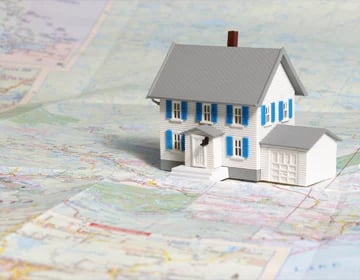
How Location Affects Your Home's Resale Value
SEO Title: How Location Affects Your Home's Resale Value
SEO Subtitle: Learn why location matters so much when buying or selling a home and what Atlanta homeowners should consider for future resale value
When people buy a home, they often focus on the house itself.
They look at the kitchen, bedrooms, bathrooms, flooring, and backyard.
But when it is time to sell, one factor can have a major influence on buyer interest:
Location.
You can update a kitchen.
You can replace flooring.
You can repaint the walls.
But you usually can't move the house to a different neighborhood.
That's why location should be an important part of your decision—not just when buying, but when thinking about future resale value.
1. Convenient Locations Attract More Buyers
A home near everyday necessities can be more appealing.
Buyers often consider access to:
- Major roads
- Grocery stores
- Restaurants
- Shopping
- Schools
- Parks
- Medical facilities
- Employment centers
Convenience can make a property easier to market to future buyers.
2. Commute Time Matters
A long commute can affect how much buyers are willing to pay.
Two similar homes may have different values simply because one offers easier access to major employment areas.
When buying, think beyond today's commute.
Ask:
“Would this location still be attractive to another buyer several years from now?”
3. Nearby Schools Can Influence Demand
For many families, schools are an important part of the home search.
Buyers may research:
- School zones
- School quality
- Programs
- Accessibility
- Future boundary changes
School-related demand can influence buyer interest in certain areas.
4. Neighborhood Condition Matters
Look beyond your own property.
Potential buyers will notice the homes and streets around you.
A neighborhood with:
- Well-maintained homes
- Attractive landscaping
- Clean streets
- Good common areas
can create a positive impression.
Your home's value is influenced by the environment surrounding it.
5. Noise Can Affect Resale Appeal
A home near a busy highway, airport, railroad, or commercial area may have a different buyer pool than a home on a quiet residential street.
Some buyers won't mind the noise.
Others may consider it a major drawback.
When evaluating a property, listen carefully to the surroundings.
6. Walkability and Nearby Amenities
Some buyers are willing to pay more for convenience.
Being close to restaurants, parks, shops, and entertainment can make a neighborhood more attractive.
This is especially important for buyers who value an active lifestyle.
7. Future Development Can Change the Area
A neighborhood can change over time.
New development may bring:
- Restaurants
- Retail
- Parks
- New homes
- Better roads
- Community improvements
But development can also create:
- More traffic
- Construction noise
- Congestion
- Less privacy
Before buying, research what is planned nearby.
8. Lot Location Within the Neighborhood Matters
Even two homes in the same community can have different resale appeal.
One may:
- Back up to trees
- Have a larger lot
- Be on a quiet street
- Have better privacy
Another may:
- Face a busy road
- Be near a community entrance
- Have limited parking
- Back up to another property
Small location differences can matter.
9. Neighborhood Reputation Can Influence Buyers
Buyers often have certain neighborhoods on their wish lists.
A community with strong demand may attract more attention when homes become available.
However, popularity can change over time.
That's why it's important to look at long-term fundamentals rather than simply buying in an area because it is currently trendy.
10. Location Can Be Hard to Fix
This is one of the most important things to remember.
If you don't like:
- The kitchen, you can renovate it.
- The flooring, you can replace it.
- The paint, you can change it.
But if you don't like the traffic, commute, or surrounding environment, there may be little you can do.
That's why buyers should carefully evaluate location before purchasing.
The Resale Value Test
Before buying a home, ask:
☐ Is the location convenient?
☐ Is the commute reasonable?
☐ Are nearby schools important to future buyers?
☐ Are homes in the area well maintained?
☐ Is the neighborhood attractive?
☐ Is there excessive noise?
☐ Are nearby amenities desirable?
☐ Is future development planned?
☐ Does the property have a desirable lot position?
☐ Would another buyer want to live here several years from now?
Don't Focus Only on Today's Value
A home can be a great fit for you today but still have resale challenges later.
That's why it's helpful to think like a future buyer.
Imagine your home is listed for sale five years from now.
What will attract buyers?
What might make them hesitate?
What nearby features will still be valuable?
This doesn't guarantee future appreciation, but it can help you make a more thoughtful purchase.
Final Thoughts
Location is one of the few parts of a home you can't renovate.
A beautiful house in an inconvenient location may struggle to attract as many buyers as a more modest home in a desirable area.
That doesn't mean you should always pay the highest price for the best-known neighborhood.
Instead, look for a location that offers the right combination of convenience, neighborhood quality, lifestyle, and long-term buyer appeal.
Before buying, don't just ask:
“Do I love this house?”
Also ask:
“Will someone else love this location when I'm ready to sell?”
Because when it comes to resale value, the address can matter just as much as the house itself.
--
Tina Jingru Sui 隋静儒
Associate Broker | Team Leader of TJS Team, Keller Williams
Serving Metro Atlanta — Johns Creek, Alpharetta, Duluth, Suwanee, Buford, and beyond
404-375-2120
WeChat: tinasuirealty
Follow me on Instagram / 小红书 / WeChat / Facebook




