How to Compare Lanier Waterfront Homes Near Buford
How do you compare Lake Lanier waterfront homes near Buford?
To compare Lanier waterfront homes near Buford, score each property separately on setting (cove or open water), shoreline usability, dock status, land access to the water, and maintenance burden. Then check every one of them at the lake's current level, not at the level shown in listing photos. A view and a list price tell you very little about how a property will actually live.
Key Takeaways
What separates Lanier Waterfront Homes Near Buford beyond the view?
Setting, access, and upkeep separate them. Two homes near Buford can both advertise lake frontage and still differ in cove protection, boat traffic, wind exposure, shoreline slope, and the distance from the back door to the dock. I walk my buyers through these as separate categories, because "waterfront" is not one product.
Is the home in a protected cove or on open water?
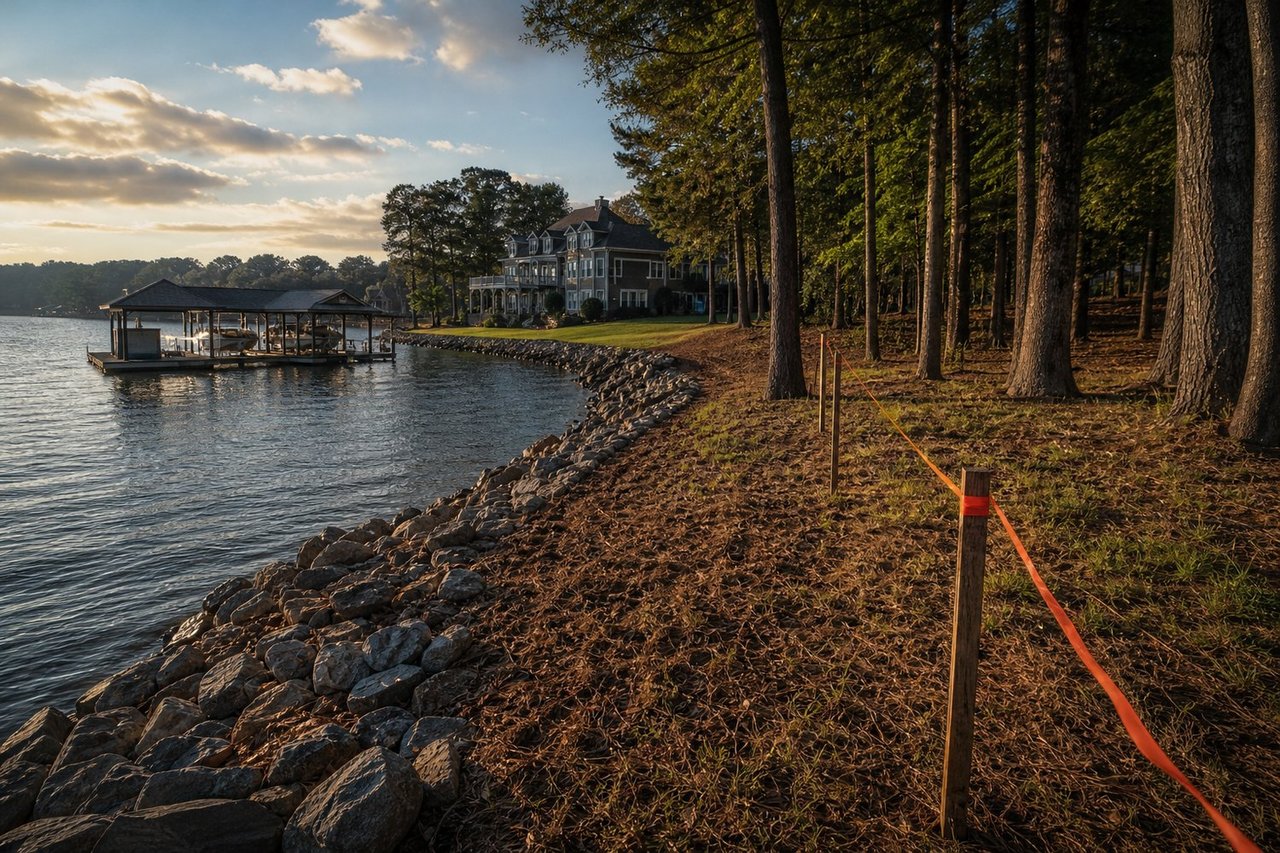
A cove and open-water frontage are different ways to live on the lake, and neither is automatically better. Open-water frontage means more exposure to boat traffic and wind, along with broader views. A cove tends to feel more sheltered, but how a cove behaves when the lake is below full pool matters a great deal. A pocket that looks like generous water at full pool can look very different today.
When I compare two properties for a buyer, I ask three questions: how much boat traffic passes the dock, how exposed the dock is to wind, and what the approach to open water looks like from the dock itself.
How steep is the lot between the house and the dock?
A steep lot can deliver a dramatic view and still make daily use harder. Long stairs, difficult equipment transport, and ongoing maintenance between the house and the shoreline all count against it. A gentler lot may be easier to use every day even if the view is less expansive.
Walk the full route from the house to the dock before you decide. If you would hesitate to carry gear down it, the view is not the whole story.
How convenient is the location for marinas, ramps, and errands?
Proximity to marinas, boat ramps, and everyday services belongs in the comparison, but verify it directly. The Corps manages Lake Lanier facilities, while private marinas and other non-Corps facilities may have separate operators and conditions. Confirm current access, ramp status, and operating arrangements with the facility itself rather than relying on a listing description. Then drive the route from each property to Buford-area services at the times you would actually make the trip.
What should you verify about the dock and shoreline before you buy?
Verify the current dock permit, whether the dock matches what is authorized, and the water depth at the dock at today's lake level. These three items decide whether the dock you are paying for is the dock you will be able to use.
Does the dock permit transfer to you?
No, you should not assume it does. The Corps' Lake Lanier shoreline permit program states that permits or licenses may be issued for a maximum of five years and are nontransferable. The Corps advises new owners of existing facilities to apply for a permit through the Lake Lanier Operations Management Office.
In practice, that means a dock in a listing photo is not a guarantee of uninterrupted use after closing. Ask for the current permit records, the renewal status, and the facility configuration. Confirm that the dock, walkway, retaining work, shoreline alterations, and electrical installations match what is actually authorized. The same program notes that work or installation of facilities on federal property must be approved before construction, so unpermitted improvements are a real comparison point between two otherwise similar homes.
Is the shoreline in front of the house private?
Not in the way many buyers assume. The Corps states that Lake Lanier's shoreline is open to public use. Owning waterfront-adjacent land is not the same as having exclusive control over every portion of the visible shoreline or the water just beyond your property line. Some improvements tied to a lake home may sit on or affect federal property, so ask exactly where your private land ends and Corps-managed land begins. I help my clients get that boundary question answered before they write an offer.
How much does the lake level change what you are buying?
It changes it a lot. According to Discover Lake Lanier's level tracker, the lake stood at 1,062.49 feet on November 9, 2026, which is 8.51 feet below the 1,071-foot full-pool elevation. The Corps controls the lake's level, and the same source notes that fluctuations can affect shoreline exposure, dock access, and practical depth at a cove or property.
A listing may say "deep water" or "year-round water." The meaningful comparison is the depth and dock usability on the day you inspect, plus how that cove behaves below full pool. With the lake well under full pool right now, an on-site look at the dock is especially revealing. A house can have lovely water views while its dock sits in a shallow pocket or behind a point. Always check the water from the actual dock location.
How do you score two waterfront homes side by side?
Give each home its own score in five categories, then compare the totals and the deal-breakers. Here is the checklist I use as a working framework with buyers looking at Lanier waterfront homes near Buford.
Category | What to check | Why it matters |
|---|---|---|
Setting | Cove or open water, boat traffic, wind exposure | Shapes noise, calm water, and how the dock feels in use |
Shoreline usability | Slope, exposure at current level, public shoreline access | Determines what you can actually use at the water's edge |
Dock access | Permit status, configuration, depth at the dock today, approach to open water | Permits are nontransferable and depth changes with the lake level |
Land access | Stairs, slope, the walk from house to dock | Affects daily use and moving equipment |
Maintenance burden | Retaining work, walkway, dock and electrical condition | Ongoing upkeep sits between the house and the water |
How should you use the scores?
What about market data and pricing?
Keep market comparisons narrow. Realtor.com reported that Atlanta-area active listings were 5.6% higher year over year in October 2026. That is a broad metro statistic and does not tell you what open-water frontage is worth compared with a protected cove. Frontage type, dock status, water depth, lot topography, and distance to Buford-area services all move value, so you need current waterfront comparables rather than metro averages.
If you want that context, I cover it in Lake Lanier waterfront home prices and demand in 2026. For the offer stage on homes with docks, see the offer decision on Lake Lanier private-dock homes. If you are still deciding what kind of lake property fits you, this overview of Lake Lanier waterfront properties is a good starting point.
Your priorities decide how to weight these categories, and that is where a local walk-through helps. The strongest comparison of Lanier waterfront homes near Buford happens on site, with the permit records in hand.
If you want to see how my clients describe working with the TJS Team, you can read my reviews on Google and Zillow.
Compare two waterfront homes
Rate each home from 1 (poor fit) to 5 (excellent fit) based on your priorities. A score does not establish permit validity, actual water depth, or market value.
Category | Home A | Home B |
|---|---|---|
SettingCove/open water, traffic, wind | ||
Shoreline usabilityLevel, public access, shoreline condition | ||
Dock accessPermit, depth, approach | ||
Land accessSlope, stairs, daily use | ||
Maintenance burdenDock, electrical, walkway, retaining work |
Deal-breaker reminder: confirm current Corps records, the new-owner application process, measured dock usability, and structural condition independently.
Lakefront due-diligence checklist
0 / 10 completed
Walk the full route from house to dockObserve boat traffic and wind exposureCheck shoreline slope and access at current lake levelMeasure depth at the dock and approach to open waterRequest current Corps permit or license and exhibitsConfirm ownership-change permit application with the CorpsCompare dock and shoreline work against approved plansInspect pilings, decking, gangway, electrical and retaining workConfirm public shoreline boundary and property surveyCompare recent truly comparable waterfront sales
Frequently asked questions
How do I compare a cove home and an open-water home near Buford?
Compare them on boat traffic, wind exposure, and how the water behaves at the current lake level. Neither setting is better in general, so decide based on how you plan to use the lake. Then check the dock location itself, since depth and the approach to open water can differ even between neighbors.
Does a Lake Lanier dock permit transfer when I buy?
No. The Corps states that shoreline permits and licenses are nontransferable and issued for a maximum of five years. New owners of existing facilities are advised to apply for a permit through the Lake Lanier Operations Management Office, so verify the current permit and your application path before you commit.
How much does the seasonal water level affect dock and boat access?
Quite a bit. On November 9, 2026, the lake was 8.51 feet below the 1,071-foot full-pool elevation, which can change shoreline exposure, dock access, and the practical depth at a cove. Inspect the dock at the present level and do not rely on photos taken at higher water.
Is the shoreline around a Lake Lanier waterfront property private?
Not entirely. The Corps states that the lake's shoreline is open to public use, so owning waterfront-adjacent land does not give you exclusive control over every part of the visible shoreline. Confirm where your property ends and Corps-managed land begins.
What should I inspect beyond the house itself?
Inspect the dock, walkway, retaining work, shoreline alterations, and electrical installations, and match them against the permit records. Also walk the route from the house to the dock and check the water depth from the dock itself. These lake-specific items are separate from a standard home inspection.
Ready to compare specific Lake Lanier homes?
The best way to compare waterfront homes is to score them one category at a time, at the current lake level, with the permit paperwork in front of you. I and the TJS Team can pull together the options near Buford, walk each dock with you, and help you ask the right questions before you make an offer. Search listings anytime at tinasui.com.
Call or text 404-375-2120 or email [email protected] to schedule a consultation.
About Tina Jingru Sui
Tina Jingru Sui is the founder and leader of the TJS Team, a top-performing real estate team serving the Northern Atlanta Metro area. Specializing in luxury homes, relocation, and investment properties across Cobb, Fulton, Forsyth, and Gwinnett counties, Tina and her team help buyers, sellers, and investors reach their real estate goals in communities like Johns Creek, Alpharetta, Suwanee, and Buford.
Keller Williams Atlanta Partners · (404) 375-2120
Tina Jingru Sui, REALTOR®, GA License #392936, Keller Williams Atlanta Partners. Equal Housing Opportunity. Regulated by the Georgia Real Estate Commission and subject to the NAR (REALTOR®) Code of Ethics. This article is general information, not legal, tax, or financial advice. Confirm your own numbers and requirements with your closing agent, tax advisor, or lender.
Make Good Moves.
Published figures, including the November 9, 2026 lake elevation and the October 2026 metro inventory change, are retained from the supplied article and have not been independently verified for this HTML conversion. Obtain current lake-level data and confirm shoreline-use and permit procedures with the U.S. Army Corps of Engineers before relying on them.