How to Identify a Resilient Real Estate Location
In every market cycle, some areas bend — and some break.
When conditions shift, resilient locations don’t just survive.
They stabilize faster, attract consistent demand, and recover with strength.
So how do you identify a resilient real estate location before the next shift happens?
It comes down to reading the fundamentals.
1️⃣ Follow the Jobs — But Look Deeper
Employment drives housing demand. But resilience isn’t just about having jobs nearby — it’s about diversified jobs.
Strong locations typically have:
-
Multiple employment sectors (healthcare, tech, logistics, education, finance)
-
Access to business districts
-
Stable corporate or institutional anchors
For example, metro areas like Atlanta benefit from diversified industries and transportation infrastructure, which supports long-term housing demand across multiple submarkets.
If one industry slows, others help cushion the impact.
Diversification = stability.
2️⃣ Study Supply Constraints
Resilient locations usually have limited room for rapid expansion.
Look for:
-
Established neighborhoods
-
Limited vacant land
-
Zoning restrictions
-
Natural boundaries (parks, rivers, preserved land)
When supply cannot easily flood the market, prices stabilize faster during downturns.
Scarcity protects value.
3️⃣ Analyze School Demand (Even If You Don’t Have Kids)
School zones influence resale liquidity more than most buyers realize.
Homes in well-regarded districts:
-
Attract broader buyer pools
-
Maintain showing activity during slow periods
-
Recover faster after corrections
School reputation creates built-in demand that doesn’t disappear when the market cools.
4️⃣ Watch Owner-Occupancy Rates
Communities with higher owner-occupancy tend to be more resilient because:
-
Owners maintain properties better
-
Turnover is lower
-
Panic selling is less common
Investor-heavy areas can perform well during booms — but may experience sharper volatility during corrections.
Stable ownership creates pricing stability.
5️⃣ Evaluate Lifestyle Infrastructure
Resilient locations offer more than shelter — they offer lifestyle.
Look for:
-
Walkability
-
Parks and green space
-
Grocery stores and daily conveniences
-
Dining and retail options
-
Community gathering spaces
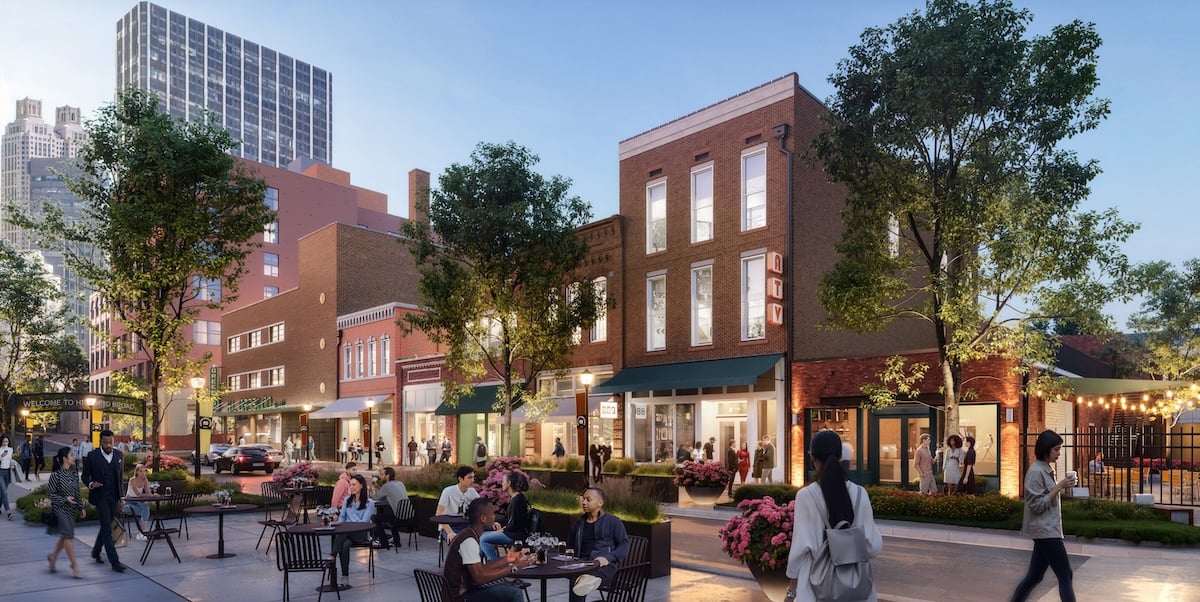
Neighborhoods near destinations such as Piedmont Park tend to retain appeal because lifestyle demand doesn’t vanish during economic shifts.
Convenience sustains desirability.
6️⃣ Study Price Tier & Buyer Pool Depth
Ask:
-
How large is the potential buyer pool?
-
Is this location affordable to a broad segment?
-
Does it rely on a narrow luxury market?
Mid-market communities often demonstrate greater resilience because they serve the largest group of buyers.
Depth of demand matters more than peak pricing.
7️⃣ Observe Historical Behavior
History doesn’t predict perfectly — but it reveals patterns.
Research:
-
How quickly did this area recover after past downturns?
-
Did prices drop sharply or moderately?
-
Did inventory spike significantly?
Communities that have demonstrated shorter recovery periods often share strong structural foundations.
Patterns repeat.
8️⃣ Pay Attention to Long-Term Planning
Resilient locations usually benefit from:
-
Continued infrastructure investment
-
Managed development
-
Transportation access
-
Balanced growth policies
Cities that actively plan for growth tend to create neighborhoods that withstand volatility better.
Stability is rarely accidental — it’s engineered.
The Bigger Question
When evaluating a property, ask:
“Would people still want to live here if the market cools?”
If the answer depends on:
-
Low interest rates
-
Investor hype
-
Rapid appreciation
…it’s fragile.
If the answer depends on:
-
Jobs
-
Schools
-
Convenience
-
Scarcity
-
Community
…it’s resilient.
Final Thought
You can improve a house.
You cannot change its location.
Resilient real estate isn’t about chasing the hottest area today — it’s about identifying the locations that will still attract demand tomorrow.
Because when the market shifts, fundamentals decide who recovers first.
--
Tina Jingru Sui 隋静儒
Associate Broker | Team Leader of TJS Team, Keller Williams
 Serving Metro Atlanta — Johns Creek, Alpharetta, Duluth, Suwanee, Buford, and beyond
 404-375-2120


 WeChat: tinasuirealty
 Follow me on Instagram / 小红书 / WeChat / Facebook