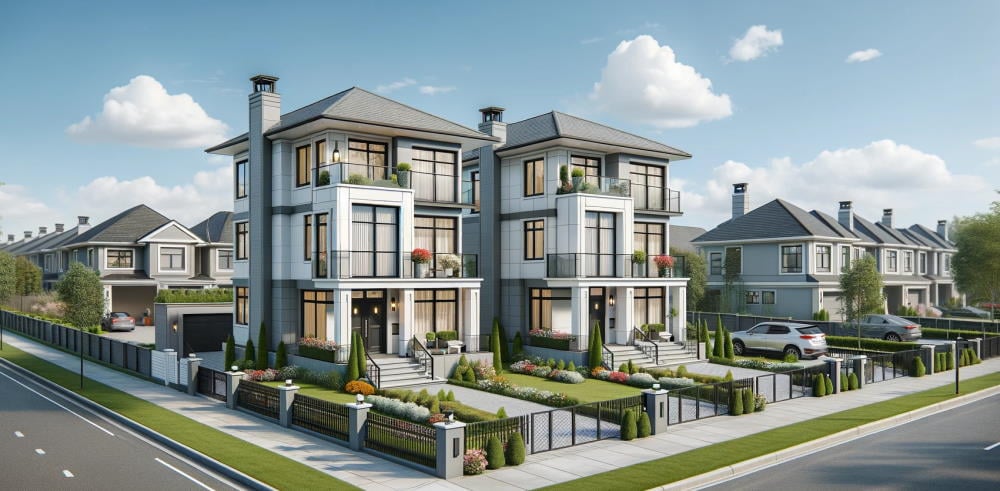
Why Two Homes in the Same City Can Perform So Differently
Same city.
Similar size.
Close in price.
Yet five years later, one home has significantly outperformed the other.
Why?
Because real estate performance isn’t determined by the city name on the address — it’s determined by micro-fundamentals.
Let’s break down why two homes in the same market can have very different outcomes.
1️⃣ Micro-Location Matters More Than City
Cities are broad. Neighborhoods are precise.
In a metro like Atlanta, performance can vary dramatically between:
-
Established in-town neighborhoods
-
Outer suburban communities
-
Areas near job corridors
-
Areas with long commute times
Even a 10–15 minute difference in accessibility can impact long-term demand.
Buyers don’t buy “a city.”
They buy commute time, convenience, and lifestyle.
2️⃣ School Zoning Creates Invisible Price Lines
Two homes may be a few streets apart — but in different school districts.
School boundaries can:
-
Expand or shrink the buyer pool
-
Influence resale speed
-
Affect price resilience during downturns
Even buyers without children understand the resale power of school reputation.
A zoning line can quietly create long-term performance gaps.
3️⃣ Supply Dynamics Within Submarkets
One neighborhood may have:
-
Limited resale inventory
-
Strict zoning
-
Little room for new construction
Another may have:
-
Large-scale new developments
-
Frequent investor resales
-
Higher turnover
When inventory rises, the oversupplied area typically experiences greater price pressure.
Scarcity supports appreciation.
Oversupply magnifies volatility.
4️⃣ Lifestyle Anchors Drive Consistent Demand
Proximity to lifestyle amenities influences performance over time.
Homes near destinations like Piedmont Park often benefit from ongoing buyer interest because walkability and recreation are long-term lifestyle drivers.
Meanwhile, homes in areas without strong amenities may rely solely on affordability to compete.
Lifestyle appeal creates pricing durability.
5️⃣ Buyer Pool Depth
Performance improves when a property appeals to multiple buyer types:
-
Families
-
Young professionals
-
Downsizers
-
Investors
If a home only fits a narrow niche (ultra-modern design, unusual layout, very high price tier), its resale demand may be more limited.
The broader the appeal, the stronger the long-term performance.
6️⃣ Property-Specific Factors
Even within the same neighborhood, performance can differ due to:
-
Lot size and privacy
-
Orientation (corner lot vs. interior)
-
Functional floor plan
-
Noise exposure
-
Future development nearby
Two homes can look similar on paper — but one may simply feel better to live in.
Livability influences resale more than specs alone.
7️⃣ Owner vs. Investor Influence
Neighborhood culture affects value trends.
Communities with strong owner-occupancy often experience:
-
Better upkeep
-
Lower volatility
-
Stronger community identity
Investor-heavy areas may appreciate quickly in strong markets — but can also adjust more sharply during corrections.
Stability compounds over time.
8️⃣ Timing of Purchase
Performance also depends on when the home was bought.
Buying:
-
At peak competition
-
During heavy new construction
-
In a rapidly expanding fringe area
… may produce different short-term results compared to buying in an established, supply-constrained neighborhood.
Timing interacts with location.
The Core Insight
Two homes in the same city are not equal investments simply because they share a zip code.
Performance is shaped by:
-
Micro-location
-
School zoning
-
Supply constraints
-
Lifestyle appeal
-
Buyer pool depth
-
Neighborhood stability
City averages hide these differences.
Real estate is hyperlocal.
Final Thought
When evaluating a property, don’t just ask:
“Is this a good city?”
Ask:
-
Is this a resilient neighborhood?
-
Is supply limited here?
-
Who will want this home five years from now?
-
What makes this specific location desirable?
Because over time, the gap between average and strategic location choices becomes very clear.
And that gap is what separates steady appreciation from unpredictable performance.
--
Tina Jingru Sui 隋静儒
Associate Broker | Team Leader of TJS Team, Keller Williams
 Serving Metro Atlanta — Johns Creek, Alpharetta, Duluth, Suwanee, Buford, and beyond
 404-375-2120


 WeChat: tinasuirealty
 Follow me on Instagram / 小红书 / WeChat / Facebook