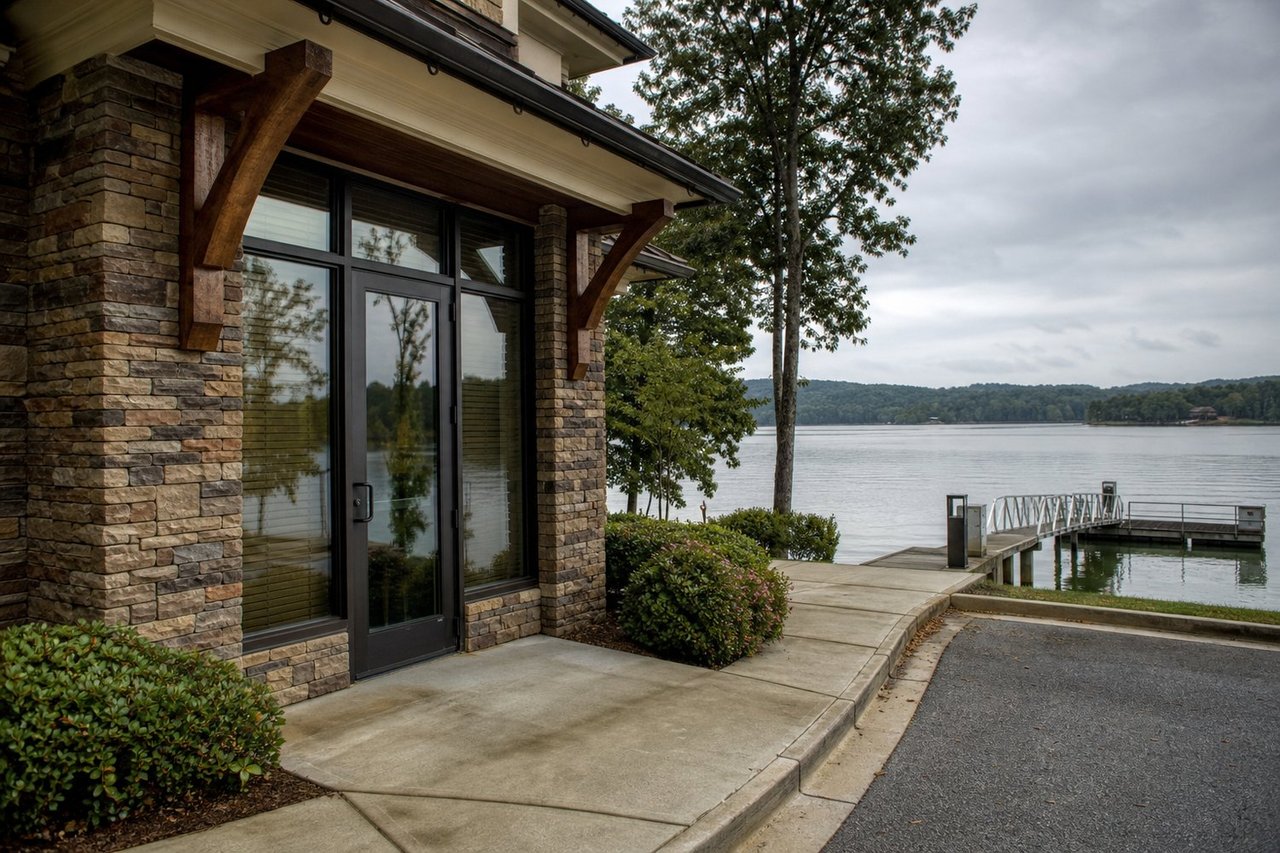
Offer Decision on Lake Lanier Private-Dock Homes
Make Good Moves. Protect your purchase by verifying the dock, shoreline access and permit status before your contract deadlines.
Before you settle on a number, find out whether the dock's authorization can carry forward to you after closing. Get the permit documents, compare them with what's physically on the shoreline, and write your contract so you can renegotiate or walk away if the U.S. Army Corps of Engineers process or your inspection goes badly.
How should you make the offer decision on a Lake Lanier private-dock home?
The offer decision on a Lake Lanier private-dock home rests on three things: the asking price, the dock's authorization and physical condition, and the contract terms that protect you if either one falls short. The U.S. Army Corps of Engineers administers Lake Lanier shoreline permits, which are generally issued for a maximum of five years and are nontransferable. That means the dock should never be assumed to convey with the house. Price the home and the usable dock as separate questions, then confirm the dock before your protections run out.
Key Takeaways
- Corps shoreline-use permits and licenses on Lake Lanier are generally issued for a maximum of five years and are nontransferable, so a dock does not automatically convey with the house.
- A "private dock" label in a listing is not proof of authorization, so your offer decision should rest on the actual permit or license and its exhibits.
- Private-dock homes belong in their own comparison set, separate from homes with community access, a shared slip, or no usable dock.
- Lake level changes with the seasons, so the month and year you test water access should be on record before you rely on it.
- Contract language on document delivery, agency confirmation, inspection rights, and your right to renegotiate or terminate matters as much as the number you offer.
Private-dock homes are a specialized slice of lake real estate, and the price on the listing tells you only part of the story. Here's how I walk my clients through it before we write anything.
What should you verify about the dock before your offer decision?
Verify four things: the dock's authorization, its location and dimensions against the listing, its physical condition, and whether the water at the dock is usable. Each one can change what the property is worth to you, so each belongs in your offer decision.
Is the dock authorized, and can that authorization reach you?
Start with the paperwork. The Corps states that shoreline-use permits and licenses are nontransferable and generally run no longer than five years. New applicants also meet onsite with a Corps ranger, so the shoreline, existing improvements, and permit records all matter.
Ask the seller for:
- The current permit or license and every exhibit attached to it
- The site plan
- Correspondence with the Corps
- Records of any inspections or violations
Then ask the Corps or the relevant project office what ownership-change or reauthorization process applies to that specific property. Don't wait for the last days of your due diligence period to make that call.
One caution: Georgia DNR's Coastal Resources permit FAQ describes revocable licenses and dock modifications, but Lake Lanier is federally managed. Coastal-dock rules are not a substitute for Corps requirements, so confirm which agency governs the parcel in front of you.
Does what's on the shoreline match what's on paper?
Compare the documents with the listing and with the water's edge. Check the dock location, walkway, boat lift, electrical service, stairs, and any shoreline structures. If a lift, set of stairs, or retaining structure was never approved, you could inherit approval, repair, or removal issues. That risk belongs in the offer decision, not in a surprise after closing.
Then bring in a qualified inspector to assess the pilings, decking, gangway, lift, electrical components, shoreline erosion, retaining walls, and the path down to the water.
Can you actually get a boat to the dock?
Not always, and it changes with the seasons. A showing during a high-water or summer period may not reveal how easily a boat reaches the dock when the lake is lower. Check navigability and water depth on the day of your inspection and write down the month and year. If you tour in one season, you're seeing that season only.
How do private-dock homes compare with shared slips and community access?
Compare a private-dock home mainly with other private-dock homes, because the dock changes what you're buying. A shared slip, a community facility, and lake access with no dock are different products, even when listings use similar words.
Access type | What to confirm | Main risk to value |
|---|---|---|
Private dock | Current permit or license, exhibits, site plan, post-closing reauthorization process | Authorization uncertainty, deterioration, shallow water at lower lake levels |
Shared slip or community dock | Availability, assignment rules, dues, waiting lists, transfer restrictions | No guaranteed slip, or rules that limit use or resale |
Lake access with no dock | Shoreline status and what, if anything, can be authorized | Paying for a dock that may never be approved |
A private dock can offer more control and convenience. Its value drops if the authorization is uncertain, the structure is worn, access is shallow, or you can't obtain the approval you need after closing. Shared facilities deserve their own analysis of rules and dues.
Location matters too. Lake Lanier shoreline properties commonly fall within Forsyth, Hall, and Gwinnett counties, with additional shoreline around Gainesville and Flowery Branch. Buford sits near the southern end of the lake. Identify the county, municipality, and cove, and confirm whether the parcel fronts Corps-managed shoreline. I cover the broader lake market in my post on waterfront properties at Lake Lanier.
How should you structure the offer on a private-dock home?
Price the house on its own merits, treat the dock as a feature you must verify, and put protections in the contract. That sequence keeps your offer decision tied to facts instead of the excitement of a lake view.
Should you offer based on the asking price, the home, or the dock?
Use all three, in that order of reliability. Weigh the asking price against the home's condition, lot and water orientation, cove characteristics, usable dock configuration, and permit documentation. A scarce dock is worth more only if it's authorized, usable, and sound.
I won't hand you a generic premium or discount for a dock, because that number comes from comparable private-dock sales analyzed for your specific property. If you want to sharpen that thinking, my post on when a home is really worth making an offer on walks through the logic, and the post on why the same home can draw very different offers explains how pricing and terms interact.
What contract terms protect you?
You can ask for contract language covering several points. These are negotiated strategies, not statutory defaults, so the seller has to agree:
- Delivery of the permit, license, exhibits, and Corps correspondence within a set time
- Confirmation from the Corps of the ownership-change or reauthorization process
- Your right to inspect the dock, lift, electrical, and shoreline structures
- Who is responsible for any unauthorized improvements
- Repair obligations tied to inspection findings
- Your right to terminate or renegotiate if approval or inspection results fall short
Your closing agent handles settlement and the movement of funds, but dock authorization is confirmed through the Corps and the documents. Build that confirmation into your timeline early. Every deal is different, and this is exactly the kind of structure I work out with a buyer before we submit anything.
If you'd like to see how clients describe working with me, you can read my reviews on Google and Zillow.
Frequently Asked Questions
Does a Lake Lanier private-dock permit transfer automatically when the house is sold?
No. The Corps states that shoreline-use permits and licenses are nontransferable, so a new owner should not assume the dock conveys with the house. Ask the Corps what ownership-change or reauthorization process applies to that specific property, and make it part of your due diligence.
What should I verify about a Lake Lanier dock before making an offer?
Verify the current permit or license and its exhibits, then compare them with the physical dock, walkway, lift, electrical service, and stairs. Have an inspector assess condition and shoreline erosion, and check water depth on the inspection date, recording the month and year.
Can I make my offer contingent on approval of the dock authorization?
You can ask for that protection, but it's a negotiated contract term, not something the law gives you automatically. A typical approach is language covering document delivery, agency confirmation, and your right to terminate or renegotiate. I'll help you draft it for your specific property.
What happens if the dock, lift, stairs, or shoreline work was never approved?
You may face approval, repair, or removal issues, and the cost and responsibility need to be settled before closing. Your contract should state who is responsible for unauthorized improvements and what your options are if the findings are serious.
Does the dock remain usable during seasonal lake-level changes?
Not necessarily. A summer showing may not show how shallow the approach gets when the lake is lower. Test access at the actual inspection date, record the month and year, and don't treat one season's conditions as permanent.
A private dock can make a Lake Lanier home worth more to you, but only if the authorization, condition, and access hold up. If you're weighing a private-dock listing in Forsyth, Hall, or Gwinnett County, let's run through the documents and build your offer together. Call or text me at 404-375-2120, or email me to schedule a consultation. You can also search listings at tinasui.com.
About Tina Jingru Sui
Tina Jingru Sui is the founder and leader of the TJS Team, a top-performing real estate team serving the Northern Atlanta Metro area. She specializes in luxury homes, relocation, and investment properties across Cobb, Fulton, Forsyth, and Gwinnett counties, helping buyers, sellers, and investors reach their goals in communities like Johns Creek, Alpharetta, Suwanee, and beyond.
Keller Williams Atlanta Partners · (404) 375-2120
Equal Housing Opportunity. Tina Jingru Sui, REALTOR®, GA License #392936, Keller Williams Atlanta Partners. Regulated by the Georgia Real Estate Commission; member of the National Association of REALTORS® (NAR). This article is general information, not legal, tax, or financial advice. Confirm your own numbers and requirements with your closing agent, tax advisor, or lender.
Private-Dock Offer Due Diligence Checklist
Use this optional checklist alongside your agent, inspectors and the U.S. Army Corps of Engineers.
0 of 10 complete
Request the current shoreline-use permit or license and all exhibitsObtain the approved dock site planReview Corps correspondence, inspections and violationsConfirm post-closing authorization process with the CorpsCompare dock, lift, stairs and electrical components with approved documentsSchedule qualified dock and shoreline inspectionCheck water depth and navigability; record the inspection dateCompare with recent private-dock home salesNegotiate document-delivery and inspection protectionsConfirm who addresses unauthorized improvements before closing
Considering a Lake Lanier Private-Dock Home?
Let's review the actual dock documents, relevant comparable sales, inspection requirements, and offer protections before you make a commitment.
Contact Tina & the TJS TeamCall or text: 404-375-2120
Tina Jingru Sui · Associate Broker & Team Leader · Keller Williams Atlanta Partners