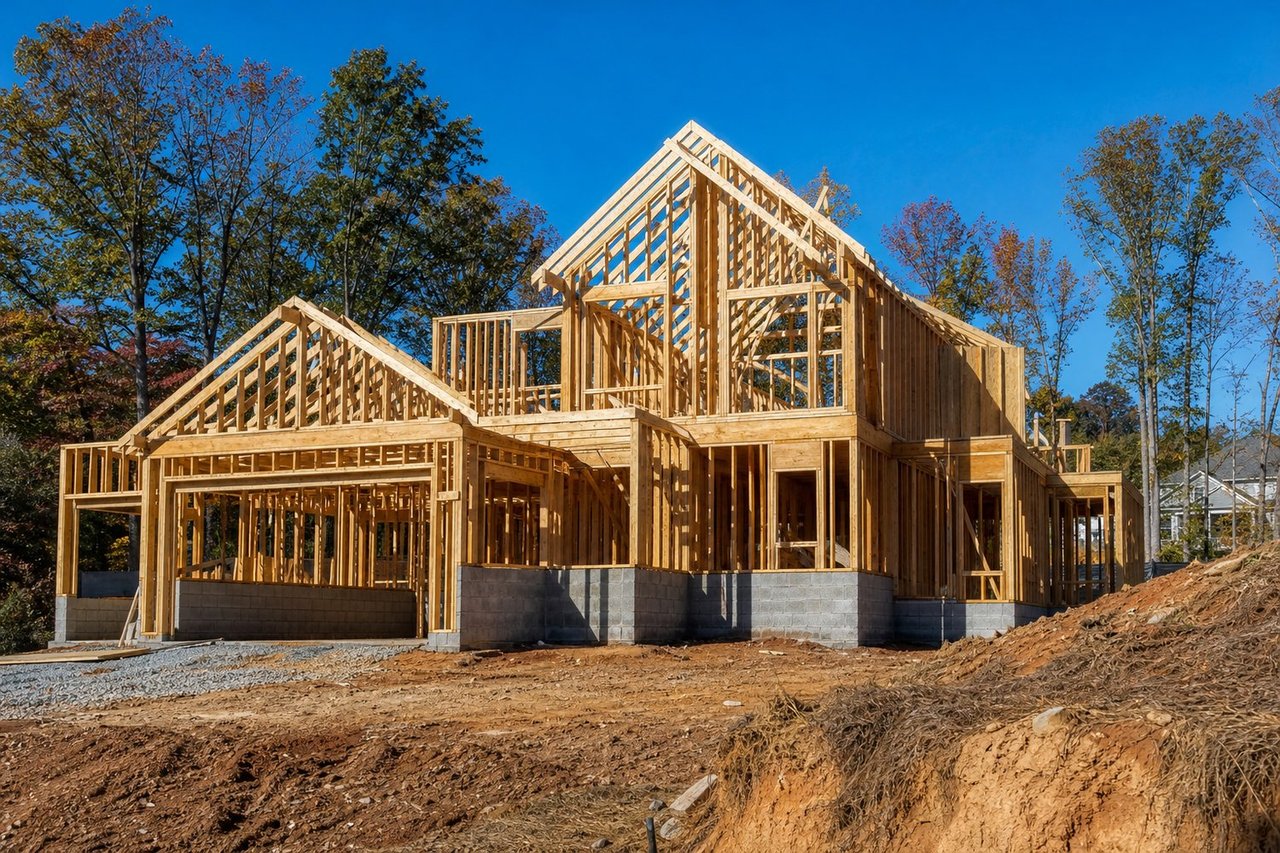
Resale Homes in Northern Atlanta vs New Construction
Put both homes on one sheet with the same budget and move-in date. The best choice is the home whose total cost, warranty, condition and timing fit your goals—not simply the one with the lower advertised price.
- The most recent Atlanta REALTORS® brief I'm drawing on, from August 2026, showed a 4.7-month supply and an average of 27 days on market across the 11-county metro, which is broad context and not a Northern Atlanta figure.
- A builder incentive is not the same as a price reduction, so compare its eligibility rules, expiration date, and financing restrictions before you give it any value.
- The written builder warranty, not the sales brochure, defines what is covered, what is excluded, and when coverage starts.
- A brand-new home still needs independent inspections, ideally before drywall when the contract allows it and again before closing.
- A completed inventory home gives you a more dependable move-in date than a to-be-built home, but with fewer finish choices.
I walk my clients through this comparison before we tour a single model home or open house. The sticker prices almost never tell you which option costs more, because the real differences sit in fees, conditions, and timing.
What does the market data say about resale homes in Northern Atlanta?
The best public data is metro-wide, so it tells you about competition and pace, not about any one neighborhood. Per the Atlanta REALTORS® Market Brief for August 2026, built on First Multiple Listing Service (FMLS) data, the metro had 20,720 active listings, a 4.7-month supply, and an average of 27 days on market.
Metro Atlanta measure (FMLS) | July 2026 | August 2026 |
|---|---|---|
Active listings | 20,863 | 20,720 |
Months of supply | 4.7 | 4.7 |
Average days on market | 24 | 27 |
The July figures come from the Atlanta REALTORS® July 2026 brief, which also reported cumulative days on market of 30. These are the latest reports I'm citing here, and they cover 11 counties. They don't tell you what a house in Johns Creek, Suwanee, or Marietta will do.
Why does the exact submarket matter?
"Northern Atlanta Metro" isn't one reporting area. North Fulton, Forsyth, Cherokee, and northern Gwinnett each have their own pricing, inventory, and builder activity. A fair comparison puts a new community and a resale home from the same submarket side by side, then looks at commute pattern, lot characteristics, community amenities, property age, and how many competing resale listings sit nearby.
Ask me for current numbers in your target area and I'll pull them from the MLS. I won't hand you a metro average and call it local. If you want the wider framework first, my post on new construction vs resale homes in Metro Atlanta covers the big picture.
What does each neighborhood type offer?
New communities tend to bring newer infrastructure, consistent exteriors, community amenities, and fewer immediate repairs. They can also be farther from established shopping and dining, and construction may continue around you for a while.
Resale homes often offer mature trees, finished streetscapes, and completed amenities you can see and judge today. The trade-off is that condition varies house by house, so you have to evaluate each property closely. My guide on evaluating the condition of an older Atlanta home shows what to look for.
How do incentives, warranties, and fees compare on the same budget?
Compare final contract terms, not headline offers. A builder credit, a lower-priced resale home, and a warranty can't be stacked on a single price line, so convert each into what it actually does for you.
Is a builder incentive the same as a price cut?
No. Incentives can be tied to a particular lot, an inventory home, a preferred lender, a closing date, or a financing program. Some change the contract price, while others only credit certain closing or financing costs.
I haven't verified a uniform builder incentive practice for Northern Atlanta, so I don't assume one exists. Before you give an incentive any value, get these answers in writing:
- What are the eligibility requirements?
- When does the offer expire?
- Does it require a specific lender or loan type?
- Does it lower the price, or does it only credit permitted costs?
What costs hide outside the advertised price?
Advertised new-construction prices don't always include everything. Ask what sits outside the base price:
- Lot premium
- Structural and design selections
- Appliances, window treatments, or similar items the builder doesn't include
- Lender requirements
- A contingency for delay
On the resale side, the hidden costs are repairs, deferred maintenance, and renovation work you plan before moving in. I'm not putting dollar amounts on these here, because they depend entirely on the specific home and contract. Bring me the two properties and we'll build a real net-cost comparison together.
How do warranties differ?
A new home's coverage lives in the written builder warranty. Under Georgia's Administrative Code Chapter 553-7, a licensed residential contractor entering a covered contract must provide a written warranty describing the covered work, exclusions, evaluation standards, and the warranty term, including when it starts. A copy must be attached to the contract or made available for review before the contract is executed.
That means you should read the actual document, not the sales summary. Look for exclusions, commencement date, claim deadlines, the required method of notice, dispute procedures, and any performance standards that limit coverage.
A resale home may carry remaining manufacturer, systems, or builder warranties that are transferable, but they won't be one unified package. Confirm what actually transfers.
Comparison point | New construction | Resale home |
|---|---|---|
Price terms | Base price plus lot premium and selections | List price plus repairs or renovation you plan |
Incentives | Conditional, often tied to lender, lot, or date | Negotiated in the offer and contract |
Warranty | Written builder warranty, terms vary | Remaining transferable warranties, if any |
Condition risk | Workmanship and punch-list items | Age of systems and deferred maintenance |
Possession date | Depends on construction stage and contract | Set by the contract and closing date |
For a real-world look at the questions to put to a builder, read my case study on buying new construction in Georgia.
How do inspections and completion timing change the comparison?
New construction swaps repair risk for timing risk, and resale does the opposite. Both need an inspection plan, and both need a move-in date you can actually count on.
Do you need an independent inspector for a brand-new home?
Yes, it's worth planning for one. The warranty rule doesn't replace your own evaluation of construction quality. Where the contract and builder procedures allow it, plan for:
- An independent pre-drywall inspection
- A final inspection before closing
- Written documentation of any incomplete punch-list items
- A clear process for submitting warranty claims after you move in
Your inspection rights depend on your contract, site access, and the builder's procedures. I haven't found one uniform statewide inspection schedule, so verify yours before you sign.
For a resale home, the inspection should focus on deferred maintenance, roof and HVAC age, moisture intrusion, drainage, foundation movement, prior additions, and systems that a new-home warranty would never cover.
How does completion timing compare?
A resale closing follows the dates in your contract. A new build follows the construction. Timing depends on the build period, delays, lender or municipal approvals, punch-list work, and a closing date that can shift as the home progresses. I can't give you a general timeline, because no statewide standard or Northern Atlanta average exists, and every project is different.
What I can tell you is the difference between the two kinds of new homes:
- Completed or nearly completed inventory homes give you a more dependable schedule but fewer finish choices.
- To-be-built homes allow more customization, but selections, upgrades, and contract deadlines can all move the final price and the date.
What should you ask the builder about delays?
Ask for the current construction stage, the estimated substantial-completion date, inspection and certificate-of-occupancy milestones, and how the builder allows for weather or supply delays. Then ask what happens if the date slips. Your loan rate lock, lease end, sale contingency, or moving plans could all be affected. If the builder can change the closing date, find out in writing what that does to you before you sign.
What's the smartest next step?
Pick one resale home and one new build in the same submarket, then price both on the same budget and move-in date. That exercise often shows that the cheaper-looking option isn't, or that a builder credit is worth less than a lower purchase price, a better lot, completed landscaping, or a shorter wait.
If you're also weighing suburbs against each other, my post on how Atlanta buyers compare homes across different suburbs is a good companion read. You can search current listings anytime at tinasui.com.
Your numbers depend on the specific lot, contract, and house condition. That's the part I do with my clients, with the TJS Team's local market knowledge behind it.
Call or text me at 404-375-2120, or email [email protected], and we'll set both options side by side.
Curious how clients feel about working with me? Read my reviews on Google and Zillow.
New Build vs. Resale: 18-Point Buyer Checklist
Use this checklist before comparing offers or signing a builder agreement.
0 of 18 reviewed
Side-by-Side Home Cost Comparison
Enter the contract-level details for each property. Incentives must be eligible, documented and usable; this comparison is illustrative and does not replace a lender's Loan Estimate.
This is a cash-cost comparison, not a mortgage payment calculation. Credits are assumed fully eligible and usable and cannot exceed applicable financing/closing limits. Carrying costs and repairs are estimates; financing terms, property tax, HOA, insurance, future maintenance and opportunity costs may differ.
Frequently Asked Questions
Is it cheaper to buy a new construction home or a resale home in Northern Atlanta?
It depends on the specific homes, not on the category. New construction can carry a lot premium, selections, and extras outside the base price, while a resale home can carry repairs and aging systems. Price both on the same budget and move-in date to see which one costs less for you.
What builder incentives are available in North Fulton, Forsyth, Cherokee, or northern Gwinnett?
Incentives vary by builder, community, lot, and timing, and I don't assume any uniform offer. Ask each builder for the eligibility rules, expiration date, lender or financing restrictions, and whether the incentive changes the price or only credits permitted costs. I can help you compare those terms against a resale option.
Should I hire an independent inspector for a brand-new home?
Yes, I recommend planning for independent inspections. Where the contract and builder procedures permit, that means a pre-drywall inspection and a final inspection before closing. Verify your inspection rights in the contract, since no single schedule applies to every Georgia new-construction purchase.
Can a builder change the closing date if construction is delayed?
That depends on the language in your contract, so read the delay provisions before you sign. A shifted date can affect your rate lock, lease, or sale contingency. Ask the builder in writing how delays are handled and documented.
How should I compare a builder's incentives with a lower-priced resale home?
Compare the final contract terms side by side, not the headline credit. Include what the incentive requires, what features are included, the warranty obligations, financing conditions, and the possession date. A credit tied to restrictions may be worth less than a lower purchase price.
Compare Two Homes With a Local Strategy
Send the TJS Team one resale listing and one new-construction option. We'll help you review current comparable sales, builder terms, inspection rights and timing before you decide.
About Tina Jingru Sui
Tina Jingru Sui leads TJS Team at Keller Williams Atlanta Partners, serving buyers, sellers and investors across Northern Metro Atlanta, including Johns Creek, Alpharetta, Suwanee, Buford, Forsyth County, North Fulton and nearby communities.
Make Good Moves · Work Hard. Be Kind. Evolve.
Tina Jingru Sui, REALTOR® · GA License #392936 · Keller Williams Atlanta Partners · Equal Housing Opportunity. This article is general information, not legal, tax, or financial advice. Confirm your own numbers with your closing agent, tax advisor, lender, or other qualified professional. Market figures are sourced from the author's supplied August 2026 and July 2026 Atlanta REALTORS® briefs and should be verified before publishing.