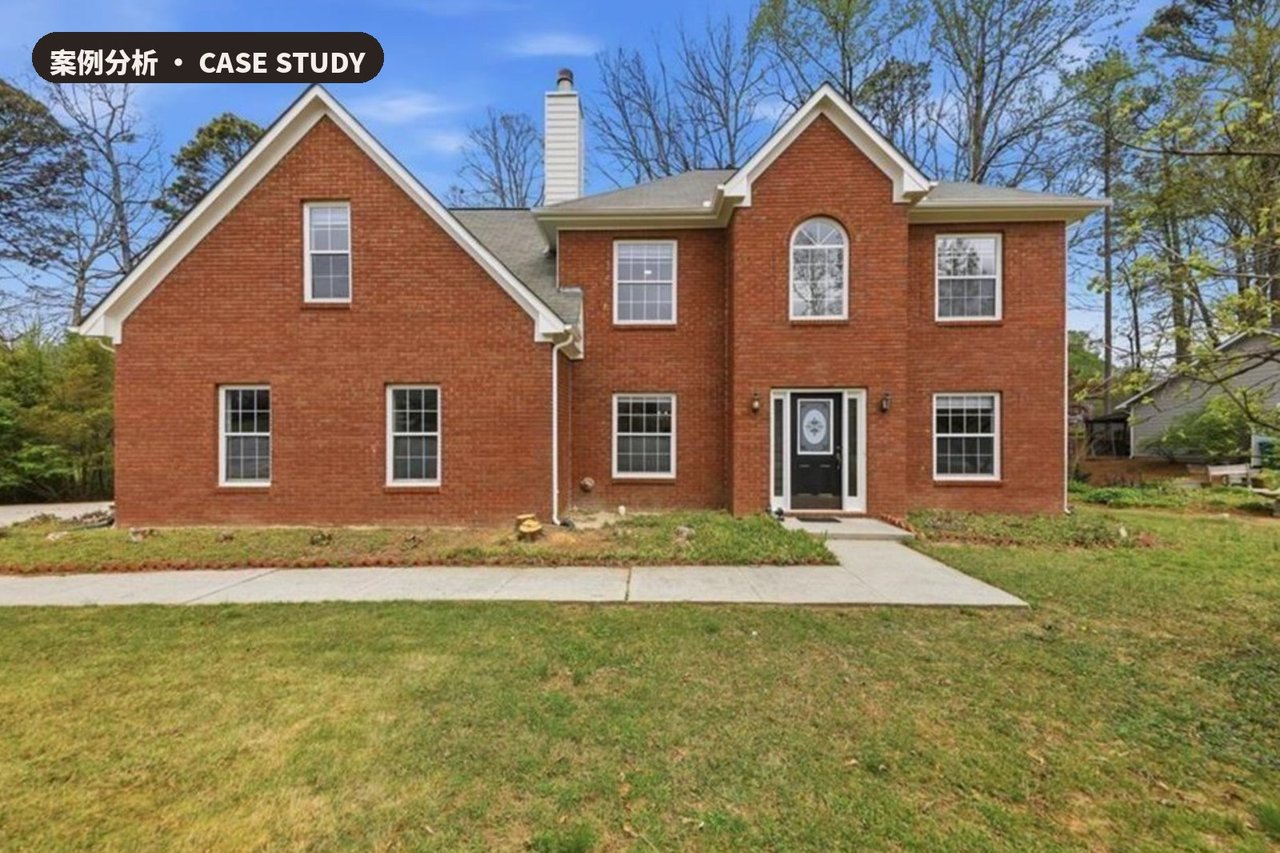
If you are preparing to sell a home in Buford, Georgia, one of the biggest mistakes is treating “Buford” as one single market. A home in 30518 can compete differently from one in 30519. A property inside the City of Buford can have a different jurisdictional profile from a home carrying a Buford mailing address outside the municipal boundary. School assignment, subdivision, price range, home age, lot, HOA, condition, and buyer search behavior can all change which properties are truly competing with yours.
Sell My House in Buford, GA: The Micro-Market Positioning Test
Before choosing the list price, define exactly where your home sits in the Buyer's decision set.
Your Home Is Not Competing
With
Every House in Buford.
It Is Competing With
the Small Group of Homes the Same Buyer Would Seriously Consider Instead.
1. Start With the September 2026 Buford Market—but Don't Stop There
Realtor.com Economic Research reported the following broad Buford market conditions for September 2026:
September 2026 Buford Market Metric | Reported Figure |
|---|---|
Median Listing Price | $549,950 |
Median Sold Price | $473,450 |
Active Listings | 667 |
Median Days on Market | 58 days |
Active Inventory Change | +25.69% year over year |
Median Sold Price Change | −4.83% year over year |
Source: Realtor.com Economic Research, September 2026.
At the broad portal-market level, Buyers currently have more available inventory than they did one year earlier.
That means Sellers should pay particular attention to:
price position,
property condition,
online presentation,
and how easily Buyers can choose something else.
But these citywide numbers are:
context—not a pricing recommendation for your property.
Citywide data tells you what kind of market you are entering. Your direct comp set tells you how your house should compete inside it.
2. Even 30518 and 30519 Were Not Identical in September 2026
The ZIP-code data illustrates why a Buford Seller should avoid relying on one broad median.
September 2026 | 30518 | 30519 |
|---|---|---|
Median Listing Price | $554,900 | $524,500 |
Median Sold Price | $490,000 | $465,000 |
Median $ / Sq. Ft. | $209 | $191 |
Active Listings | 270 | 397 |
Median Days on Market | 57 days | 58 days |
Source: Realtor.com Economic Research, September 2026. Portal ZIP-level data should not be treated as a valuation of a specific property.
Even this comparison is still too broad to price your home.
A 30518 luxury property near Lake Lanier,
a City of Buford resale,
an older Downtown Buford home,
and a newer subdivision property
may compete with completely different homes.
3. Define the Exact Geography Before You Build the CMA
For a Buford property, verify:
- Exact municipal jurisdiction.
- County.
- ZIP code.
- Subdivision or neighborhood.
- Current school assignment if relevant to objective Buyer search criteria.
- HOA or condominium structure.
The official City of Buford map shows municipal territory across portions of:
Gwinnett County and Hall County.
At the same time, the larger Buford postal area extends outside the municipal boundary.
That distinction matters.
Buford Mailing Address
Does Not Automatically Mean
City of Buford.
And It Does Not Automatically Mean
Buford City Schools.
Buford City Schools' current registration guidance requires proof that a student lives within the Buford City Schools zone for in-district registration, unless separate out-of-district acceptance applies.
So if school assignment is material to how a particular Buyer searches:
verify the exact property rather than advertising based on the mailing city.
4. Build a Buyer Comp Set—not Just an Appraisal Comp Set
Traditional comparable sales are important for understanding market value.
But a Seller also needs to know:
what the current Buyer can purchase instead.
Those two sets of properties overlap.
They are not always identical.
An appraiser may care about:
- Proximity.
- Property type.
- Square footage.
- Age.
- Sale date.
- Lot and condition.
The Buyer may also compare:
- A slightly newer home farther away.
- A smaller renovated home.
- A larger home with older systems.
- A townhome with lower maintenance burden.
- A neighboring subdivision in the same price range.
Sold comps help explain value. Direct active competition helps explain Buyer behavior.
Before Listing, Ask:
“Which Buyers Are Most Likely to Consider My Home—and Which Homes Will They Compare It Against?”
5. Your Price Determines Which Comparison Group You Enter
Suppose a Seller is deciding between:
$599,000
and:
$625,000.
The difference is not only:
$26,000.
The two prices may place the property in different Buyer searches and against a different competitive set.
At $625,000, Buyers may compare the home against properties offering:
newer systems,
larger lots,
better updates,
or newer construction.
So the pricing question is not only:
“Can we justify $625,000?”
It is also:
“What does $625,000 force us to compete against?”
Your list price does not only communicate value. It chooses your competition.
6. Don't Price From Seller Need
A Seller may think:
“I paid $480,000.”
“I put $70,000 into the house.”
“I need $200,000 for my next purchase.”
Those numbers matter to the Seller's financial planning.
They do not prove current market value.
Buyers are comparing:
- Relevant sold properties.
- Current competing listings.
- Condition.
- Location.
- Home type.
- Features.
- Expected future cost.
Seller Need
Can Determine
Whether You Should Sell.
It Does Not Determine
What the Market Will Pay.
7. Before Spending Money, Separate Buyer Problems From Seller Preferences
Not every dated feature needs renovation.
I would divide pre-listing items into four categories:
Category | Seller Question |
|---|---|
Verify / Investigate | Do we need better information before listing? |
Address Before Listing | Will this issue create disproportionate Buyer concern or affect financing / insurability? |
High-Impact Cosmetic | Can a modest improvement materially improve presentation? |
Leave for Buyer | Is this expensive, subjective, or unlikely to materially improve competitive position? |
8. Older Systems Create a Budget Conversation Even When They Still Work
An older HVAC system is not automatically defective.
An older roof does not automatically require replacement.
But if Buyers are comparing your property with homes offering newer:
roof,
HVAC,
water heater,
windows,
or appliances,
they may place more future capital reserve against your property.
That can affect perceived value.
System age is not automatically a repair deduction, but multiple aging systems can change how Buyers compare the total ownership burden.
9. Reduce the Buyer's “Unknown Cost” Before It Becomes a Discount
Sellers often focus heavily on cosmetics.
But information can have value too.
When available, organize:
- Roof replacement information.
- HVAC age and service history.
- Water-heater information.
- Major repair receipts.
- Renovation information.
- Relevant permits where applicable.
- HOA information.
- Utility information when useful.
- Other property-specific records.
Why?
Because when a Buyer does not know:
they may create their own risk reserve.
Good Seller Preparation
Does Not Only
Make the House Look Better.
It Can Also
Reduce Buyer Uncertainty.
10. Prepare for the Search Result Before You Prepare for the Showing
Most Buyers will encounter your home online before they ever enter it.
The actual funnel starts here:
Buyer Search
↓
Main Photo
↓
Listing Click
↓
Photo / Video Review
↓
Price + Property Comparison
↓
Showing Request
↓
In-Person Experience
↓
Second Look / Offer
That means a Seller can lose the Buyer:
before the front door ever opens.
11. The First Photo Has a Different Job From the Rest of the Marketing
The first image has one primary job:
earn the click.
The rest of the presentation needs to:
- Explain the layout.
- Show important spaces.
- Make the strongest features easy to understand.
- Accurately represent the property.
- Answer enough questions to justify a showing.
Professional photography,
video,
3D tours,
floor-plan information,
open houses,
MLS exposure,
social distribution,
and targeted digital promotion
may all be appropriate depending on the property and strategy.
Marketing should not simply prove that the home exists. It should make the competitive advantage easy for the right Buyer to recognize.
12. Define the One-Sentence Reason to Choose Your Home
Before the listing goes live, complete this sentence:
“Compared with the closest alternatives around $________, our home gives the Buyer ______________________________.”
Maybe it is:
a newer roof,
a larger usable backyard,
a more functional main-level bedroom,
a better garage,
updated systems,
less immediate work,
or a location advantage relevant to the exact property.
If the Seller and listing agent cannot clearly identify why a Buyer should choose the home,
the Buyer may have difficulty identifying it too.
13. Treat the Launch as a Market Test
The first stage of the listing provides information.
Monitor:
- Online engagement where available.
- Showing requests.
- Actual showings.
- Repeated Buyer feedback.
- Second showings.
- Offers.
- What competing properties go pending.
- What new competition enters the market.
Do not rely on a universal rule such as:
“No offer in seven days means reduce the price.”
Different price ranges and property types move at different speeds.
The objective is:
compare actual response with the response the launch strategy reasonably expected.
14. Diagnose the Funnel Before Changing the Price
What You See | What to Investigate |
|---|---|
Very Few Showings | Price band, online presentation, competition, access, market demand |
Many Showings, Weak Interest | Condition, layout, lot, smell, presentation, perceived value |
Second Showings, No Offers | Price-position gap, permanent objections, competing alternatives, terms |
Competitors Keep Going Pending | Why Buyers are choosing those homes instead |
Don't Ask Only:
“Why Haven't We Sold?”
Ask:
“Where Is Buyer Interest Breaking Down?”
15. Showing Access Is Part of Your Competitive Position
Buyers often tour several homes during one trip.
If your property requires:
very limited appointment windows,
long advance notice,
or repeated scheduling changes,
some Buyers may simply see another home first.
Not every Seller can provide unlimited access.
Tenant occupancy,
pets,
work schedules,
and other realities matter.
But limited access has:
a competitive cost.
The easier a serious Buyer can evaluate the property, the fewer opportunities you lose to competing listings simply because they were easier to see.
16. Watch the Properties That Go Pending While Yours Remains Active
If a competing listing goes pending,
do not simply say:
“Their house was nicer.”
Compare:
- Price.
- Condition.
- Lot.
- Systems.
- Updates.
- Floor plan.
- Marketing.
- Exact location.
- Time on market.
The final contract price may not yet be known.
But the pending status still tells you:
a current Buyer chose to pursue that property.
17. If You Change Price, Make the Change Strategically
A price reduction should not exist merely to create activity on the MLS.
Ask:
“What does the new price change about our competitive position?”
Does it:
- Enter a different Buyer search bracket?
- Create a clearer value gap versus direct competitors?
- Compensate for a permanent property objection?
- Respond to repeated market feedback?
If the answer is:
“It just makes us $5,000 cheaper,”
the adjustment may not materially change Buyer behavior.
A Useful Price Adjustment
Should Change
the Buyer's Comparison.
Not Just
the Number on the Listing.
18. When Offers Arrive, Protect the Economics You Worked to Create
The highest purchase price is not necessarily the strongest contract.
Compare:
- Purchase price.
- Estimated Seller net.
- Seller credits.
- Buyer financing.
- Due Diligence.
- Appraisal exposure.
- Earnest money.
- Closing date.
- Possession.
- Other contingencies or dependencies.
A slightly lower offer may sometimes create a better Seller outcome.
A higher offer may also absolutely be the strongest offer.
The contract has to be analyzed as:
a complete economic package.
19. The Sale Price Can Still Change Economically After Acceptance
Once under contract, Buyer may investigate property condition according to the contract.
Later discussions may involve:
repairs,
credits,
price changes,
or other solutions.
Seller should evaluate any request based on:
- Actual condition.
- Professional information where needed.
- Repair cost.
- Contract obligations.
- Current market leverage.
- Potential cost of returning to market.
The goal is not to agree to every request—or reject every request. It is to protect the strongest reasonable overall Seller outcome.
20. Build the Seller Net Sheet Before the Home Goes Live
Before choosing the listing price, estimate:
Estimated Sale Price
− Mortgage / Lien Payoffs
− Negotiated Brokerage Compensation
− Seller Credits
− Expected Seller Closing Expenses
− Prorations / HOA Amounts
− Repair or Preparation Costs
=
Estimated Seller Net
Then model several scenarios.
For example:
- List-price scenario.
- Expected-sale scenario.
- Lower-price / faster-sale scenario.
- Offer with substantial Seller credit.
Broker compensation is negotiable and should be based on the actual agreement.
The Seller's Goal
Is Not
the Highest Listing Price.
It Is the Strongest
Overall Sale Outcome.
The Buford Micro-Market Positioning Map
Positioning Layer | Seller Must Define | Why It Matters |
|---|---|---|
Exact Geography | City / county / ZIP / neighborhood / school assignment where relevant | Defines the correct market context |
Buyer Search Band | The price range in which Buyers will discover the home | Determines which listings become alternatives |
Sold Comp Set | Recent relevant closed transactions | Supports market-value analysis |
Active Competitor Set | Homes current Buyers can purchase instead | Explains Buyer choice |
Property Advantage | Reason to choose this property | Creates differentiation |
Buyer Friction | Condition, systems, layout, lot, access or uncertainty issues | Explains discount pressure |
Launch Plan | Media, MLS, showings, open house, distribution and response review | Turns strategy into execution |
The 100-Point Buford Seller Positioning Scorecard
Category | Score | Seller Question |
|---|---|---|
Micro-Market Definition | ___ / 15 | Are we using the correct geography and buyer pool? |
Pricing Evidence | ___ / 20 | Do relevant sold comps support our position? |
Competitive Position | ___ / 15 | How do we compare with the homes Buyers can purchase instead? |
Condition Confidence | ___ / 15 | Have we reduced avoidable Buyer uncertainty? |
Presentation | ___ / 15 | Is the competitive advantage easy to see online and in person? |
Showing / Access Plan | ___ / 5 | Can qualified Buyers evaluate the property easily? |
Performance Review Plan | ___ / 5 | Do we know what evidence will trigger a strategy review? |
Seller Net Clarity | ___ / 10 | Do I understand realistic proceeds under multiple scenarios? |
Total | ___ / 100 | This evaluates positioning readiness, not guaranteed sale performance. |
30 Questions Before Listing a Buford Home
☐ 1. Is the property actually inside City of Buford limits?
☐ 2. Which county is the property in?
☐ 3. Which ZIP code applies?
☐ 4. What school assignment applies if relevant to objective Buyer criteria?
☐ 5. If marketing mentions Buford City Schools, has eligibility been verified?
☐ 6. Which sold comps are actually relevant?
☐ 7. Which sold comps should be excluded?
☐ 8. Which three to five active listings compete most directly?
☐ 9. Which competitors have recently gone pending?
☐ 10. What price band puts us in the strongest competitive position?
☐ 11. What does a Buyer get from the house priced directly above us?
☐ 12. What does a Buyer give up by choosing the cheaper competitor?
☐ 13. What is our strongest differentiator?
☐ 14. What is our strongest Buyer objection?
☐ 15. Is that objection fixable, documentable, or something we must price around?
☐ 16. Which repairs should be addressed before listing?
☐ 17. Which cosmetic work is likely to meaningfully improve presentation?
☐ 18. Which improvements are unlikely to justify their cost?
☐ 19. What major-system information can we document?
☐ 20. What information can reduce Buyer uncertainty?
☐ 21. Does our main photo earn the click?
☐ 22. Does the listing explain the floor plan and strongest features clearly?
☐ 23. What does our marketing do beyond basic MLS exposure?
☐ 24. How easy will the home be to show?
☐ 25. How will Buyer feedback be summarized?
☐ 26. What market response are we expecting from the launch?
☐ 27. What evidence would make us change strategy?
☐ 28. What are my estimated proceeds at several realistic sale prices?
☐ 29. What trade-offs matter most to me besides price?
☐ 30. If a Buyer tours my home and the three closest alternatives today, why should they choose mine?
The Best Pre-Listing Question:
“If a Buyer Tours My Home and the Three Closest Alternatives Today, Why Should They Choose Mine?”
Frequently Asked Questions About Selling a Home in Buford, GA
How long does it take to sell a home in Buford in 2026?
Realtor.com reported a median of approximately 58 days on market for its broad Buford market in September 2026. That does not mean every home should take 58 days. Actual timing varies by price range, condition, exact geography, property type, competition, presentation and Buyer demand. Contract-to-closing time comes after a property goes under contract.
What is the median home price in Buford right now?
Realtor.com's September 2026 broad Buford market data reported a median listing price of approximately $549,950 and a median sold price of approximately $473,450. Those metrics represent different sets of properties and should not be interpreted as an expected negotiation discount for an individual home.
Is 30518 more expensive than 30519?
In Realtor.com's September 2026 ZIP-level data, 30518 showed a higher median listing price, median sold price and median listing price per square foot than 30519. However, ZIP-wide medians can be influenced by the mix of homes currently listed or sold. A specific Seller should use neighborhood- and property-level comparable sales.
Does a Buford address mean my home is in Buford City Schools?
No. A Buford mailing address does not automatically establish eligibility for Buford City Schools. Current district registration guidance requires proof of residency within the Buford City Schools zone for in-district registration unless separate out-of-district acceptance applies. Verify the exact property before making school-related marketing statements.
Should I renovate my Buford home before selling?
Not automatically. Prioritize repairs or presentation improvements that remove meaningful Buyer friction or uncertainty. Large renovations should be evaluated against likely market impact because renovation spending does not guarantee dollar-for-dollar resale value.
Should I get a pre-listing inspection?
It depends on the property and Seller's strategy. A pre-listing inspection may help identify unknown issues, but it can also create information the Seller needs to evaluate and address appropriately. Discuss the advantages, obligations and strategy before ordering one.
Is Buford a Buyer's market in September 2026?
Realtor.com's broad Buford page labeled its September 2026 portal market a Buyer's market, while its 30519 page characterized that ZIP as balanced. These labels are source-specific and illustrate why Sellers should not assume the entire Buford area behaves uniformly.
Should I price high so I have room to negotiate?
Not automatically. A higher price can change the competitive group and reduce showing activity if Buyers perceive stronger value elsewhere. The pricing strategy should consider relevant sold comps, current competition, Buyer search behavior and your Seller goals.
How do I know if my price is the problem?
Look at the entire listing funnel. Very low showing activity may point toward price position, presentation, access or market demand. Many showings without offers may indicate perceived value, condition or property-specific objections. Compare your results with relevant competitors rather than relying on one universal rule.
What is the most important question before listing a Buford home?
Ask: “Which Buyers are most likely to consider my property, which homes will they compare it against, and why should they choose mine at our proposed price?”
Don't List
a
“Buford House.”
Position
This Specific Property Against Its Actual Competition.
Final Thoughts: Buford Is the Market Name—Your Comp Set Is the Strategy
A broad Buford market report is useful.
But before listing, go narrower.
Define:
Exact jurisdiction.
ZIP code.
Neighborhood or subdivision.
School assignment if relevant and verified.
Property type.
Price band.
Relevant sold comps.
Direct active competitors.
Recent pending competitors.
Condition differences.
Major-system differences.
Buyer objections.
And your strongest reason to be chosen.
Then build the price and marketing strategy around that competitive position.
Because the Buyer is not asking:
“Do I want to buy a house somewhere in Buford?”
They are usually asking:
“Of the homes I can buy at this price, which one gives me the strongest overall value?”
The strongest Buford selling strategy starts by making the comparison smaller and more precise.
Don't ask only what homes in Buford are selling for. Ask which homes your Buyer is actually deciding between.
Thinking About Selling Your Home in Buford, GA?
Before choosing a list price, we can build a property-specific Buford market analysis around your exact address. That can include current comparable sales, direct active competition, recently pending listings, ZIP and jurisdiction context, verified school-assignment information when relevant, property condition, major-system age, price-band positioning, expected Buyer objections, marketing strategy and estimated Seller net proceeds. The goal is to understand not only what your home may be worth—but exactly how it should compete.
Tina Jingru Sui | Associate Broker & Team Leader | TJS Team
Call or Text: (404) 375-2120
Email: [email protected]
Visit TinaSui.com
Lead with Purpose. Work with Intention. Deliver Exceptional Results. Earn Trust. Serve for Life.
About Tina Jingru Sui
Tina Jingru Sui is Associate Broker and Team Leader of the TJS Team at Keller Williams Atlanta Partners, serving home sellers, buyers, investors, new-construction buyers and relocation clients throughout Buford and Metro Atlanta.
The TJS Team's seller approach focuses on market-based pricing, property-specific positioning, professional presentation, clear communication, negotiation strategy and organized contract-to-closing execution.
September 2026 Market & Local Sources
Market figures referenced in this article are based on Realtor.com Economic Research's September 2026 Buford, 30518 and 30519 market pages. Municipal-boundary information is based on the City of Buford's official map and public planning resources. Buford City Schools residency guidance is based on the district's current student-registration information. Market portal geographies, ZIP codes, municipal boundaries and school zones should not be treated as interchangeable. Property-specific facts should always be re-verified for the exact address before publication or transaction decisions.
Keller Williams Atlanta Partners · (404) 375-2120
This article is provided for general real estate education and marketing information only and does not constitute legal, financial, tax, appraisal, lending, inspection, engineering, insurance, school-placement, zoning, planning, title, investment, brokerage-contract interpretation or other professional advice. Market statistics are source-specific snapshots and can change. Realtor.com market labels, median listing prices, median sold prices, active-listing counts, price-per-square-foot figures, sale-to-list ratios and days-on-market figures reflect the provider's methodology and geographic definitions and should not be interpreted as a valuation of a specific property. ZIP codes, mailing addresses, municipal boundaries, counties and school attendance zones are not interchangeable. A Buford mailing address does not automatically establish that a property lies inside the City of Buford or qualifies for Buford City Schools. Current jurisdiction and school assignment should be verified through appropriate official sources for the exact property. School information should be provided objectively and consistently and should not be used for discriminatory steering. Real estate advertising should not characterize neighborhoods as suitable for particular protected classes. A Comparative Market Analysis is not an appraisal. List price is not market value. Pending status does not disclose final contract price or terms. Future appreciation, sale price, number of offers, days on market, appraisal, Seller net proceeds and closing cannot be guaranteed. Property-system age does not by itself establish defect, remaining useful life or required replacement. Repair and renovation spending does not guarantee dollar-for-dollar resale value. HOA dues, assessments, rules, taxes, insurance, utility expenses and other ownership costs can change. Seller disclosure duties and Buyer inspection rights depend on applicable law and the actual contract. Broker compensation is not set by law and is fully negotiable. Seller net proceeds depend on actual sale price, mortgage and lien payoffs, negotiated brokerage compensation, Seller concessions, closing expenses, taxes, prorations, HOA or condominium amounts, repairs, possession arrangements and other transaction-specific items. Marketing services such as professional photography, video, 3D tours, open houses, MLS exposure, social media and digital advertising can improve presentation and exposure but do not guarantee showings, offers or sale results. Real estate professionals can assist with market analysis, property positioning, marketing, offer comparison, negotiation and transaction coordination but do not replace attorneys, appraisers, inspectors, engineers, contractors, lenders, insurance professionals, school districts, municipalities, counties or other qualified specialists. Equal Housing Opportunity. Tina Jingru Sui, GA License #392936, REALTOR®, Keller Williams Atlanta Partners.