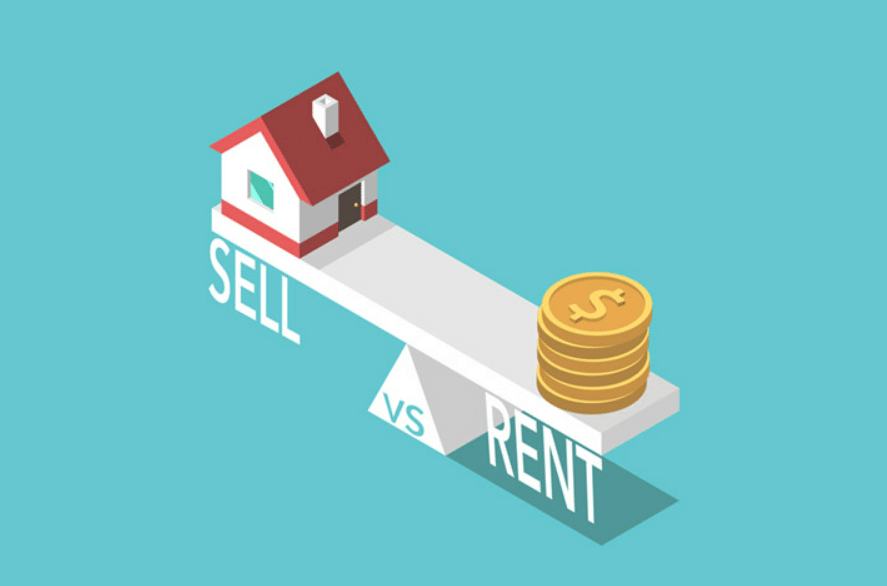
When a home is not selling as quickly as expected, “Maybe we should just rent it” can sound like an easy Plan B. Sometimes it is an excellent decision. Sometimes it turns a large amount of home equity into a rental producing very little usable cash flow. The right comparison is not simply sale price versus monthly rent. You need to understand what the property earns, what it consumes, how much equity remains tied up, what ownership will require, and what your future exit may look like.
Selling or Renting Your Home? How to Choose the Right Strategy for Your Property
Don't keep a property simply because you already own it. Decide whether you would choose to own it again today.
Prefer to watch instead?
Selling or Renting Your Home? How to Choose the Right Strategy
The Rebuy Test
Imagine you sell the property today.
After paying off the mortgage and the actual transaction expenses, suppose you would have:
$250,000 in available equity.
Now pretend you no longer own the home.
You simply have:
$250,000 in cash.
Would you choose to take that $250,000,
put it back into this exact property,
become the landlord,
accept the maintenance and vacancy risk,
and own this property as an investment?
If the answer is:
“Absolutely.”
Renting deserves serious consideration.
If the answer is:
“Probably not.”
then the strongest reason you may have for keeping it is simply:
you already own it.
The Question Is Not Only
“Can This House Rent?”
The Better Question Is
“Does This Property Deserve to Keep My Equity?”
1. First Calculate What Selling Actually Releases
Do not compare:
$600,000 sale price
with:
$3,500 monthly rent.
Those numbers measure completely different things.
Start with estimated sale proceeds.
Expected Sale Price
− Mortgage / Lien Payoffs
− Negotiated Brokerage Compensation
− Seller Credits
− Preparation / Repair Costs
− Other Transaction Expenses
=
Estimated Equity Released
That estimated equity becomes the capital you are choosing either to:
release,
or continue investing in the property.
2. Don't Compare Rent With the Mortgage Payment
Homeowner says:
“My mortgage is $2,400 and I can rent the house for $3,200, so I'll make $800 a month.”
Maybe.
But that is not yet a rental cash-flow calculation.
You may also have:
- Property taxes.
- Landlord insurance.
- HOA dues.
- Repairs.
- Routine maintenance.
- Property management.
- Vacancy.
- Leasing / turnover costs.
- Lawn or pest responsibilities.
- Capital reserves for major systems.
Rent
− Mortgage
Is Not
Rental Cash Flow.
3. Calculate True Rental Cash Flow
Collected Rent
− Debt Service
− Taxes
− Insurance
− HOA
− Property Management
− Vacancy Allowance
− Routine Maintenance
− Capital Reserve
− Other Owner-Paid Expenses
=
Estimated Pre-Tax Rental Cash Flow
Every property is different.
Some expenses may already be included inside an escrowed mortgage payment.
Some may be paid separately.
The point is:
count each expense once, but don't pretend expenses disappear because they are irregular.
4. A Rental Doesn't Produce 12 Perfect Months Every Year
A projection showing:
12 months × full market rent
may be useful as gross income.
But real ownership may also include:
- Vacancy between tenants.
- Tenant turnover.
- Cleaning.
- Minor repairs.
- Leasing expenses.
- Delayed rent.
- Unexpected property work.
That does not mean rental property is unattractive.
It means:
the investment should still make sense after normal friction is included.
A rental analysis built on perfect occupancy and zero surprises is not a conservative rental analysis.
5. Older Systems Matter Differently When You Become the Landlord
A homeowner may tolerate:
an older HVAC,
an older roof,
an aging water heater,
or older appliances.
As a landlord, when one of those items fails:
you are still the owner responsible for dealing with it.
Therefore the rental analysis should not ask only:
“Is it working today?”
Also ask:
“What major ownership expenses am I accepting during the period I plan to hold the property?”
6. The Most Overlooked Number: Return on the Equity You Are Keeping Trapped
Suppose the property would release:
$300,000 of equity
if sold.
After realistically budgeting all rental expenses, suppose projected pre-tax cash flow is:
$9,000 per year.
The simplified cash yield on that equity is:
$9,000
÷
$300,000
=
3% Annual Pre-Tax Cash Yield on Equity
That does not automatically mean:
“Sell it.”
The property may also have:
- Mortgage principal reduction.
- Strategic long-term value to the owner.
- A future use.
- Potential appreciation.
But appreciation should not be treated as guaranteed.
The important question is:
If I Have
$300,000 of Equity Working Here,
Am I Satisfied With
What That Capital Is Producing
for the Risk and Work Required?
7. Equity Has an Opportunity Cost
If selling releases substantial capital, that money could potentially be used for:
- A down payment on another property.
- Debt reduction.
- Business investment.
- Another rental with different economics.
- A diversified investment portfolio.
- Emergency or liquidity reserves.
This does not mean another investment will necessarily perform better.
It means:
keeping the house is itself a capital-allocation decision.
Doing nothing with the house is still doing something with the equity.
8. Verify Market Rent Before You Build the Rental Strategy
Do not base the entire decision on:
“My neighbor said I can rent it for $4,000.”
Look at relevant rental evidence.
Compare:
- Property type.
- Bedroom and bathroom count.
- Square footage.
- Condition.
- School assignment if independently relevant to the prospective tenant.
- Lot / parking.
- Lease terms.
- HOA restrictions.
- Current competing rentals.
- Recently leased comparable properties where available.
Then build:
a realistic rent range—not a best-case number.
9. Confirm That You Are Actually Allowed to Rent It
Before building a rental projection, verify whether:
- The HOA permits rentals.
- Rental caps apply.
- Waiting periods apply.
- Lease-term restrictions exist.
- Tenant-registration requirements exist.
- Short-term rentals are restricted.
A strong rental projection does not matter if the property's governing documents do not allow the strategy you intend to use.
10. Ask Whether You Actually Want the Job of Landlord
Rental income is not passive simply because rent arrives electronically.
Someone must handle:
- Marketing the rental.
- Applicant screening.
- Lease documentation.
- Move-in condition.
- Rent collection.
- Maintenance requests.
- Vendor coordination.
- Lease enforcement.
- Renewals.
- Move-out.
- Security-deposit administration.
Georgia rental ownership also comes with legal obligations that homeowners should understand before becoming landlords.
That does not mean you personally need to handle every operational task.
It means:
management has a real value and a real cost.
If the Rental Works
Only When
Your Own Time Is Valued at $0,
Recalculate the Rental.
11. Property Management Can Change the Decision—but It Does Not Fix Bad Economics
Professional property management may help with:
- Marketing.
- Tenant screening.
- Lease administration.
- Rent collection.
- Maintenance coordination.
- Tenant communication.
- Renewals and turnover.
For an owner who:
lives far away,
has a demanding schedule,
or simply does not want day-to-day landlord responsibilities,
management may make rental ownership much more practical.
But:
Property management can improve execution. It cannot turn a structurally weak rental into a strong investment simply by managing it better.
12. Converting a Primary Residence to a Rental Can Change the Tax Conversation
This part deserves professional tax advice before the decision is finalized.
Under current federal rules, the timing of a later sale can matter when a former primary residence becomes a rental.
The familiar home-sale exclusion rules generally look at whether the ownership and use requirements are met during the five-year period ending on the sale date.
Rental use can also create depreciation issues.
Depreciation allowed or allowable during rental ownership generally needs to be accounted for when the property is later sold and is not simply erased by the home-sale exclusion.
Therefore:
“We'll rent it now and sell it someday” is not tax-neutral planning.
Before Converting
a Primary Home
Into a Rental,
Understand
the Future Exit Tax Timeline.
13. “The House Isn't Selling” Is Not Automatically a Reason to Become a Landlord
This is an important distinction.
If the property has been sitting on the market,
first diagnose:
- Price positioning.
- Presentation.
- Condition.
- Marketing.
- Showing accessibility.
- Buyer feedback.
- Current competition.
A listing problem and an investment opportunity are:
two different questions.
Do not turn the house into a rental merely because:
Plan A was poorly executed.
A failed listing strategy does not automatically prove that rental ownership is the better strategy.
14. Before Switching to Rent, Compare the Cost of Correcting the Sale Strategy
Suppose a home is listed at:
$650,000
but market evidence now suggests stronger Buyer response around:
$625,000.
Owner says:
“I'm not dropping $25,000. I'll rent it instead.”
That may be rational.
But first calculate:
- What is the likely rental cash flow?
- How much equity remains tied up?
- What repairs may arise?
- How long must you hold?
- What tax / exit implications may develop?
- How much is avoiding the $25,000 adjustment actually costing elsewhere?
15. Don't Let the Original Purchase Price Control Today's Decision
Homeowner says:
“I paid $700,000. I refuse to sell for $650,000.”
That emotional reaction is understandable.
But today's choice is between:
the options available today.
The original purchase price may be relevant to taxes, basis, and the owner's financial outcome.
But it does not force the current rental economics to become attractive.
Yesterday's Purchase Price
Does Not Determine
Today's Best Capital Decision.
16. Don't Use Future Appreciation to Rescue Weak Current Numbers
A rental may have weak cash flow and still become a good long-term investment.
But be careful with this reasoning:
“It's okay that I lose money every month because Atlanta real estate always goes up.”
Future appreciation is uncertain.
A better analysis is:
Does the property work if appreciation is modest?
Does it work if prices are flat for several years?
Can I comfortably carry an unexpected repair?
Would I still want to own it?
Treat appreciation as possible upside—not as the number required to make weak operating economics look acceptable.
17. Negative Cash Flow Is Not Automatically Wrong—but It Needs a Reason
Some owners knowingly hold a property with slightly negative cash flow because:
- They expect to return to the property.
- The loan has unusually favorable terms.
- They have a specific long-term ownership strategy.
- They are comfortable subsidizing the property.
- The property serves another strategic purpose.
That can be reasonable.
But define the subsidy.
If rental ownership costs:
$500 per month out of pocket,
then the owner is investing:
$6,000 per year
of additional cash into the strategy.
The question becomes:
“What am I receiving in exchange for that annual contribution?”
18. Rental Equity Is Not Liquid
Home equity can be substantial.
But it is not the same as cash sitting in a bank account.
To access it later, the owner may need to:
- Sell the property.
- Refinance.
- Borrow against the property.
- Use another financing strategy.
Those options have:
cost,
qualification requirements,
market risk,
and timing considerations.
19. But Keeping the Property Can Create Valuable Optionality
The case for renting is not only current cash flow.
Keeping the property may provide:
- Future housing flexibility.
- Longer ownership horizon.
- Rental income.
- Mortgage principal reduction.
- An asset that may later be sold under different circumstances.
Those benefits can be meaningful.
The goal is not to force everything into one year's cash-on-cash return.
The goal is:
to understand exactly what you are being compensated for continuing to own.
20. Decide the Rental Exit Strategy Before You Become a Landlord
Do not stop at:
“We'll rent it for now.”
Ask:
- For how long?
- What would cause us to sell?
- Would we sell tenant-occupied or vacant?
- Will the property need renovation before resale?
- How does rental use affect our tax planning?
- What if rent growth is weaker than expected?
- What if a major system fails?
“Rent It for Now”
Is Not
an Exit Strategy.
Build Three Scenarios Before You Decide
Scenario | Calculate |
|---|---|
A. Sell Now | Realistic sale price, selling expenses, payoff, estimated equity released, timeline |
B. Rent — Normal Case | Market rent, normal vacancy, management, routine maintenance, capital reserve, debt service and expected annual cash flow |
C. Rent — Stress Case | Vacancy + one meaningful repair + slower rent growth + normal operating costs |
If renting looks attractive only in the perfect-case projection, you probably do not yet have a strong rental strategy.
Sell vs. Rent Decision Matrix
Factor | Sell | Rent |
|---|---|---|
Liquidity | Releases equity | Keeps equity invested in property |
Income | No future rent after sale | Potential recurring rental income |
Future Repairs | Transferred to Buyer after closing subject to contract | Owner continues carrying property risk |
Management | Ends after transaction | Ongoing landlord or management responsibility |
Market Exposure | Realizes today's market outcome | Owner remains exposed to future market movement |
Tax Complexity | Current sale tax rules apply | Rental income, depreciation and future-sale tax considerations become relevant |
Flexibility | Capital becomes available for another use | Property remains available as a long-term asset or possible future use |
The 100-Point Keep-as-Rental Test
Category | Score | Question |
|---|---|---|
True Cash Flow | ___ / 20 | After realistic expenses, does the rental produce meaningful cash flow? |
Equity Productivity | ___ / 20 | Is the return reasonable relative to the equity remaining invested? |
Capital-Expense Risk | ___ / 15 | Can I comfortably absorb roof, HVAC, appliances and other major costs? |
Management Fit | ___ / 10 | Do I have the time, interest or management system to own a rental? |
Rental Demand / Rent Support | ___ / 10 | Is the rent assumption supported by current evidence? |
HOA / Legal Feasibility | ___ / 10 | Can the intended rental strategy legally and contractually be used? |
Exit Flexibility | ___ / 10 | Do I understand when and how I would eventually sell? |
Personal Strategic Value | ___ / 5 | Does keeping this particular property serve a real future purpose? |
Total | ___ / 100 | This is a decision framework—not an investment-return guarantee. |
30 Questions Before You Turn Your Home Into a Rental
☐ 1. What could the property realistically sell for today?
☐ 2. What would my estimated net sale proceeds be?
☐ 3. How much equity would selling release?
☐ 4. What current rental comps support the projected rent?
☐ 5. What is a conservative rent assumption?
☐ 6. What is my true monthly debt service?
☐ 7. What are the property taxes?
☐ 8. What will landlord insurance cost?
☐ 9. What are the HOA dues?
☐ 10. Does the HOA allow my intended rental strategy?
☐ 11. What vacancy assumption am I using?
☐ 12. What maintenance allowance am I using?
☐ 13. What capital reserve am I using?
☐ 14. How old are the roof, HVAC and water heater?
☐ 15. What owner-paid utilities or services remain?
☐ 16. What will professional property management cost?
☐ 17. What turnover or leasing costs should I budget?
☐ 18. What is the estimated annual pre-tax cash flow?
☐ 19. What is the estimated cash yield on the equity I am keeping invested?
☐ 20. Am I comfortable if appreciation is minimal for several years?
☐ 21. What happens in a vacancy + repair stress scenario?
☐ 22. Do I want to be a landlord?
☐ 23. If not, do the numbers still work after professional management?
☐ 24. Have I discussed the tax implications with a qualified tax professional?
☐ 25. Could rental conversion affect my future home-sale tax strategy?
☐ 26. What is my intended holding period?
☐ 27. What event would cause me to sell?
☐ 28. What else could I do with the equity if I sold?
☐ 29. Am I keeping the property because the numbers are good—or because I dislike the current sale price?
☐ 30. If I had the equity in cash today, would I use it to buy this exact property as a rental?
If You Ask Only One Question:
“If I Had the Equity in Cash Today, Would I Use It to Buy This Exact Property as a Rental?”
Watch: Selling or Renting Your Home?
Want the shorter video version of this decision? Watch the full breakdown on YouTube.
Frequently Asked Questions
Should I rent my house if it is not selling?
Maybe, but first determine why the home is not selling. If the issue is pricing, presentation, marketing or another correctable listing problem, converting the property to a rental does not automatically create a better financial outcome. Evaluate the rental as a separate investment decision.
How do I know whether my house is a good rental?
Estimate realistic market rent and subtract debt service, taxes, landlord insurance, HOA, vacancy, maintenance, capital reserves, property management and other owner expenses. Then compare the resulting cash flow with the amount of equity remaining invested in the property.
Is positive monthly cash flow enough to justify keeping the house?
Not necessarily. A property might produce positive cash flow while using a very large amount of equity. Compare the income with the capital tied up, the risks you are accepting, and the other uses available for that capital.
Should I assume the property will appreciate?
No. Appreciation may occur, but it is uncertain. It can be included as an upside scenario rather than treated as a guaranteed return required to make the rental numbers work.
Do I need a property manager?
Not necessarily. Some owners self-manage successfully. Others prefer professional management because of distance, time constraints or the complexity of tenant and maintenance responsibilities. Include the realistic cost of management when deciding whether the property's economics work for you.
Does renting my former primary residence affect taxes?
It can. Federal tax rules regarding the sale of a principal residence, rental depreciation and later disposition can interact in important ways. Timing matters, and depreciation allowed or allowable during rental use can affect the tax result when the property is later sold. Consult a qualified tax professional for your specific situation.
Can I still sell the property later?
Yes, but the future sale strategy may differ depending on whether the property is vacant, tenant-occupied, the lease term, property condition and tax situation at that time. Build the exit plan before converting the home to a rental.
Should I rent because I don't like today's sale price?
Not by itself. Today's price may be disappointing, but keeping the property should still make sense as an investment. Compare the realistic rental return, ownership risk and equity opportunity cost with the sale alternative.
What is the most important sell-vs.-rent question?
Ask: “If I sold the home today and had the equity in cash, would I voluntarily use that money to buy this exact property today as a rental?”
Don't Keep
a Property
Because You Already Own It.
Keep It
Because the Numbers and Strategy
Still Justify Owning It.
Final Thoughts: Sell vs. Rent Is Really a Capital Decision
Selling gives up future ownership.
But it releases capital and removes future landlord risk.
Renting preserves ownership.
But it keeps your equity invested and leaves you responsible for the asset.
Before choosing, calculate:
Estimated sale proceeds.
Equity released.
Realistic market rent.
Vacancy.
Maintenance.
Capital reserves.
Taxes and insurance.
HOA.
Property management.
Annual cash flow.
Return on equity.
Tax considerations.
And your eventual exit strategy.
Then perform the Rebuy Test:
“If the equity were sitting in my bank account today, would I voluntarily put it back into this house?”
If the answer is yes, you may have a rental worth keeping.
If the answer is no, selling may be more rational than allowing familiarity, sunk cost, or disappointment with today's sale price to make the decision for you.
Not Sure Whether to Sell or Rent Your Metro Atlanta Property?
We can help you compare both paths using the actual property. That can include current resale comps, estimated Seller proceeds, rental comps, projected rental income, property condition, major-system reserves, HOA restrictions, current market competition and professional property-management considerations. Tax-specific decisions should be reviewed with your qualified tax professional. The goal is to make a deliberate ownership decision—not simply choose whichever option feels easier today.
Tina Jingru Sui | TJS Team
Call or Text: (404) 375-2120
Email: [email protected]
Visit TinaSui.com
About Tina Jingru Sui
Tina Jingru Sui is the founder and leader of the TJS Team, serving home sellers, buyers, investors, new-construction buyers and relocation clients throughout Metro Atlanta. Her real estate work also includes helping property owners evaluate rental strategy and professional property-management options.
Tina and her team serve Atlanta, Johns Creek, Alpharetta, Suwanee, Duluth, Buford, Dacula, Sandy Springs, Roswell, Marietta, Smyrna, Peachtree Corners and surrounding Metro Atlanta communities.
Tax & Landlord Resources
For federal tax rules involving the sale of a principal residence, later rental use and depreciation, homeowners can review current IRS Publication 523 and related IRS guidance and should consult a qualified tax professional regarding their specific facts. For Georgia residential landlord-tenant responsibilities, the Georgia Department of Community Affairs hosts the Georgia Landlord-Tenant Handbook. Laws, tax rules, HOA restrictions and property-specific facts can change and should be verified before implementing a rental strategy.
Keller Williams Realty Atlanta Partners · (404) 375-2120
This article is provided for general real estate education and information only and does not constitute legal, financial, tax, accounting, investment, property-management, insurance, lending, appraisal or other professional advice. The Rebuy Test, Keep-as-Rental Test, Sell vs. Rent Decision Matrix, cash-flow formulas, equity-yield examples, scenarios, scorecards and related frameworks are educational tools only and do not establish that a homeowner should sell or rent a particular property or guarantee any rental income, cash flow, occupancy, appreciation, investment return, resale value or tax result. Market rent should be supported by current property-specific rental evidence and is not guaranteed. Vacancy, maintenance, repair, turnover, management, insurance, HOA, tax and capital-expense assumptions vary materially by property and ownership situation. System age does not by itself establish defect, immediate replacement requirement or remaining useful life. Future appreciation is uncertain and should not be treated as guaranteed. Principal reduction depends on the actual loan structure and payment history. Equity estimates depend on current property value, mortgage and lien payoffs, negotiated brokerage compensation, Seller concessions, preparation expenses, transaction expenses and other property-specific amounts. Rental restrictions, caps, lease-term requirements and other use limitations should be verified through current HOA, condominium, zoning and other applicable documents. Georgia landlord-tenant law imposes rights and responsibilities on landlords and tenants; property owners should review current law, lease requirements and the Georgia Landlord-Tenant Handbook and obtain qualified legal advice when necessary. Converting a principal residence to rental use can affect federal and state tax treatment. Current federal rules include ownership-and-use requirements applicable to the principal-residence gain exclusion, and rental use can create depreciation deductions and later depreciation-related tax consequences; individual circumstances vary materially. Homeowners should consult a CPA or other qualified tax adviser before relying on any tax strategy. Real estate and property-management professionals can assist with market analysis, resale strategy, rental comparisons, property preparation, tenant-placement and management considerations within the scope of their roles but do not replace attorneys, CPAs, financial advisers, appraisers, lenders, insurance professionals or other qualified specialists. Equal Housing Opportunity. Tina Jingru Sui, GA License #392936, REALTOR®, affiliated with Keller Williams Realty Atlanta Partners.