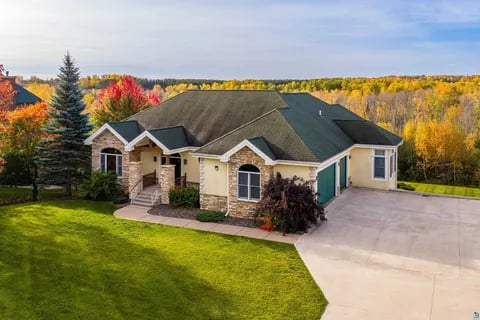
If your home has been on the market without receiving an offer, spending more money is not automatically the answer. You may need better presentation. You may need to address a property problem. You may be better off selling as-is. Or the real problem may have nothing to do with the physical condition of the home at all.
Should You Stage, Renovate, or Sell As-Is? Choosing the Right Plan for an Unsold Home
Before investing another dollar into a home that has not sold, identify what Buyers are actually rejecting.
Watch: What Should You Do When Your Home Isn't Selling?
Prefer to watch on YouTube? Watch the video here.
Before Choosing a Solution, Diagnose Why the Home Hasn't Sold
A Seller may assume:
“The house needs to look better.”
But that may not be the actual problem.
An unsold home can struggle because of:
- Price positioning.
- Weak online presentation.
- Limited showing activity.
- Poor showing experience.
- Visible deferred maintenance.
- Property-condition concerns.
- Competition from stronger listings.
- Permanent location or lot objections.
- A marketing strategy that is not reaching the right Buyers.
Before staging or renovating, ask:
“What Problem Am I Actually Trying to Solve?”
1. Stage the Home When the Problem Is Presentation
Home staging can help Buyers understand a home's space and imagine how they might use it.
Staging may make sense when the home is fundamentally in good condition but:
- Feels crowded.
- Has too much furniture.
- Feels dark.
- Has awkward room arrangements.
- Looks overly personalized.
- Appears smaller in photos than it really is.
- Has empty rooms Buyers struggle to understand.
Staging does not always require renting an entire house of furniture.
A lower-cost preparation plan may include:
- Removing unnecessary furniture.
- Decluttering counters and shelves.
- Reducing personal items.
- Improving lighting.
- Opening curtains and blinds.
- Deep cleaning.
- Rearranging furniture to improve traffic flow.
- Improving the entrance and curb appeal.
Staging is most useful when Buyers are having difficulty seeing the home's value—not when the underlying value proposition is wrong.
What Staging Cannot Fix
Staging cannot permanently solve:
- An unsupported asking price.
- A major roof problem.
- A failing HVAC system.
- Serious water intrusion.
- A difficult lot.
- Road noise.
- A major floor-plan disadvantage.
Beautiful furniture cannot make every Buyer objection disappear.
2. Repair or Renovate When the Problem Is Cost or Confidence
Sometimes Buyers are not rejecting the way a property looks.
They are reacting to:
what they think they will need to spend after closing.
Examples might include:
- Damaged flooring.
- Active plumbing problems.
- Rotten exterior wood.
- Broken fixtures.
- Obvious drywall or paint damage.
- Deferred exterior maintenance.
- Other visible problems affecting Buyer confidence.
These items may create two separate problems.
First:
Buyer estimates the repair cost.
Second:
Buyer wonders what else has not been maintained.
A $500 Visible Problem
Can Sometimes Create
More Than
$500 of Buyer Uncertainty.
Don't Renovate Just Because the Home Hasn't Sold
Before starting a major renovation, calculate:
Cost + Time + Carrying Cost + Execution Risk.
Suppose a Seller considers a $30,000 renovation.
Also consider:
- How long the work will take.
- Whether the property must come off market.
- Additional mortgage payments.
- Taxes.
- Insurance.
- Utilities.
- HOA dues.
- Potential contractor overruns.
Then ask:
“Does this project solve a Buyer problem large enough to justify the money, time, and delay?”
3. Be Careful Not to Over-Renovate
One of the easiest Seller mistakes is turning:
“We need to improve marketability”
into:
“Let's remodel everything.”
A Seller may replace:
cabinets,
countertops,
flooring,
fixtures,
appliances,
and bathrooms,
then discover Buyers still object to:
the road,
lot,
layout,
or price.
Renovation Spending
≠
Dollar-for-Dollar Market Value.
Use a Four-Bucket Improvement Test
Category | Seller Question |
|---|---|
Must Address | Is this creating a material Buyer concern or preventing normal marketability? |
High-Impact Cosmetic | Can a modest investment meaningfully improve presentation? |
Low-Return Upgrade | Am I spending heavily on something Buyers may not pay me back for? |
Leave for Buyer | Would different Buyers prefer to make this choice themselves? |
4. Sell As-Is When the Discount Is More Efficient Than the Work
Selling as-is can be a rational strategy when:
- The property requires substantial work.
- Seller does not want to manage contractors.
- Seller has limited cash available for preparation.
- The timeline matters more than maximizing presentation.
- Renovation would create substantial delay.
- Buyer demand exists for the property in its current condition.
But “as-is” should not automatically mean:
“Investor only.”
Some owner-occupant Buyers may also purchase homes in current condition when:
- The price reflects the work.
- The financing works.
- The location or property features are compelling.
- The Buyer is willing to complete improvements after closing.
As-is is a condition and negotiation strategy. It does not automatically determine who the Buyer will be or eliminate every inspection, Due Diligence, disclosure, or contractual issue.
5. Sometimes the Home Does Not Need Work—the Price Does
This is the uncomfortable possibility Sellers should consider before spending more money.
Suppose Buyers repeatedly say:
“Beautiful home. We just prefer the other options at this price.”
That is not necessarily a staging problem.
It may not be a renovation problem.
It may be:
a value-positioning problem.
If your home has already been:
cleaned,
professionally photographed,
reasonably prepared,
and actively shown,
but qualified Buyers repeatedly choose competing listings,
then adding another $20,000 of upgrades may not be the highest-return answer.
Do Not Spend
$20,000
Trying to Solve
a Pricing Problem.
6. Use Buyer Behavior to Decide Which Strategy to Change
Instead of guessing, look at where Buyers are leaving the listing process.
What Is Happening? | What It May Suggest | Possible Response |
|---|---|---|
Very Few Showings | Price, search positioning, online presentation, access or competition | Review price + marketing before renovating |
Clicks but Few Showing Requests | Online value proposition may be weak | Review photos, presentation, copy and price |
Many Showings, Same Appearance Objection | Presentation problem may be real | Stage or make targeted cosmetic improvements |
Many Showings, Repeated Repair Concern | Condition confidence is reducing Buyer interest | Evaluate repair vs. price adjustment vs. as-is strategy |
Buyers Like It but Choose Competitors | Relative value may be weak | Compare price and competition before spending on renovations |
Permanent Location Objection | Problem may not be fixable | Price for the objection rather than over-improve the interior |
7. Compare the Cost of Each Strategy
Before deciding, create three scenarios.
Strategy | Upfront Cost | Time Cost | Main Question |
|---|---|---|---|
Stage / Re-present | Usually lower | Usually shorter | Is presentation the actual obstacle? |
Repair / Renovate | Potentially substantial | Can be significant | Will this materially improve Buyer willingness to pay? |
Sell As-Is / Reprice | Lower preparation expense | May allow faster repositioning | Is the discount more efficient than completing the work? |
8. Include the Cost of Waiting
A renovation that costs $20,000 may actually cost more economically if it also creates:
- Two additional mortgage payments.
- Property taxes.
- Insurance.
- HOA dues.
- Utilities.
- Maintenance.
- Contractor delays.
The comparison should therefore be:
Improvement Cost
+
Holding Cost During the Project
+
Execution Risk
vs.
Expected Improvement in Seller Outcome
9. Compare As-Is Net With Post-Improvement Net
For an as-is strategy:
Expected Sale Price As-Is − Applicable Selling Costs − Other Seller Expenses = Estimated As-Is Net
For an improvement strategy:
Expected Post-Improvement Sale Price − Improvement Cost − Holding Cost − Applicable Selling Costs − Other Seller Expenses = Estimated Post-Improvement Net
These are estimates—not guarantees.
But putting both strategies into numbers can prevent emotional over-spending.
10. If You Make Changes, Create a Real Relaunch
If the home has already been exposed to the market, simply changing:
two photos,
one paint color,
or a small price amount
may not meaningfully change Buyer behavior.
A stronger reset might include:
- New preparation.
- Updated photography.
- Revised photo sequence.
- New video.
- Improved listing copy.
- Corrected property information.
- A meaningful price-position change when supported.
- New open-house or Buyer-outreach strategy.
If You Change the Strategy,
Give Buyers
Something Meaningfully Different to Reconsider.
11. A Second Opinion Can Be Valuable Before a Major Renovation
If the proposed solution involves:
$20,000, $30,000, or $50,000 of Seller spending,
getting a second professional real estate opinion may be reasonable.
Ask another agent to review:
- Price history.
- Listing photos.
- Showing activity.
- Buyer feedback.
- Relevant sold comps.
- Current competition.
- Pending competition.
- Property condition.
Ask them:
“If this were your listing today, what problem would you solve first?”
12. Renting Is a Different Financial Strategy—not Just a Backup Plan
If selling no longer makes sense, renting may be worth analyzing.
But do not compare:
monthly rent vs. monthly mortgage only.
Also consider:
- Vacancy.
- Repairs.
- Maintenance.
- Property management.
- Insurance differences.
- HOA rental restrictions.
- Leasing expenses.
- Future capital expenditures.
- Tax implications.
Renting can be a strong option for some owners.
It can also delay a decision while creating a completely new set of obligations.
The Unsold-Home Strategy Decision Tree
Market Signal | First Strategy to Investigate |
|---|---|
Good Home, Weak Presentation | Staging / photography / showing experience |
Repeated Small Cosmetic Objections | Targeted high-impact cosmetic work |
Repeated Material Condition Concerns | Repair vs. credit vs. as-is pricing analysis |
Buyers Like Home but Choose Competitors | Price / value-position review |
Major Permanent Objection | Price for the objection rather than over-renovate |
Major Repairs + Limited Seller Budget | As-is / price / direct-offer comparison |
Seller No Longer Needs Immediate Sale | Sell vs. hold / rent analysis |
The 100-Point Unsold Home Strategy Scorecard
Category | Score | Question |
|---|---|---|
Diagnosis Quality | ___ / 20 | Do we know why qualified Buyers are not converting? |
Market Position | ___ / 15 | How does the home compare with current alternatives? |
Presentation Opportunity | ___ / 10 | Would staging meaningfully change Buyer perception? |
Repair Opportunity | ___ / 15 | Would targeted repairs eliminate meaningful Buyer objections? |
Improvement Economics | ___ / 15 | Does expected benefit justify cost + time + carrying expense? |
As-Is Viability | ___ / 10 | Would an adjusted price produce a stronger result than doing the work? |
Seller Timeline | ___ / 10 | How much time can Seller realistically invest in a reset? |
Alternative Strategy | ___ / 5 | Have we compared sell, hold, rent or other reasonable options? |
Total | ___ / 100 | This supports strategy comparison; it does not guarantee a sale or return on improvements. |
25 Questions Before You Spend More Money on an Unsold Home
☐ 1. How many relevant Buyers have actually seen the home?
☐ 2. What objections are repeating?
☐ 3. Where are Buyers dropping out of the listing funnel?
☐ 4. Are competing homes going pending?
☐ 5. Why are Buyers choosing them instead?
☐ 6. Is our pricing supported by current market evidence?
☐ 7. Is presentation actually the problem?
☐ 8. Would staging materially improve room function or perception?
☐ 9. Which visible issues are hurting Buyer confidence?
☐ 10. Which repairs are truly material?
☐ 11. Which upgrades are purely cosmetic?
☐ 12. Which projects would Buyers probably prefer to choose themselves?
☐ 13. What would each proposed improvement cost?
☐ 14. How long would the project take?
☐ 15. What would carrying the home during that period cost?
☐ 16. Is there contractor or permit uncertainty?
☐ 17. What realistic market problem will the project solve?
☐ 18. What is the estimated as-is sale scenario?
☐ 19. What is the estimated post-improvement sale scenario?
☐ 20. How different are the estimated net proceeds?
☐ 21. Is the real problem something renovations cannot change?
☐ 22. Would a price reposition solve the problem more efficiently?
☐ 23. If we make changes, do we have a real relaunch plan?
☐ 24. Should we get a second opinion before making a major investment?
☐ 25. What problem am I actually spending this money to solve?
Before Spending Another Dollar:
“What Problem Am I Actually Spending This Money to Solve?”
Frequently Asked Questions
Should I stage my home if it isn't selling?
Possibly. Staging may help if Buyers are having difficulty understanding room function, the home feels cluttered or empty, or presentation is weaker than competing listings. If Buyers already understand the property but reject the price or a permanent location issue, staging may not solve the core problem.
Should I renovate before relisting?
Only after identifying the market problem the renovation is intended to solve. Compare the improvement cost, project time, carrying expenses, likely Buyer response, and realistic post-improvement value before starting major work.
Does renovation spending increase the sale price dollar for dollar?
No. Buyers and appraisers may value improvements differently, and renovation cost does not automatically equal additional market value.
Can I sell my home as-is?
Potentially. Selling as-is generally means marketing the property in its current condition, subject to the actual contract, applicable disclosures, Due Diligence rights, financing requirements, and other legal obligations.
Does selling as-is mean only investors will buy the property?
No. Investors may be interested, but some owner-occupant Buyers may also consider properties needing work if the price, location, financing, property features, and renovation requirements fit their goals.
Should I lower the price instead of renovating?
Sometimes. If the home's presentation and condition are already competitive but Buyers consistently choose alternatives at the current price, a price reposition may be more efficient than investing in improvements that do not address the core objection.
How do I know why my home hasn't sold?
Review relevant showing activity, online engagement where available, repeated Buyer feedback, recent comparable sales, current competition, newly pending listings, property condition, showing experience, and price positioning together.
Should I get a second opinion from another agent?
It may be worthwhile before committing substantial money to renovations or another major strategy change. A second market analysis may identify whether the primary issue is condition, price, marketing, competition, or another property-specific factor.
Should I rent the home instead?
Possibly, but rental income should be compared with vacancy, repairs, management, insurance, HOA restrictions, leasing costs, capital expenses, tax considerations, and your longer-term goals. Renting creates a different investment decision rather than simply postponing the sale.
What is the most important question before improving an unsold home?
Ask: “What specific Buyer problem am I trying to solve, and is this the most cost-effective way to solve it?”
Don't Spend More
Just Because
the Home Hasn't Sold.
Spend Only When
You Understand
What Buyer Problem the Money Is Solving.
Final Thoughts: Diagnose First, Spend Second
If your home is not selling, you have several possible paths:
stage it,
repair it,
renovate it,
sell it as-is,
change the price,
relaunch it,
or reconsider whether selling right now is still the best plan.
The mistake is choosing one before understanding:
what Buyers are actually rejecting.
what competing homes are offering.
which objections can be fixed.
which objections are permanent.
what each solution costs.
how long it will take.
and how much carrying the property during that time will cost.
Then choose the smallest effective intervention.
If staging solves the problem:
stage.
If a targeted repair solves it:
repair.
If the work is economically inefficient:
consider pricing and selling as-is.
The best strategy is not the one that makes the home perfect.
It is the one that removes enough Buyer resistance to improve the Seller's outcome without spending more money, time, or risk than the improvement is worth.
Watch the Video
For more on deciding whether to stage, renovate, or change your selling strategy, watch the full video.
Is Your Metro Atlanta Home Still Not Selling?
Before you spend more money on staging or renovations, we can review the listing from the Buyer's perspective. That includes current comparable sales, active and pending competition, pricing history, showing activity, Buyer feedback, property condition, online presentation, permanent property objections, and the estimated economics of repairing, relaunching, repricing, or selling as-is. The goal is to identify the problem first—then choose the strategy that makes the most financial sense.
Tina Jingru Sui | TJS Team
Call or Text: (404) 375-2120
Email: [email protected]
Visit TinaSui.com
About Tina Jingru Sui
Tina Jingru Sui is the founder and leader of the TJS Team, serving home sellers, buyers, investors, new-construction buyers, and relocation clients throughout Metro Atlanta.
Tina and her team serve Atlanta, Johns Creek, Alpharetta, Suwanee, Duluth, Buford, Dacula, Sandy Springs, Roswell, Marietta, Smyrna, Peachtree Corners, and surrounding Metro Atlanta communities.
Keller Williams Realty Atlanta Partners · (404) 375-2120
This article is provided for general real estate education and information only and does not constitute legal, financial, tax, appraisal, inspection, engineering, construction, investment, brokerage-contract interpretation, property-management, insurance, or other professional advice. Staging, repairs, renovations, pricing changes, relaunch strategies, as-is sales, direct-sale options, and rental alternatives can produce different results depending on the property, market, Seller goals, contract, financing, and transaction. No improvement is guaranteed to increase sale price, shorten days on market, generate an offer, or produce a positive return on investment. Renovation cost does not equal market value. Estimates of future sale price, Seller net, repair costs, carrying costs, rental income, or market response are not guarantees. Property-system age alone does not establish a defect or required replacement. Selling a property as-is does not automatically eliminate disclosure requirements, Buyer Due Diligence, inspection rights, financing conditions, appraisal issues, or other contractual obligations. Applicable duties and rights depend on the actual agreement and law. Buyer feedback should be evaluated as one source of information and should be compared with actual market behavior, showing activity, comparable sales, active competition, and pending listings. A Comparative Market Analysis is not an appraisal. Rental analysis should include vacancy, repairs, management, insurance, HOA restrictions, leasing expenses, capital expenditures, and applicable tax considerations. Real estate professionals can assist with pricing, market analysis, listing strategy, property preparation, offer analysis, negotiation, and transaction coordination but do not replace attorneys, CPAs, appraisers, inspectors, engineers, contractors, insurance professionals, lenders, or other qualified specialists. Equal Housing Opportunity. Tina Jingru Sui, GA License #392936, REALTOR®, affiliated with Keller Williams Realty Atlanta Partners.