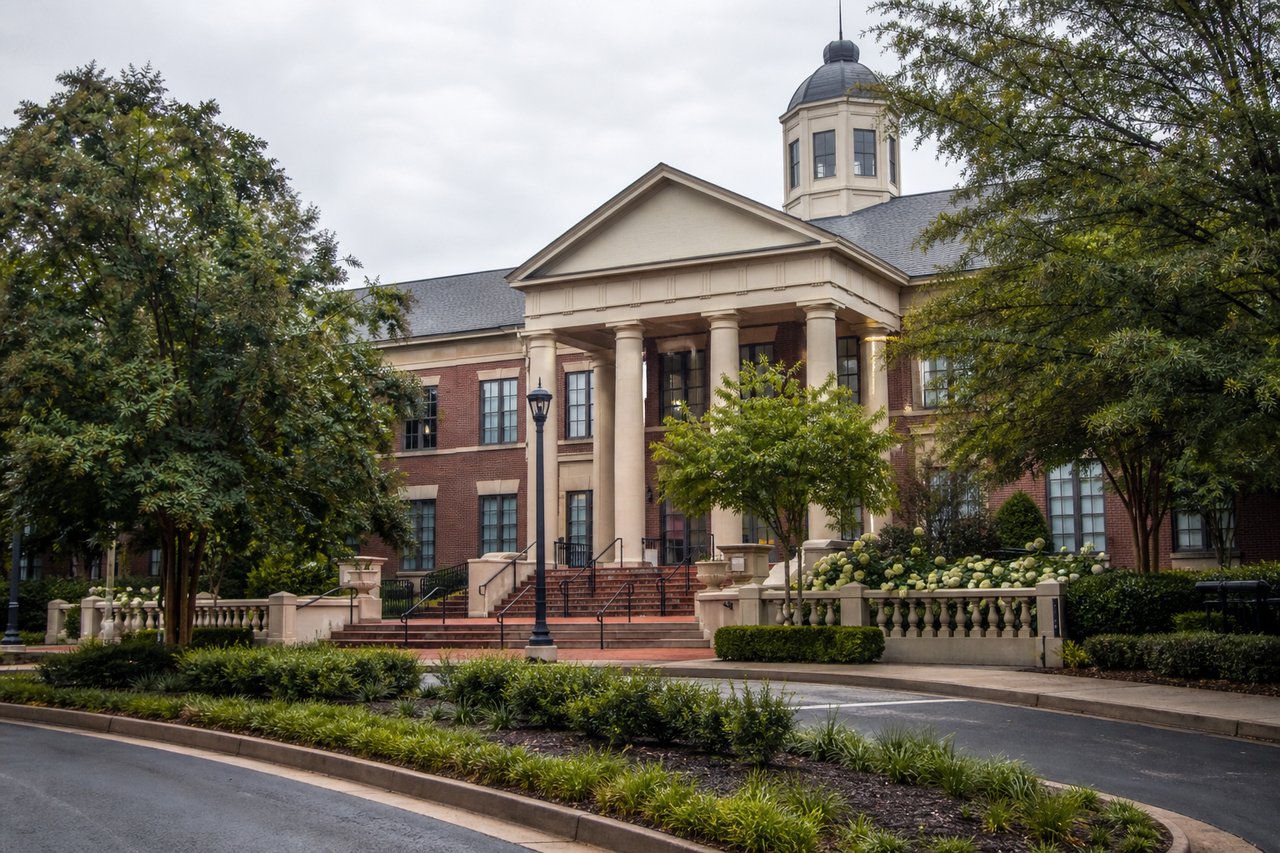
Suwanee Town Center has changed substantially from the single central park many Metro Atlanta Buyers remember. Today, downtown Suwanee combines the original Town Center Park, a large mixed-use district, Town Center on Main, DeLay Nature Park, restaurants, shops, public art, events, trails and newer additions such as Suwanee Circle. For Buyers, however, the important question is not simply whether Town Center is attractive. It is whether a particular home gives you enough practical access to these amenities to justify whatever price difference comes with the location.
Suwanee Town Center Growth in 2026: What It Really Means for Homebuyers
Being “near Town Center” can mean very different things. Measure the lifestyle you actually receive—not just the city name on the listing.
Proximity
Has Value
Only When It
Changes How You Actually Live.
First: Understand What “Suwanee Town Center” Actually Includes
Several different places are often grouped together casually under the phrase:
“Suwanee Town Center.”
But they are not the same thing.
Place | What It Actually Is | Buyer Relevance |
|---|---|---|
Town Center District | The broader public-private mixed-use downtown district containing parks, businesses, offices and residences | Walkable restaurants, retail, public space and housing |
Town Center Park | The original approximately 10-acre civic park at Buford Highway and Lawrenceville-Suwanee Road | Events, open lawn, amphitheater, fountain, public art and Greenway connection |
Town Center on Main | An approximately 13-acre City urban park opened as part of the newer downtown park expansion | Large lawn, reflection pond, waterfall, volleyball, public art and elevated pedestrian bridge |
DeLay Nature Park | Wooded nature area along Brushy Creek adjacent to Town Center on Main | Nature trails and Brushy Creek Greenway access |
Suwanee Circle | Food-truck destination that debuted at Town Center on Main in spring 2026 | Casual food, outdoor seating and periodic entertainment |
Town Center on Main is a public park—not the private residential-and-retail project itself. The broader Town Center district is the mixed-use environment.
1. The Original Town Center Was Already a Mixed-Use Experiment
Suwanee did not simply build a park and then allow commercial development to appear around it.
The broader Town Center was intentionally developed as a public-private mixed-use district.
According to the City, the district today encompasses more than 63 acres and includes:
- More than 100,000 square feet of retail space.
- Approximately 87,000 square feet of office space.
- Townhomes and condominiums.
- Single-family homes.
- Town Center Park.
- Suwanee City Hall.
That combination matters because:
walkability requires destinations—not just sidewalks.
A Walkable Address
Needs More Than
a Walking Trail.
It Needs
Places Worth Walking To.
2. The 2024 Expansion Changed the Geography of Downtown
The opening of Town Center on Main and DeLay Nature Park in 2024 was significant because the project did more than add another lawn.
It expanded the downtown public-space network toward Main Street and Old Town.
Major features include:
- A large urban lawn.
- Reflection pond and waterfall.
- Volleyball courts.
- Reading Grotto near the library.
- Greater Good Veterans Memorial.
- Nature trails.
- The Brushy Creek Greenway.
- A roughly 1,200-foot pedestrian bridge spanning the park.
The City describes the project as strengthening the connection between:
Town Center, Main Street and Suwanee's historic Old Town.
3. In 2026, the Project Received Statewide Recognition
In January 2026, Suwanee received a Visionary City Award from the Georgia Municipal Association in collaboration with Georgia Trend for Town Center on Main.
The recognition focused on:
- Long-term planning.
- Public-private collaboration.
- Pedestrian connectivity.
- New public green space.
- Connecting the Town Center area more effectively with historic downtown.
This is useful context for Buyers because it helps explain:
the City's development strategy.
It does not prove that every nearby house will appreciate faster.
Planning recognition is evidence of a public-space strategy. It is not a guarantee of future home value.
4. Suwanee Circle Added Another Everyday-Use Layer in 2026
A notable 2026 addition is:
Suwanee Circle.
The food-truck park debuted at Town Center on Main in spring 2026.
The concept includes:
- Rotating food trucks.
- Outdoor seating.
- An outdoor bar.
- TVs.
- A small performance stage.
- Occasional live acoustic music.
From a homebuyer perspective, this matters for a simple reason:
an amenity becomes more valuable when it can be used casually, not only during major festivals.
Festival Destination
Creates
Occasional Utility.
Coffee, Dinner, Trails and Casual Recreation
Create
Repeat Utility.
5. Another Cultural Addition Is Being Planned at 431 Main Street
In 2026, the City solicited design-build proposals for a future Suwanee Arts Center immediately adjacent to Town Center on Main and DeLay Nature Park.
The published project scope included:
- Renovation of an existing 1940s-era house.
- A Creative Arts, Media & Gathering Hub.
- A new pottery building.
- Outdoor gathering space.
- Pedestrian connections.
- Landscaping and related site improvements.
Because this was a 2026 procurement project rather than a completed amenity at the time of the public solicitation:
Buyers should treat it as planned development—not as an existing finished feature.
When future development influences your purchase decision, separate “open today” from “planned, proposed or under development.”
Now Use the Town Center Amenity Utility Radius Test
The key real-estate question is not:
“Is Town Center nice?”
Clearly, it offers a substantial amenity package.
The homebuyer question is:
“How much of that amenity package does this exact address really give me?”
Town Center Utility
=
Useful Amenity Access
×
Frequency of Use
×
Ease of Access
×
Property Fit
−
Access Friction
−
Price Premium
−
Event / Traffic Trade-Offs
6. “Near Town Center” Is Too Vague
A listing may advertise:
“Minutes from Suwanee Town Center.”
But “minutes” can mean:
a five-minute walk,
a 10-minute bike ride,
a short drive,
or a drive that becomes meaningfully longer during traffic or major events.
For each property, test:
- Walking route.
- Bike route.
- Driving route.
- Crossings.
- Parking.
- Whether the route actually feels practical for you.
Distance
Does Not Equal
Access.
7. Think in Utility Rings, Not Just Miles
Utility Ring | Potential Experience | Buyer Question |
|---|---|---|
Walkable / Bikeable Ring | Town Center can become part of routine life without requiring a car | Would I actually walk or bike this route? |
Quick-Drive Ring | Amenities remain convenient but typically require a vehicle | How often would I realistically make this trip? |
City-Name Ring | Town Center is available but not necessarily part of everyday life | Am I paying for a reputation more than actual access? |
8. Amenity Value Depends on How Often You Will Use It
Suppose two Buyers look at exactly the same home near Town Center.
Buyer A expects to:
- Walk to restaurants twice a week.
- Use the parks frequently.
- Attend community events.
- Walk or bike recreationally.
- Use the library and nearby gathering spaces.
Buyer B:
- Rarely attends events.
- Prefers driving elsewhere for restaurants.
- Does not regularly use parks or trails.
- Spends most free time in another part of Metro Atlanta.
The same Town Center proximity has:
different utility to those two Buyers.
An amenity you use three times a week can justify a different personal premium from an amenity you visit three times a year.
9. Don't Assume There Is One Fixed “Town Center Premium”
Buyers sometimes ask:
“How much more is a house worth because it is near Town Center?”
There is no universal dollar adjustment.
The value difference can depend on:
- Actual walking access.
- Neighborhood and subdivision.
- Property type.
- Home condition.
- Lot.
- Road position.
- HOA.
- School assignment if relevant to the Buyer's criteria.
- Current competing inventory.
- Recent comparable sales.
A townhouse directly integrated with the downtown environment may capture Town Center proximity very differently from a detached home several miles away that simply carries a Suwanee mailing address.
Town Center Proximity
Can Affect
Buyer Preference.
It Does Not Create
One Automatic Dollar Premium.
10. Use Comparable Sales to Test Whether the Market Is Paying for Proximity
If you want to understand whether a specific property carries a Town Center premium:
do not start with a citywide median.
Compare:
- Similar home type.
- Similar age.
- Similar condition.
- Similar size.
- Similar lot characteristics.
- Similar school assignment where relevant.
- Different degree of Town Center access.
Then ask:
“Does the market evidence actually show Buyers paying more for the location advantage?”
One sale is not enough to establish a universal premium.
Look for patterns.
11. Convenience Can Come With Trade-Offs
Being closer to a busy community hub can also mean:
- More event traffic at certain times.
- More pedestrian activity.
- More nearby commercial activity.
- Different parking patterns.
- Greater density.
- Less separation from public activity in certain locations.
One Buyer may view that as:
energy and convenience.
Another may prefer:
more separation from activity.
Neither is universally correct.
Walkability is a feature only if you personally value what comes with walkability—including greater proximity to activity.
12. Walk the Route Before Paying for the Walkability
Do not rely on:
“0.8 miles from Town Center.”
Walk it.
Check:
- Sidewalk continuity.
- Major road crossings.
- Pedestrian tunnels or bridges.
- Grade and elevation.
- Trail connections.
- Whether you would use the route in normal weather.
A technically short distance can still create:
high access friction.
13. Town Center Is Only One Part of Your Daily-Life Geography
A home can be very close to Town Center and still be poorly positioned for:
- Your workplace.
- Healthcare.
- Your preferred grocery store.
- Recurring activities.
- Relatives.
- Other parts of Metro Atlanta you visit frequently.
So do not optimize one amenity at the expense of your entire weekly routine.
A Great Saturday Location
Can Still Be
a Bad Monday-to-Friday Location.
14. More Development Does Not Automatically Mean More Home Value
The City continues to plan for a connected, evolving downtown.
That can create:
- More destinations.
- Better pedestrian connections.
- Additional cultural amenities.
- New business activity.
But future development can also create:
- Construction.
- More traffic.
- Changes in views.
- Greater density.
- Additional housing supply.
So when a Buyer says:
“They're developing more nearby, so this house has to go up in value,”
I would slow that conclusion down.
Development changes the environment. Whether that increases the value of one specific property depends on what changes, where it occurs, and how future Buyers respond.
15. Think About Resale as Buyer-Pool Breadth—not an Appreciation Prediction
If a home has practical access to:
restaurants,
parks,
trails,
events,
and other recurring amenities,
those features may appeal to some future Buyers.
That can be useful when thinking about future marketability.
But do not turn:
“Some Buyers value walkable amenities”
into:
“This home will appreciate faster.”
Those are different claims.
The Town Center Amenity Utility Test
Factor | What to Verify | Buyer Question |
|---|---|---|
Actual Access | Walk, bike and drive routes | Can I use Town Center as easily as the listing implies? |
Frequency | Restaurants, parks, events, trails and recreation | How often would I genuinely use these amenities? |
Property Premium | Price versus comparable alternatives | How much am I paying for this proximity? |
Access Friction | Crossings, parking, traffic and route practicality | Is nearby actually convenient? |
Trade-Offs | Event traffic, density, activity | Do I like the side effects of being closer? |
Market Evidence | Relevant comparable sales | Is the market actually paying a premium for this location? |
Future Development | Completed vs. planned projects | Am I paying today for something that does not exist yet? |
The 80-Point Town Center Fit Scorecard
Category | Score | Question |
|---|---|---|
Practical Walk / Bike Access | ___ / 15 | Can I realistically reach the amenities without a car? |
Amenity Usage | ___ / 15 | Will these amenities actually become part of my routine? |
Home / Lot Fit | ___ / 15 | Am I compromising on the house itself to get the location? |
Price Fit | ___ / 15 | Is the price difference justified by my personal utility and market evidence? |
Daily-Life Geography | ___ / 10 | Does this location work beyond weekends? |
Activity Trade-Off | ___ / 5 | Am I comfortable with traffic, events and density? |
Future Flexibility | ___ / 5 | Would the location still work if my routine changes? |
Total | ___ / 80 | This measures personal utility—not guaranteed market value. |
25 Questions Before Paying More to Live Near Suwanee Town Center
☐ 1. How far is this exact property from Town Center Park?
☐ 2. How far is it from Town Center on Main?
☐ 3. Can I realistically walk there?
☐ 4. Is there a practical bike route?
☐ 5. What roads or crossings are involved?
☐ 6. How often would I use the restaurants?
☐ 7. How often would I use the parks?
☐ 8. Would I use the trails or Greenway?
☐ 9. Do City events matter to me?
☐ 10. Would I realistically use Suwanee Circle?
☐ 11. What similar homes farther away cost less?
☐ 12. How much of a price difference am I paying for location?
☐ 13. Do relevant sold comps support that difference?
☐ 14. Am I giving up square footage for proximity?
☐ 15. Am I giving up lot size?
☐ 16. Is the home's condition as strong as alternatives?
☐ 17. How is my actual work commute?
☐ 18. How are my other recurring destinations?
☐ 19. How does event traffic affect this exact street?
☐ 20. Do I want greater activity—or more separation from it?
☐ 21. Which nearby amenities are already open?
☐ 22. Which are only planned or proposed?
☐ 23. Am I assuming future development will increase value without evidence?
☐ 24. If this house were five minutes farther away, would I still want it?
☐ 25. Am I paying for a Town Center lifestyle I will actually use—or simply paying for the label?
The Question I Would Ask Before Paying the Location Premium:
“Am I Paying for a Town Center Lifestyle I Will Actually Use—or Simply Paying for the Label?”
Frequently Asked Questions
What is Suwanee Town Center?
Suwanee Town Center is a broader mixed-use downtown district anchored by Town Center Park and Suwanee City Hall, with restaurants, retail, offices and residential properties. It is now connected with the newer Town Center on Main and DeLay Nature Park.
Is Town Center on Main a residential mixed-use development?
No. Town Center on Main itself is an approximately 13-acre City park. The confusion comes from the broader Town Center district, which is a mixed-use environment containing retail, offices and residential development.
When did Town Center on Main open?
Town Center on Main and DeLay Nature Park opened in 2024 as a major expansion of Suwanee's downtown public-space network.
What is Suwanee Circle?
Suwanee Circle is a food-truck destination at Town Center on Main that debuted in spring 2026. The City describes it as a casual outdoor gathering area with rotating food trucks, seating and periodic entertainment.
Is Suwanee building an Arts Center?
In 2026, the City solicited design-build proposals for a Suwanee Arts Center at 431 Main Street adjacent to Town Center on Main and DeLay Nature Park. Buyers should distinguish a planned or in-development public project from an amenity that is already complete.
Are homes near Town Center automatically worth more?
No universal premium applies to every property. Practical access to parks, restaurants, trails and downtown amenities may influence Buyer demand, but price also depends on home type, condition, size, lot, micro-location, HOA, relevant comparable sales and current competition.
How do I know if a home is truly walkable to Town Center?
Test the actual route. Look at sidewalk and trail continuity, road crossings, pedestrian connections, distance and whether you would realistically use the route during normal daily life.
Does future Town Center growth guarantee appreciation?
No. Future development can change amenities, traffic, density, views and supply, but appreciation depends on many property-specific and market factors. Planned development should not be treated as guaranteed future value.
Is living directly near Town Center better than living elsewhere in Suwanee?
That depends on the Buyer. Someone who frequently uses parks, trails, restaurants and events may place substantial value on closer access. Someone prioritizing a larger lot, quieter micro-location, a different commute or more house for the budget may prefer another part of the Suwanee area.
What is the most important question for a Buyer considering a Town Center property?
Ask: “How often will I actually use the amenities I am paying to be close to?”
Don't Pay
for
Proximity on Paper.
Pay Attention to
Utility in Real Life.
Final Thoughts: Town Center's Growth Matters—but the Exact Address Matters More
Suwanee's downtown has clearly evolved.
The original Town Center district created:
mixed-use activity,
restaurants,
retail,
housing,
public space,
and events.
Town Center on Main and DeLay Nature Park expanded the public-space network.
Suwanee Circle added another casual-use destination in 2026.
And additional cultural investment is being planned.
Those changes are worth understanding.
But before paying more for a home because it is marketed as:
“near Suwanee Town Center,”
measure the actual benefit.
Can you walk there?
Will you use the amenities?
Do the routes work?
Does the home itself fit?
What comparable alternatives cost less?
Do current sales support a location premium?
And are you comfortable with the activity that comes with being closer?
Town Center can be a meaningful lifestyle advantage.
But the real estate value comes from the combination of actual access + actual use + the right property + a price supported by the market.
Considering a Home Near Suwanee Town Center?
We can compare the actual homes rather than relying on “near Town Center” as a marketing label. That can include walking and driving access, recent comparable sales, current competing listings, neighborhood and HOA structure, home condition, lot and road position, major systems, school assignment when relevant to your independent criteria, future development information and the price difference between closer and farther alternatives. The goal is to determine how much Town Center proximity is actually worth to you—and whether the market evidence supports the price.
Tina Jingru Sui | TJS Team
Call or Text: (404) 375-2120
Email: [email protected]
Visit TinaSui.com
About Tina Jingru Sui
Tina Jingru Sui is the founder and leader of the TJS Team, serving home buyers, sellers, investors, new-construction buyers and relocation clients throughout Metro Atlanta.
Tina and her team serve Suwanee, Johns Creek, Alpharetta, Duluth, Buford, Dacula, Atlanta, Sandy Springs, Roswell, Marietta, Smyrna, Peachtree Corners and surrounding Metro Atlanta communities.
2026 Public Information Sources
Current factual information regarding Town Center Park, the broader Town Center district, Town Center on Main, DeLay Nature Park, Suwanee Circle, downtown planning, the 2026 Visionary City Award and the planned Suwanee Arts Center was reviewed against City of Suwanee public resources available in 2026. Property-specific pricing and market premiums should be established separately using current comparable sales and competition for the exact property.
Keller Williams Realty Atlanta Partners · (404) 375-2120
This article is provided for general real estate education and information only and does not constitute legal, financial, tax, appraisal, planning, zoning, investment, development, engineering or other professional advice. The Town Center Amenity Utility Test, utility rings, scorecard, formulas, questions and examples are educational decision-making tools only and do not establish market value, predict Buyer demand, determine an appropriate purchase price or guarantee appreciation, resale value or future marketability. References to Town Center Park, Town Center on Main, DeLay Nature Park, Suwanee Circle, the Suwanee Arts Center and other public projects are based on City of Suwanee information available at the time of publication. Completed amenities should be distinguished from projects that are planned, proposed, under procurement, under construction or otherwise subject to change. Future development may be revised, delayed or not completed. Proximity to parks, restaurants, trails, retail, events, public art or other amenities does not create a universal fixed real estate premium. Buyer preferences vary, and some Buyers may value walkability and proximity to activity while others may prefer lower density, different lot characteristics, a different commute or greater separation from public activity. A Comparative Market Analysis is not an appraisal. Any property-specific location premium should be evaluated using relevant current comparable sales, competing listings, property condition, home type, lot, HOA, jurisdiction and other factors. Walk times, bike access and drive times vary by exact address, route, traffic, weather and individual ability and should be independently tested. School assignment, when relevant to a Buyer's independent criteria, should be verified using the exact property address and current official district information. Real estate professionals should provide objective housing and location information consistently and should not steer Consumers based on protected characteristics. Equal Housing Opportunity. Tina Jingru Sui, GA License #392936, REALTOR®, affiliated with Keller Williams Realty Atlanta Partners.