The room that photographs best is not necessarily the room that will improve your life the most. When touring a home, look beyond the showpiece kitchen or oversized primary suite and ask which spaces offer the most daily usefulness, comfort, flexibility, natural light, storage, and connection to the way you actually live.
The Best Room in the House Might Not Be the One You Think
The kitchen may impress you first. The most useful room may reveal itself only after you imagine an ordinary day.
When buyers walk into a home, certain rooms naturally receive most of the attention.
The renovated kitchen.
The two-story living room.
The oversized primary suite.
The finished basement.
Those spaces can absolutely matter.
But the room that looks best during a 20-minute showing may not be the room that makes the biggest difference after you move in.
Don't ask only:
“Which room impresses me the most?”
Also ask:
“Which room would make my normal life better?”
Showpiece Space vs. High-Use Space
Real estate marketing naturally highlights rooms that photograph well.
But a buyer's daily-life value can come from much less dramatic spaces.
May Impress During a Showing | May Matter More Every Day |
|---|---|
Large formal dining room | Breakfast area you use every morning |
Dramatic two-story living room | Comfortable everyday sitting area |
Oversized guest bedroom | Quiet office used five days a week |
Huge basement entertainment area | Small flexible room beside the main living space |
The Most Impressive Room
≠
The Most Valuable Room to Your Daily Life
1. Start With Your “Normal Tuesday”
One of the best ways to evaluate a home is to stop imagining special occasions.
Instead, imagine an ordinary weekday.
Where do you sit in the morning?
Where do you work?
Where do you eat most meals?
Where do you relax at night?
Which room would you walk into repeatedly throughout the day?
A room you use every day may provide more lifestyle value than a spectacular room you use twice a month.
2. Where the Room Is Located Can Matter as Much as Its Size
A room's usefulness is affected by how it connects to the rest of the house.
Consider:
- Is it near the kitchen?
- Is it separated enough for quiet work?
- Does it connect naturally to outdoor space?
- Do you have to cross the entire house to use it?
- Is there a bathroom nearby?
- Does its placement support the intended use?
A 120-square-foot room in exactly the right place may be more functional than a 300-square-foot room that feels disconnected from daily activity.
3. Natural Light Can Change How Often You Want to Use a Space
Square footage is easy to measure.
Comfort is harder.
Two rooms with identical dimensions can feel completely different because of:
- Window placement.
- Natural light.
- Ceiling height.
- Views.
- Connection to adjacent rooms.
- Furniture layout.
During a showing, notice which spaces you naturally want to stay in longer.
Then ask why.
4. Small Rooms Can Carry a Lot of Function
Bigger is not automatically better.
A smaller room may become:
- Home office.
- Reading room.
- Exercise space.
- Creative workspace.
- Guest space where appropriate.
- Storage combined with another practical use.
Size measures area.
It does not automatically measure usefulness.
5. One of the Best Rooms May Be the One That Can Change Jobs
Flexible space can become increasingly useful when your routine changes.
A room may begin as:
An Office
and later become:
A Hobby Room → Guest Space → Exercise Room → Study
The specific use is personal.
The important feature is adaptability.
Don't Only Ask:
“What Is This Room?”
Ask:
“What Else Could This Room Become?”
Make Sure “Flexible” Is Actually Functional
Not every empty room is equally flexible.
Evaluate:
- Dimensions.
- Door placement.
- Windows.
- Closet or storage.
- Electrical outlets.
- Privacy.
- Access to bathrooms or other needed spaces.
A room should not be called flexible simply because no one knows what to do with it.
6. Sometimes the “Best Room” Is Really Great Storage
Storage does not usually make the listing photos.
But it can dramatically affect everyday functionality.
Consider the value of:
- A useful pantry.
- Mudroom.
- Well-positioned laundry room.
- Large utility closet.
- Garage storage.
- Walk-in attic or basement storage where applicable.
A beautiful room makes a great first impression.
Good storage can quietly improve almost every day after closing.
7. A Home Office Is Valuable Only If It Actually Works as an Office
A listing may label almost any extra space as an “office.”
If you genuinely need one, test the space.
Ask:
- Is it reasonably quiet?
- Can I close a door?
- Does my desk fit?
- Is the lighting comfortable?
- Is there enough wall and outlet space?
- Would I actually want to spend several hours here?
The same principle applies to exercise rooms, workshops, studios, media rooms, and other specialized spaces.
8. Don't Give a Finished Basement Automatic Bonus Points
A finished basement can provide substantial usable space.
But ask how you would actually use it.
Evaluate:
- Natural light.
- Ceiling height.
- Access.
- Temperature comfort.
- Storage.
- Bathroom access.
- Actual intended use.
A large amount of finished space is not automatically valuable to you if you rarely expect to use it.
9. Your Favorite “Room” Might Be Outside
Useful living space does not always have four interior walls.
A covered porch, screened space, deck, patio, or small outdoor sitting area may become one of your most-used parts of the property.
Consider:
- Privacy.
- Shade.
- Connection to the kitchen or main living area.
- Road or surrounding noise.
- Maintenance.
- How often you realistically expect to use it.
10. More Space Also Means More Space to Own
An enormous room can feel impressive.
But additional square footage may also mean more:
- Heating and cooling.
- Furniture.
- Flooring.
- Paint.
- Cleaning.
- General maintenance.
Unused space is not necessarily free space.
If you own it, you may still need to furnish, condition, clean, and maintain it.
Try the Room Usability Score
When two homes have similar square footage, try comparing individual spaces with something other than size.
Question | Score 1–5 |
|---|---|
How often would I use this room? | |
Does the furniture layout work? | |
Is the room located where I need it? | |
Does it have appropriate light? | |
Does it have enough storage? | |
Can the room serve another purpose later? | |
Total Usability | / 30 |
This scorecard is simply a buyer decision tool. It is not an appraisal methodology and does not determine market value.
A Room Can Be Excellent in Photos and Wrong for Your Life
Listing photos have one job:
help you understand and become interested in the property.
Your showing has a different job.
During the tour, ask:
- Where would I spend most of my time?
- Which room would I use every day?
- Which space solves a problem in my current home?
- Which room looks impressive but would rarely be used?
- What space could adapt if my routine changes?
Don't Force Yourself to Use Every Room
Buyers sometimes evaluate homes based on traditional room labels.
Formal dining room.
Formal living room.
Bonus room.
Sitting room.
But you are not required to use a room exactly the way it is staged or labeled, subject to any applicable property limitations or rules.
A formal dining room might function better for you as a workspace.
A sitting room might become a reading area.
A bonus room might serve several different purposes over time.
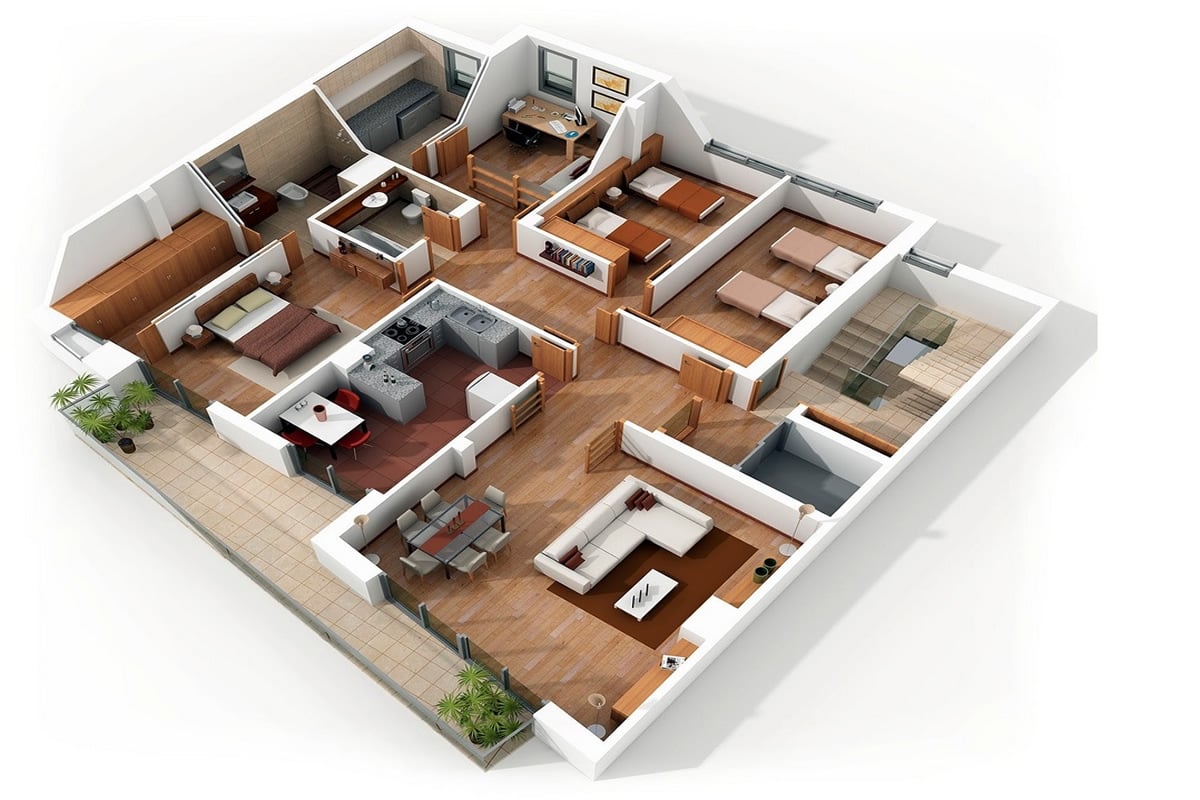
Don't Buy the Label on the Floor Plan.
Buy the Function the Space Can Give You.
Lifestyle Value Is Not the Same as Market Value
There is an important distinction.
A room may be extremely valuable to you without adding the same amount to the property's market value.
For example, you might place significant personal value on:
- A dedicated office.
- A workshop.
- A specialized hobby room.
- A large media room.
Another buyer may value those spaces differently.
Personal usefulness and market value are related concepts—but they are not interchangeable.
15 Questions to Find the Most Useful Room in a Home
☐ 1. Where would I spend the most time?
☐ 2. Which room fits my normal weekday best?
☐ 3. Which room solves a problem in my current living situation?
☐ 4. Which space has the best natural light for how I would use it?
☐ 5. Does furniture fit comfortably?
☐ 6. Is the room located in the right part of the home?
☐ 7. Does it have useful storage?
☐ 8. Is it comfortable enough to use for several hours?
☐ 9. Is the space private enough for its intended use?
☐ 10. Could it serve a different purpose later?
☐ 11. Would I use this room more than the largest room?
☐ 12. Am I impressed by the room itself or mostly by the staging and finishes?
☐ 13. What will this room cost to furnish and maintain?
☐ 14. Does the space still make sense if my routine changes?
☐ 15. Which room would I miss the most if this home did not have it?
Frequently Asked Questions
Is a larger room automatically more valuable?
No. Size can be useful, but functionality also depends on layout, location within the home, natural light, storage, furniture placement, and how often you expect to use the space. Market value is also determined by the property as a whole rather than one simple room-size rule.
Does a home office add value?
A functional office may add significant lifestyle value for a buyer who needs one. Its effect on market value depends on the overall property, whether the space replaces another important function, comparable sales, and current buyer demand.
Is a finished basement always a major advantage?
Not automatically. Evaluate the quality, condition, natural light, access, ceiling height, layout, and how the space would actually be used. Basement space may also be treated differently from above-grade living area in valuation and comparison contexts.
Should every spare room be considered a bedroom?
No. Marketing labels and legal or appraisal treatment are not necessarily the same. Whether a space qualifies or is represented as a bedroom can depend on property characteristics, applicable requirements, records, and professional interpretation.
Is flexibility important for resale?
Flexible space may appeal to a range of future buyers because it can accommodate different uses, but no floor plan or room configuration guarantees future demand, appreciation, sale price, or days on market.
Should I choose a smaller home if its rooms are more functional?
It can be reasonable to prefer a smaller home with a better layout, but there is no universal answer. Compare usable space, price, location, condition, ownership costs, storage, lot, and your actual space requirements rather than relying on total square footage alone.
Don't Ask Only:
“Which Room Looks Best?”
Ask:
“Which Space Makes My Life Work Better?”
Final Thoughts: Buy the Space You Will Actually Use
A beautiful kitchen can absolutely improve your experience.
So can a luxurious primary suite.
But sometimes the room that changes your everyday life is much less dramatic.
It might be the sunny breakfast corner.
The quiet office.
The well-positioned laundry room.
The comfortable den.
The flexible bonus room.
Or even a covered porch you end up using constantly.
The best room is not necessarily the biggest, newest, or most expensive room.
Sometimes it is simply the space that fits naturally into your life—and keeps being useful long after the first impression wears off.
Comparing Atlanta Homes With Very Different Floor Plans?
We can look beyond total square footage and compare how each home's space actually functions—including room placement, storage, flexible spaces, basement configuration, furniture layout, lot, condition, ownership costs, and relevant comparable sales. The goal is to find the home whose space fits the way you actually plan to live.
Tina Jingru Sui | TJS Team
About Tina Jingru Sui
Tina Jingru Sui is the founder and leader of the TJS Team, serving buyers, sellers, investors, and relocation clients throughout Metro Atlanta.
Tina and her team serve communities including Johns Creek, Alpharetta, Suwanee, Duluth, Buford, Dacula, Marietta, Roswell, Sandy Springs, Smyrna, Lawrenceville, and surrounding Metro Atlanta areas.
Keller Williams Atlanta Partners · (404) 375-2120
This article is provided for general informational and educational purposes only and does not constitute legal, appraisal, financial, tax, lending, inspection, construction, architectural, zoning, HOA, or other professional advice. References to a room's “value,” usefulness, flexibility, or importance primarily describe buyer lifestyle considerations and do not mean that a particular room or improvement will increase appraised value, market value, resale price, or buyer demand. Square footage, room labels, bedroom counts, basement areas, and finished-space classifications should be independently verified when material to a purchase decision. Finished basement or below-grade space may be treated differently from above-grade living area in certain appraisal, MLS, tax, or comparison contexts. A room's possible future use may depend on property characteristics, building codes, zoning, permits, HOA rules, or other requirements. No room configuration, floor plan, renovation, or property feature guarantees appreciation, resale demand, sale price, or future marketability. Buyers should independently investigate the property and consult appropriate inspectors, appraisers, contractors, architects, attorneys, lenders, or other professionals when needed. Equal Housing Opportunity. Tina Jingru Sui, GA License #392936, REALTOR®, affiliated with Keller Williams Atlanta Partners and regulated by the Georgia Real Estate Commission.