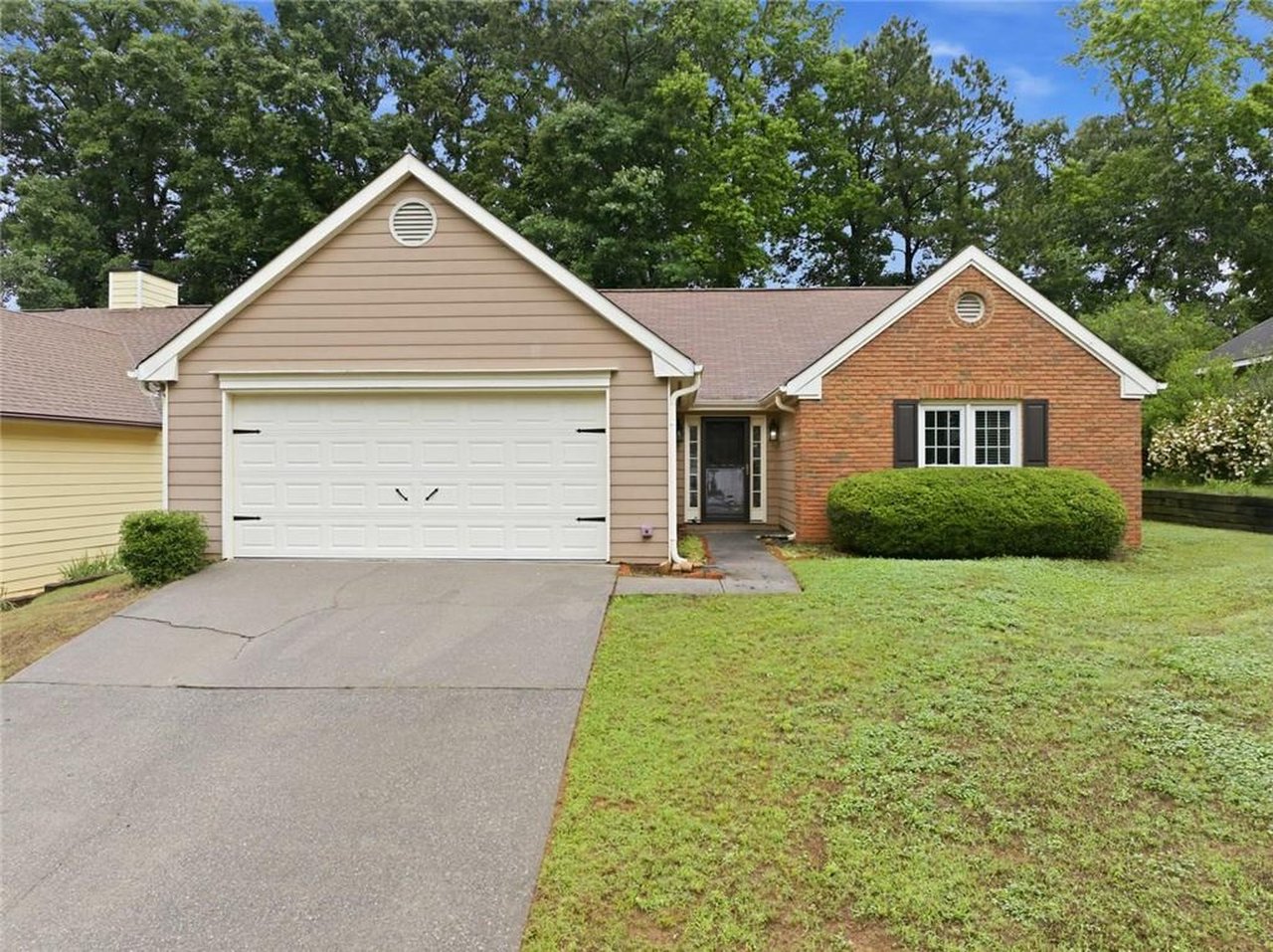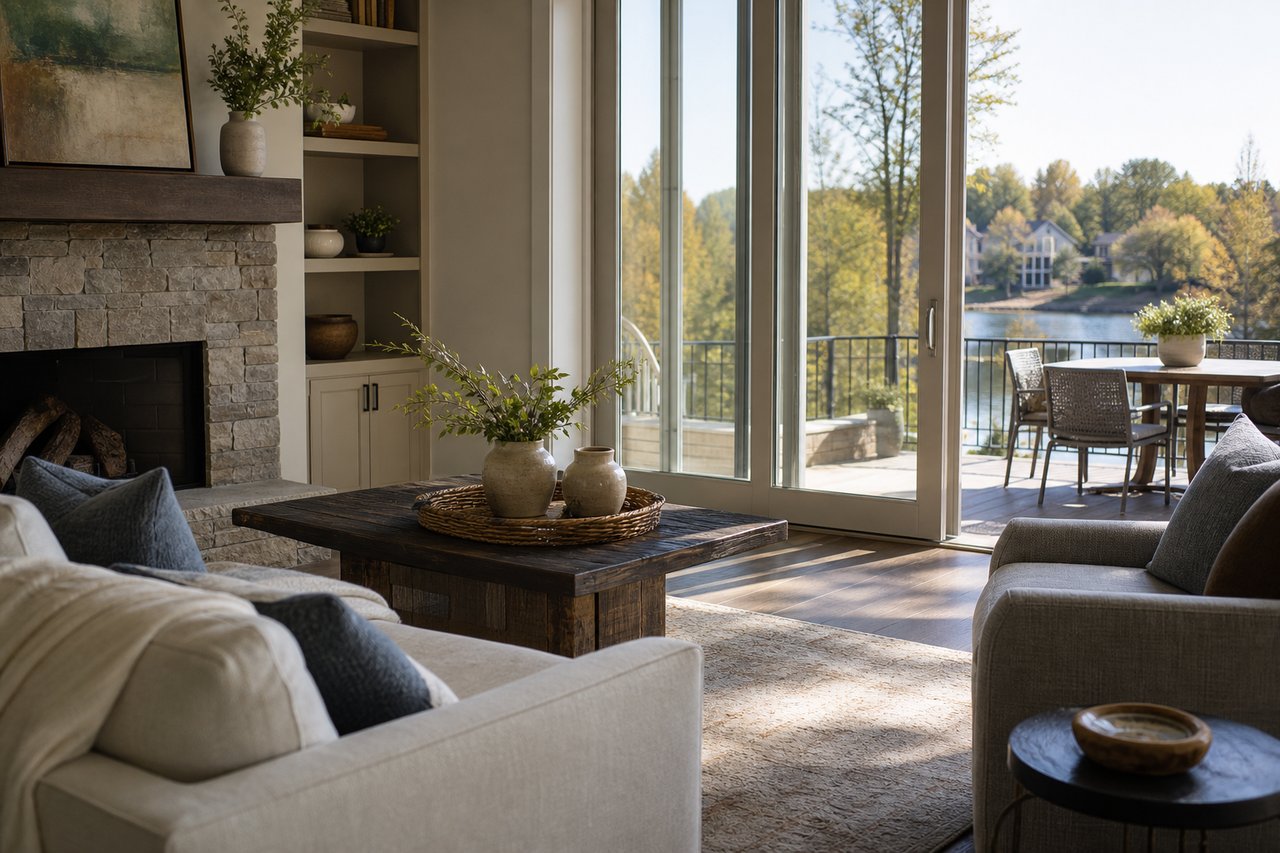
The house that photographs best is not always the house that works best financially or functionally. A simple home with a practical layout, reasonable maintenance needs, good condition, and a location that fits your daily life may give you something flashy homes sometimes do not: flexibility.
The Hidden Advantage of Buying a “Boring” House
Why a simple, functional, well-maintained home may offer lower maintenance, more flexibility, and better long-term usability than a house packed with expensive features.
Home shopping is emotional.
Buyers naturally notice the house with:
- The dramatic kitchen.
- Designer finishes.
- A resort-style pool.
- Custom built-ins.
- Statement lighting.
- Elaborate landscaping.
Those features can be wonderful.
But sometimes another house gets overlooked because it feels ordinary.
Neutral paint.
Straightforward floor plan.
No pool.
No designer kitchen.
Nothing that makes you say:
“Wow.”
That does not automatically make it a worse purchase.
Sometimes the less exciting house gives you fewer expensive surprises, fewer features you are paying for but rarely use, and more freedom to make the property your own over time.
What Can Make a “Boring” House Surprisingly Valuable?
Simple Systems + Functional Layout + Lower Complexity + Flexible Design + Good Location + Manageable Cost
1. Fewer Features Can Mean Fewer Things to Maintain
Every feature you own eventually becomes something you may need to clean, service, repair, or replace.
Consider:
Feature | Possible Ongoing Responsibilities |
|---|---|
Swimming Pool | Cleaning, chemicals, equipment, resurfacing, repairs |
Extensive Landscaping | Irrigation, trimming, replacement plants, ongoing maintenance |
Complex Smart-Home Systems | Updates, troubleshooting, replacement components, compatibility |
Large Home | More flooring, windows, paint, utilities, furnishing, cleaning |
None of these features is inherently bad.
The question is whether you actually value the feature enough to justify its ongoing cost.
A feature is not a benefit simply because it is expensive.
It is a benefit when you actually use it enough to justify owning and maintaining it.
2. Simple Can Make Your Future Expenses Easier to Understand
A straightforward house can make it easier to understand what you are taking responsibility for.
You still need to evaluate:
- Roof.
- HVAC.
- Water heater.
- Plumbing.
- Electrical system.
- Windows.
- Exterior condition.
- Drainage.
But when the property has fewer specialty systems and elaborate features, there may simply be fewer categories of future expense to budget around.
Remember:
Simple does not mean maintenance-free.
Every home still requires inspection, maintenance, and eventual repairs.
3. A Neutral House Can Be Easier to Personalize
Sometimes buyers reject a home because it does not already look like their Pinterest board.
But neutral can be an advantage.
You may be able to gradually change:
- Paint.
- Lighting.
- Furniture.
- Hardware.
- Window treatments.
- Landscaping.
- Selected finishes.
This can allow you to personalize the home gradually instead of paying upfront for someone else's design decisions.
You do not necessarily need to buy the finished version of your dream home.
Sometimes you buy a strong foundation and create the rest over time.
4. A “Boring” House Can Help You Put More of Your Budget Into Location
Buyers often have to choose between:
More House vs. Different Location
Imagine two similarly priced homes.
Home A | Home B |
|---|---|
Dramatic renovation | More basic finishes |
Home A may still be the better choice for you.
But do not automatically dismiss Home B because it feels less impressive during a 20-minute showing.
Paint can change.
Countertops can change.
You usually cannot change:
- Commute.
- Lot position.
- Road proximity.
- Access to your regular destinations.
If public-school attendance assignment matters to your purchase, verify the exact property address directly with the applicable school district. Attendance boundaries can change.
5. You May Avoid Paying a Premium for Features You Do Not Need
Buyers sometimes pay more for a home because it includes features that look valuable during a showing.
But ask:
Will I actually use this?
Maybe you do not need:
- A six-bedroom house.
- A pool.
- A theater room.
- A huge formal dining room.
- An elaborate outdoor kitchen.
If you genuinely value those features, great.
But if you rarely use them, they may represent additional purchase price and maintenance without improving your life very much.
6. Functional Space Can Be More Valuable Than Dramatic Space
A “boring” floor plan may actually be highly functional.
Look for:
- Bedrooms that fit normal furniture.
- A usable living room.
- Good storage.
- A practical kitchen layout.
- Flexible rooms.
- Reasonable parking.
- Usable outdoor space.
Dramatic architecture can be beautiful.
But it does not automatically make a house easier to live in.
Square footage tells you how much space exists.
Functionality tells you how much of that space improves your life.
7. Simple, Functional Homes May Preserve More Resale Flexibility
Today you are the buyer.
Someday you may become the seller.
Homes with practical layouts and broadly usable features can sometimes be easier for a range of future buyers to understand.
Examples include:
- Functional bedroom configurations.
- Good storage.
- Usable living areas.
- Reasonable parking.
- Neutral finishes.
- Well-maintained major systems.
This does not guarantee a faster sale, higher future value, or appreciation.
It simply means a highly personalized or specialized property may have a different future buyer pool than a more conventional home.
8. “Boring” Is Not the Same as “Neglected”
This distinction matters.
A simple house can be a good opportunity.
A neglected house can carry substantial repair exposure.
Before deciding that an ordinary-looking property is a smart buy, still evaluate:
- Roof condition.
- HVAC condition.
- Plumbing.
- Electrical.
- Water heater.
- Windows.
- Drainage.
- Visible deferred maintenance.
And remember:
Age alone does not prove a system is defective or must immediately be replaced.
Evaluate actual condition, maintenance history, inspection findings, and future repair exposure.
9. Compare Total Ownership Cost—not Just Purchase Price
A simpler home may cost less to own.
But do not assume that automatically.
Calculate:
Mortgage
+ Property Taxes
+ Insurance
+ HOA
+ Utilities
+ Maintenance
+ Repair Reserve
= Total Ownership Picture
A plain $600,000 home with a large maintenance backlog may be much more expensive to own than a $625,000 home in better condition.
“Boring” is not the goal.
Good value relative to your needs is the goal.
Flashy House vs. “Boring” House: Ask Better Questions
What Gets Your Attention | What to Ask Instead |
|---|---|
Luxury kitchen | How much premium am I paying for it? |
Huge house | How much of the space will I actually use? |
Pool | Do I want the maintenance responsibility too? |
Designer finishes | Would I rather personalize a neutral home gradually? |
Dramatic architecture | Is the floor plan actually practical? |
Before You Reject the “Boring” House, Check These 12 Things
☐ Is the price supported by relevant comps?
☐ Does the location work for my actual daily routine?
☐ Is the floor plan functional?
☐ Is there enough storage?
☐ Is the outdoor space usable?
☐ What is the condition of the major systems?
☐ Are there expensive specialty features I do not really need?
☐ What would cosmetic updates realistically cost?
☐ Can I personalize the home gradually?
☐ What is the total monthly ownership cost?
☐ Does this house leave more financial flexibility?
☐ Am I rejecting it because it is actually wrong for me—or simply because it did not create an emotional “wow”?
Flashy homes often win the first 15 minutes.
Functional homes have to work for the next several years.
Frequently Asked Questions
Is a simple house always cheaper to maintain?
No. Condition matters more than appearance. A simple house with deferred maintenance can still be expensive to own. The advantage is that fewer specialty features may reduce some categories of ongoing maintenance, but the actual property should still be evaluated carefully.
Is it better to buy an outdated home and renovate it myself?
Sometimes, but not automatically. Compare purchase price, renovation cost, inconvenience, contractor availability, financing, current condition, and the value of comparable renovated homes. Renovation spending does not automatically translate dollar-for-dollar into market value.
Should I choose location over finishes?
Location is generally harder to change than finishes, but every purchase involves trade-offs. Compare commute, road exposure, nearby uses, lot, price, condition, and how much work the property requires before deciding.
Do neutral homes sell more easily later?
Not necessarily. A functional layout and broadly usable features may support future resale flexibility, but future buyer demand, market conditions, price, condition, location, and competition cannot be predicted or guaranteed.
Is a pool a bad investment?
Not inherently. A pool may provide significant personal value to a buyer who wants one. It also brings maintenance, insurance, repair, and usability considerations. The right question is whether you value the feature enough to justify the costs and responsibilities.
What should I focus on instead of cosmetic finishes?
Focus on price, location, floor-plan functionality, storage, lot usability, major-system condition, ownership costs, current comparable sales, and whether the property fits your actual long-term needs.
Final Thoughts
There is nothing wrong with buying the exciting house.
If you love the pool, will use the outdoor kitchen, value the designer finishes, and the numbers make sense, those features can absolutely be worth paying for.
The mistake is assuming that more impressive automatically means better.
Sometimes the “boring” house gives you:
Less Complexity + More Flexibility + Practical Space + Manageable Costs + Room to Personalize
And sometimes that is exactly what makes it the smarter purchase.
The most exciting house may win your attention.
But the house with the right price, location, condition, functionality, and ownership cost may ultimately do more for your life—and your wallet.
Comparing a Beautiful Home With a More Practical One?
We can compare the properties side by side using relevant recent comps, location, floor plan, condition, major systems, repair exposure, HOA, ownership costs, and the value of the features you will actually use—so the decision is based on more than which house makes the strongest first impression.
Tina Jingru Sui | TJS Team
Search Metro Atlanta Homes at TinaSui.com →
About Tina Jingru Sui
Tina Jingru Sui is the founder and leader of the TJS Team, serving buyers, sellers, investors, and relocation clients throughout Metro Atlanta.
Tina and her team serve communities including Johns Creek, Alpharetta, Suwanee, Duluth, Buford, Dacula, Marietta, Roswell, Sandy Springs, Smyrna, Lawrenceville, and surrounding Metro Atlanta areas.
Keller Williams Atlanta Partners · (404) 375-2120
This article is provided for general informational and educational purposes only and does not constitute legal, tax, financial, investment, appraisal, lending, inspection, engineering, insurance, or other professional advice. A simple or conventionally designed home is not necessarily less expensive to own, easier to maintain, easier to resell, or a better financial investment. Property value, future appreciation, resale demand, days on market, maintenance expenses, renovation costs, and repair costs cannot be guaranteed. Renovation spending does not automatically increase market value dollar-for-dollar. The age of a roof, HVAC system, water heater, plumbing, electrical system, windows, or other component does not by itself establish that it is defective or requires immediate replacement. Home inspections have limitations and do not guarantee discovery of all current or future defects. Public-school attendance assignments should be verified using the exact property address with the applicable school district. Buyers should independently verify property condition, square footage, HOA obligations, taxes, insurance, development information, and other material facts and consult qualified professionals when appropriate. Equal Housing Opportunity. Tina Jingru Sui, GA License #392936, REALTOR®, affiliated with Keller Williams Atlanta Partners and regulated by the Georgia Real Estate Commission.