The Importance of Flexible Living Spaces in Modern Homes
Modern lifestyles are changing faster than ever. Remote work, growing families, multi-generational living, and shifting daily routines have all influenced how people use their homes. As a result, flexible living spaces have become one of the most desirable features in today’s real estate market.
A flexible living space is any area in a home that can adapt to different needs over time. Instead of being designed for a single purpose, these spaces can easily shift between functions—helping homeowners get more value, comfort, and usability out of their property.
What Are Flexible Living Spaces?
Flexible living spaces are rooms or areas that can serve multiple purposes depending on your needs.
Common examples include:
- A home office that doubles as a guest room
- A dining room used as a study or workspace
- A finished basement that serves as a media room and gym
- A loft or bonus room that can change with family needs
The key idea is adaptability over time, not fixed function.
Why Flexibility Matters More Today
Homes are no longer used in just one way. People now expect their living spaces to support multiple aspects of life.
Flexible spaces are important because they support:
- Remote and hybrid work
- Online learning
- Family growth and changes
- Hobbies and personal projects
- Long-term aging in place
A home that can adapt is more valuable in the long run.
Supports Remote Work and Learning
One of the biggest drivers of flexible living is the rise of working and studying from home.
A flexible space can easily become:
- A quiet home office
- A virtual classroom
- A productive study area
This helps reduce distractions and improves work-life balance without needing a dedicated extra room.
Accommodates Changing Family Needs
Family needs often change over time.
A flexible home can adjust for:
- Newborns and young children
- Teenagers needing study space
- Adult children returning home
- Aging parents moving in
Instead of moving every time life changes, flexible spaces allow your home to evolve with you.
Increases Property Value and Buyer Appeal
Homes with adaptable layouts often attract more buyers.
Why?
- Buyers see long-term usefulness
- Spaces feel more functional
- Homes appeal to wider demographics
- There is less need for immediate renovations
This versatility can make your home more competitive in the market.
Makes Smaller Homes Feel Larger
Flexible spaces help maximize square footage.
For example:
- A small bedroom that functions as both office and guest room
- A living room with defined work and relaxation zones
- Built-in storage that reduces clutter
When spaces serve multiple purposes, the home feels larger and more efficient.
Encourages Better Organization
Multi-use spaces often lead to smarter storage and design choices.
Homeowners tend to:
- Reduce unnecessary furniture
- Use hidden storage solutions
- Keep spaces more organized
- Focus on functionality
This creates a cleaner and more livable environment overall.
Saves Money Over Time
Instead of remodeling or moving, flexible spaces allow homeowners to adapt existing areas.
This can reduce costs related to:
- Home additions
- Major renovations
- Frequent relocations
- Furnishing multiple rooms
A well-designed flexible space is a long-term investment in convenience.
Popular Types of Flexible Spaces
Modern homes often include several adaptable areas, such as:
Bonus Rooms
Can become playrooms, offices, or entertainment spaces.
Finished Basements
Ideal for gyms, media rooms, or guest suites.
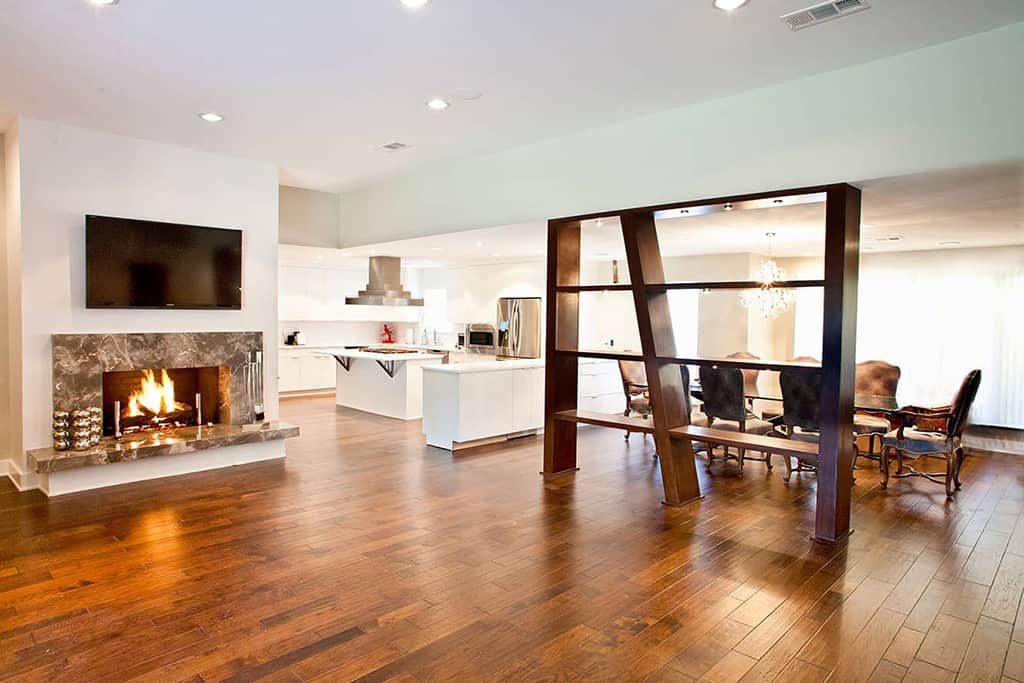
Open-Concept Living Areas
Allow multiple uses within one shared space.
Spare Bedrooms
Can easily transition between guest rooms and offices.
Outdoor Living Spaces
Patios and decks can be used for dining, relaxing, or entertaining.
Design Tips for Flexible Spaces
To maximize flexibility, consider these design strategies:
- Use neutral color palettes
- Choose movable furniture
- Incorporate modular storage
- Use foldable or multi-purpose furniture
- Keep layouts open and adaptable
The goal is to make changes easy without major effort or expense.
How Buyers View Flexible Spaces
Today’s buyers often prioritize adaptability over rigid design.
They look for homes that offer:
- Room to grow
- Functional layouts
- Multi-use spaces
- Long-term usability
A home that can evolve with lifestyle changes is often more attractive than one with fixed-purpose rooms.
The Future of Home Design
As lifestyles continue to evolve, flexibility will become even more important.
Future homes are likely to include:
- Hybrid workspaces
- Convertible rooms
- Smart storage systems
- Multi-functional furniture integration
Adaptability is becoming a core feature of modern home design.
Final Thoughts
Flexible living spaces are no longer just a luxury—they are a necessity in modern homes. They allow homeowners to adapt to changing lifestyles, maximize space, and improve overall functionality without constant renovations or relocations.
Whether you are buying, selling, or remodeling, focusing on flexibility can increase both comfort and long-term value. A home that adapts to your needs today—and in the future—is a home that truly works for modern living.
--
Tina Jingru Sui 隋静儒
Associate Broker | Team Leader of TJS Team, Keller Williams
 Serving Metro Atlanta — Johns Creek, Alpharetta, Duluth, Suwanee, Buford, and beyond
 404-375-2120


 WeChat: tinasuirealty
 Follow me on Instagram / 小红书 / WeChat / Facebook