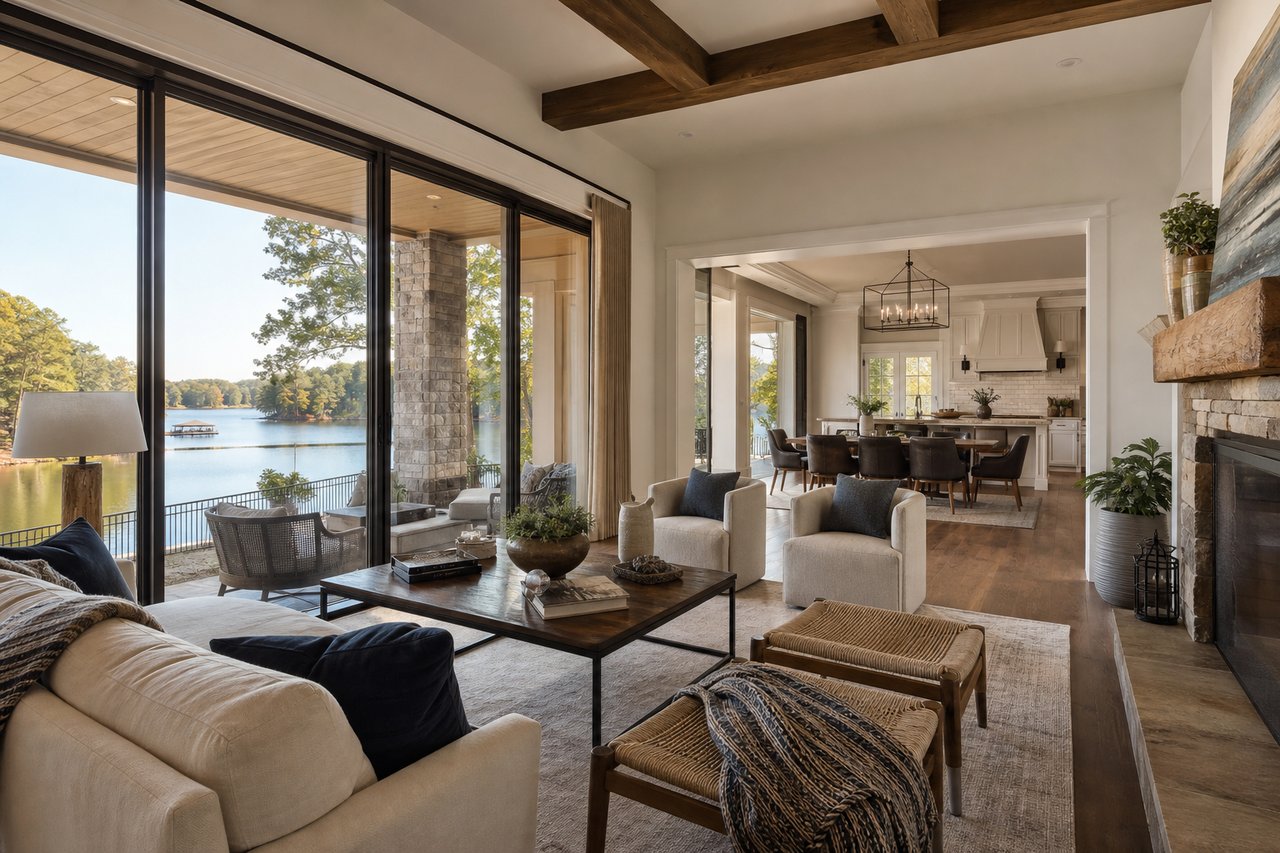
More space can absolutely make a home better—but only when the extra space does something useful for you. Otherwise, you may be paying to buy, heat, cool, furnish, clean, maintain, and eventually repair rooms you rarely use.
The “Too Much House” Problem: When More Space Isn’t Better
Bigger is valuable when you use the space. Bigger becomes expensive when you only own it.
Buyers often compare two homes and naturally lean toward the larger one.
Four bedrooms sounds better than three.
A finished basement sounds better than no basement.
Three living areas sound better than one.
A huge yard sounds better than a small one.
Sometimes that is absolutely true.
But sometimes the bigger house wins the feature comparison while losing the lifestyle comparison.
The key question is:
“What will I actually do with the extra space?”
More Square Footage
≠
More Useful Home
Use the Extra-Space Burden Test
Every additional room provides potential utility.
It can also create an ownership burden.
Extra-Space Value
=
Actual Use + Flexibility
−
Purchase Cost + Utilities + Furnishing + Cleaning + Maintenance
This is not a financial formula.
It is a way to ask whether the additional house is earning its place in your life.
1. Stop Counting Rooms and Start Assigning Jobs
Instead of saying:
“This house has five bedrooms.”
name the job of each room.
Space | Actual Job | Usage |
|---|---|---|
Bedroom 1 | Primary bedroom | Daily |
Bedroom 2 | Bedroom | Daily |
Bedroom 3 | Home office | 5 days/week |
Bedroom 4 | Guest room | 10–15 nights/year |
Bedroom 5 | ? | ? |
That fifth bedroom may still have value.
But if you cannot identify a realistic use, it should not automatically receive the same value in your personal decision as a room you use every day.
2. Watch for Expensive Empty Capacity
Businesses often think about unused capacity.
Homebuyers should too.
Examples might include:
- A formal living room nobody uses.
- Two dining spaces when you use one.
- Multiple guest rooms for very occasional visitors.
- A large finished basement with no defined purpose.
- Oversized rooms that simply contain more empty floor area.
Unused Space
Is Not
Free Space.
3. Compare Features by Frequency of Use
A feature used every day may provide more personal value than a larger feature used only occasionally.
Consider:
Feature | Potential Usage |
|---|---|
Good kitchen workflow | Daily |
Home office | Potentially hundreds of days per year |
Fourth guest bedroom | Possibly a few weeks per year |
Formal living room | Depends heavily on household routine |
The room you use 250 days per year may matter more than the room that impresses guests five times per year.
4. Bigger Homes Can Create Bigger Utility Loads
More conditioned space can mean more energy used to heat and cool the property.
Actual utility costs depend on many factors, including:
- Square footage.
- Insulation.
- Window efficiency.
- HVAC efficiency.
- Ceiling height.
- Thermostat preferences.
Do not assume two homes with similar purchase prices will create similar utility costs.
5. Empty Rooms Tend to Ask for Furniture
Buyers sometimes budget for the house but not for filling the house.
Larger homes may create pressure to purchase:
- Additional sofas.
- Bedroom sets.
- Area rugs.
- Window treatments.
- Dining furniture.
- Decor.
That spending is optional.
But it is worth thinking about before choosing significantly more house.
Buying the square footage is one expense.
Furnishing the square footage can become another.
6. More House Requires More Cleaning—Whether You Do It or Pay Someone Else
More bedrooms mean more floors, baseboards, windows, bathrooms, and surfaces.
That creates either:
More of your time—or more of your money.
Neither is automatically a problem.
But it is part of the ownership package.
7. More Components Eventually Mean More Things to Maintain
A larger property may contain:
- More windows.
- More flooring.
- More plumbing fixtures.
- Additional HVAC zones or systems.
- More exterior surface area.
That does not mean larger homes are unreliable.
It simply means there is more physical property to maintain over a long ownership period.
8. “Too Much House” Can Also Mean Too Much Yard
Buyers often include the lot in the bigger-is-better comparison.
A larger yard can provide:
- Outdoor space.
- Gardening opportunities.
- Recreation.
- Greater separation from neighboring homes.
But depending on the property, it may also involve:
- Mowing.
- Tree care.
- Leaves.
- Irrigation.
- Landscaping.
- Fence maintenance.
- Drainage considerations.
Don't Ask Only:
“How Big Is the Yard?”
Ask:
“How Much of This Yard Do I Want to Own?”
9. Bigger Does Not Automatically Mean Higher Taxes—but Compare the Actual Properties
Property taxes depend on assessed value, jurisdiction, exemptions, and other factors.
Do not simply assume:
Bigger House = Exact Proportional Tax Increase.
Instead, compare the actual tax information for each property and understand that a future owner's tax liability may differ from the current owner's bill.
10. Ask What You Are Giving Up to Get the Extra Space
Larger homes at the same budget may require a trade-off.
Perhaps the larger home is:
- Farther from work.
- Older.
- In weaker condition.
- On a less desirable lot for your preferences.
- More expensive to maintain.
Or perhaps the larger home genuinely gives you the better package.
The important part is identifying what funded the extra square footage.
Extra square footage is rarely free.
Ask what you are trading for it.
11. A Smaller House Can Have Better Space Efficiency
Imagine:
House A: 4,000 square feet
but it contains:
- A large two-story foyer.
- Formal rooms you rarely use.
- Oversized hallways.
House B: 3,300 square feet
but it has:
- A strong kitchen.
- A useful office.
- Good bedroom sizes.
- Better storage.
- Efficient circulation.
House B may function larger for your actual life.
Efficient Space
Can Outperform
More Space.
12. Flex Space Is More Valuable Than Space With No Purpose
Not every room needs a permanent single use.
A room that can function as:
- Office today.
- Guest room occasionally.
- Hobby room later.
may give you more value than three separate spaces that each sit mostly unused.
Flexible design can sometimes reduce how much total square footage you actually need.
13. Be Realistic About Guest Space
Buyers sometimes design their entire purchase around occasional visitors.
Ask:
- How frequently do guests actually stay overnight?
- How many guests typically visit?
- Could a flex room serve the same purpose?
A dedicated guest room may absolutely be worth it.
Just make sure you are not paying daily ownership costs to solve a situation that happens once or twice per year.
14. “I Might Need It Someday” Needs a Probability Test
Future planning is smart.
But there is a difference between:
Likely Future Need
and:
Hypothetical Future Possibility.
Ask:
- How likely is this need?
- When would it occur?
- How long do I expect to own the home?
- Could existing space adapt if necessary?
Don't pay for ten years of extra house to solve a future possibility you may never use.
15. Think About the House at the End of Your Ownership Period Too
A home can fit perfectly today and feel unnecessarily large later.
During your expected ownership period, ask whether:
- Household size could change.
- You will still want the same yard.
- You will still want multiple floors.
- You will still want the same level of maintenance.
This does not mean you should buy small today.
It means future maintenance tolerance deserves a place in the decision.
16. Make Sure You Want the House—not Just the Idea of Having a Bigger House
Bigger homes can feel impressive.
That emotional reaction is normal.
But before deciding, ask:
“If nobody else ever knew how large this house was, would I still want all of this space?”
Your answer may still be yes.
If so, the space may genuinely matter to you.
Build a One-Year Room Utilization Map
Before buying a significantly larger home, estimate how often each major space will be used.
Room / Space | Purpose | Estimated Use | Worth the Space? |
|---|---|---|---|
Home Office | Work | ___ days/year | Yes / No |
Guest Room | Visitors | ___ nights/year | Yes / No |
Basement | ________ | ________ | Yes / No |
Formal Dining | ________ | ________ | Yes / No |
The 50-Point Extra-Space Burden Scorecard
Category | Score | Question |
|---|---|---|
Room Utilization | ___ / 10 | Will most major spaces have a real use? |
Layout Efficiency | ___ / 10 | Does the square footage work hard? |
Operating Burden | ___ / 10 | Are utilities and maintenance comfortable? |
Time Burden | ___ / 10 | Do cleaning and yard responsibilities fit your lifestyle? |
Future Flexibility | ___ / 10 | Will this amount of house still fit your expected ownership period? |
Total | ___ / 50 | More points should mean the extra space works harder for you. |
This scorecard is a personal home-comparison exercise only and is not a financial, appraisal, or investment model.
20 Questions Before Buying More House
☐ 1. What job does every major room have?
☐ 2. Which rooms would I use every day?
☐ 3. Which rooms would I use less than once per week?
☐ 4. Do I really need separate spaces for functions that could share one flex room?
☐ 5. How often do overnight guests actually stay with me?
☐ 6. What would I use the basement for?
☐ 7. Is the floor plan efficient—or simply large?
☐ 8. What will it cost to furnish the extra rooms?
☐ 9. What might utilities look like for this property?
☐ 10. How much cleaning does this home require?
☐ 11. Would I clean it myself or pay someone else?
☐ 12. How much yard maintenance comes with the property?
☐ 13. How many major systems and components am I maintaining?
☐ 14. What am I giving up to get this additional square footage?
☐ 15. Would a smaller house give me a better location or condition?
☐ 16. Am I buying for a real future need or a hypothetical one?
☐ 17. Could flexible rooms solve the same need with less space?
☐ 18. Will I still want this much house later in my expected ownership period?
☐ 19. If nobody else knew the square footage, would I still want it?
☐ 20. Am I buying useful space—or expensive empty capacity?
Frequently Asked Questions
Is a bigger house always more expensive to own?
Not necessarily in every category, but additional square footage can increase certain costs such as utilities, furnishing, cleaning, maintenance, and repair exposure. Actual expenses depend on the specific property.
How do I know if a house is too big for me?
Consider whether major rooms have realistic uses, how frequently you will use them, and whether the added purchase cost, utilities, furnishing, maintenance, yard work, and cleaning are worthwhile for the benefits you receive.
Is buying extra bedrooms for future needs a bad idea?
No. Future flexibility can be valuable. The useful question is how likely the future need is, when it may occur, how long you expect to own the property, and whether existing flex space could serve the same purpose.
Is a finished basement worth paying more for?
It can be if the space is legal where required, appropriately finished, functional, and useful to you. Market value should be evaluated using relevant property-specific market evidence rather than assuming every finished basement creates the same premium.
Is more square footage always better for resale?
No future resale result can be guaranteed. Buyers evaluate many factors including location, price, condition, layout, usable space, lot, property type, and current market conditions. Larger square footage alone does not guarantee stronger future demand.
Can a smaller house feel larger?
Yes. Efficient circulation, useful room dimensions, good storage, flexible rooms, furniture-friendly layouts, and fewer underused spaces can allow a smaller home to function very effectively.
Should I choose a smaller home just to save money?
Not automatically. If you genuinely need and use the additional space, a larger property may be the better fit. The goal is alignment between space, budget, lifestyle, location, condition, and ownership responsibilities.
Is a large yard always more maintenance?
Maintenance depends on topography, landscaping, trees, irrigation, fencing, lawn area, and how the property is managed. Larger acreage does not create exactly the same burden in every case.
Should I compare utility bills before buying?
Historical utility information can provide context when available, but future usage and rates may differ. Buyers should not assume a prior occupant's utility expense will match their own.
Can my real estate agent help me determine how much house I need?
A buyer's agent can help compare layouts, square footage, usable rooms, market options, location, condition, lot, taxes, HOA information, and property trade-offs. Your personal space needs, financial comfort, and lifestyle priorities ultimately determine how much home is appropriate for you.
Don't Ask Only:
“How Much House Can I Get?”
Ask:
“How Much House Will I Actually Use?”
Final Thoughts: Buy Enough House—not Automatically the Most House
A large home can be the perfect home.
More bedrooms, a finished basement, multiple living areas, and a large lot can provide real value.
The question is whether that value exists for you.
Before choosing the larger property, compare:
Room utilization.
Layout efficiency.
Utility exposure.
Furnishing needs.
Cleaning.
Maintenance.
Yard responsibility.
Location trade-offs.
Current needs.
Likely future needs.
And how much of the house will actually participate in your life.
The goal is not to buy the smallest home possible.
It is to avoid paying for square footage that adds more responsibility than value.
Buy enough house to support your life—not so much house that your life starts supporting the house.
Comparing a Bigger House With a Better-Fitting House?
We can compare more than total square footage. For each Metro Atlanta property, we can look at room utilization, floor-plan efficiency, storage, condition, lot, taxes, HOA, commute, major systems, ownership considerations, and what you may be giving up to get the additional space. The goal is to find the amount of house that genuinely supports your life.
Tina Jingru Sui | TJS Team
Search Metro Atlanta Homes at TinaSui.com →
About Tina Jingru Sui
Tina Jingru Sui is the founder and leader of the TJS Team, serving buyers, sellers, investors, and relocation clients throughout Metro Atlanta.
Tina and her team serve communities including Atlanta, Johns Creek, Alpharetta, Suwanee, Duluth, Buford, Dacula, Marietta, Roswell, Sandy Springs, Smyrna, Lawrenceville, and surrounding Metro Atlanta areas.
Keller Williams Atlanta Partners · (404) 375-2120
This article is provided for general informational and educational purposes only and does not constitute legal, financial, tax, lending, appraisal, inspection, engineering, construction, insurance, investment, accessibility, utility, energy-efficiency, or other professional advice. The “Extra-Space Burden Test,” One-Year Room Utilization Map, scorecard, and related examples are personal home-comparison tools only and are not financial models, appraisal methods, investment calculations, or recommendations regarding how much home any specific buyer should purchase. Larger homes do not automatically have higher costs in every category, and smaller homes do not automatically provide lower overall ownership costs. Purchase price, taxes, insurance, HOA or condominium dues, utilities, furnishing, landscaping, repairs, maintenance, cleaning, and other expenses vary materially by property and can change over time. Historical utility bills or ownership expenses do not guarantee a future owner's costs. Current property-tax bills may not represent a future owner's tax liability. Property and system age alone does not establish condition, defect, remaining useful life, or replacement need. Buyers should conduct appropriate inspections and obtain specialist evaluations when material. Square footage, room count, finished-area classification, basement status, permitted use, and property records should be independently verified when material to the purchase. Finished basements and other additional spaces can differ in quality, legal status, functionality, and market contribution and should not be assumed to contribute value on a dollar-for-dollar or square-foot-for-square-foot basis. A Comparative Market Analysis prepared by a real estate professional is not an appraisal and does not guarantee purchase value, appraised value, future sale price, appreciation, marketability, or buyer demand. A real estate professional can help buyers compare property characteristics, layouts, current market evidence, location, condition, lot, taxes, HOA information, and transaction trade-offs but does not replace lenders, financial professionals, inspectors, engineers, contractors, appraisers, attorneys, tax professionals, insurance professionals, or other qualified specialists. Future household needs, lifestyle preferences, ownership duration, resale demand, and market conditions cannot be guaranteed. Community and location comparisons should rely on objective property and lifestyle criteria identified by the consumer and not on characteristics protected by Fair Housing law. Equal Housing Opportunity. Tina Jingru Sui, GA License #392936, REALTOR®, affiliated with Keller Williams Atlanta Partners and regulated by the Georgia Real Estate Commission.