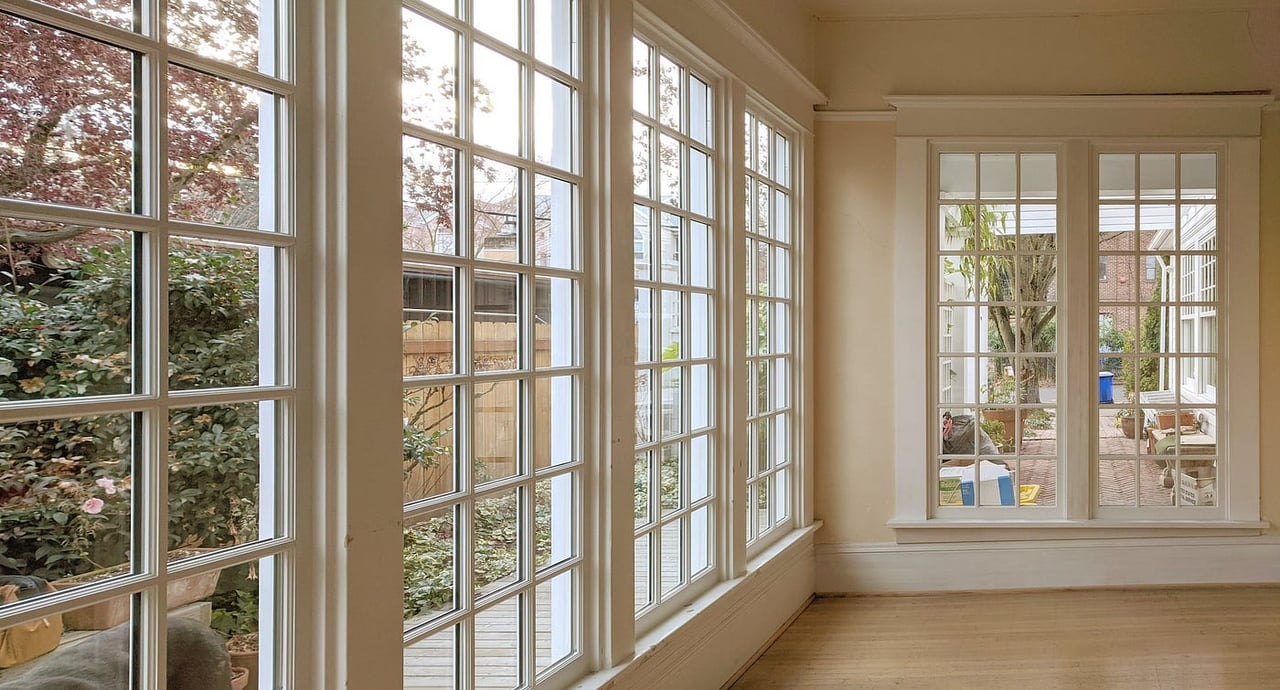
A house does not end at the walls. What you see, hear, and experience immediately outside the property can become part of everyday life. Before buying, look through the home's major windows and evaluate privacy, neighboring properties, road exposure, commercial activity, outdoor views, natural light, and possible future development.
The View From the Window: Why What Surrounds Your Home Matters
You may renovate almost everything inside a house. What sits outside the windows can be much harder to change.
Buyers naturally spend most of a showing looking inward.
Kitchen.
Flooring.
Bedrooms.
Bathrooms.
But before leaving, turn around and look outside.
What you see from the kitchen sink, primary bedroom, living room, patio, and backyard may become part of your experience every single day.
Don't ask only:
“Do I like this house?”
Also ask:
“Do I understand what surrounds this house?”
1. Your View Becomes Part of the Room
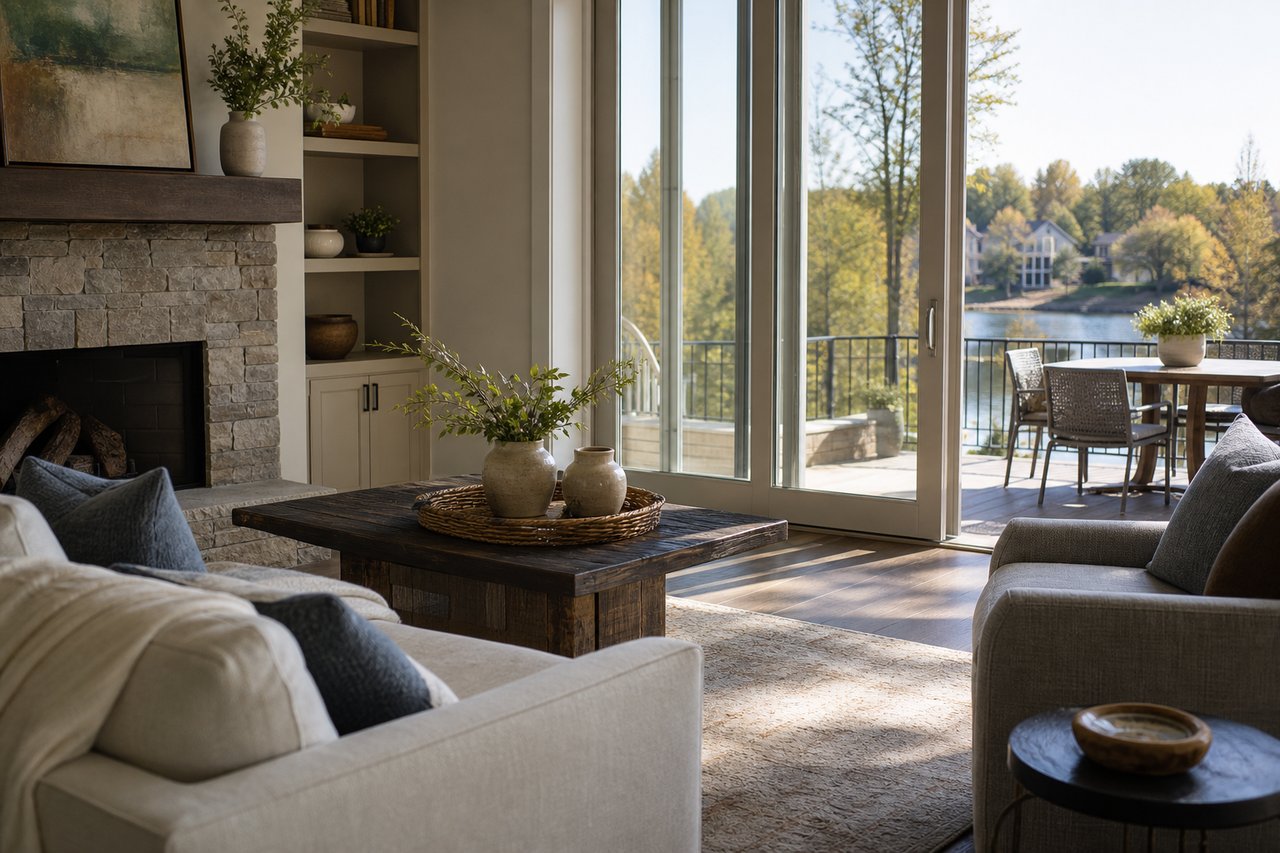
Two nearly identical rooms can feel very different depending on what is outside.
One bedroom may look toward trees or an open backyard.
Another may look directly toward a neighboring wall, parking area, retaining wall, commercial property, or busy roadway.
The interior dimensions may be the same.
The everyday experience may not be.
A Window Is Not Just Natural Light.
It Is Also A View You May See Every Day.
2. Look Out Every Major Window
During a showing, buyers often admire a room without actually walking over to the windows.
Try it.
Look out from:
- Primary bedroom.
- Kitchen.
- Family or living room.
- Home office.
- Frequently used secondary rooms.
- Deck, porch, or patio.
Ask what is visible today—and whether you are comfortable seeing it repeatedly.
3. Evaluate Privacy From Both Directions
Privacy is not only about what you can see.
It is also about who can see you.
Consider:
- Distance between homes.
- Window-to-window alignment.
- Elevation differences.
- Second-story neighboring windows.
- Backyard positioning.
- Existing fences.
- Tree and landscaping coverage.
Landscaping can improve privacy, but do not assume every privacy issue can be easily or permanently solved.
4. Remember That Trees Do Not Look the Same All Year
Trees can create excellent visual screening during part of the year.
But deciduous trees may provide much less screening after leaves fall.
If privacy is important, distinguish between:
- Permanent structural separation.
- Evergreen screening.
- Seasonal tree coverage.
- Fencing.
- Temporary landscaping.
A heavily wooded summer view may look more open during winter.
5. Road Exposure Is Both Visual and Practical
A nearby road may affect more than the view.
Evaluate:
- What portions of the road are visible.
- Traffic volume at relevant times.
- Road noise inside and outside.
- Headlights at night.
- Ease of driveway or subdivision access.
A home near a busier road is not automatically a poor purchase.
The question is whether you are comfortable with the trade-off and whether the price appropriately reflects the property's characteristics.
6. Lot Position Can Matter More Than Lot Size
Two homes in the same subdivision may have very different surroundings.
One may sit:
- On an interior lot.
- At an intersection.
- On a cul-de-sac.
- Against a larger road.
- Beside an entrance.
- Near community amenities.
- Next to undeveloped land.
These characteristics can change visual exposure, traffic, parking patterns, access, and how outdoor spaces feel.
7. What Surrounds the House Can Affect Natural Light
Buyers often say they want a “bright” home.
But brightness is not determined only by the number of windows.
Light can be affected by:
- Neighboring structures.
- Large trees.
- Roof overhangs.
- Home orientation.
- Window placement.
- Topography.
A large window facing a wall a short distance away may function very differently from the same window facing an open area.
8. Look Beyond the Immediate Neighbor
Walk or drive around the immediate area.
Notice nearby:
- Retail or commercial properties.
- Parking areas.
- Schools or public facilities.
- Community amenities.
- Utility infrastructure.
- Vacant parcels.
- Major roads.
- Construction activity.
None of these is automatically positive or negative.
What matters is understanding how the surrounding uses fit your preferences and routine.
9. Today's Open View Is Not Necessarily Permanent
One of the most important questions is whether the view depends on land you do not own.
A beautiful wooded outlook may belong to:
- A neighboring homeowner.
- A developer.
- A commercial property owner.
- A municipality or other entity.
- An undeveloped parcel.
Ownership of your home does not generally give you control over how unrelated nearby property will always be used.
If the View Depends on Land
You Do Not Own,
Don't Automatically Treat It as
A Permanent Feature.
“Future Development” Can Mean Very Different Things
When researching nearby changes, distinguish between:
Development Stage | What It Means |
|---|---|
Discussed / Proposed | May never happen in the form currently discussed |
Submitted | An application or plan may be under review |
Approved | Approvals may exist, but timing and final execution can still change |
Under Construction | Physical development is actively occurring |
10. Don't Assume the Landscaping You See Belongs to the Property
A fence, tree line, landscaped buffer, or open grassy area may visually feel like part of the home.
But appearances do not establish property boundaries.
If boundaries are important to your decision, review appropriate surveys, plats, title information, or other reliable property records.
What looks like “your backyard” during a showing and what is legally part of the parcel are not always identical questions.
11. Revisit at a Different Time if the Surroundings Matter
If road exposure, parking, nearby activity, or noise is important to your decision, a second visit at another time can provide useful context.
A weekday afternoon may differ from:
- Morning commute hours.
- Evening commute hours.
- Weekend activity.
- After-dark conditions.
One visit cannot establish what conditions will always be like, but different observations can help you make a more informed decision.
12. Be Careful Paying a Large Premium for a View
Certain views may be highly valuable to individual buyers.
But if a seller is asking a significant premium because of a particular outlook, ask:
- How do relevant comparable sales treat similar views?
- Is the view protected in any meaningful way?
- Does the view depend on neighboring land?
- Is the premium primarily personal preference or supported by market evidence?
You may decide a view is worth paying more for.
Just separate your personal enjoyment from any assumption that the same premium will automatically be recovered later.
13. Future Buyers May Notice the Same Surroundings
If you notice road exposure, limited privacy, close neighboring structures, a parking lot, or another surrounding characteristic, a future buyer may notice it too.
That does not automatically make the property difficult to sell.
But permanent external characteristics should be understood as part of the overall property rather than treated as something separate from the home.
You Can Change The Paint.
You Usually Cannot Change What Is Next Door.
The Window-by-Window Audit
On your next serious home tour, spend five minutes doing nothing except looking outward.
☐ What do I see from the primary bedroom?
☐ What do I see while standing at the kitchen sink?
☐ Can neighboring windows see directly inside?
☐ How close are adjacent homes?
☐ What is behind the backyard?
☐ Is a major road visible or audible?
☐ Is the current screening permanent or seasonal?
☐ Does nearby development appear possible?
☐ Could another structure affect current light or views?
☐ Am I comfortable with these surroundings at today's price?
15 Questions Before You Buy the View
☐ 1. What do I see from the rooms I will use most?
☐ 2. How much privacy does the home actually have?
☐ 3. Can neighboring homes see directly into major rooms?
☐ 4. How does the view change when trees lose their leaves?
☐ 5. What is directly behind the property?
☐ 6. What is beside it?
☐ 7. Are major roads nearby?
☐ 8. Does road exposure affect noise, headlights, or access?
☐ 9. Is nearby land undeveloped?
☐ 10. What do current public records or planning information show about nearby development?
☐ 11. Does my current view depend on property I do not own?
☐ 12. Do I know where the property boundaries actually are?
☐ 13. How much natural light could nearby structures affect?
☐ 14. Would I still like the home if the view changed?
☐ 15. Does the purchase price reflect the permanent external trade-offs?
Frequently Asked Questions
Does a better view automatically increase home value?
No. Certain views may influence buyer appeal and market value, but their effect depends on the property, location, comparable sales, permanence of the view, and current buyer demand. A view does not have one universal dollar value.
Is a home backing to a road automatically a bad purchase?
No. Buyers value road exposure differently. Evaluate actual noise, traffic, access, visual exposure, relevant comparable sales, and whether the purchase price reflects the characteristic.
Can trees guarantee privacy?
No. Trees can provide screening, but coverage can change by season, weather, maintenance, disease, ownership, and future removal. If privacy is important, evaluate the full physical setting rather than relying on vegetation alone.
How can I find out what may be built nearby?
Depending on the jurisdiction, buyers may review zoning information, planning records, development applications, public meeting materials, permits, plats, and other official records. Proposed projects can change or fail to proceed, so distinguish proposals from approved or active construction.
Does an empty lot mean it will eventually be developed?
Not necessarily. Vacant land may remain unchanged or may later be developed subject to ownership, zoning, approvals, infrastructure, market conditions, and other factors. Buyers should not assume either permanent open space or guaranteed future construction.
Should I pay extra for a wooded or open view?
That depends on how much personal value you place on it and whether relevant market evidence supports a premium. If the view depends on land outside the property, also consider whether that outlook could change.
Can my agent guarantee what the neighborhood will look like in the future?
No. Future development, land use, traffic, landscaping, neighboring structures, and market conditions can change. An agent can help identify available objective information and sources, but future conditions cannot be guaranteed.
Don't Just Tour the Rooms.
Tour What Every Room Looks Out Toward.
Final Thoughts: The Surroundings Are Part of What You Are Buying
You may be able to replace flooring.
Remodel a kitchen.
Change paint.
Add landscaping.
But some of the most important characteristics around a property are outside your control.
Before buying, understand:
What you see.
Who can see you.
What is next door.
What is behind the property.
What may change.
What probably cannot.
A beautiful interior can make you fall in love with a house.
But before you decide, look out the window.
The surroundings may become just as much a part of your everyday experience as the rooms themselves.
Comparing Two Atlanta Homes With Very Different Surroundings?
We can compare more than the interior. We can look at relevant sales, lot position, road exposure, neighboring properties, privacy, current competition, nearby land uses, and available development information so you better understand the permanent and potentially changing characteristics around each property.
Tina Jingru Sui | TJS Team
About Tina Jingru Sui
Tina Jingru Sui is the founder and leader of the TJS Team, serving buyers, sellers, investors, and relocation clients throughout Metro Atlanta.
Tina and her team serve communities including Johns Creek, Alpharetta, Suwanee, Duluth, Buford, Dacula, Marietta, Roswell, Sandy Springs, Smyrna, Lawrenceville, and surrounding Metro Atlanta areas.
Keller Williams Atlanta Partners · (404) 375-2120
This article is provided for general informational and educational purposes only and does not constitute legal, appraisal, surveying, zoning, land-use, environmental, engineering, title, inspection, financial, investment, or other professional advice. Views, privacy, natural light, road exposure, traffic, noise, landscaping, trees, neighboring properties, nearby land uses, and development conditions may change. A current view or open area is not guaranteed to remain unchanged unless supported by enforceable rights or restrictions confirmed by appropriate legal and title professionals. Proposed, submitted, approved, and under-construction developments are different stages and plans may change, be delayed, or not proceed. Visible fences, tree lines, landscaping, or open areas do not establish legal property boundaries. Buyers should independently verify parcel boundaries, surveys, plats, easements, zoning, public planning information, title matters, and other relevant records when material to their purchase decision. No view, lot position, privacy characteristic, surrounding land use, or neighborhood feature guarantees appreciation, resale demand, sale price, or future marketability. Community comparisons should rely on objective factors identified by the buyer and not protected characteristics. Equal Housing Opportunity. Tina Jingru Sui, GA License #392936, REALTOR®, affiliated with Keller Williams Atlanta Partners and regulated by the Georgia Real Estate Commission.