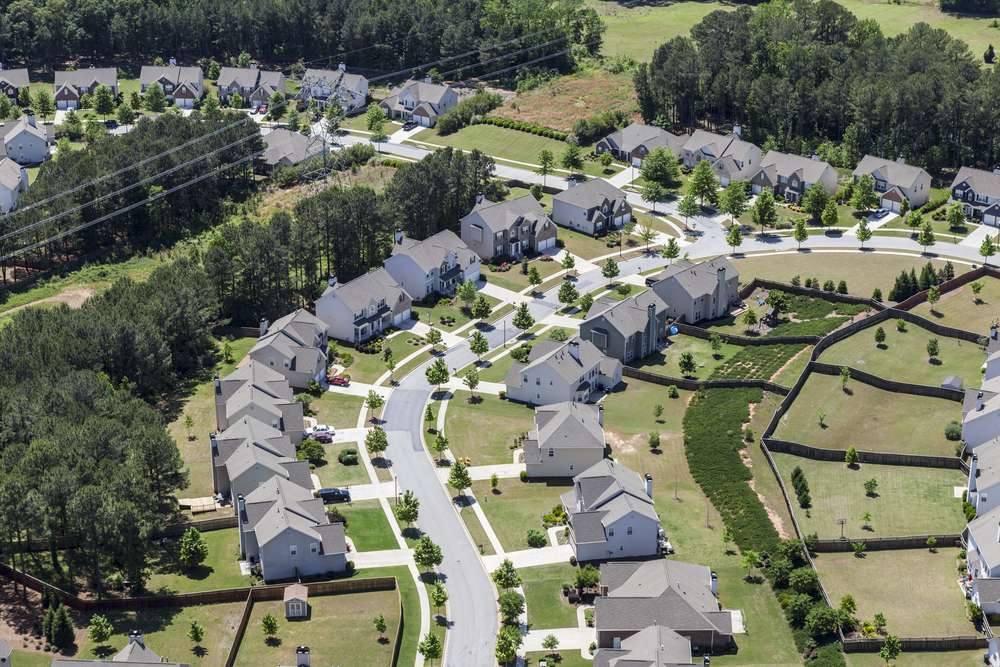
Atlanta new construction is not one market. A new townhome near the BeltLine, a new home in Alpharetta, and a new build in South Fulton may all be brand-new—but they can represent completely different decisions in terms of price, space, commute, HOA structure, taxes, future construction, and lifestyle.
Atlanta New Construction 2026: Intown vs. North Fulton vs. South Fulton
Don't ask which new-home community is “best.” Ask which new-construction geography gives you the strongest combination of location, space, cost, and future flexibility.
New construction can feel easy to compare.
Everything is new.
The kitchens photograph beautifully.
The floor plans look modern.
Builders may advertise incentives.
But two brand-new homes at similar prices can create completely different ownership experiences.
One may give you:
- A shorter commute but less space.
- An HOA that handles more exterior maintenance.
- Three or four levels of vertical living.
Another may give you:
- More bedrooms.
- A larger lot.
- More homeowner maintenance.
- A longer daily drive.
That is why the correct question is not:
“Where can I get the nicest new house?”
It is:
Same New Construction
≠
Same Ownership Experience
Location Changes the Math.
Use the New-Construction Geography Test
When comparing Intown Atlanta, North Fulton, and South Fulton, evaluate six categories.
New-Construction Fit
=
Location + Home Type + Commute + Total Ownership Cost + Builder / HOA Structure + Future Supply & Flexibility
The best result is not necessarily the area that scores highest in every category.
It is the one that performs best in the categories you care about most.
First: Don't Assume Each Part of Atlanta Offers Only One Kind of New Construction
It is tempting to describe the market like this:
Intown = townhomes.
North Fulton = single-family.
South Fulton = affordable detached new builds.
That is too simple.
In 2026, Intown Atlanta includes townhomes, townhome-style condominiums, condos, and selective detached construction.
Alpharetta and other North Fulton locations include attached and detached options across very different price ranges.
South Fulton also contains both detached homes and townhome-style new construction.
Geography Influences
the Housing Options.
It Does Not
Define Them Completely.
Examples of Active New-Construction Areas to Research in 2026
These are examples—not rankings or recommendations—and community availability can change quickly.
Area | 2026 Examples to Research | Common Decision Theme |
|---|---|---|
Intown Atlanta | Skylar in Chosewood Park, Beckham Place at Morningside, The Heights on Boulevard in Boulevard Heights | Proximity and urban access versus vertical living, HOA, parking and attached-home considerations |
North Fulton | The Gathering Alpharetta, Brookside Reserve, IveyBrooke, Bellmoore Park, Bellwyn, Ward's Crossing | Higher-priced land and location choices, attached versus detached product, commute, lot and limited new-community supply in some submarkets |
South Fulton | Parkview Estates, Briar Creek, Enclave at Stonewall Tell, South Wind, Woodbury Park, Butner Estates | More new-build choices at varying price points versus commute, future development, community phase and total ownership cost |
Community examples reflect publicly marketed inventory reviewed in September 2026. Availability, builder, product type, pricing, incentives and phase status can change without notice.
Option 1: Intown Atlanta New Construction
Intown new construction often makes the strongest case when the buyer places substantial value on location.
Depending on the exact neighborhood, an Intown property may provide easier access to:
- Central Atlanta employment destinations.
- Restaurants and retail.
- Parks and trails.
- BeltLine access.
- MARTA in certain locations.
- Entertainment and cultural destinations.
But do not buy the marketing phrase “walkable.”
Test the actual route.
A destination may be one-half mile away but still involve an uncomfortable road crossing, missing sidewalk, steep grade, or indirect route.
“Near the BeltLine” and “I can comfortably use the BeltLine from my front door” are not automatically the same thing.
Vertical living is part of the house—not a minor detail
Many Intown townhomes use multiple levels to create more living space on a smaller footprint.
That can give buyers:
- Private garages.
- Rooftop terraces.
- Separate office or guest levels.
- Greater separation between spaces.
But walk through a normal day.
Garage on Level 1.
Kitchen on Level 2.
Bedrooms on Level 3.
Rooftop on Level 4.
That may work perfectly for you.
Or you may realize that every bag of groceries has a staircase attached to it.
Understand whether you are buying a fee-simple townhome or condominium ownership structure
New attached housing can have different legal and maintenance structures.
Review:
- What you personally own.
- What the association maintains.
- Current dues.
- Insurance responsibilities.
- Rental restrictions.
- Parking rules.
- Reserve information when applicable.
A lower-maintenance lifestyle does not mean zero maintenance cost.
Future competing construction matters
When buying into an area with ongoing infill development, ask what else can be built nearby.
Future inventory may create:
- More amenities.
- More neighborhood investment.
- More housing supply.
- More direct competition if you sell while new units remain available.
New Development
Can Improve an Area
and Still Become
Your Future Competition.
Option 2: North Fulton New Construction
North Fulton includes very different new-construction products across Alpharetta, Johns Creek, Milton, Roswell, and nearby areas.
Some buyers may find detached homes.
Others may find luxury townhomes, condominiums, courtyard-style homes, or smaller infill developments.
The important point is:
Do not assume “North Fulton new construction” means a large suburban subdivision with a big detached house.
Location scarcity can change what “new” looks like
In more established areas, available land can be more constrained.
That can result in:
- Smaller communities.
- Attached housing.
- Infill construction.
- Higher price points.
- Smaller lots relative to the home price.
None of those is automatically a disadvantage.
It simply means you may be paying more of your budget for location and less for raw land or square footage.
In an established high-demand location, part of the purchase price may be buying geography—not just construction.
Test your actual North Fulton commute
North Fulton may work extremely well if your recurring destinations are also in North Metro Atlanta.
But if you commute regularly to Midtown, Downtown, the airport, or another part of the metro, test that route at the time you will actually travel.
Do not rely only on:
- Mileage.
- A Sunday-afternoon drive.
- The builder's “minutes from” marketing language.
If school assignment matters, verify the exact homesite
Do not assume school assignment based on:
- Alpharetta mailing address.
- Johns Creek marketing language.
- ZIP Code.
- The community name.
- A third-party listing website.
If school assignment is material to your decision, verify the exact address through the applicable official school district.
Boundaries can change.
Option 3: South Fulton New Construction
South Fulton continues to offer buyers a meaningful amount of new-home inventory across different builders and product types.
Depending on the community, buyers may find:
- Detached single-family homes.
- Townhomes.
- Larger floor plans at different price points.
- Builder incentives.
- Communities still completing future phases.
The potential opportunity is straightforward:
Your budget may purchase a different amount of house than it would in some Intown or North Fulton locations.
But square footage should not end the analysis.
Run the “Normal Tuesday” commute test
A home may look like a bargain until you calculate how often you need to drive somewhere else.
Test:
- Morning commute.
- Evening return.
- Airport trips.
- Grocery and routine errands.
- Recurring social or recreational destinations.
Lower Purchase Price
Can Be Valuable.
But:
Housing Cost + Transportation Cost + Time Cost
All Belong in the Comparison.
Ask how many phases are still coming
Buying early in a new community can have benefits.
But you should understand the development timeline.
Ask:
- How many homes are planned?
- How many have been completed?
- How many phases remain?
- Where will future construction occur?
- What amenities are completed versus merely planned?
This matters because if you need to sell while the builder is still selling new homes, your resale home may compete with:
brand-new inventory + builder incentives.
The Model Home Is a Marketing Tool—not the Base House
This is one of the most important new-construction rules.
The model may include:
- Upgraded flooring.
- Premium cabinets.
- Enhanced lighting.
- Built-ins.
- Designer paint.
- Upgraded appliances.
- Landscaping.
- Optional structural selections.
Do not ask only:
“How much is this floor plan?”
Ask:
“What would it cost to build the version I am standing inside?”
Base Price Is Not the Same as Your Final Purchase Price
Depending on the builder and property, the final cost may be affected by:
- Lot premium.
- Elevation choice.
- Structural options.
- Design-center upgrades.
- Appliance package.
- Closing expenses.
Base Price
≠
All-In Price
Builder Incentives Need Their Own Comparison
A builder may advertise:
- Closing-cost assistance.
- Rate incentives.
- Upgrade credits.
- Quick-move-in discounts.
An incentive can be valuable.
But don't evaluate it in isolation.
If an incentive requires the use of an affiliated lender or other provider, compare:
- Interest rate.
- APR.
- Points.
- Lender fees.
- Cash required at closing.
- Monthly payment.
The biggest advertised credit is not automatically the lowest financing cost.
New Construction Does Not Mean “No Inspection Needed”
A new home may have fewer age-related maintenance concerns.
It is still a newly assembled physical structure.
Depending on the construction stage and contract, buyers may consider professional inspections at appropriate times such as:
- Pre-drywall.
- Before closing.
- Before applicable warranty periods expire.
Inspection rights and timing depend on the specific builder contract, so confirm what is permitted before assuming.
New Construction ≠ Perfect Construction
Read the Warranty Instead of Assuming What “Builder Warranty” Means
Ask:
- What is covered?
- For how long?
- What is excluded?
- Who handles warranty claims?
- What deadlines apply?
- Are manufacturer warranties separate?
“There is a warranty” is not enough information to understand your protection.
Know Who the On-Site Sales Representative Represents
The person greeting you at the model home can be knowledgeable, responsive, and helpful.
But do not assume that person represents your interests as the buyer.
Confirm the agency relationship.
Georgia real estate licensees are required to disclose agency relationships, and buyers should understand who represents whom before relying on advice about:
- Price.
- Contract terms.
- Incentives.
- Inspection.
- Negotiation.
Friendly
≠
Your Representative
Confirm Agency.
Builder Contracts Can Be Very Different From a Typical Resale Contract
Before signing, understand provisions involving:
- Earnest money.
- Financing deadlines.
- Construction delays.
- Material substitutions.
- Inspection access.
- Closing date flexibility.
- Default provisions.
- Warranty procedures.
A builder contract should be evaluated as the actual agreement you are signing—not as though it automatically works like the last resale contract you saw.
The Homesite Can Matter More Than the Floor Plan
Buyers often spend hours selecting cabinets and flooring but only minutes choosing the lot.
Evaluate:
- What the backyard faces.
- Slope.
- Drainage.
- Sun orientation.
- Road exposure.
- Amenity proximity.
- Future phases.
- Adjacent undeveloped property.
Flooring can be replaced.
Your lot position usually cannot.
Don't Pay for Today's View Without Asking What Is Planned Tomorrow
A model or quick-move-in home may currently back to trees or open land.
Ask:
“Is that permanent open space—or simply the next phase?”
Review the builder's community plans and, when material, available public planning or zoning information.
A conceptual plan, proposed development, approved project, and completed project are not the same thing.
Do Not Estimate Your Future Property Tax From the Vacant Lot's Current Bill
New construction can create confusion because the current tax record may reflect:
- Vacant land.
- Partial construction.
- A prior assessed value.
That may not resemble the future tax liability after the completed property is assessed.
Buyers should investigate the applicable jurisdiction, current millage information, exemptions they may qualify for, and reasonable estimates based on the completed property.
Compare Total Ownership Cost—not Just New-Home Price
Mortgage
+
Property Taxes
+
Insurance
+
HOA
+
Utilities
+
Maintenance
+
Transportation
+
Upgrades
=
Real Ownership Experience
Two $500,000 new homes can create very different monthly budgets.
One may have:
- Higher HOA dues.
- Lower transportation needs.
- Less yard maintenance.
Another may have:
- Lower HOA dues.
- A longer commute.
- More exterior maintenance.
The purchase prices may match.
The lifestyle economics may not.
Intown vs. North Fulton vs. South Fulton: What Are You Really Trading?
Factor | Intown Atlanta | North Fulton | South Fulton |
|---|---|---|---|
Typical Value Proposition | Proximity and urban access | Established North Metro location with varied new product | New-home selection and differing price points |
Home Type | Often attached, but varies | Attached and detached | Attached and detached |
Space per Dollar | Often less interior/lot space for the same budget | Highly location- and product-specific | May provide more space in some communities |
Commute | Can favor central destinations | Can favor North Metro destinations | Must be tested against your actual destinations |
HOA | Often important for attached communities | Varies significantly | Varies by community and amenities |
Future Supply | Infill and nearby redevelopment can matter | Some submarkets have limited new-community inventory | Remaining phases can be an important factor |
Main Risk to Check | HOA, parking, stairs, competing development | Price premium, lot, jurisdiction, commute | Commute, future phases, development and total carrying cost |
Which Area Should You Choose?
Give Intown More Weight If You Prioritize:
- Closer access to central Atlanta destinations.
- Urban amenities.
- Potentially more walkable daily routines in the right location.
- Lower exterior-maintenance responsibility in some attached communities.
- Location over maximum square footage.
Give North Fulton More Weight If You Prioritize:
- North Metro location.
- Access to Alpharetta, Johns Creek, Roswell, Milton or nearby destinations.
- A mix of attached and detached new-construction options.
- Established commercial and recreational infrastructure.
- Location enough to accept a potentially higher price per unit of space.
Give South Fulton More Weight If You Prioritize:
- A broader selection of currently marketed new-home communities.
- Exploring different price points.
- Larger or newer floor plans in some communities.
- Builder incentive opportunities.
- The ability to accept a different commute or development pattern in exchange for those benefits.
The 100-Point Atlanta New-Construction Scorecard
Category | Weight | Question |
|---|---|---|
Location & Commute | 20 | Does this location improve my actual weekly routine? |
Home & Lot Function | 20 | Do the floor plan, parking, stairs, outdoor space and storage fit? |
Total Ownership Cost | 20 | What do payment, taxes, insurance, HOA, transportation and maintenance look like together? |
Builder & Contract | 15 | Do I understand the builder, contract, warranty, timeline and incentives? |
HOA / Community Structure | 10 | Are the dues, rules and responsibilities comfortable? |
Future Supply & Flexibility | 15 | What could still be built, and what might I compete with later? |
Total | 100 | Use the score to compare trade-offs, not to mechanically choose a home. |
25 Questions to Ask Before Buying Atlanta New Construction
☐ 1. What is included in the advertised price?
☐ 2. What would the model home's upgrades cost?
☐ 3. Is there a lot premium?
☐ 4. Which structural options cannot be added later?
☐ 5. What is the realistic all-in purchase price?
☐ 6. What builder incentives are currently available?
☐ 7. Do incentives require a specific lender or provider?
☐ 8. What does that financing look like after rate, APR, points and fees are compared?
☐ 9. What are current HOA dues?
☐ 10. What does the HOA maintain?
☐ 11. Are there rental or leasing restrictions?
☐ 12. What is the estimated tax situation after the home is fully assessed?
☐ 13. Who does the on-site sales representative represent?
☐ 14. What does the builder contract say about delays and closing dates?
☐ 15. What inspection rights do I have?
☐ 16. What exactly does the builder warranty cover?
☐ 17. How many phases remain in the community?
☐ 18. What will be built behind or beside my homesite?
☐ 19. Which amenities already exist and which are only planned?
☐ 20. Have I driven my commute during a normal weekday?
☐ 21. If school assignment matters, have I verified the exact homesite address?
☐ 22. What competing new construction could still be available if I need to resell?
☐ 23. How does this new home compare with nearby recent resale options?
☐ 24. Am I paying primarily for the house, the location, or the fact that it is new?
☐ 25. If I removed the model-home presentation, would this still be the strongest location and home for my budget?
Frequently Asked Questions
Where is the best place to buy new construction in Atlanta in 2026?
There is no single best area for every buyer. Intown, North Fulton, and South Fulton provide different combinations of price, space, commute, ownership structure and future development. The best choice depends on your actual priorities.
Is Intown Atlanta new construction always a townhome?
No. Intown inventory can include townhomes, townhome-style condominiums, condos and selective detached construction. Confirm the legal ownership structure and HOA responsibilities for the specific property.
Is North Fulton new construction only expensive single-family homes?
No. Current inventory includes attached and detached products at varying price points, although land availability and location can create different pricing patterns from other parts of Metro Atlanta.
Is South Fulton new construction cheaper?
Some South Fulton communities may offer lower starting prices or more square footage than certain Intown or North Fulton alternatives, but buyers should compare actual homes rather than assume the entire area is less expensive. Taxes, HOA, upgrades, commute and financing all affect total cost.
Should I use the builder's lender?
Builder-affiliated lender incentives can be valuable, but compare the entire financing package—including rate, APR, points, fees, cash to close and monthly payment—against other available financing options before deciding.
Do I need a real estate agent when buying new construction?
Buyers can decide what representation they want, but they should understand that the builder's sales representative should not automatically be assumed to represent the buyer. Confirm all agency relationships and understand any builder procedures for buyer representation before touring or contracting.
Should I inspect a brand-new home?
New construction can still have workmanship, installation or completion issues. Professional inspection can be useful, but the timing and access rights depend on the builder contract and construction stage.
Are builder warranties the same for every new home?
No. Coverage, exclusions, duration and claim procedures vary. Review the actual warranty documents for the home and builder.
Does buying early in a new community guarantee appreciation?
No. Future values cannot be guaranteed. Additional phases may bring amenities and community development, but they can also create future competing inventory.
Is the model-home price the price I should expect to pay?
Not necessarily. Models frequently contain upgrades, optional structural selections, furniture and design features that are not included in the base price. Ask for an itemized explanation of what is standard and what costs extra.
Don't Ask:
“Which Atlanta New-Home Community Is Best?”
Ask:
“Which Location Gives My Budget the Life I Actually Want?”
Final Thoughts: Buy the Geography and the House Together
New construction can make it tempting to compare countertops, cabinets and floor plans first.
But the larger decision is often geography.
Intown may ask you to trade space for proximity.
North Fulton may ask you to pay more for an established North Metro location or accept a different housing type than you expected.
South Fulton may offer more new-build choices at certain budgets while asking you to evaluate commute, future development and remaining community phases carefully.
Before buying, compare:
Location.
Commute.
Home type.
Layout.
Lot.
Base price versus all-in price.
Builder incentives.
Financing.
Taxes.
Insurance.
HOA.
Inspection rights.
Warranty.
Future phases.
And competing resale and new-construction inventory.
The newest house is not automatically the strongest purchase.
The stronger decision is the new home whose location, cost, function and future flexibility work together for your actual life.
Comparing New-Construction Communities Around Atlanta?
We can compare more than builder brochures and model homes. For each community, we can look at location, commute, total purchase price, homesite, upgrades, HOA, taxes, incentives, contract terms, inspections, future phases, nearby resale competition and the long-term trade-offs of the area. The goal is to help you understand what you are actually buying before you sign the builder contract.
Tina Jingru Sui | TJS Team
About Tina Jingru Sui
Tina Jingru Sui is the founder and leader of the TJS Team, serving buyers, sellers, investors, new-construction buyers, and relocation clients throughout Metro Atlanta.
Tina and her team serve communities including Atlanta, Johns Creek, Alpharetta, Suwanee, Duluth, Buford, Dacula, Marietta, Roswell, Sandy Springs, Smyrna, Lawrenceville, and surrounding Metro Atlanta areas.
Keller Williams Atlanta Partners · (404) 375-2120
This article is provided for general informational and educational purposes only and does not constitute legal, financial, tax, lending, investment, appraisal, inspection, engineering, construction, warranty, insurance, zoning, school, HOA, or other professional advice. Community names and examples reflect publicly marketed inventory reviewed in September 2026 and are included only as examples, not rankings, endorsements or guarantees of availability. Builders, community phases, pricing, incentives, floor plans, homesites, amenities, completion dates and availability can change without notice. Base prices may not include lot premiums, structural options, design selections, upgrades, closing expenses or other costs. Builder incentives can be conditioned on the use of affiliated lenders, title providers or other services and should be evaluated together with interest rate, APR, points, fees, cash to close and monthly payment. New construction does not guarantee defect-free construction, and inspection rights depend on the applicable builder contract. Buyers should review actual warranty terms rather than assume uniform coverage. Proposed amenities, roads, views, phases or surrounding developments may change, be delayed or never be completed. A conceptual or proposed plan is not the same as an approved or completed project. HOA dues, rules, reserves, maintenance responsibilities, leasing restrictions and insurance structures vary by community and can change. Current tax records for a new-construction homesite may not reflect a future completed-home assessment or the buyer's future tax liability. If school assignment is material to the purchase, buyers should verify the exact property address through the applicable official school district because attendance boundaries can change. Community comparisons should use objective criteria identified by the buyer—such as price, commute, home type, lot, transportation, amenities, taxes and ownership cost—and not characteristics protected by Fair Housing law. Georgia real estate licensees are required to disclose agency relationships; buyers should confirm who represents whom in a builder transaction and should not assume an on-site sales representative represents the buyer. Builder contracts may differ materially from resale contracts. Buyers should have legal questions reviewed by a qualified attorney and use appropriately qualified inspectors, lenders, engineers, insurance professionals, tax professionals and other specialists when necessary. A Comparative Market Analysis prepared by a real estate professional is not an appraisal and does not guarantee future appreciation, marketability, resale price, buyer demand or net proceeds. Equal Housing Opportunity. Tina Jingru Sui, GA License #392936, REALTOR®, affiliated with Keller Williams Atlanta Partners and regulated by the Georgia Real Estate Commission.




