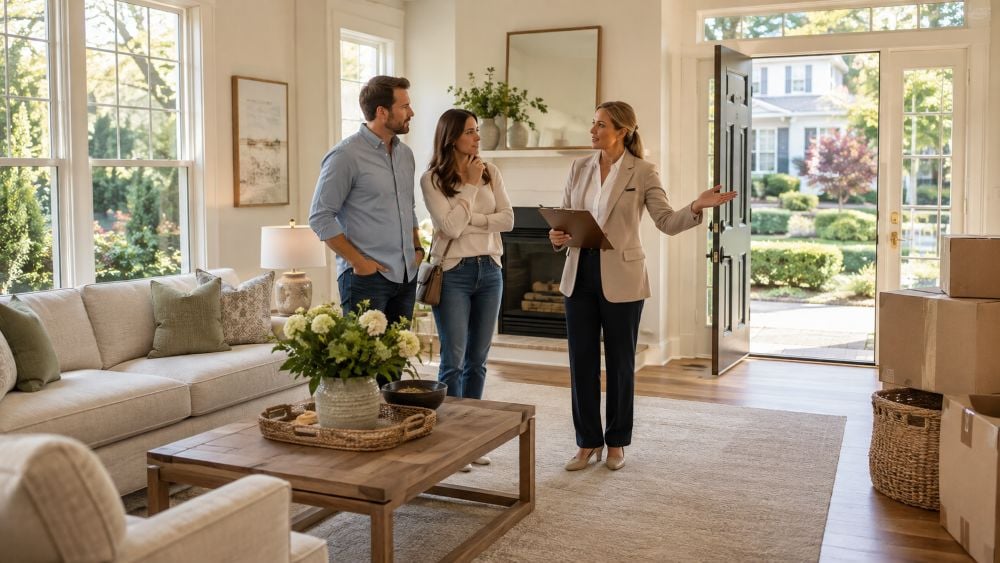
An open house can make a property feel surprisingly easy to love. The lights are on, the rooms may be staged, the counters are clean, and you are seeing the home during a carefully presented window of time. Instead of trying to “inspect” everything yourself, use the visit for a more realistic purpose: determine whether the home's layout, condition, surroundings, and ownership questions are strong enough to justify a deeper second look.
What Should You Look for During an Atlanta Open House?
Use the first visit to screen the property—not to convince yourself you already understand it.
Watch: What Should You Look for During an Atlanta Open House?
Prefer a quick video walkthrough? Watch the companion video below before your next showing or open house.
An Open House
Is Not Where You Finish
Your Due Diligence.
It Is Where You Decide
Whether the Property
Deserves More of It.
Use the 20-Minute Open House Screen Test
Time | Focus | Main Question |
|---|---|---|
Minutes 0–3 | Overall fit | Does this home solve my major needs? |
Minutes 3–10 | Layout & function | Will the space actually work for my daily life? |
Minutes 10–15 | Condition signals | What deserves professional follow-up? |
Minutes 15–20 | Exterior, surroundings & questions | What comes with this house that I cannot easily change? |
1. First 3 Minutes: Don't Start With the Countertops
Before you start opening cabinets or discussing paint colors, answer the big questions.
Does the home have:
- The right number and location of bedrooms?
- The bathroom arrangement you need?
- The type of kitchen / living connection you prefer?
- The parking you actually require?
- The lot and outdoor space you want?
- Any obvious permanent feature you already know you cannot accept?
If one of your true deal-breakers is already present,
do not spend the next 40 minutes talking yourself into the chandeliers.
A beautiful room should not make you forget a permanent problem.
2. Walk the Floor Plan Like You Already Live There
Do not simply count rooms.
Walk your normal day through the house.
Imagine:
bringing groceries from the car to the kitchen,
doing laundry,
working from home,
having overnight guests,
moving between bedrooms and bathrooms,
taking the dog outside,
or storing the things you use every week.
Ask:
“Does the floor plan make my normal life easier—or am I already creating workarounds?”
Square Footage Tells You
How Much Space Exists.
The Floor Plan Tells You
How Much of It You Can Actually Use.
3. Mentally Remove the Staging
Staging can be very effective.
That is the point.
But while touring, mentally remove:
- The furniture.
- The art.
- The rugs.
- The decorative lighting.
- The perfectly positioned accessories.
Now ask:
“Do I still like the room itself?”
Pay attention to:
- Room dimensions.
- Furniture placement limitations.
- Door locations.
- Window placement.
- Traffic flow.
- Wall space.
4. Notice Natural Light—but Also Notice Why the Room Is Bright
Ask:
Are all the lights on?
Are curtains completely open?
Is the room naturally bright,
or professionally presented as bright?
Look at:
- Window size.
- Window direction.
- Nearby trees.
- Neighboring structures.
- Covered porches.
- Basement exposure.
If natural light is especially important to you, a second visit at another time of day may be worthwhile.
5. Don't Ask “Does It Have Storage?” Ask “Where Does My Stuff Go?”
Check storage where appropriate and permitted.
Think about:
- Kitchen pantry.
- Bedroom closets.
- Linen storage.
- Garage storage.
- Basement storage.
- Seasonal items.
- Cleaning supplies.
- Outdoor equipment.
A house can be large and still have surprisingly poor storage.
Extra square footage does not automatically solve poor storage design.
6. Look for Condition Signals—not a DIY Inspection
An open house is not a substitute for a professional home inspection.
But you can identify things worth investigating later.
Look for visible signs such as:
- Ceiling or wall staining.
- Cracks.
- Damaged flooring.
- Loose or damaged trim.
- Fogged windows.
- Visible moisture.
- Unusual odors.
- Exterior wood deterioration.
- Signs of deferred maintenance.
Do not diagnose the cause yourself.
Simply note:
“This needs more information before I make a decision.”
Open House
=
Notice the Signal.
Inspection
=
Investigate the Condition.
7. Find the Major Systems
If accessible, notice:
- HVAC equipment.
- Water heater.
- Electrical panel location.
- Visible plumbing components.
- Roof condition from safe visible areas.
You do not need to estimate remaining useful life during the open house.
Instead, write down questions:
How old is the roof?
How old are the HVAC systems?
Has the water heater been replaced?
Are there service records?
Have major systems been repaired recently?
System age does not automatically mean defect. At the open house, your goal is to identify what information you still need.
8. Use More Than Your Eyes
Listen.
Smell.
Notice temperature differences.
Ask yourself:
- Is one room unusually warm or cold?
- Is there a musty odor?
- Is there heavy fragrance that makes another smell difficult to evaluate?
- Can you hear road traffic inside?
- Can you hear mechanical equipment?
- Is exterior noise noticeable from bedrooms?
These observations are not conclusions.
They are:
follow-up questions.
9. Spend Real Time Outside
Many Buyers spend 30 minutes inside and two minutes outside.
Reverse some of that.
If access is available and safe, look at:
- Driveway slope.
- Parking.
- Yard usability.
- Drainage patterns.
- Retaining walls.
- Fencing.
- Exterior siding / trim.
- Gutters.
- Decks and patios.
- Neighboring lots.
- What is directly behind the home.
Don't Spend
30 Minutes Evaluating
the Kitchen
and
90 Seconds Evaluating the Lot.
10. Check the Exact Road Position
Two houses in the same neighborhood can create very different ownership experiences.
Ask whether the home:
- Backs to a larger road.
- Sits near the subdivision entrance.
- Is located on a through street.
- Has an intersection nearby.
- Has limited guest parking.
- Has a difficult driveway.
If road noise or traffic matters to you, come back during the time you are most likely to experience it.
11. Look Beyond the Property Line
Objectively observe:
- Adjacent land uses.
- Vacant parcels.
- Commercial property.
- Construction.
- Drainage areas.
- Utility infrastructure.
- Roads.
- Physical property conditions nearby.
Avoid making assumptions about the people who live in the area.
Focus on:
physical, geographic, transportation, and land-use conditions.
12. Don't Let “Great Location” Stay Vague
After the open house, test the location against your real routine.
Drive or map:
- Work.
- Your preferred grocery store.
- Healthcare.
- Regular activities.
- Highway access.
- Any other destination you expect to use frequently.
If school assignment is part of your independent buying criteria, verify it using the exact property address through the applicable school district.
The open house shows you the house. Your follow-up research tells you whether the address works.
13. Ask About HOA Early if It Could Change Your Decision
Useful first questions include:
- Is there an HOA or condominium association?
- What are the current dues?
- What does the association maintain?
- Are there rental restrictions?
- Are there known special assessments?
- Are there architectural restrictions that matter to your plans?
Do not assume verbal answers are the final authority.
Material HOA information should ultimately be verified through current association documents and appropriate transaction due diligence.
14. Ask Questions That Create Useful Follow-Up
Instead of:
“Is this a good house?”
ask:
- How old is the roof?
- When were the HVAC systems last replaced or serviced?
- What major improvements have been completed?
- Are permits or invoices available for major work where applicable?
- Are there HOA dues or assessments?
- How long has the property been on the market?
- Have there been price changes?
- Is the Seller aware of any material issues that should be disclosed?
- Are there offer instructions or timing considerations?
15. Remember Who the Open-House Agent Represents
The person hosting the open house may represent the Seller, another agent in the listing brokerage, or potentially have another role depending on the situation.
You can ask factual questions.
But if you already have your own Buyer Agent, use your representative to help you:
- Analyze comparable sales.
- Investigate property-specific questions.
- Review disclosures and documents.
- Evaluate offer strategy.
- Coordinate inspections and Due Diligence.
Do not assume the open-house host is automatically acting as your adviser.
16. Don't Reject a Strong House Because of Easy-to-Fix Cosmetics
Orange walls can be painted.
A chandelier can be replaced.
Carpet can be changed.
Cabinet color can often be changed.
Staging furniture will leave.
Ask whether the objection is:
fixable or permanent.
Then compare the realistic cost of fixing it with the advantages of the property.
Don't reject a good location because you dislike paint. Don't accept a bad location because you love the kitchen.
17. Know When the Home Deserves a Second Tour
The first visit should answer:
“Is this property worth more investigation?”
If yes, a second showing can focus more deeply on:
- Room dimensions.
- Furniture placement.
- Storage.
- Major-system information.
- Exterior details.
- Noise at another time.
- Commute.
- Neighborhood routes.
- Property documents.
- Comparable sales.
The 80-Point Open House Screen Scorecard
Category | Score | Question |
|---|---|---|
Major Needs Fit | ___ / 15 | Does the home satisfy my non-negotiable needs? |
Layout / Function | ___ / 15 | Does the space work for everyday life? |
Condition Confidence | ___ / 10 | What visible items need further investigation? |
Storage / Utility | ___ / 10 | Can the house realistically hold what I need? |
Exterior / Lot | ___ / 10 | Does the outside function as well as the inside? |
Micro-Location | ___ / 10 | Road, noise, parking, adjacent land—can I accept these? |
Follow-Up Clarity | ___ / 10 | Do I know what still needs to be verified? |
Total | ___ / 80 | This is a screening tool—not a property inspection or purchase recommendation. |
25 Things to Check During an Atlanta Open House
☐ 1. Does the overall floor plan work?
☐ 2. Are bedrooms located where you want them?
☐ 3. Are bathrooms conveniently located?
☐ 4. Can your furniture reasonably fit?
☐ 5. Is there enough functional storage?
☐ 6. How much natural light is actually present?
☐ 7. Are there visible stains or signs of moisture?
☐ 8. Are there cracks worth further investigation?
☐ 9. Do floors feel uneven or damaged?
☐ 10. Are windows visibly damaged or fogged?
☐ 11. Are there unusual odors?
☐ 12. Is there a noticeable temperature difference between rooms?
☐ 13. Can you identify the HVAC units?
☐ 14. Can you identify the water heater?
☐ 15. What questions do you have about the roof?
☐ 16. Is the driveway practical?
☐ 17. Is there sufficient parking?
☐ 18. Is the yard actually usable?
☐ 19. Do you notice drainage or retaining-wall concerns?
☐ 20. What is directly behind and beside the property?
☐ 21. Can you hear road or commercial noise?
☐ 22. What HOA questions remain?
☐ 23. What major improvements has Seller reported?
☐ 24. What still needs professional verification?
☐ 25. Does this home deserve a second showing?
The Best Question to Ask as You Leave:
“Did I See Enough Here to Justify a Second Look—and What Still Needs to Be Verified?”
Frequently Asked Questions
What should I look for first at an open house?
Start with the major property fit: layout, bedroom and bathroom arrangement, parking, lot, and any permanent characteristic that could be a deal-breaker. Cosmetic details can come later.
Should I look for defects during an open house?
You can notice visible condition signals, but an open house is not a substitute for a professional inspection. Note anything that deserves further investigation instead of trying to diagnose the cause yourself.
Can I open closets and cabinets?
At many open houses, Buyers may reasonably inspect built-in storage, but respect the Seller's property, follow the hosting agent's instructions, and do not open private furniture or personal belongings.
Should I worry about an old HVAC system during an open house?
System age alone does not establish a defect or immediate replacement requirement. Note the age if available and consider condition, maintenance history, inspection findings, and professional evaluation later.
Should I check the neighborhood during the open house?
Yes, but focus on objective property and location characteristics: road position, traffic, parking, nearby land uses, access to recurring destinations, and other factors that matter to your own routine.
Can an open house replace a private second showing?
Usually not if you are seriously considering the property. A private second visit can give you more time to measure spaces, review condition questions, assess noise or light at another time, and investigate issues that were difficult to evaluate during a busy open house.
Can an open house replace a home inspection?
No. A professional home inspection is a separate, much more detailed evaluation. Contract rights and inspection timing depend on the actual purchase agreement.
Should I ask about school information at an open house?
If current school assignment is part of your independent buying criteria, verify it using the exact property address through the applicable school district rather than relying solely on listing or portal information.
Should I ask whether other Buyers are interested?
You can ask about offer instructions, deadlines, or known transaction timing. Keep in mind that showing activity and verbal interest are different from a written offer.
What is the most important question after an open house?
Ask: “Does this home deserve a second look, and what important information do I still need before making an offer?”
First Visit:
Screen.
Second Visit:
Verify Fit.
Inspection / Due Diligence:
Investigate.
Final Thoughts: Leave the Open House With Better Questions
An open house does not need to answer everything.
It needs to help you decide whether the property is worth pursuing.
Look at:
Layout.
Functional space.
Storage.
Natural light.
Visible condition signals.
Major-system questions.
Exterior condition.
Lot usability.
Parking.
Road position.
Noise.
Surrounding land.
HOA questions.
And the facts that still need verification.
Most importantly, separate:
what you observed
from:
what you still need a qualified professional or reliable source to confirm.
A successful open house visit is not one where you leave believing you know everything about the property.
It is one where you leave knowing whether the home deserves the next step—and exactly what you need to investigate next.
Touring Homes in Metro Atlanta?
When you find a property that deserves a closer look, we can help you move from first impression to structured analysis. That can include comparable sales, listing history, property disclosures, major-system questions, HOA information, location and lot trade-offs, offer strategy, inspection coordination, and the contract deadlines that matter after an offer is accepted. The goal is to help you distinguish what looks good during the showing from what actually makes sense to own.
Tina Jingru Sui | TJS Team
Call or Text: (404) 375-2120
Email: [email protected]
Visit TinaSui.com
About Tina Jingru Sui
Tina Jingru Sui is the founder and leader of the TJS Team, serving home buyers, sellers, investors, new-construction buyers and relocation clients throughout Metro Atlanta.
Tina and her team serve Atlanta, Johns Creek, Alpharetta, Suwanee, Duluth, Buford, Dacula, Sandy Springs, Roswell, Marietta, Smyrna, Peachtree Corners and surrounding Metro Atlanta communities.
Keller Williams Realty Atlanta Partners · (404) 375-2120
This article is provided for general real estate education and information only and does not constitute legal, financial, tax, appraisal, inspection, engineering, construction, environmental, insurance, school-placement, HOA, zoning or other professional advice. The 20-Minute Open House Screen Test, 80-point scorecard, checklist and related frameworks are educational screening tools only and are not substitutes for professional inspection, contractor evaluation, engineering review, survey, appraisal, title review, insurance underwriting or other appropriate due diligence. Visible staining, cracks, odors, temperature differences, aging systems, drainage conditions or other observations do not establish the existence, cause, severity or cost of a defect. Property-system age does not by itself establish failure or remaining useful life. Buyers should use qualified professionals when additional evaluation is appropriate. School assignments are property-specific, can change and should be verified through the applicable school district if relevant to the Buyer's independent criteria. References to neighboring or surrounding properties should be limited to objective physical, land-use, transportation and property conditions and should not be used to draw conclusions based on the race, color, religion, sex, disability, familial status, national origin or other protected characteristics of occupants or residents. HOA dues, assessments, restrictions and responsibilities should be verified through current association documents. Public planning, zoning and land-use information can change and does not guarantee future development. Open-house hosts may represent the Seller, another party, or have another brokerage relationship depending on the transaction; Buyers should understand agency relationships and obtain their own representation when desired. An open house does not create or replace contractual Due Diligence or inspection rights. Those rights and deadlines depend on the actual purchase agreement. A Comparative Market Analysis is not an appraisal. Real estate professionals can assist Buyers with market information, comparable sales, property research, offer strategy and transaction coordination within the scope of their license but do not replace attorneys, lenders, appraisers, inspectors, engineers, contractors, insurance professionals or other qualified specialists. Equal Housing Opportunity. Tina Jingru Sui, GA License #392936, REALTOR®, affiliated with Keller Williams Realty Atlanta Partners.