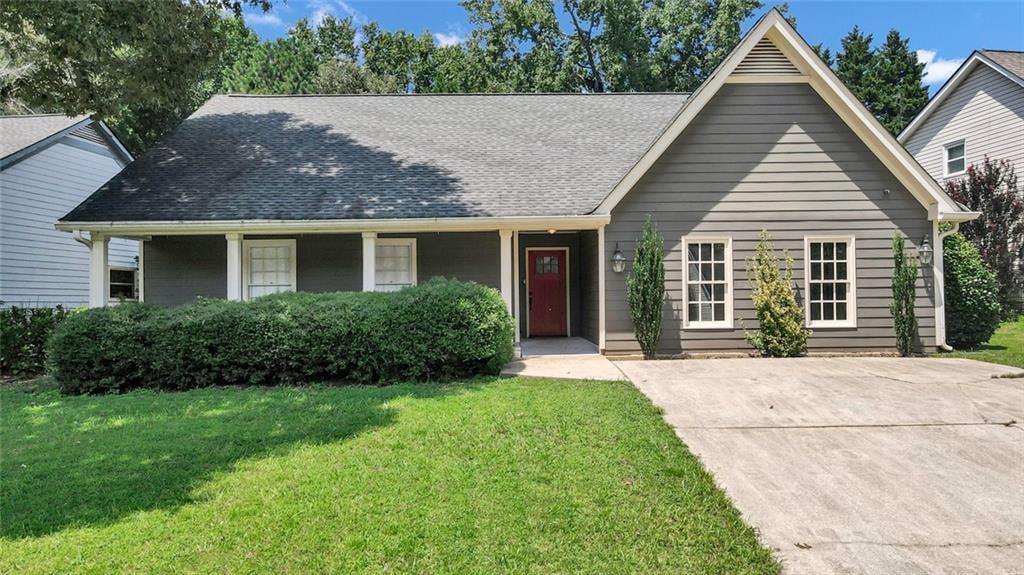
The house was a one-level ranch in Alpharetta, in North Fulton County — four bedrooms, two baths, a little over 1,500 square feet, freshly painted, on a fenced lot with a deck and no mandatory HOA. I was the listing agent. The binding contract set closing for October 28.
It closed on October 20.
The problem: a closing date that moved eight days, with less than a day's notice
At 12:28 on the afternoon of Monday, October 19, the closing attorney's office emailed the file with a single line: the closing was scheduled for nine o'clock the next morning.
That was eight days ahead of the date written into the contract, and it arrived with under twenty-one hours to work with.
Closing early is not a problem in itself. It is common, and it is usually good news — a buyer whose loan clears ahead of schedule wants to use the time, and a seller who is already packed would rather be done. But in Georgia the closing date is a term of the purchase and sale agreement, not a line on a calendar. Changing it means an amendment, signed by both sides. And the party who has to live with the new date — who has to be out, who has to have the utilities transferred, who has to have the movers booked — is the seller, who at that moment had not yet heard about it from anyone.
So the work of that afternoon was not deciding whether to accept the earlier date. It was making sure that when we accepted it, nothing was riding on it that had not been checked.
What we did, in the three hours we had
12:31 p.m. — three minutes after the notice. I replied with two questions: why, when our binding contract says the 28th, and has our seller been notified? The second one is the one that mattered. The closing attorney's office coordinates with the agents; the seller hears it from me. Until my seller had the date, I did not have an answer to give.
12:38 p.m. I asked that the commission be corrected to match the Instructions to Closing Attorney we had already submitted, so that the figures on the statement and the figures in our file were the same document before anyone signed anything.
12:40 p.m. The amendment that was to carry the new date had the city name misspelled. It was caught before it went anywhere and corrected — a small thing on the day, and not a small thing months later when a title examiner reads the file and finds a document describing a town that does not exist.
12:44 p.m. I had gone through the settlement statement that had been circulated, line by line, and the credit due to my seller was not on it. I raised it. The credit was in fact being applied; it simply was not visible on the version that had gone out, and an updated statement was recirculated the same afternoon. That is the ordinary explanation and it was the right one. It is also the explanation you only get if someone reads the statement the day it arrives rather than at the table.
1:00 p.m. With the credit confirmed, the commission corrected and the amendment on its way to being fixed, I went back to my seller, got a yes, and wrote back: we have an initial change, and my client can close tomorrow at nine.
The next morning at 9:00 a.m., a member of my team was in the room for the signing. It closed that day. The signed settlement statement came back the following afternoon, the closing notice went to FMLS, and the file was updated across our systems the same day.
Eight days early, on the earlier date, with the seller's credit where it belonged and the paperwork describing the right city.
If your closing gets moved up, check these six things before you answer
- Treat the date as a contract term. A new date needs an amendment signed by both parties. An email announcing it is not the amendment.
- Ask whether the seller knows. Nobody should be agreeing to a date on a seller's behalf until that seller has been told what it is and said yes.
- Read the settlement statement line by line, the day it is circulated. Not the total — the lines. Credits, prorations and payoffs are where a statement and a contract quietly disagree, and the fix takes an afternoon in advance or a crisis on the morning.
- Check the commission against the instructions you sent. If your side submitted an Instructions to Closing Attorney, the statement should match it. If it does not, say so before signing, not after.
- Read the amendment itself, not just its purpose. Addresses, city names, legal descriptions and dates are the fields that get mistyped, and the amendment becomes part of the closing file.
- Give the answer once, in writing. A verbal yes on the phone and a signed amendment are not the same thing, and only one of them is still true in a disagreement.
Looking back
What made that Monday afternoon a short problem rather than a long one is that none of it surfaced on closing morning. The statement had been read the day before. The commission was reconciled against our own instructions rather than taken on trust. The seller was asked before the date was accepted, not after.
On every listing I take, the settlement statement gets read line by line the day it is circulated, and a proposed change to the closing date does not get an answer from me until my seller has given me one first. Those two habits cost almost nothing on a file where everything is already correct, and they are the whole difference on a file where something is not.
If you are selling in Alpharetta, Johns Creek, Suwanee or anywhere across North Fulton, Forsyth County or Gwinnett County and you want a listing agent who reads the paperwork before it reaches the closing table, I work with sellers in English and Mandarin, at about 100 closings a year with Keller Williams Atlanta Partners. A home valuation takes one visit.