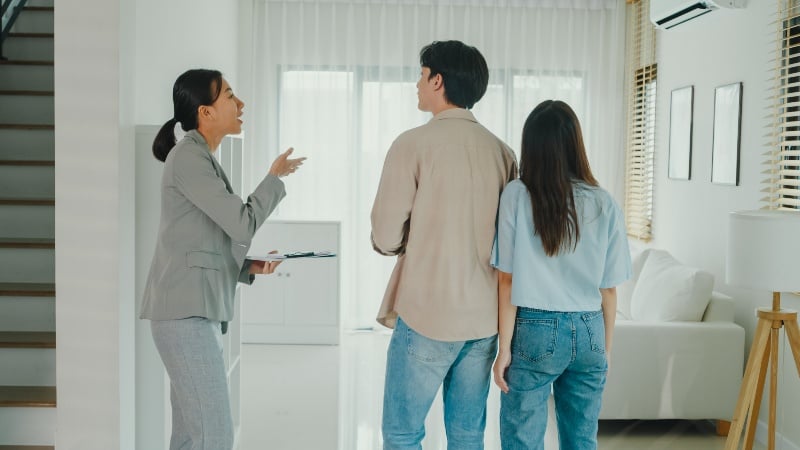
The first showing tells you whether you are interested. The second should help you decide whether the house actually works. Instead of spending the entire visit admiring finishes, use your second tour to evaluate layout, storage, condition, parking, noise, lot usability, major systems, ownership costs, and your normal daily routine.
Why Your Second Home Tour Should Be Different From Your First
The first visit is about attraction. The second is about verification.
The first time you walk through a house, emotion naturally plays a big role.
You notice the kitchen.
The ceiling height.
The backyard.
The natural light.
You may even start imagining where your furniture will go before you reach the second floor.
That first reaction is useful.
It tells you whether the property is worth considering.
But if you come back for a second showing, your purpose should change.
First Tour:
“Do I love this house?”
Second Tour:
“Does this house actually work?”
The Second Tour Should Have a Different Job
A second showing is not a substitute for a professional inspection.
You are not expected to diagnose plumbing, electrical, roofing, structural, or mechanical problems yourself.
Instead, the purpose is to slow down and notice practical questions you may have missed while deciding whether you liked the property.
First Tour = Emotion + Possibility
Second Tour = Function + Questions + Verification
1. Walk More Slowly
On the first showing, buyers often move quickly because they are trying to take in the entire house.
On the second visit, intentionally slow down.
Look more carefully at:
- Walls and ceilings.
- Flooring transitions.
- Doors and windows.
- Trim and baseboards.
- Cabinets and countertops.
- Visible plumbing areas.
- Basement and attic access where appropriate.
- Exterior surfaces you can observe without invasive inspection.
You may notice stains, cracking, damaged finishes, unusual repairs, moisture indicators, or deferred maintenance that you simply did not register the first time.
Notice something? Write it down.
Do not automatically diagnose the cause. Use your observations to generate questions for the seller, inspector, contractor, or other appropriate professional.
2. Mentally Remove the Staging
Good staging can make a room feel larger, more balanced, and easier to understand.
On the second tour, mentally remove the furniture.
Then ask:
- Where would my sofa actually go?
- Is there enough wall space for furniture?
- Will my dining table fit comfortably?
- Can a bedroom accommodate the furniture I need?
- Are walking paths practical?
- Do doors interfere with furniture placement?
A beautifully staged room and a highly functional room are not always the same thing.
3. Run the “Normal Tuesday” Test
Stop imagining the house during a holiday or perfectly staged weekend.
Imagine an ordinary weekday.
Ask yourself:
- Where do I enter when I come home?
- Where do shoes, bags, packages, and coats go?
- How easy is it to bring groceries into the kitchen?
- Where would I work if I need office space?
- Where does laundry happen?
- How many stairs would I repeatedly use?
- Does the kitchen function the way I actually cook?
Don't Only Imagine
Living Beautifully.
Imagine
Living Normally.
4. Open the Closets and Check the Storage
Storage is easy to overlook because it is not exciting.
But after moving in, lack of storage becomes very noticeable.
Look for:
- Bedroom closets.
- Linen storage.
- Pantry space.
- Coat storage.
- Garage storage.
- Utility storage.
- Basement or attic storage where applicable.
Do not just ask whether storage exists.
Ask whether it is in the places where you will actually need it.
5. Verify Room Size Instead of Trusting Your First Impression
A room can photograph larger than it feels.
Small-scale staging furniture can also affect perception.
If room dimensions matter to your decision, verify available measurements and consider measuring critical spaces yourself where permitted.
You may want to know whether:
- Your bed fits with usable circulation space.
- A dresser can fit without blocking a door.
- Your sectional works in the living room.
- Your dining table fits when chairs are pulled out.
6. Test the Parking in Real Life
Parking can look completely adequate when no one else is home.
On your second visit, pay attention to:
- Garage width and depth.
- Driveway width.
- Driveway slope.
- Whether vehicles have to block one another.
- Turnaround ability.
- Street parking.
- HOA or municipal parking restrictions.
Ask a very ordinary question:
“If several people arrive at the same time, where do the cars go?”
7. Walk the Yard Again
On the first visit, a large backyard can create an immediate emotional reaction.
On the second visit, evaluate its actual usability.
Look at:
- Slope.
- Drainage patterns you can visibly observe.
- Retaining walls.
- Tree coverage.
- Fencing.
- Usable flat space.
- Landscaping maintenance.
A larger lot is not automatically more useful than a smaller one.
Ask how much of the outdoor space you will actually use—and how much you will need to maintain.
8. Stop Talking for a Minute and Listen
Buyers often tour homes while talking with an agent, another buyer, or the seller's representative.
On your second tour, spend a short period simply listening.
Pay attention to sounds from:
- Traffic.
- Nearby commercial activity.
- Construction.
- Mechanical equipment.
- Shared walls where applicable.
- Roads behind or beside the property.
Then step outside and listen again.
If Possible, Visit at a Different Time
A property viewed at 1:00 p.m. may feel different at 6:00 p.m.
Different times can reveal different patterns involving:
- Traffic.
- Parking.
- Road noise.
- Nearby business activity.
- Community access.
One visit cannot show every condition, but a different time can provide another useful data point.
9. Drive the Route You Will Actually Use
If you have reached the point of making a serious purchase decision, test the location beyond the map.
Consider driving:
- From the driveway to work.
- From work back to the property.
- To your regular grocery store.
- To other destinations you personally use often.
Maps Tell You How Far.
Driving Helps You Decide How It Feels to Repeat.
10. Gather Information About the Major Systems
A second tour is a good time to identify questions about:
- Roof.
- HVAC.
- Water heater.
- Windows.
- Plumbing.
- Electrical components.
- Major appliances where included.
Useful questions may include:
- Do we know the installation date?
- Have major repairs been completed?
- Are records or invoices available?
- Were significant renovations performed?
Age alone does not establish condition.
A more useful framework is: Age + Actual Condition + Maintenance History + Inspection Findings + Future Repair Exposure.
The Second Showing Is Still Not the Inspection
Even a very careful buyer cannot replace a qualified professional inspection by looking more closely during a showing.
Your second tour should help you generate better questions.
Inspection and other specialist evaluations, where appropriate, are different due-diligence steps.
11. Ask What “Updated” Actually Means
A listing may describe a home as:
Updated. Renovated. Remodeled.
Those words can describe very different scopes of work.
Ask what was actually changed.
Depending on the renovation, you may want to understand:
- When the work was completed.
- What the scope included.
- Whether structural, plumbing, electrical, or mechanical work was involved.
- Whether permits were required and obtained where applicable.
- Whether transferable warranties or invoices exist.
A new backsplash does not tell you the condition of the HVAC.
New flooring does not tell you the age of the roof.
12. Revisit the Total Ownership Cost
Once you love a house, it becomes tempting to focus only on whether you can qualify for the purchase price.
Before moving forward, review the larger ownership picture.
Depending on the property, this may include:
- Mortgage principal and interest.
- Property taxes.
- Homeowners insurance.
- HOA or condo dues.
- Utilities.
- Routine maintenance.
- Potential future repairs.
Loan qualification answers whether financing may be available.
It does not determine whether the total ownership cost feels comfortable within your personal budget.
If property taxes are important to your budget, do not automatically assume the seller's current tax bill will equal your future tax bill.
Exact tax treatment can depend on assessed value, local taxing jurisdictions, exemptions, and the buyer's ownership situation.
13. Look Beyond the HOA Fee
If the property is governed by an HOA or condominium association, the fee is only part of the question.
Review available documents for topics such as:
- Parking rules.
- Rental restrictions.
- Exterior changes.
- Maintenance responsibilities.
- Amenities.
- Other use restrictions relevant to your plans.
The question is not simply whether the HOA fee is high or low.
It is whether the rules and services fit how you intend to use the property.
14. Think Ahead Without Trying to Predict Your Entire Life
You do not need a house capable of handling every possible future scenario.
But if you expect to stay for several years, ask whether the property has reasonable flexibility.
Consider:
- Could one room serve multiple purposes?
- Is storage adequate?
- Can the layout adapt if your routines change?
- Would the maintenance burden still be acceptable later?
You do not need to future-proof your entire life.
You just want to avoid buying something that only works under one very narrow set of circumstances.
15. For Five Minutes, Look at the House as the Future Seller
You should buy for your own needs.
But before making the final decision, consider:
“If I had to put this house back on the market, what would another buyer question?”
Maybe it is:
- The road exposure.
- Parking.
- An unusual layout.
- Limited storage.
- A steep yard.
- A high-maintenance feature.
That does not mean you should reject the house.
It means you understand the trade-off before buying it.
First Tour vs. Second Tour
First Tour | Second Tour |
|---|---|
Do I like it? | Does it function? |
Notice finishes | Notice condition |
See staged rooms | Test furniture placement |
Admire the yard | Assess usability and maintenance |
Look at the neighborhood | Listen to traffic and test access |
Imagine moving in | Imagine a normal Tuesday |
Ask “Can I see myself here?” | Ask “What am I accepting?” |
The 20-Point Second Home Tour Checklist
☐ 1. Walk every room more slowly.
☐ 2. Look at ceilings and walls.
☐ 3. Look more closely at floors, windows, and doors.
☐ 4. Mentally remove staging.
☐ 5. Test furniture placement.
☐ 6. Verify critical room dimensions.
☐ 7. Open closets and evaluate storage.
☐ 8. Walk through your normal daily routine.
☐ 9. Check garage and driveway functionality.
☐ 10. Think about guest parking.
☐ 11. Walk the yard carefully.
☐ 12. Stop talking and listen to the property.
☐ 13. Observe road exposure and nearby activity.
☐ 14. Test the route to your regular destinations.
☐ 15. Ask about major-system ages and repairs.
☐ 16. Clarify what renovations actually included.
☐ 17. Review HOA questions relevant to your plans.
☐ 18. Recalculate total ownership cost.
☐ 19. Ask whether the home can adapt to likely future needs.
☐ 20. Identify the three biggest trade-offs before leaving.
Before You Leave, Name the Three Biggest Trade-Offs
Every house has something you are accepting.
Maybe this home has:
- A great layout but a longer commute.
- A great location but a smaller yard.
- Beautiful renovation but older mechanical systems.
- More square footage but higher maintenance.
Before leaving your second tour, try to identify the three biggest compromises.
A Strong Purchase Decision Does Not Require
Finding a House With No Problems.
It Requires
Understanding the Trade-Offs Before You Buy.
Frequently Asked Questions
Do I always need a second showing before making an offer?
No. Market conditions, seller deadlines, buyer availability, and property circumstances may not always allow a second showing before an offer. When a second visit is possible and useful, it can help a buyer evaluate the property more deliberately.
Is a second showing the same as a home inspection?
No. A buyer walkthrough is not a substitute for a qualified professional inspection. A second showing is useful for evaluating functionality and identifying questions; an inspection is a separate due-diligence process with its own scope and limitations.
What should I look at most closely during the second visit?
Focus on items that affect everyday use and are easy to overlook during an emotional first showing: layout, room dimensions, storage, parking, yard usability, road exposure, noise, access, visible condition, and questions about major systems and ownership costs.
Should I visit at a different time of day?
If traffic, noise, parking, or road access is important to your decision, observing the property at a different time may provide useful additional information. Conditions can vary from day to day, so no single visit guarantees what the area will always be like.
Can I measure rooms during a showing?
When permitted, measuring important spaces can help confirm whether furniture or other items fit. Buyers should not rely solely on visual impressions or assume that every published measurement is exact.
Should I be worried if the roof or HVAC is older?
Age alone does not establish that a component is defective or immediately requires replacement. Actual condition, maintenance history, professional inspection findings, and future repair exposure provide better context.
What if I still love the house after noticing several problems?
That can still be a reasonable purchase. The purpose of a second tour is not to talk yourself out of a home you like. It is to understand the property's trade-offs so you can evaluate price, due diligence, ownership cost, and whether those compromises are acceptable to you.
First Tour: Fall in Love.
Second Tour: Test the Reality.
Final Thoughts: Your Second Tour Should Answer Better Questions
The second visit is not about trying to find reasons to dislike the house.
It is about making sure the first impression still holds up when you examine the property more carefully.
Before leaving, you should have a better understanding of:
How the layout functions.
Where your belongings will go.
How the parking works.
How usable the yard is.
What the surroundings feel like.
What questions remain about condition.
What owning the property may actually cost.
Which compromises you are accepting.
A house should make you say:
“I love it.”
But before you buy, it should also survive the question:
“Does this actually work for the way I live?”
Going Back for a Second Look at an Atlanta Home?
We can help you look beyond first impressions and compare the property's layout, condition, relevant recent sales, current competition, parking, lot, HOA, major systems, ownership costs, road exposure, and potential resale considerations. The goal is not to find a perfect house—it is to make sure you understand the property before making a major decision.
Tina Jingru Sui | TJS Team
Search Metro Atlanta Homes at TinaSui.com →
About Tina Jingru Sui
Tina Jingru Sui is the founder and leader of the TJS Team, serving buyers, sellers, investors, and relocation clients throughout Metro Atlanta.
Tina and her team serve communities including Johns Creek, Alpharetta, Suwanee, Duluth, Buford, Dacula, Marietta, Roswell, Sandy Springs, Smyrna, Lawrenceville, and surrounding Metro Atlanta areas.
Keller Williams Atlanta Partners · (404) 375-2120
This article is provided for general informational and educational purposes only and does not constitute legal, tax, financial, lending, inspection, engineering, construction, appraisal, HOA, insurance, or other professional advice. A buyer's showing or personal observations are not substitutes for a professional home inspection or other appropriate specialist evaluations. Visible stains, cracks, wear, repairs, sounds, odors, or other observations do not by themselves establish the cause or severity of a condition. Component age alone does not establish that a roof, HVAC system, water heater, plumbing system, electrical component, window, appliance, or other item is defective or requires immediate replacement. Buyers should independently review seller disclosures, inspections, HOA documents, surveys, title matters, public records, tax information, utility information, and other relevant materials and consult appropriate inspectors, contractors, engineers, attorneys, lenders, insurance professionals, appraisers, or other specialists as needed. Property-tax amounts, HOA dues, insurance costs, utilities, traffic, commute times, noise, maintenance expenses, and other ownership factors can change. No property characteristic guarantees appreciation, resale demand, sale price, or future marketability. Equal Housing Opportunity. Tina Jingru Sui, GA License #392936, REALTOR®, affiliated with Keller Williams Atlanta Partners and regulated by the Georgia Real Estate Commission.




