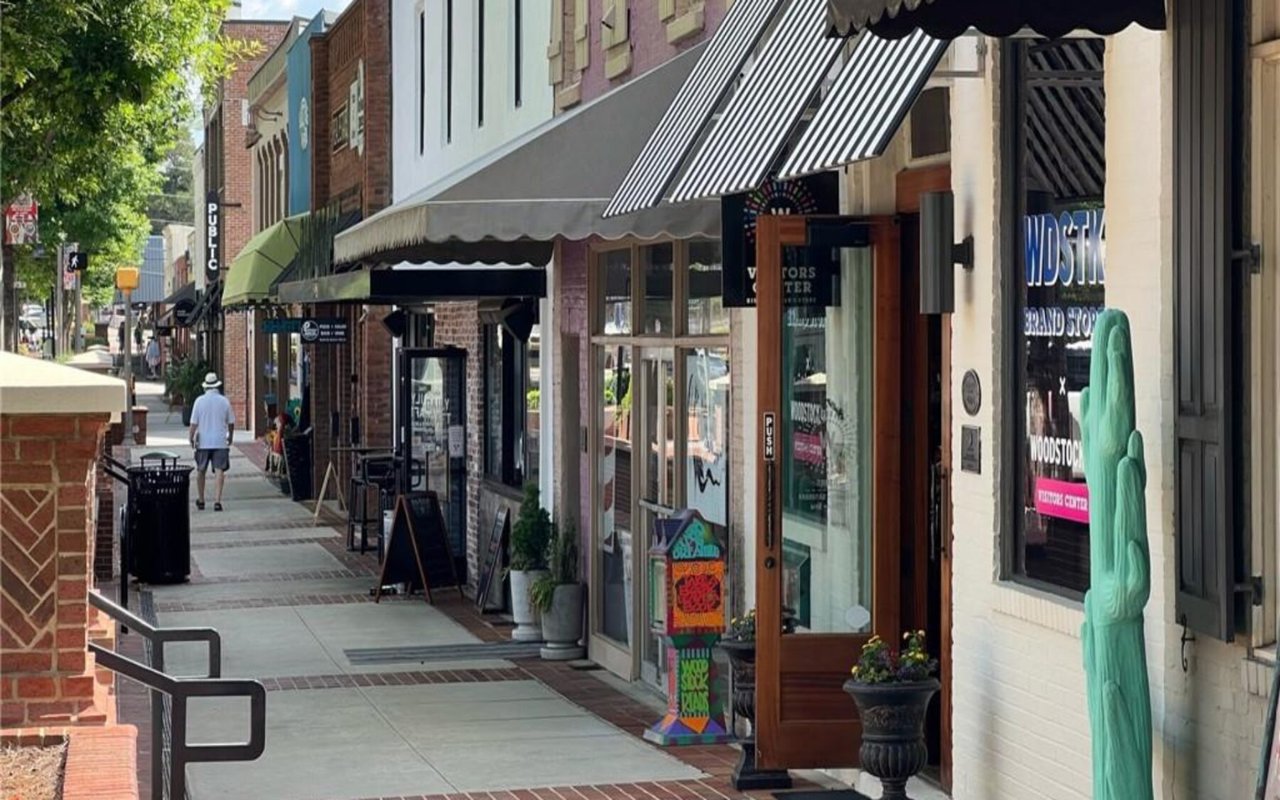
Nestled in Cherokee County, Georgia, Woodstock is a city rich in history and brimming with contemporary allure. From its early days as a modest settlement to its current status as a vibrant community, Woodstock’s journey is a testament to resilience and growth.
Early Beginnings
The area now known as Woodstock saw its first settlers in the early 1830s. These pioneers established farms near waterways like Little River and Noonday Creek, laying the foundation for a self-sustaining community. By 1833, Woodstock had its first postmaster, signaling the town’s budding infrastructure.

The Railroad Era
A significant turning point came in 1879 with the arrival of the railroad. This development transformed Woodstock into a bustling hub, facilitating the shipment of goods and attracting entrepreneurs. The town’s growth was further solidified when it was officially incorporated in 1897.

Educational and Commercial Growth
Education played a pivotal role in Woodstock’s development. The establishment of Woodstock Academy in 1880 provided residents with access to formal education. Commercially, the town flourished with businesses like the J.H. Johnston Company, which expanded to include warehouses, a cotton gin, and the Bank of Woodstock.
Preserving Heritage Amidst Modernization
Despite its growth, Woodstock has managed to preserve its historical charm. Landmarks like the Dean’s Store, established in 1906, now serve as the city’s Visitors Center, offering a glimpse into the past while welcoming newcomers.

A Thriving Community Today
Today, Woodstock stands as a testament to successful integration of history and modernity. With a population exceeding 35,000, the city boasts excellent schools, diverse housing options, and a commitment to green spaces, making it one of Georgia’s most desirable places to live.

Discover the unique blend of history and modern living that Woodstock offers. Whether you’re considering a move or simply exploring, Woodstock welcomes you with open arms.