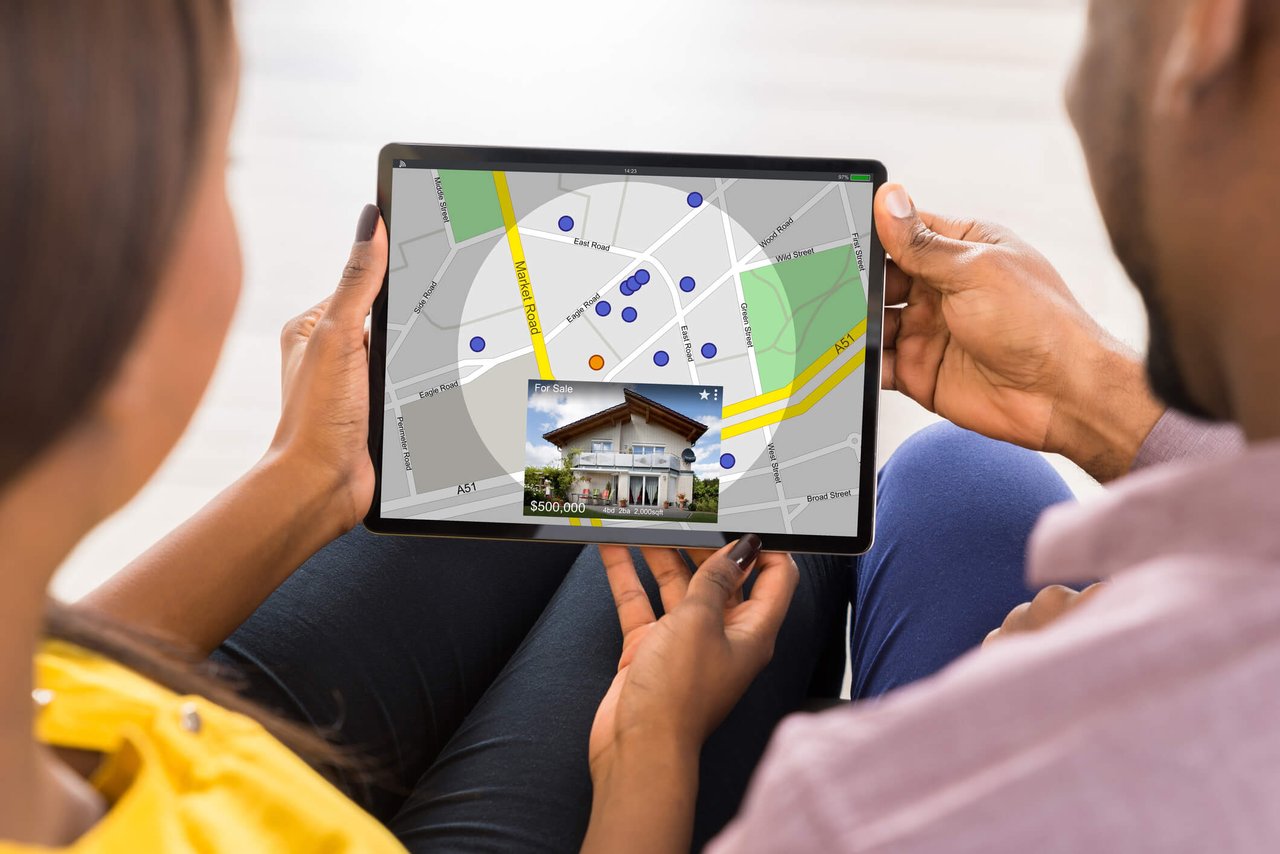
Online listings are excellent screening tools—but they are not complete representations of a property. Photos, price, square footage, bedroom count, and listing descriptions can help you decide what to tour. They generally cannot fully show real room proportions, noise, privacy, parking, lot usability, road exposure, natural light, smells, daily access, commute patterns, or what surrounds the property.
Your Home Search Has a Blind Spot: What Online Listings Don’t Tell You
The internet can help you find a house. It takes more investigation to understand what living there may actually feel like.
Home search has never been more convenient.
In a few minutes, you can compare:
- Price.
- Bedrooms and bathrooms.
- Square footage.
- Lot size.
- Photos.
- Maps.
- Listing descriptions.
That makes online searching incredibly useful.
But the convenience can create a false sense that you already understand the property.
Don't ask only:
“Does this listing look good?”
Also ask:
“What am I not seeing yet?”
Online Search Has One Job: Help You Narrow the List
An online listing does not need to answer every question about a property.
Its most useful role is helping you identify which homes deserve more investigation.
Online Search = Screen the Options
Showing = Test the Reality
Due Diligence = Verify What Matters
1. Photos Show Rooms—Not Always Their True Proportions
Real estate photography is designed to help buyers understand a property and present it effectively.
But photography cannot perfectly communicate how a room feels in person.
Perspective, camera position, lens choice, furniture scale, and image composition can all affect your perception of space.
A room that looks generous online may feel tighter when you stand inside it.
During a showing, ask:
- Does my furniture actually fit?
- Is there enough walking space around it?
- Where are the doors and windows?
- How much usable wall space is available?
Photos help you see the room.
Walking through it helps you understand how the room functions.
2. Pay Attention to What Wasn't Photographed
Sometimes one of the most useful questions is:
“What part of this property haven't I seen?”
For example:
- Garage.
- Laundry area.
- Certain secondary bedrooms.
- Mechanical areas.
- Side yard.
- Rear exterior.
- Driveway.
- Storage areas.
Missing photos do not automatically indicate a problem.
They simply give you a useful list of things to investigate in person.
3. Listings Cannot Let You Hear the Property
A property page is visual.
Real life is not.
Depending on location, you may notice sounds from:
- Road traffic.
- Aircraft.
- Rail lines.
- Nearby businesses.
- Construction.
- Community amenities.
- Mechanical equipment.
- Shared walls in attached housing.
During a showing, stop talking for a minute.
Stand inside the main living area, then step outside and listen again.
4. A Backyard Photo Doesn't Fully Show Privacy
A wide-angle photo may show a beautiful backyard.
But once you stand there, you may notice:
- Neighboring windows overlooking the yard.
- Homes sitting much closer than expected.
- A road behind the tree line.
- A retaining wall.
- A parking area.
- Seasonal rather than permanent tree screening.
Look from both directions:
What can I see—and who can see me?
5. Listing Photos Don't Show What You Will See From Every Window
During the tour, walk to the major windows.
Look outside from:
- Primary bedroom.
- Kitchen sink.
- Main living area.
- Office.
- Frequently used secondary rooms.
The interior may be beautifully renovated, but the outside view is still part of your everyday experience.
6. Bright Photos Don't Tell You How the Natural Light Actually Works
Photography can present interiors clearly regardless of the exact lighting conditions at the moment you would normally use the room.
Natural light can depend on:
- Window placement.
- Home orientation.
- Neighboring structures.
- Trees.
- Roof overhangs.
- Time of day.
If natural light is especially important to you, pay attention to it personally rather than relying on photos alone.
7. A Screen Can't Show You Odors
Smell is another part of a property that cannot be communicated well through a listing.
During a showing, you may notice odors associated with:
- Pets.
- Cooking.
- Smoke.
- Damp areas.
- Mechanical spaces.
- Nearby external sources.
Notice an odor? Don't automatically diagnose the cause.
Treat it as a question that may deserve further investigation during appropriate due diligence.
8. Floor Plans Don't Always Tell You How the House Flows
A floor plan can be very helpful.
But walking through a home reveals things a diagram may not communicate well.
For example:
- How many steps separate important spaces.
- Whether rooms feel disconnected.
- Whether doors interfere with movement.
- How easy groceries are to carry from garage to kitchen.
- Whether bedrooms have adequate separation.
- Whether everyday storage is in useful locations.
Square Footage Tells You How Much Space Exists.
Walking the House Tells You How That Space Actually Works.
9. “Two-Car Garage” Does Not Tell You the Whole Parking Story
A listing may tell you the garage capacity.
It may not immediately communicate:
- Garage depth.
- Driveway width.
- Driveway slope.
- Whether cars block one another.
- Turnaround ability.
- Guest parking.
- HOA or municipal parking restrictions.
Parking is not glamorous, but it can become part of your daily routine immediately after closing.
10. Lot Size Doesn't Tell You How Much Yard Is Usable
A listing may show acreage or lot dimensions.
But actual usefulness may depend on:
- Slope.
- Topography.
- Tree coverage.
- Drainage patterns.
- Retaining walls.
- Fences.
- Actual flat outdoor area.
Compare usable land—not simply the number attached to lot size.
11. An Address Doesn't Tell You How the Route Feels
A map can tell you mileage.
It cannot fully tell you how a route feels to drive repeatedly.
Consider testing:
- Driveway to major road.
- Subdivision entrance.
- Typical route to work.
- Regular shopping destinations.
- Other places that are personally important to your routine.
In a large metropolitan area, two homes a similar number of miles from a destination can still produce very different daily driving experiences.
12. One Showing Time Is Only One Snapshot
A home viewed in the middle of a weekday may feel different during another period.
If a particular condition matters to you, consider observing the property or immediate surroundings at another relevant time when feasible.
You may notice changes in:
- Traffic.
- Parking.
- Road noise.
- Nearby business activity.
- Access patterns.
No visit guarantees what conditions will always be like, but additional observations can reduce uncertainty.
13. The Listing Page Focuses on the Property—You Should Also Study the Surroundings
Walk or drive around the immediate area and observe objective features such as:
- Road network.
- Parks and recreation.
- Retail and commercial uses.
- Nearby public facilities.
- Vacant land.
- Construction.
- Housing types.
- Pedestrian infrastructure where relevant.
The goal is not to decide whether an area is universally “good” or “bad.”
It is to understand whether the objective surroundings fit your own routine and priorities.
14. Online Listings May Not Explain What Could Change Nearby
Vacant land, nearby construction, or redevelopment can matter to a buyer.
If future development is important to your decision, distinguish between:
Stage | Meaning |
|---|---|
Proposed | Discussed or planned, but may change substantially |
Submitted / Under Review | Application or plans may be in a formal review process |
Approved | Approvals may exist, but timing and execution can still change |
Under Construction | Physical work is underway |
Do not assume an empty parcel will stay empty forever.
But also do not assume every proposed project will ultimately be built as originally presented.
15. Some Important Information Requires Separate Verification
A listing page may display information sourced from MLS records, public records, third-party databases, or other sources.
When an item is important to your purchase decision, verify it through the appropriate source.
Depending on the property, that may include:
- Property taxes.
- HOA dues and restrictions.
- Lot boundaries.
- Permits.
- Zoning.
- School assignment for the exact address.
- Utility information.
- Renovation history.
If a Fact Is Important Enough
to Change Your Decision,
It Is Important Enough
to Verify.
What Online Listings Show vs. What You Still Need to Test
Online Listing Can Help Show | In-Person / Due-Diligence Question |
|---|---|
Room photos | Does the space actually function for my furniture? |
Lot size | How much of the yard is usable? |
Garage count | How does real-life parking work? |
Street map | What is traffic and access like at my usual times? |
Beautiful backyard image | What are privacy and surrounding views actually like? |
Renovation description | What work was actually performed? |
Property address | Does this location fit my real daily routine? |
The Online Listing Blind Spot Audit
Before deciding that an online favorite is “the one,” test the areas the screen cannot fully answer.
☐ How large do the rooms actually feel?
☐ What does the house sound like?
☐ What does it smell like?
☐ How private is the backyard?
☐ What do I see from the major windows?
☐ How much natural light is there in person?
☐ How functional is the floor plan?
☐ Where will my furniture and belongings go?
☐ How does the parking actually work?
☐ How usable is the lot?
☐ What is directly beside and behind the property?
☐ What is the route to my regular destinations really like?
☐ What parts of the property weren't photographed?
☐ What important facts still need independent verification?
☐ What could I only discover by being here in person?
This Doesn't Mean Online Home Search Is Unreliable
Online search is one of the most useful tools available to buyers.
It can help you eliminate properties that clearly do not fit and focus your time on stronger candidates.
The mistake is not searching online.
The mistake is assuming that because you have studied 50 photographs, a map, and a property description, you already understand what it is like to own the home.
Use the internet to become more efficient—not to skip investigation.
Frequently Asked Questions
Can real estate photos make rooms look larger?
Photography can affect visual perception through perspective, lens choice, composition, and furniture placement. Buyers should verify room dimensions and functionality when those factors are important rather than relying solely on photographic impressions.
Can I tell whether a neighborhood is noisy from an online listing?
An online listing cannot reproduce every real-world sound condition. If traffic, road noise, aircraft, nearby commercial activity, or other sounds are important to you, observe the property personally and consider more than one relevant time when feasible.
Should I avoid a house if some rooms are not photographed?
Not automatically. There can be many reasons a particular space was not included. Treat missing areas as items to inspect personally rather than assuming either that something is wrong or that the omitted area is unimportant.
Is Google Maps enough to evaluate commute?
Mapping tools are very useful for estimating routes and travel times, but actual driving conditions can vary by time, day, incidents, construction, and route. When commute is a major decision factor, driving a realistic route can provide additional context.
Can online listings tell me whether the backyard is private?
Photos can provide useful information but may not reveal every sightline. Visit the backyard, look toward neighboring windows, consider elevation differences, and determine whether existing screening is structural, evergreen, seasonal, or located on neighboring property.
Should I rely on the school information shown on a property website?
When school assignment is important to a purchase decision, verify the exact property address through the appropriate school district or other official source. Attendance boundaries and assignments can change, and third-party listing information may not always reflect the latest boundary information.
Is an in-person showing enough to evaluate the home's condition?
No. A showing helps buyers observe the property and identify questions, but it is not a substitute for professional inspections or other specialist evaluations when appropriate. Buyers should use their contractual due-diligence opportunities carefully.
The Listing Shows You
What to Consider.
The Showing Helps You Discover
What You Still Need to Know.
Final Thoughts: The Screen Is the Beginning of the Search
Online listings make home shopping dramatically easier.
Use them.
Study the photos.
Compare the numbers.
Review the maps.
Narrow the choices.
But when a property becomes a serious possibility, move beyond the screen.
Evaluate:
What the rooms really feel like.
What you hear.
What you see outside.
How private the property feels.
How the parking works.
How usable the yard is.
How the route fits your routine.
What information still needs to be verified.
The internet can show you a house.
Seeing it, driving it, listening to it, and investigating it can help you understand whether it works as your home.
Found an Atlanta Home Online That Looks Perfect?
Before deciding, we can help you evaluate what the listing page cannot fully show—including layout, usable space, parking, lot position, road exposure, nearby properties, current competition, ownership costs, major systems, and relevant comparable sales. The goal is to turn an attractive online listing into a well-informed real-world decision.
Tina Jingru Sui | TJS Team
About Tina Jingru Sui
Tina Jingru Sui is the founder and leader of the TJS Team, serving buyers, sellers, investors, and relocation clients throughout Metro Atlanta.
Tina and her team serve communities including Johns Creek, Alpharetta, Suwanee, Duluth, Buford, Dacula, Marietta, Roswell, Sandy Springs, Smyrna, Lawrenceville, and surrounding Metro Atlanta areas.
Keller Williams Atlanta Partners · (404) 375-2120
This article is provided for general informational and educational purposes only and does not constitute legal, appraisal, inspection, engineering, surveying, zoning, land-use, lending, financial, tax, environmental, title, HOA, or other professional advice. Online property listings, photographs, floor plans, maps, square footage, room dimensions, school information, lot information, tax data, renovation descriptions, and other listing or third-party data may come from different sources and should be independently verified when material to a purchase decision. Photographs and virtual tours may not communicate exact room dimensions, physical condition, noise, odors, lighting, privacy, traffic, lot usability, surrounding land uses, or other real-world property characteristics. A buyer showing is not a substitute for a professional inspection or other appropriate specialist evaluation. Visible conditions or odors do not establish their cause or severity. Traffic, commute times, noise, nearby development, landscaping, views, neighboring uses, school boundaries, property taxes, HOA rules, and other conditions can change. Proposed, approved, and under-construction developments are different stages and future plans are not guaranteed. Buyers should independently review inspections, disclosures, surveys, plats, title information, HOA documents, school-district information, public planning and zoning records, tax records, utility information, and other relevant sources where appropriate. Community comparisons should be based on objective criteria identified by the buyer and not on protected characteristics. No listing feature, neighborhood characteristic, floor plan, view, location, or online estimate guarantees appreciation, resale demand, sale price, or future marketability. Equal Housing Opportunity. Tina Jingru Sui, GA License #392936, REALTOR®, affiliated with Keller Williams Atlanta Partners and regulated by the Georgia Real Estate Commission.