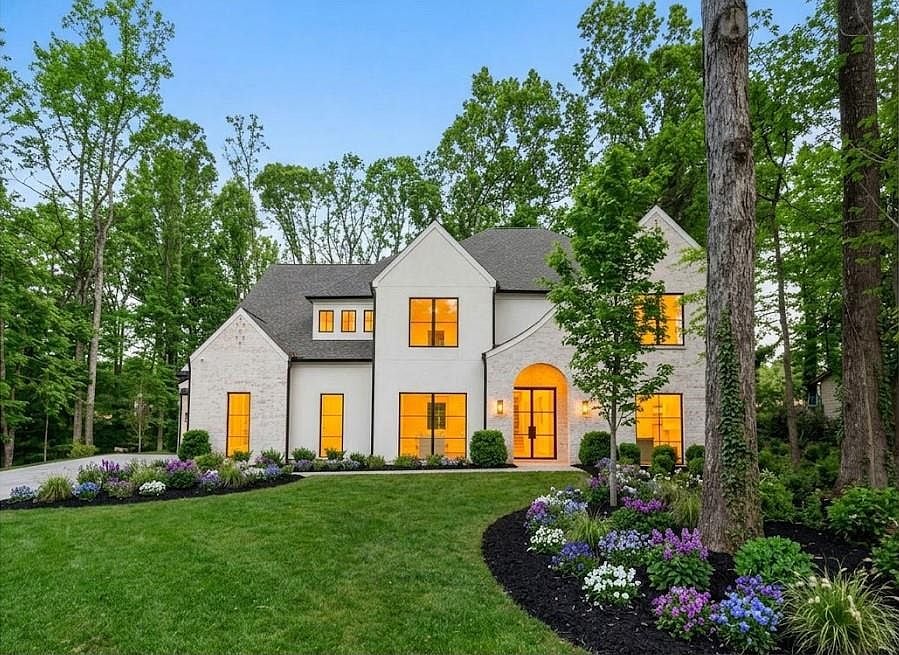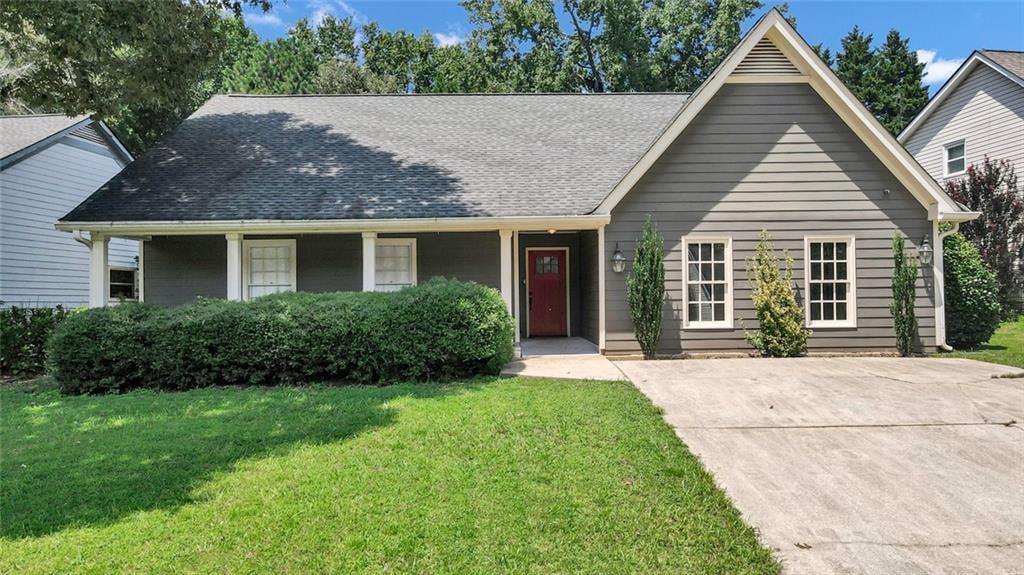
If your Lawrenceville home expired without selling, the first instinct may be to “start over.” New Agent. New photos. New listing. Maybe a new price. But a stronger second attempt should not erase the first listing. It should learn from it. Your original listing generated real market evidence: Buyers either clicked or did not click, scheduled showings or did not, toured and left, submitted offers, raised objections, chose competing properties, or possibly entered a contract that later failed. That information can make the second launch smarter than the first.
Your Lawrenceville Listing Expired: How to Prepare for a Better Second Attempt
Don't relist the same house with a new MLS date. Relaunch it with a better hypothesis.
An Expired Listing
Is Not
a Blank Slate.
It Is a Property With
Real Market History.
1. Start With the Current Lawrenceville Market—not the Market You Listed Into
The market may have changed since your original listing went live.
Realtor.com Economic Research reported the following Lawrenceville snapshot for September 2026:
September 2026 Lawrenceville Metric | Reported Figure |
|---|---|
Median Listing Price | $410,000 |
Median Sold Price | $387,990 |
Active Listings | 1,438 |
Median Days on Market | 54 days |
Active Inventory Change | +8.97% year over year |
Reported Sale-to-List Ratio | Approximately 99% |
Source: Realtor.com Economic Research, September 2026. Portal-defined Lawrenceville market.
Redfin, using a different geography and three-month calculation method, reported a September 2026 median sale price of approximately:
$364,826
with approximately:
55 median days on market
and a reported:
98.2% sale-to-list ratio.
These sources should not be averaged together.
They use different methodologies and geographic definitions.
Citywide statistics give context. Your relisting decision should be based on the market that directly competes with your specific property.
Lawrenceville Is Not One Uniform Price Market
Even broad ZIP-code data illustrates the variation.
ZIP Code | Sept. 2026 Median Listing Price | Median DOM |
|---|---|---|
30043 | $434,950 | 48 days |
30045 | $429,450 | 57 days |
30044 | $385,000 | 54 days |
30046 | $375,000 | 59 days |
Even ZIP-level figures are still too broad to price a specific property.
The relisting CMA should become progressively narrower:
Lawrenceville
↓
ZIP
↓
Neighborhood / Submarket
↓
Direct Buyer Alternatives
↓
Your Specific Property
2. Treat the First Listing Like a Market Experiment
Your first listing tested several assumptions.
You may have assumed:
- The price would attract enough Buyers.
- The photographs would generate showings.
- The condition would be acceptable at the asking price.
- The strongest features would be obvious.
- The showing process would create enough access.
- The property would compete effectively with nearby alternatives.
The market then responded.
That response is valuable.
The goal before relisting is to compare:
what we expected to happen vs. what actually happened.
The first listing may have failed to produce a sale, but it still produced data.
Before You Relist, Ask:
“What Did the First Listing Teach Us That the Second Listing Will Do Differently?”
3. Build a First-Listing Evidence File
Before deciding on the new strategy, collect as much information as possible from the previous listing.
I would want to review:
- Original list price.
- Every price change.
- Dates of those changes.
- Total days on market.
- Showing count.
- Showing timing.
- Repeated feedback.
- Online views or engagement where available.
- Saved / favorite activity where available.
- Open-house attendance.
- Offers received.
- Offer prices and major terms.
- Any withdrawn or rejected offers.
- Any previous contract and why it terminated.
- Marketing materials.
- Photography.
- Listing description.
- Showing restrictions.
- Competing listings during the same period.
- Which competitors went pending.
Don't Ask Only:
“Why Didn't It Sell?”
Ask:
“What Evidence Did the Listing Produce?”
4. Read the Signal Before Choosing the Solution
First-Listing Pattern | Possible Questions to Investigate |
|---|---|
Very Few Online Views | Visibility, search position, price bracket, photography, listing completeness, property demand |
Online Interest but Few Showings | Price-to-value perception, photo-to-detail conversion, access, competing homes |
Many Showings but No Offers | In-person value, condition, layout, lot, location objection, price relative to competition |
Several Low Offers | Whether Buyers are collectively signaling a lower value range or simply negotiating aggressively |
Strong Interest After a Price Reduction | Whether the revised bracket finally aligned with Buyer search behavior |
Under Contract, Then Terminated | Inspection, appraisal, financing, title, insurance or contract-specific issue |
Competing Listings Went Pending While Yours Stayed Active | What Buyers chose there that they did not choose here |
These are diagnostic clues.
They are not automatic conclusions.
For example:
Many showings with no offers could indicate price,
but it could also indicate:
a difficult floor plan,
visible maintenance,
road exposure,
or a stronger competing property.
5. Identify Which Assumption the Market Already Proved Wrong
This is where the second launch becomes powerful.
Maybe the first strategy assumed:
“Buyers will pay a premium for our renovation.”
But Buyers repeatedly chose similarly renovated homes at lower prices.
Maybe Seller assumed:
“The older HVAC won't matter.”
But feedback repeatedly mentioned major-system age.
Maybe the marketing assumed:
“The basement is our strongest feature.”
But showing feedback consistently focused on the backyard.
Maybe everyone assumed:
“We just need more time.”
while direct competitors continued going under contract.
A second launch should not defend an assumption the first launch already disproved.
6. Rebuild the Price From Today's Evidence
Do not begin with:
“We were at $475,000, so let's try $465,000.”
That is a price reduction.
It is not necessarily a pricing analysis.
Instead, rebuild the price using:
- New relevant closed sales.
- Current active competition.
- Recently pending competition.
- Listings that expired or were withdrawn.
- Price reductions among competitors.
- Your first listing's Buyer response.
- Property condition today.
- Any improvements made since the first listing.
Relisting Price
Should Not Be
Old Price Minus Something.
It Should Be
a New Conclusion From Current Evidence.
Your Price History Is Part of the Story
Buyers and agents may be able to see prior listing and pricing history through available real estate data.
That means a relaunch should not pretend the previous strategy never existed.
Instead, the new positioning should answer:
“Why does the property make more sense at this price today?”
7. Divide Property Problems Into Three Relaunch Buckets
Before spending money, separate issues into:
Bucket | Examples | Possible Response |
|---|---|---|
Remove the Objection | Obvious maintenance, poor lighting, damaged paint, neglected curb appeal | Fix when cost and expected impact make sense |
Reduce the Uncertainty | Unknown roof age, unclear repair history, prior leak with no documentation | Provide reliable information or appropriate professional documentation where available |
Price for the Objection | Permanent road exposure, difficult lot, costly update Seller will not make | Position against alternatives accordingly |
Not every Buyer objection needs a renovation. Some need information. Some need pricing.
8. A Second Launch Should Look Meaningfully Different
If a Buyer saw the property during the first listing,
what reason do they have to reconsider it now?
Changing:
the MLS number,
the agent's name,
and a few words in the description
may not be enough.
A meaningful reset might involve:
- A genuinely different price position.
- Improved property condition.
- Better staging.
- New professional photography.
- Better photo sequencing.
- A floor plan.
- Updated video.
- 3D tour where useful.
- More accurate feature positioning.
- Better showing access.
New Listing Date
Does Not Automatically Create
a New Buyer Perception.
9. Rebuild the Online Story From the Buyer's Decision Order
The first photograph is not decoration.
It is a decision point.
The photo sequence should help Buyers quickly understand:
- What type of home this is.
- What makes it different.
- How the important rooms connect.
- What the major outdoor features look like.
- Why it deserves a showing relative to competing homes.
Ask:
“Did the original listing lead with what Buyers actually cared about?”
The first listing's feedback may help answer that question.
10. Marketing Cannot Be the Only Change
Professional photography,
video,
open houses,
social media,
digital advertising,
MLS exposure,
and agent outreach
can all support a relaunch.
But if the first listing failed because Buyers consistently saw:
better value elsewhere,
more marketing may simply expose the same positioning problem to more Buyers.
Marketing multiplies the positioning. It does not automatically fix the positioning.
11. Clarify Which Property Advantages Actually Matter
The relaunch should make objective property advantages easy to understand.
Depending on the home, that might include:
- Recent renovations.
- Finished basement.
- Main-level bedroom.
- Flexible office space.
- Usable backyard.
- Updated major systems.
- Storage.
- Proximity to relevant roads, services, parks, or Downtown Lawrenceville.
Do not rely on generic phrases such as:
“Won't last!”
If the first listing lasted,
the market has already contradicted the phrase.
12. Use Lawrenceville Location Facts Precisely
Lawrenceville offers multiple housing environments:
Downtown,
older established subdivisions,
newer construction,
townhomes,
larger single-family communities,
and higher-priced properties.
If the home has meaningful proximity to places such as:
- Lawrenceville Lawn.
- Downtown Lawrenceville.
- Lawrenceville Arts Center.
- Georgia Gwinnett College.
- Relevant employment or transportation corridors.
describe that access accurately.
But do not assume every Lawrenceville mailing address has the same:
- Municipal jurisdiction.
- School assignment.
- Tax structure.
- Commute.
- Buyer pool.
13. Decide Whether You Need a New Agent—or a New Strategy
An expired listing does not automatically prove the previous agent was ineffective.
Likewise,
hiring a new agent does not automatically fix the property.
Review:
- Did the previous agent recommend market-supported pricing?
- Did Seller follow that advice?
- Was the marketing executed as promised?
- Were showings easy to schedule?
- Was Buyer feedback collected and analyzed?
- Did the strategy change when new evidence appeared?
- Was communication clear?
- Were difficult conversations avoided?
Then ask the next agent:
“What do you believe the first strategy got wrong—and what evidence supports your answer?”
New Agent
Without
New Diagnosis
Can Produce
the Same Result.
14. Review the Previous Listing Agreement Before Signing Again
Before entering a new listing agreement,
review the agreement that just ended.
Pay attention to any provisions that may continue beyond expiration, including any applicable:
- Protection-period provisions.
- Compensation obligations.
- Marketing-cost obligations.
- Other post-expiration terms.
If you are uncertain about legal obligations under the prior agreement,
consult qualified Georgia legal counsel before assuming the expiration date eliminated every obligation.
15. Define the Second Listing's Performance Triggers Before You Launch
Do not wait until everyone is frustrated to decide what weak performance means.
Before the relaunch, agree on:
- How often performance will be reviewed.
- Which direct competitors will be monitored.
- Which Buyer-feedback patterns matter.
- What low showing activity would cause the team to investigate.
- What repeated showings without offers would trigger review.
- What market changes would cause repricing analysis.
There is no universal:
“7 days,”
“10 showings,”
or other fixed rule that applies to every property.
The thresholds should make sense for:
this property, this price range, this submarket, and this launch.
A strategy is stronger when Seller and Agent decide in advance what evidence would cause them to reconsider it.
A Four-Phase Lawrenceville Relisting Plan
Phase 1: Reconstruct the First Listing
Gather:
- Price history.
- Showing data.
- Buyer feedback.
- Marketing assets.
- Offers.
- Previous contract history.
- Competing listings from the same period.
Phase 2: Diagnose Before Spending
Determine whether the main issue appears to involve:
- Market position.
- Presentation.
- Condition.
- Access.
- Information gaps.
- Permanent property characteristics.
- Contract execution.
Phase 3: Build the Meaningful Reset
Finalize:
- Current CMA.
- New price position.
- Prioritized property work.
- Staging.
- Photography and video.
- Listing copy.
- Showing plan.
- Launch marketing.
Phase 4: Measure the New Market Response
Review:
- Online engagement.
- Showing volume.
- Showing quality.
- Feedback patterns.
- Second-showing activity.
- Offers.
- Competing listings going pending.
Your First Listing
Already Paid for
One Round of Market Feedback.
Don't Throw It Away
Before Round Two.
The “What Changed?” Test
Before relaunching, complete this sentence:
“The first time we listed, Buyers saw ____________________.
This time, they will see ____________________.
We changed it because the first listing showed us ____________________.”
If you cannot complete those three blanks,
ask whether the second launch is meaningfully different enough yet.
Second-Launch Evidence Matrix
Evidence From First Listing | What It May Suggest | Possible Second-Launch Response |
|---|---|---|
Low Showing Volume | Weak initial value proposition or discoverability | Revisit price, search bracket, photos, listing information and access |
Many Showings / No Offers | In-person competitive disadvantage | Compare condition, layout, lot, location and price against direct alternatives |
Repeated Same Objection | Potential systematic Buyer friction | Fix, document or price for the issue |
Low Offers Clustered in Similar Range | Possible market disagreement with Seller value expectation | Recheck comps and competing value before dismissing the pattern |
Competitors Sold / Went Pending | Buyer demand existed but was captured elsewhere | Identify the competing advantage |
Contract Terminated | A later-stage transaction issue | Determine whether the problem can be prevented, disclosed, documented or priced differently |
The 100-Point Second-Launch Readiness Scorecard
Category | Score | Question |
|---|---|---|
First-Listing Evidence | ___ / 20 | Do we actually understand what happened the first time? |
Current Market Analysis | ___ / 20 | Are we pricing against today's competition rather than the old listing? |
Property Reset | ___ / 15 | Have high-impact Buyer objections been addressed? |
Presentation Reset | ___ / 15 | Does the second listing look and communicate meaningfully differently? |
Competitive Position | ___ / 15 | Do Buyers have a clear reason to choose this property today? |
Performance Triggers | ___ / 10 | Have we decided what evidence would make us change strategy? |
Contract / Seller Readiness | ___ / 5 | Have prior obligations and relisting logistics been reviewed? |
Total | ___ / 100 | This measures relaunch preparation—not the probability or timing of a sale. |
30 Questions Before Relisting Your Lawrenceville Home
☐ 1. What was the original list price?
☐ 2. What price changes occurred and when?
☐ 3. How many relevant showings occurred?
☐ 4. What feedback repeated more than once?
☐ 5. How much online engagement did the listing receive?
☐ 6. Did online interest convert into showings?
☐ 7. Did showings convert into second looks?
☐ 8. Were offers received?
☐ 9. If several offers were low, were they clustered around a similar range?
☐ 10. Did the property ever go under contract?
☐ 11. If a contract terminated, exactly why?
☐ 12. Which direct competitors went pending during the first listing?
☐ 13. What did those competitors offer that ours did not?
☐ 14. Which new sales have occurred since we first listed?
☐ 15. What new active competition exists today?
☐ 16. Does the old price still have any support?
☐ 17. Which assumption from the first listing appears to have been wrong?
☐ 18. Which Buyer objection can be economically fixed?
☐ 19. Which concern can be reduced through better information?
☐ 20. Which permanent issue must simply be reflected in positioning?
☐ 21. What will physically look different in the second launch?
☐ 22. What will be different in the first five listing photos?
☐ 23. Has the strongest property feature changed based on Buyer feedback?
☐ 24. Is showing access as easy as reasonably possible?
☐ 25. What will the new marketing do differently?
☐ 26. What exactly will the new agent do differently?
☐ 27. What evidence would trigger a pricing review?
☐ 28. How often will Seller and Agent review performance?
☐ 29. Have prior listing-agreement obligations been reviewed?
☐ 30. What did the first listing teach us that the second listing will do differently?
Frequently Asked Questions About Expired Listings in Lawrenceville
Why didn't my Lawrenceville house sell?
There is rarely one universal explanation. Review pricing, current competition, online engagement, showing volume, Buyer feedback, property condition, access, permanent property characteristics, offers, and any previous contract issues. The pattern matters more than one isolated comment.
Should I automatically lower the price when I relist?
No. The new price should be rebuilt using current comparable sales, active and pending competition, changes in the property, and evidence from the first listing. A lower price may be appropriate, but “old price minus $10,000” is not a complete strategy.
Should I use new photos?
If the prior presentation was weak or the property has changed, new professional photography may help. More importantly, determine whether the new visual story clearly communicates the property advantages that matter most to current Buyers.
Should I renovate before relisting?
Not automatically. Separate issues into those worth fixing, those worth documenting, and those better addressed through price positioning. Expensive improvements should be evaluated against likely Buyer impact rather than assumed to produce dollar-for-dollar value.
Should I change real estate agents?
Possibly. First determine whether the problem was execution, strategy, Seller decisions, market conditions, property characteristics, or a combination. If interviewing a new Agent, ask for a specific diagnosis supported by evidence—not simply a promise to market the property harder.
How long are homes taking to sell in Lawrenceville in 2026?
Realtor.com reported 54 median days on market for September 2026, while Redfin's separate three-month methodology showed approximately 55 days. Individual properties can move much faster or slower depending on price range, location, condition, housing type, and competition.
Does relisting reset the Buyer's perception of the home?
Not automatically. Some Buyers and agents may be aware of prior listing and price history. A stronger relaunch gives the market a meaningful reason to reconsider the property rather than relying only on a new listing date.
What if we had many showings but no offers?
That suggests Buyers were interested enough to visit but did not find enough value to write an acceptable offer. Investigate price relative to competition, in-person condition, layout, lot, location, future ownership costs, and repeated Buyer feedback.
What if the home went under contract and then came back?
Identify exactly why the prior contract ended. Inspection, financing, appraisal, insurance, title, or transaction-specific contractual issues may require different solutions. Do not treat every failed contract as a marketing problem.
What is the most important question before relisting?
Ask: “What did the first listing teach us that the second listing will do differently?” If the answer is unclear, the relaunch strategy probably needs more work.
Don't Relaunch
the Same Strategy
With
a New MLS Date.
Use the First Listing
to Build
a Better Second Hypothesis.
Final Thoughts: Your First Listing May Be Your Best Source of Second-Launch Information
An expired listing can be frustrating.
But it also creates information that a brand-new Seller does not have.
You now may know:
Which Buyers clicked.
Whether they scheduled.
What they said after touring.
Which objections repeated.
What they offered.
Which competitors they chose.
Which price points changed behavior.
And whether a contract issue appeared later in the process.
That is valuable information.
Use it.
The second listing should not be:
“Let's try again.”
It should be:
“This is what the market taught us, this is what we changed, and this is how we will measure whether the new strategy is working.”
Your first listing did not produce the result you wanted.
But if it produced useful evidence, it does not have to be wasted. The strongest second attempt uses that evidence to make fewer assumptions and better decisions.
Your Lawrenceville Home Didn't Sell? Let's Find Out Why Before You Relist.
A second attempt should begin with evidence. We can review your previous pricing history, comparable sales, current competition, showing activity, Buyer feedback, online presentation, property condition, prior offers, and any contract issues that affected the first listing. From there, the goal is to build a relaunch strategy that is meaningfully different—not simply put the same property back online and hope for a different result.
Tina Jingru Sui | TJS Team
Call or Text: (404) 375-2120
Email: [email protected]
Visit TinaSui.com
About Tina Jingru Sui
Tina Jingru Sui is the founder and team leader of the TJS Team, serving home sellers, buyers, investors, new-construction buyers, and relocation clients throughout Metro Atlanta.
Tina and the TJS Team serve Lawrenceville, Suwanee, Duluth, Buford, Johns Creek, Alpharetta, Dacula, Atlanta, Sandy Springs, Roswell, Marietta, Peachtree Corners, and surrounding Metro Atlanta communities.
2026 Lawrenceville Market Sources
Current market context referenced in this article uses Realtor.com Economic Research's September 2026 Lawrenceville and ZIP-code market reporting and Redfin's September 2026 Lawrenceville housing-market data. The sources use different methodologies, reporting windows, and geographic definitions and should not be treated as interchangeable. Property-specific pricing should rely on a current comparative market analysis using relevant nearby sales and competing listings.
Keller Williams Realty Atlanta Partners · (404) 375-2120
This article is provided for general real estate education and marketing information only and does not constitute legal, financial, tax, appraisal, inspection, engineering, investment, brokerage-contract interpretation, or other professional advice. The Second-Launch Evidence Advantage, Second-Launch Evidence Matrix, 100-point scorecard, diagnostic examples, performance triggers, and related frameworks are educational tools only and do not guarantee a sale, offer, sale price, appraisal result, days on market, Seller net proceeds, or closing. An expired listing does not establish that any particular prior Agent, Seller decision, pricing decision, marketing strategy, or property characteristic caused the home not to sell. Showing data, online engagement, Buyer feedback, offer patterns, and competing-listing behavior are diagnostic signals and should be interpreted in context rather than treated as definitive proof of one cause. A Comparative Market Analysis is not an appraisal. Citywide and ZIP-code median statistics do not establish the value of a specific property. Realtor.com and Redfin use different methodologies and geographic definitions and their statistics should not be averaged or treated as directly interchangeable. Property-system age does not by itself establish a defect or required replacement. Renovations and repairs do not guarantee dollar-for-dollar increases in market value. Professional photography, video, 3D tours, social media, MLS exposure, open houses, advertising, and other marketing tactics may improve presentation or exposure but do not guarantee Buyer interest, offers, or closing. Prior listing and price history may remain available through real estate data systems and should not be assumed to disappear when a property is relisted. Sellers should review the actual prior listing agreement before entering another representation agreement, including any applicable protection-period, compensation, marketing-cost, or other post-expiration provisions. Broker compensation is not set by law and is fully negotiable. Legal questions regarding prior brokerage agreements, commissions, protection periods, disclosure obligations, prior contracts, termination, title, or other legal rights should be reviewed with qualified Georgia legal counsel when appropriate. Real estate professionals can assist Sellers with market analysis, pricing, marketing, Buyer-feedback analysis, property positioning, offer review, negotiation, and transaction coordination but do not replace attorneys, appraisers, inspectors, engineers, contractors, lenders, CPAs, insurance professionals, title professionals, or other qualified specialists. Equal Housing Opportunity. Tina Jingru Sui, GA License #392936, REALTOR®, affiliated with Keller Williams Realty Atlanta Partners.